Vaata sisu
 Jaga teost
 Jaga
Jaga
 Detailid
 Õppekate juhend

 Laadi alla
 Sarnased teosed
 Röntgenuuring
 Slaidietendus
 Statistika
Entombment
 Acrylic On Canvas
- WallArt
- International Gothic
 1335
1335 22.0 x 15.0 cm
 Staatliche Museen zu Berlin
 Loe lähemalt
Giclée / Kunstiprint
Muuseumikvaliteediga giclée- või kangasprint kiire tootmisega ja paindlikud viimistlusvõimalused. ( Telli käsitsi maalitud reproduktsioon Ülemineku digitaalse pildi müügi kanalisse)




P118B €10

P118H €10

P118W €10

P438Z €10

P508JH €12

P508YH €12

P805H €10

P805Z €10

P919BZ €10

P919G €10

P919XJ €10

P959ZH €10

P968JZ €12

W106C €8

W218G €10

W218JH €8

W218Y €10

W307PJ €10

W316G €10

W316PJ €8

W316Y €10

W398PJ €8

W4111J €10

W500HY €15

W500JH €15

W692G €12

W849H €8

W940BG €15

W953PJ €8




Vali meie eelmääratud suurused, mis vastavad teose algupärastele proportsioonidele.

Sisestage vajalik laius ja kõrgus, et see sobiks teie raamile või seinale. Trükki saab ainult lõigata, seda ei saa kunagi pildist suuremaks teha, seega ka differentse vormiga suurus kaotab osa pildist. Enne trükkimist saadame teile kinnitamiseks digitaalse näidisprojektsiooni. Sellel lehel näidatud pilt ei kujuta reaalset lõiget — seda näitab ainult näidisprojekttsioon.
Ülemaailmne tarne () 2 nädala jooksul, tavalise 4/5 nädala asemel. (22 oktoober)

Tasuta ekspresssaatmine üle maailma

Kõrgekvaliteediline lina-kangastest muld

Täielik transpordikindlustus

Tollimaksude tagastamise garantii

Värvitoime täpsuse garantii

100 päeva tagastusõigus (ainult defektide korral)

100% raha tagasi garantii

Hulgusoodustus
 Klaasivalik on saadaval ainult kuni 110 cm suuruses teostes

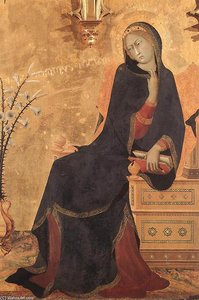
Entombment
Giclée / Kunstiprint
Reproduktsiooni mõõtmed
-


Lõppsumma
€ 70
A Moment Frozen in Time: Simone Martini’s Entombment
Simone Martini's *Entombment*, completed around 1335-44, transcends mere depiction; it embodies the spiritual fervor and artistic sophistication of Siena during its golden age. This tempera painting on wood—measuring a modest 22 x 15 cm—holds an unparalleled significance within the Early Italian Gothic tradition, securing its place as one of the most celebrated artworks of the period. Currently housed in the Staatliche Museen Berlin, it invites viewers to contemplate not just a biblical scene but also the profound artistic vision of Martini himself.The Scene Unfolds: Narrative and Composition
The painting portrays Jesus Christ being laid into his tomb by Mary Magdalene and Nicodemus—a pivotal moment recounted in Matthew 27:58-60. Martini meticulously captures the solemnity of the occasion, arranging figures within a carefully constructed space dominated by towering cypress trees that symbolize immortality and remembrance. The composition is deliberately balanced, guiding the eye across the scene with subtle diagonals and converging lines, creating an atmosphere of profound grief and reverence. Notice how Martini skillfully employs shading to sculpt the forms of Jesus’ body and the mourners, conveying both physicality and emotional depth—a hallmark of Martini's distinctive style.Technique and Artistic Innovation
Martini’s mastery lies in his meticulous application of tempera paint on wood – a technique favored by Sienese artists during this era. Tempera pigments bind to the surface without solvents, resulting in vibrant colors that retain their luminosity over centuries. Martini's painstaking layering of translucent glazes—particularly noticeable in Jesus’ face and hands—creates an ethereal quality, capturing the subtle nuances of light and shadow. This technique distinguishes Martini from his predecessors like Giotto di Bondone, who favored a more flattened perspective, elevating *Entombment* to a pinnacle of artistic innovation. The artist's attention to detail extends beyond mere representation; he imbues every element with symbolic significance.Symbolism: Trees of Remembrance and Spiritual Reflection
The cypress trees surrounding the tomb are laden with symbolism—representing eternal life and commemorating the deceased. Their upward reaching branches mirror Jesus’ ascension into heaven, reinforcing the overarching theme of resurrection and divine grace. Furthermore, Martini's depiction of Mary Magdalene and Nicodemus reflects the theological concerns of the time – specifically, the contemplation of Christ’s suffering and sacrifice for humanity’s salvation. The figures are rendered with exquisite realism, yet imbued with an aura of spiritual solemnity, prompting viewers to engage in introspection and contemplate the mysteries of faith.Emotional Resonance: A Window into Medieval Spirituality
*Entombment* resonates powerfully with audiences today due to its ability to evoke a deep sense of empathy and contemplation. Martini’s masterful use of color—primarily blues and reds—creates an emotionally charged atmosphere, mirroring the grief experienced by those present at Jesus' burial. The painting serves as a testament to the enduring power of religious art to communicate profound spiritual truths—a legacy that continues to inspire artists and collectors alike. Its serene beauty and meticulous craftsmanship offer a captivating glimpse into the artistic sensibilities of Siena during its illustrious medieval period.Küsimused ja vastused
Mis on teose „Entombment“, autor Simone Martini domineeriv värv?
Teose "Entombment" kõige silmapaistvam värv on Walnut (#67382c). Dominantne värv on kasulik teose sobitamisel interjööriga.
Millissele perioodile Simone Martini karjäärist kuulub teos "Entombment"?
Teos "Entombment" kuulub Simone Martini loomingulise karjääri perioodi Mature Period. See klassifikatsioon seostab teose kunstniku loovliku arenguga.
Millissele stiilile kuulub "Entombment"?
Teosest „Entombment“, autor Simone Martini tuntud kunstisuuna kuulub International Gothic stiili. See klassifikatsioon aitab teost paikutada sarnaste kunstnike ja teoste hulka.
Kunstniku elulugu
Simone Martini (c.1284–1344) – A Sienese Master of Elegance and Grace
Simone Martini, born around 1284 in Siena, Italy—though precise birthdates remain elusive—stands as a cornerstone figure in the transition from medieval to Renaissance art. He wasn’t merely a painter; he was an architect of elegance, a master of line and color who infused his works with a courtly refinement that distinguished him from contemporaries like Giotto di Bondone. Historical accounts regarding Martini’s formative years are fragmentary—scholarly debate centers on whether he apprenticed under Duccio di Buoninsegna, the dominant Sienese artist of his time, or if Florence and Giotto exerted a more profound influence—yet Martini undeniably forged an artistic path uniquely his own.
Origins and Education – The Seeds of Style
The exact circumstances surrounding Simone’s upbringing are shrouded in obscurity. Tradition suggests he was born in Siena’s Sant’Egidio district, possibly the son of Martino Senese, a craftsman specializing in preparing arriccio—the initial plaster layer applied to wall surfaces destined for fresco painting—though corroborating evidence remains scant. Regardless of his precise origins, Martini’s artistic training undoubtedly commenced within Duccio di Buoninsegna’s workshop, where he absorbed the stylistic precepts of Sienese Gothic.
The Siena Workshop – Collaboration and Patronage
Martini’s formative years were marked by close association with Memmo di Filippuccio, another artisan active in San Gimignano—a partnership that fostered not only professional growth but also exposure to the burgeoning artistic culture of Tuscany. Crucially, Martini secured his first major civic commission in 1311: the frescoing of the *Maestà* for Siena’s Palazzo Pubblico—a monumental undertaking that cemented Duccio’s legacy and established Martini as a rising talent.
The Maestà – A Synthesis of Tradition
The *Maestà*, completed in 1315, represents a pivotal moment in Martini’s artistic trajectory. It served as an homage to Duccio’s own masterpiece—a stylistic echo that underscored Martini’s commitment to established Sienese conventions. Yet, Martini transcended mere imitation; he innovated through meticulous attention to detail and the incorporation of groundbreaking techniques—particularly the use of metallic pigments and punching—resulting in a painting that embodies both grandeur and exquisite refinement.
International Gothic – Influence and Artistic Vision
Martini’s stylistic hallmark is undeniably International Gothic, a movement characterized by its delicate beauty, elongated figures, flowing drapery, and opulent ornamentation. This aesthetic was profoundly shaped by artistic currents originating from France—specifically the illuminated manuscripts and ivory carvings of Parisian ateliers—which Martini skillfully assimilated into his own distinctive vision.
Later Career – Avignon and Artistic Circles
Martini’s renown extended beyond Siena, attracting commissions from papal patrons in Avignon—a city at the epicenter of European power during the thirteenth century. His presence within Francesco Petrarca’s intellectual circle further enriched his artistic milieu—a connection underscored by Vasari’s account of Martini’s portrait of Laura de Noves—demonstrating Martini's ability to capture not only physical likeness but also the essence of beauty and inspiration.
Legacy – An Enduring Influence
Simone Martini’s contribution to European art history is undeniable. He championed International Gothic style, disseminating its aesthetic principles across the continent and shaping the artistic sensibilities of subsequent generations. His frescoes in San Francesco d’Assisi exemplify his mastery of large-scale decorative painting—a testament to Martini's unparalleled command of color, form, and compositional harmony. Martini died in Avignon in 1344, leaving behind a legacy that continues to inspire awe and admiration centuries later—a beacon of elegance and artistic innovation.

Simone Martini
1284 - 1344 , Itaalia
Lühikest infot
- Artistic Movement Or Style: International Gothic
- Artists Who Influenced This Artist:
- Duccio di Buoninsegna
- Francesco Petrarca
- Date Of Birth: c. 1284
- Date Of Death: 1344
- Full Name: Simone Martini
- Nationality: Italian
- Notable Artworks:
- Saint Louis Crowning Robert
- Annunciation (Uffizi)
- Consecration of Chapel
- Place Of Birth: Siena, Italy
Sarnased artiklid

Beyond Borders: The Spiritual & Stylistic Innovations of International Gothic Art
Explore the exquisite beauty & spiritual depth of International Gothic art. Discover key artists like Simone Martini & Pol de Limbourg, its origins, symbolism, and lasting influence on European painting. Expert insights at OriginalUniqueArt.
Shadows & Splendor: A Journey Through the Soul of Gothic Art and Architectural Grandeur
Embark on a profound journey through the spiritual intensity of Gothic art. Explore the architectural marvels, luminous stained glass, and sacred sculptures that define this era of grandeur and human devotion.

Gothic Vibes: From Dark Shadows to Bold Modern Edge | The Ultimate Trend Forecast
Explore the evolution of Gothic vibes, from historical shadows to bold modern edge. Discover how dark aesthetics, noir interiors, and contemporary subcultures are redefining modern design through a high-impact, trend-focused lens.

Simone Martini: Innovation, Spirituality & Courtly Refinement in Sienese Painting
Explore the captivating world of Simone Martini, a pivotal figure in Sienese painting & the International Gothic style. Discover his innovative techniques, spiritual depth, and lasting influence on early Renaissance art.
The Radiant Dusk of Medieval Vision: Exploring Late Gothic Art's Synthesis of Faith, Form & Emotionality (c. 1300-1500)
Explore the exquisite beauty & spiritual depth of Late Gothic art (c. 1300-1500). Discover key artists, symbolism, and its lasting influence on the Renaissance. Expert insights at OriginalUniqueArt.