

 Saada
Saada Jaga
Jaga
 Teave teose kohta

 Laadi alla
 Sarnased teosed
 Slaidietendus
 Statistika
I see me Dolls


 Loe lähemalt
Giclée / Kunstiprint
Muuseumikvaliteediga giclée- või kangasprint kiire tootmisega ja paindlikud viimistlusvõimalused. ( Osta käsitsi maalitud maal Ülemineks digitaalse pildiga müügi kanalisse)




































Vali meie eelmääratud suurused, mis vastavad teose algupärastele proportsioonidele.

Saate sisestada oma mõõdud, et need sobiks konkreetse raami või ruumi sisse. Kui valitud suurus ei vasta originaalteose proportsioonidele, lõigame teose ära või laiendame pilti peegeldatud või ühtlase servaga. Enne tootmisprotsessi algust saadetakse Teie kinnitamiseks digitaalne näidis.
Palun märka, et ekraanil kuvatav eelvaade ei kajasta tegelikku lõigamist või laiendamist. Ainult näidis kujutab täpselt lõplikku kompositsiooni.
Kuigi erimõõdu on saadaval, soovitame originaaproportsioonide säilitamiseks valida mõõt ette määratud nimekirjast.
Ülemaailmne tarne () 2 nädala jooksul, tavalise 4/5 nädala asemel. (17 september)

Tasuta ekspresssaatmine üle maailma

Kõrgekvaliteediline linakangas

Täielik transpordikindlustus

Tollimaksude tagastamise garantii

Värvitoime täpsuse garantii

100 päeva tagastusõigus (ainult tootmisdefektide korral)

100% raha tagasi garantii

Hulgusoodustus
 Klaasivalik on saadaval ainult suuruses kuni 110 cm

I see me Dolls
Giclée / Kunstiprint
Reproduktsiooni suurus
-


Kogusumma
$ 80
I See Me Dolls – Sana Musasama: A Ceramic Tapestry of Identity and Memory
Sana Musasama’s “I See Me Dolls” isn't merely a sculpture; it’s a poignant meditation on childhood experience, cultural heritage, and the enduring influence of maternal care. Born in Saint Albans, New York, in 1951, Musasama’s artistic journey began with a deep fascination for ceramics and evolved into an exploration of themes surrounding womanhood and social justice—a passion that continues to fuel her creative output.
- Artist Background: Sana Musasama holds a BA in Ceramics and Education from City College (1974) and an MFA from Alfred State College of Ceramics (1987). Her extensive travels across Africa, Asia, and Latin America—including visits to Sierra Leone, Cambodia, Vietnam, and Japan—have profoundly shaped her artistic vision.
- Material & Technique: Musasama’s distinctive style is characterized by the use of raku firing – a Japanese ceramic technique known for its unpredictable oxidation process that creates stunning textural variations. This method lends an organic quality to her sculptures, mirroring the natural world and reflecting her connection to cultural traditions.
The sculpture itself depicts a humanoid figure crafted from clay—a deliberate choice that speaks volumes about Musasama’s artistic sensibilities. Its exaggerated form is juxtaposed against a stark white background, maximizing visual impact and emphasizing the materiality of the piece. The artist meticulously adorns the doll with beads, fabric scraps, and carefully positioned pipe cleaners – elements that contribute to its narrative complexity.
Symbolism & Narrative: “I See Me Dolls” draws inspiration from Musasama’s childhood memories—specifically her mother crafting a doll alongside her when she was a young girl. This act of creation symbolizes nurturing, caregiving, and the importance of recognizing oneself within one's surroundings. The inclusion of pipe cleaners and beads represents Musasama’s desire to imbue the doll with beauty and vibrancy – mirroring her appreciation for cultural traditions and artistic expression.
Musasama’s exploration of female excision—a ritual practiced in nomadic tribes across Africa—further underscores the sculpture's thematic depth. The dolls serve as a visual representation of this practice, prompting reflection on identity, femininity, and societal expectations. As Musasama herself eloquently describes, “It was said, the enslaved children ‘couldn’t have dolls in their image’. If they were ever caught with a ‘black doll’, they would simply ‘turn it over’ to the white more acceptable side.”
Ultimately, “I See Me Dolls” transcends mere aesthetic beauty; it embodies Musasama's commitment to artistic exploration and her profound engagement with social issues. It stands as a testament to the transformative power of art—a reminder that creativity can illuminate hidden truths and foster empathy for diverse perspectives.
Kunstniku elulugu
Sana Musasama: Life and Art
Early Life and Education
- Born in Saint Albans, New York in 1951, Sana Musasama is an African-American ceramic and mixed-media artist.
- She received a B.A. in Ceramics and Education from City College in 1974.
- Musasama continued her artistic journey with an M.F.A. from Alfred State College of Ceramics in 1987.
- Her dedication to the craft led her to further studies at institutions like the Archie Bray Foundation (Montana), Gakium Designer College (Tokyo, Japan), Tuscarora International School of Ceramics (Nevada), and Mende Pottery (Sierra Leone).
Artistic Development & Influences
- Musasama’s artistic practice is deeply intertwined with her extensive travels across Africa, Asia, and Latin America.
- These journeys – including visits to Sierra Leone, Cambodia, Vietnam, and Japan – profoundly shaped her understanding of non-Western cultures, particularly concerning womanhood and socio-political issues impacting women.
- Influences: Her work reflects a synthesis of traditional ceramic techniques with contemporary themes, drawing inspiration from folk art traditions and the lived experiences of women globally.
- She is also influenced by her commitment to human rights causes.
Themes and Artistic Style
- Musasama’s work frequently addresses critical social issues, most notably the human trafficking of women.
- Her pieces often serve as powerful visual narratives that raise awareness and promote dialogue around these sensitive topics.
- She masterfully blends ceramics with mixed-media elements to create textured and evocative artworks.
- A signature element of her work is the creation of ceramic figures, particularly dolls, which embody themes of identity, resilience, and cultural heritage.
Notable Works: “I See Me Dolls”
- Perhaps Musasama’s most recognized series is the “I See Me Dolls.”
- These ceramic sculptures are not merely representations of figures; they are celebrations of identity and difference.
- Each doll possesses unique characteristics, reflecting diverse cultural backgrounds and personal stories.
- The dolls serve as poignant reminders of the importance of self-acceptance and recognizing the inherent worth of every individual.
Major Achievements & Recognition
- Musasama has exhibited her work in numerous solo and group exhibitions, gaining recognition for her powerful artistic voice.
- Her artworks are held in various public and private collections, attesting to their cultural significance.
- She received the prestigious Anonymous Was A Woman Award in 2002, acknowledging her contributions to the field of art.
- Currently, she serves as an Associate Adjunct Professor at Hunter College, sharing her knowledge and passion with aspiring artists.
Historical Significance & Legacy
- Sana Musasama’s work stands out for its unique blend of artistic skill, social consciousness, and cultural sensitivity.
- She has carved a niche for herself as an artist who fearlessly tackles challenging issues through her art.
- Her commitment to amplifying the voices of marginalized communities and raising awareness about human rights makes her a significant figure in contemporary art.
- Musasama’s legacy lies not only in her captivating artworks but also in her dedication to education and advocacy, inspiring future generations of artists to use their creativity for positive change.

Sana Musasama
1951 - , United States of America
Lühikesed faktid
- Birth Date: 1951
- Birth Place: Saint Albans, New York, United States of America
- Influenced By: Non-Western cultures (African, Asian, Latin American)
- Movement: Contemporary ceramics, Mixed media
- Name: Sana Musasama
- Nationality: American
- Notable Works: I See Me Dolls
Seotud artiklid

The Enduring Form: Sculpture Across History, Technique & Emotional Resonance
Explore the rich history of sculpture with OriginalUniqueArt. Discover key techniques, influential artists & investment potential for discerning collectors. Expert insights into valuing and collecting timeless masterpieces.

Bronze Sculptures That Defined Art History | OriginalUniqueArt
Journey through art history with our Top 10 bronze sculptures! Explore masterpieces by Rodin, Michelangelo & more. Discover stories behind iconic statues and find museum-quality reproductions for your home decor at OriginalUniqueArt.com.

The Alchemy of Clay: A Collector's Guide to the Mastery, Texture, and Timeless Form of Ceramic Art
Discover the profound beauty of ceramic art. Our expert guide explores the alchemy of clay, texture, and glaze, offering collectors deep insights into mastering earth and fire to create timeless, sculptural masterpieces for any curated collection.
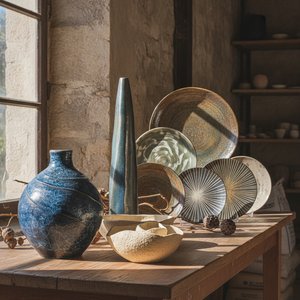
The Art of Ceramics: A Guide to Mastery, Texture, and Timeless Form for the Discerning Collector
Explore the profound elegance of ceramic art. From master glazes to sculptural forms, our expert guide offers discerning collectors deep insights into the mastery, texture, and timeless value of fine ceramics for sophisticated collections and luxury interiors.

The Enduring Form: Exploring Themes & Techniques in Sculpture Across Historical Periods
Explore the rich history of sculpture from ancient masterpieces to contemporary innovations. Discover key techniques, influential artists & investment potential for discerning art collectors.
