
 Eelvaade
 Saada
Saada Jaga
Jaga
 Teave teose kohta

 Laadi alla
 Sarnased teosed
 Röntgenuuring
 Slaidietendus
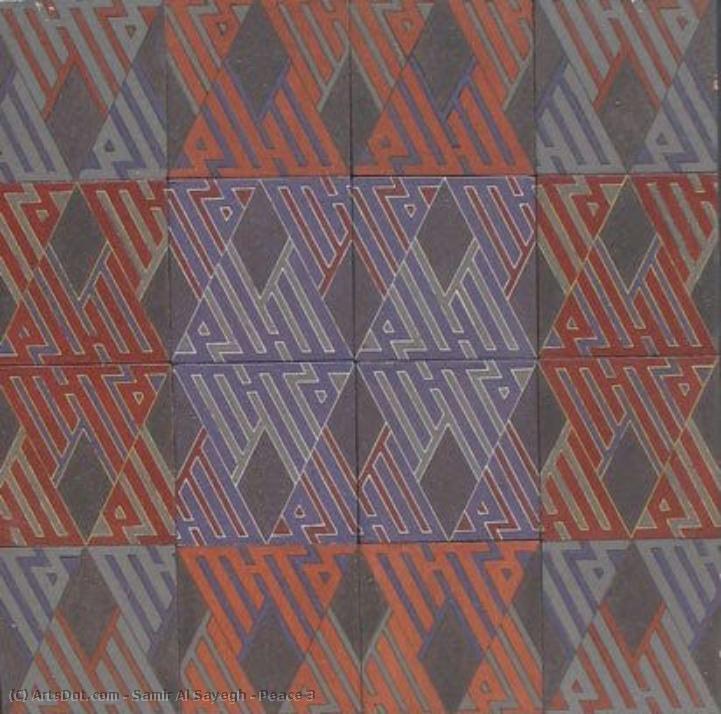
Peace 3


 Loe lähemalt
Giclée / Kunstiprint
Muuseumikvaliteediga giclée- või kangasprint kiire tootmisega ja paindlikud viimistlusvõimalused. ( Osta käsitsi maalitud maal Osta pilt)




































Vali meie eelmääratud suurused, mis vastavad teose algupärastele proportsioonidele.

Saate sisestada oma mõõdud, et need sobiks konkreetse raami või ruumi sisse. Kui valitud suurus ei vasta originaalteose proportsioonidele, lõigame teose ära või laiendame pilti peegeldatud või ühtlase servaga. Enne tootmisprotsessi algust saadetakse Teie kinnitamiseks digitaalne näidis.
Palun märka, et ekraanil kuvatav eelvaade ei kajasta tegelikku lõigamist või laiendamist. Ainult näidis kujutab täpselt lõplikku kompositsiooni.
Kuigi erimõõdu on saadaval, soovitame originaaproportsioonide säilitamiseks valida mõõt ette määratud nimekirjast.
Ülemaailmne tarne () 2 nädala jooksul, tavalise 4/5 nädala asemel. (18 august)

Tasuta ekspresssaatmine üle maailma

Kõrgekvaliteediline linakangas

Täielik transpordikindlustus

Tollimaksude tagastamise garantii

Värvitoime täpsuse garantii

60-päevane tagastusõig: ainult tootmisdefektide korral

100% raha tagasi garantii

Hulgusoodustus
 Klaasivalik on saadaval ainult suuruses kuni 110 cm

Peace 3
Giclée / Kunstiprint
Reproduktsiooni suurus
-


Kogusumma
$ 80
Kunstniku elulugu
The Calligraphic Soul: The Artistic Journey of Samir Al-Sayegh
Born in the vibrant cultural landscape of Beirut, Lebanon, in 1945, Samir Al-Sayegh has emerged as a profound voice in the contemporary art world, weaving together the ancient threads of Arabic calligraphy with the bold strokes of modern abstraction. His artistic odyssey began not in an academy, but through a childhood fascination with the written word, ignited at the age of twelve when a teacher recognized his innate mastery of handwriting. This early spark blossomed into a lifelong devotion, nurtured by his formative years at the Saint Savior Convent in Joun, where he was granted rare access to ancient Arabic manuscripts. These encounters with antiquity did more than teach him technique; they instilled a deep reverence for the visual language of Islam, teaching him how elegance and precision can serve as vessels for the most complex spiritual and philosophical ideas.
Al-Sayegh’s intellectual and artistic horizons expanded significantly when he moved to Paris to study Art History at the École des Beaux-Arts. This period of academic rigor allowed him to bridge the gap between Eastern aesthetics and Western traditions, creating a unique synthesis that defines his mature style. By immersing himself in the history of Western art, he gained the tools to deconstruct traditional forms, eventually returning to Lebanon not just as a practitioner of calligraphy, but as a scholar capable of reinterpreting it. His career has been characterized by this duality—acting simultaneously as a master calligrapher, an art critic, a historian, and a poet, with each discipline informing and enriching the others.
Transcending the Letter: Innovation in Form and Meaning
What distinguishes Al-Sayegh from the traditionalists of his era is his radical approach to the Arabic alphabet. Rather than treating letters merely as carriers of linguistic meaning, he seeks to liberate them from the constraints of syntax and vocabulary. In his hands, the Arabic letter becomes a universal sign, a geometric entity capable of profound abstraction. He experiments with the structural and rhythmic potentialities of line and space, transforming calligraphic characters into dynamic compositions that often surge across the entire surface of the canvas. This method allows meaning to emerge not from what is read, but from the visceral relationship between weight, motion, and void.
His work is a masterful exploration of the geometric, structural, and abstract potentialities of his medium. By focusing on the formal elements of writing, he creates a visual poetry that transcends language barriers, making his art accessible to a global audience. This pursuit of modernity does not come at the expense of tradition; rather, it is an evolution of it. His ability to utilize the aesthetic properties of writing to create contemporary design has earned him recognition as one of the most avant-garde Arab master calligraphers, a pioneer who ensures that the ancient art of calligraphy remains a living, breathing force in the modern era.
A Legacy of Scholarship and Creative Expression
Beyond the canvas, Al-Sayegh’s contribution to the Middle Eastern art discourse is monumental. As a prolific writer and researcher, he has documented the evolution of contemporary and Islamic art through numerous essays, articles, and books. His literary debut in 1980 with “Maqam al-Qaws wa Ahwal al-Sahm” showcased a poetic style that mirrored his visual art—deliberate, symbolic, and unafraid to depart from conventional structures. His scholarly work, including studies on the philosophy of Islamic art and contemporary Syrian art, has provided essential frameworks for understanding the region's complex aesthetic history.
His professional life has been equally impactful, serving as a lecturer at the American University of Beirut’s Department of Architecture and Graphic Design from 1993 to 2007. This role allowed him to mentor a new generation of artists, passing on the nuances of both historical reverence and modern innovation. His accolades are numerous, ranging from exhibitions across Europe and the Arab world to being honored at the prestigious biennial of Sharjah for Arabic calligraphy. Through his multifaceted career, Samir Al-Sayegh has achieved something rare: he has taken the sacred geometry of the past and translated it into a universal language for the future.
samir al sayegh
1945 - , Lebanon
Lühikesed faktid
- Artistic Movement Or Style: Calligraphy
- Artists Or Movements Influenced By This Artist: ['Islamic Art']
- Artists Who Influenced This Artist: ['']
- Date Of Birth: 1945 Beirut Lebanon
- Full Name: Samir Al-Sayegh
- Nationality: Lebanese
- Notable Artworks:
- He 1
- Peace 3
- He 2
- Place Of Birth: Beirut Lebanon

