

 Vaata sisu
 Jaga teost
 Jaga
Jaga
 Detailid
 Õppekate juhend

 Laadi alla
 Sarnased teosed
 Röntgenuuring
 Slaidietendus
 Statistika
Drawing the Eel
 Oil On Canvas
- WallArt
- Dutch Golden Age
 1650
1650- Early Modern
 75.0 x 106.0 cm
 Metropolitani Kunstimuuseum
 Loe lähemalt
Käsitsi valmistatud õlimaalireproduktsioon
Meie kunstnike poolt tellimusel valmistatud käsitsi maalitud õli-kainaste teos teie soovitud suuruses ja raamis. ( Lülita trükkitoodetele Ülemineku digitaalse pildi müügi kanalisse)




P118B €10

P118H €10

P118W €10

P438Z €10

P508JH €12

P508YH €12

P805H €10

P805Z €10

P919BZ €10

P919G €10

P919XJ €10

P959ZH €10

P968JZ €12

W106C €8

W218G €10

W218JH €8

W218Y €10

W307PJ €10

W316G €10

W316PJ €8

W316Y €10

W398PJ €8

W4111J €10

W500HY €15

W500JH €15

W692G €12

W849H €8

W940BG €15

W953PJ €8




Vali meie eelmääratud suurused, mis vastavad teose algupärastele proportsioonidele.

Sisestage vajalik laius ja kõrgus, et teos sobiks teie raamile või seinale. Kuna tegu on käsipainatud teosega, siis erineva kujuga suuruse korral võib kunstnik jätta pildi ümber veidi rohkem marginaali või lõigata osa ära — valik on teie. Enne maali alustamist saadame teile kinnitamiseks digitaalse näidisprojektsiooni. Sellel lehel näidatud pilt ei kajasta tegelikku tulemust — seda näitab ainult näidisprojekttsioon.
Pärast tellimust saadab OriginalUniqueArt.com meeskond kliendile e-posti juhised ning esitab eelvaate kavandi
Maailmline tarne 3–4 nädala jooksul tavalise 5 nädala asemel. (25 oktoober). Kvaliteedis kompromisse ei tehta.

Tasuta ekspresssaatmine üle maailma

Kõrgekvaliteediline lina-kangastest muld

Täielik transpordikindlustus

Tollimaksude tagastamise garantii

Värvitoime täpsuse garantii

100 päeva tagastusõigus (ainult defektide korral)

100% raha tagasi garantii

Hulgusoodustus
 Klaasivalik on saadaval ainult kuni 110 cm suuruses teostes

Drawing the Eel
Reproduktsiooni materjal
Reproduktsiooni mõõtmed
-


Lõppsumma
€ 263
A Window Into Seventeenth Century Holland
In the heart of the Dutch Golden Age, amidst a period of unprecedented maritime prosperity and cultural flowering, Salomon van Ruysdael captured more than just scenery; he captured the very soul of a nation. His masterpiece, Drawing the Eel, completed around 1650, serves as an exquisite meditation on light, observation, and the subtle grandeur found within the rhythms of everyday life. While many of his contemporaries sought to overwhelm the viewer with dramatic, idealized vistas, Ruysdael championed a remarkably restrained and intimate approach. He possessed a singular ability to render the precise nuances of natural light—particularly that soft, diffused glow filtering through an overcast sky—a technique that transforms a simple village scene into a breathing, atmospheric experience.
The painting unfolds across a wide horizontal expanse, inviting the eye to wander through a tranquil landscape where a river meanders gracefully toward the horizon. The composition is anchored by a substantial house, likely the residence of a wealthy landowner, which stands prominently on the right, its architecture reflecting the stability and burgeoning wealth of the era. Surrounding this structure, trees laden with fruit create a rich tapestry of textures, their leaves catching the light in a way that demonstrates Ruysdael’s meticulous mastery of detail. This is not merely a landscape, but a carefully constructed stage where the elements of nature and human industry exist in a delicate, harmonious balance.
The Pulse of Village Life and Festive Tradition
Beyond its serene landscape, Drawing the Eel is a vibrant chronicle of social history. The canvas is alive with the movement of a community engaged in the seasonal festivities of a clear winter day. Scattered throughout the scene are figures that breathe life into the Dutch countryside: villagers tending to livestock, children playing near the riverbank, and groups gathered around carts in moments of shared greeting. At the center of this social tapestry lies the depiction of palingtrekken, or "eel pulling," a traditional Dutch festival pastime that adds a layer of cultural depth to the work.
Every brushstroke serves to document the textures of 17th-century life, from the heavy folds of woolen clothing to the shimmering reflections on the water’s surface. The presence of boats on the river hints at the vital commerce and trade that fueled the Dutch economy, while the inclusion of cows and horses underscores the essential connection between the people and their land. For the discerning collector or interior designer, this painting offers a profound sense of narrative richness; it is a piece that rewards repeated viewing, revealing new details of human interaction and rural industry with every encounter.
A Timeless Aesthetic for the Modern Interior
For those seeking to infuse a space with historical elegance and emotional depth, a high-quality reproduction of this work offers unparalleled inspiration. The color palette—dominated by verdant greens, earthy tones, and the luminous blues of a fair-weather sky—is both soothing and sophisticated, making it an ideal centerpiece for a variety of interior styles, from classical traditionalism to contemporary organic modernism. The painting’s ability to evoke a sense of tranquility and nostalgia allows it to act as a "window," expanding the perceived boundaries of a room and bringing the peaceful spirit of the Dutch countryside indoors.
Owning a piece that echoes the mastery of Salomon van Ruysdael is an opportunity to celebrate the enduring power of observation. This artwork does not demand attention through grandiosity, but rather earns it through its quiet, persistent beauty. It remains a testament to a time when art was used to find the extraordinary within the ordinary, making it a timeless acquisition for anyone who appreciates the profound impact of light, landscape, and the human story.
Küsimused ja vastused
Mis on teose „Drawing the Eel“, autor Salomon Van Ruysdael tehnika ja valmimisaeg?
Teos "Drawing the Eel" loodi aastal 1650, kasutades Oil On Canvas tehnikat. Materjal ja kuupäev kirjeldavad, kuidas ja millal originaal valminud on.
Millest teos "Drawing the Eel" on valmistatud ja millises stiilis on see?
„Drawing the Eel“, autor Salomon Van Ruysdael ühendab endas Oil On Canvas tehnikat ja Dutch Golden Age stiili. Tehnika ja suundumus kirjeldavad teose valmistusviisi ja stiili.
Kas teos "Drawing the Eel" on saadaval kunstiprentina?
Teose "Drawing the Eel" trükised on saadaval vormis kunstiprint puuvillalõikel}}^{\text{canvas}}$ või arhiveeritaval kangaspaberil. Tellimusi saab esitada selle Kõlblik kunstutrüki kvaliteetne trükis lehel, oma soovitud suuruses.
Kunstniku elulugu
Hollandi maaparid meistri peenus: Salomon van Ruysdaeli elu
Seitsmeteistsa sajandi Hollandi kuldkultuuri ajastul, perioodil, mida iseloomustas võrratu õitsev prosperiteet ja kunstiline kukoestus, tõusev Salomon van Ruysdael esines maalrina, kellel oli sügav atmosfääriline tundlikkus. Sündides umbes 1602. aastal Naardenis, oli tema elu tihedalt seotud Hollandi kuldkultuuri olemusega. Kuigi ajalugu heidab sageli pikka varju tema kuulsama venne Jacob van Ruisdaeli üle, lõi Salomon maaparid maali kunstikaononi sisse eristatava ja asendamatu niši. Tema tööd ei kujusta pelgalt maastikku; need tabavad Hollandi maapiirkonna hingavat olemust, kus valgus ja vesi esitavad linal silmaga nähtaval vaikset ja igavest tantsu.
Tema kunstilise meisterlikkuse alused paneti kodus, kus käsitöö oskus ja täpsus olid ülimatised. Tema isa, Jacob Jansz de Gooyer, oli kogenud puusepp, kes spetsialiseerus peenete eebenastist raamide valmistamisele, mis raamistasid selle ajastu väärtuslikumaid peegleid ja maale. See varajane kokkupuude raamimise hoolikatele detailidele installeeris Salomonisse tõenäoliselt eluaalset austust tekstuuride ja struktuurilise terviklikkuse vastu. Kuigi tema formaalne haridus oli üllatavalt lai — hõludes ka latini keele keerukusi ja isegi meditsiini — jäi tema süda armastama visuaalset maailma. Liitudes 1623. aastal prestiižsese Haarlemi Püha Luki guildiga, astus ta loovate inimeste eliitringi, jõudes otsese mõjutuse alla meisterlikest kunstnikest nagu Jan Porcellis ja Esaias van de Velde. Need mentorid, kes olid atmosfäärilise perspektiivi ja observatsioonilise realismi eest seisjad, pakkusid tehnilist sõnavara, mida Salomon kasutas hiljem oma rahustavate, veega keskendatud vaadete loomisel.
Vee ja valguse sümfoonia
Salomon van Ruysdaeli tõeline meistriklassis seisneb tema võimes kujundada Hollandi atmosfääri ajutisi omadusi. Erinevalt paljudest tema kaasajast, kes otsisid dramaatilisi, laia vaateala või turbulentseid torme, leidis Salomon oma suurima inspiratsiooni siseveeste vaikuses. Tema kompositsioonid keskenduvad sageli jõgede rütmile ja järvedele, kus taevas ja vesi kohtuvad ühtlases üleminekus, koosnedes pehmetest toonidest ja madalast valgusest. Masterpiece-töödes nagu Jõemagnifikatsioon Deventeri lähedal, saab vaataja märgata, kuidas ta kasutab peenust paletti, et tekitada Hollandi niisket ja jahe õhku, kutsumates vaatajat astuma sisse sügava rahu hetkesse.
Tema tehniline võime on eriti ilmne mereliste ja jõemaastikute teemade töötlemisel. Teostes nagu Sailing Vessels on an Inland Body of Water demonstreerib ta võimatut oskust tabada ujuvate praasude liikumist ja raskust läbi rahulike voolude. Inimlikud elemendid — nagu unobustav kalurite kohalolu teoses River with Fishermen — ei ole kunagi pealetükivad; pigem annavad need figuurid maastikule mõõdet ja elavat reaalsust. Tema pintslitõlgenduses muutub vesi enamat kui vaid pind; sellest saab peegel, mis peegeldab muutuvaid pilvi ja seda pehmet, hajutatud valgust, mis iseloomustab Hollandi taevast.
Pärand ja kunstiline tähenduslikkus
Salomon van Ruysdaeli ajalooline olulisus peitub tema rollis atmosfäärilise maaparid meisterlikkuse pioneerina. Ta liikus eemale varasemate ajastute rangest topograafilisest kujundamisest suunates ennast emotiivsemale ja sensorsemale looduse kogemusele. Tema võime ühendada still-life elementide täpsus maaparid maali kunstivälja laadsumusega lõi unikaalse esteetika, mis kõlastas Hollandi keskl Klassi inimestega, kes otsisid kunsti, mis peegeldaks nende enda rahulikku ja tööstuslikku keskkonda.
Tänapäeval on tema pärand säilitatud mõningates maailma auastimustes, sealhulgas Museo Thyssen-Bornemisza muuseumis. Van Ruysdaeli teose uurimine on kui õppetund kannatlikkusest ja tähelepanelusest. Tema töö jääb tunnistuseks peidetud ilule, meelestades meid, et sügavamad kunstilised tõded on sageli leotatavad jõe vaiksetes peegeldustes või hääbubva päikese pehmuses. Tema panus Hollandi kuldkultuuri sisse on oluline peatükk loos, kuidas inimkond õppis maailma nägema mitte ainult sellisena, nagu see on, vaid sellisena, nagu see tundub.
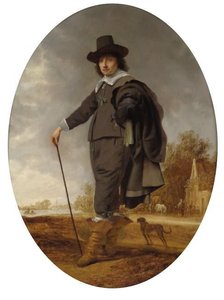
Salomon Van Ruysdael
1602 - 1670 , Holland
Lühikest infot
- Artistic Movement Or Style: Hollandi kuldajaegune maastikupaitus
- Artists Or Movements Influenced By This Artist: ['Jacob Van Ruisdael']
- Artists Who Influenced This Artist:
- Jan Porcellis
- Esaias van de Velde
- Date Of Birth: Naarden, Holland (1602)
- Date Of Death: 3. november 1670
- Full Name: Salomon van Ruysdael
- Nationality: Hollandi
- Notable Artworks:
- Jõemaastik
- Parv Gorinchemi lähedal
- Vaade Deventeri
- Place Of Birth: Naarden
Sarnased artiklid
Nicolaes Berchem: Dutch Golden Age Pastoralism & the Evolution of Landscape Painting
Explore the captivating world of Nicolaes Berchem, a leading Dutch Golden Age painter. Discover his idyllic landscapes, masterful technique & lasting influence on art history. Learn more at OriginalUniqueArt.

Golden Light & Dutch Skies: Bringing the Magic of Dutch Golden Age Landscapes into Your Home
Transform your home with the breathtaking light of Dutch Golden Age landscapes. Discover how hand-painted oil reproductions of masterworks like Ruisdael and Vermeer bring timeless elegance, atmosphere, and soulful texture to modern interiors. Elevate your space with museum-quality art.
Charles Leickert: Capturing the Dutch Golden Age Light – A Comprehensive Study of Technique, Context, and Legacy
Explore the captivating winter landscapes of Charles Leickert, a master of Dutch Golden Age light & atmosphere. Discover his techniques, symbolism, and lasting legacy – a comprehensive study for art enthusiasts and collectors.

Hollandi Kuldaja Särgas Kunstipärit: 10 Meisterteost Sinu Koduks
Sukeldu Hollandi Kuldaja kunstivorme! Avasta 10 ikoonilist meistriteost – Rembrandt, Vermeer jt. - ning nende ajatu loojatööd. Leia inspiratsiooni interjöörile ja kaunista kodu OriginalUniqueArt.com kvaliteetsete reproduktsioonidega. Uuri kollektsiooni!

Golden Light & Dutch Skies: The Timeless Magic of Dutch Golden Age Landscapes
Discover the breathtaking beauty of Dutch Golden Age landscapes. Explore the mastery of light, chiaroscuro, and 17th-century realism through an expert art history lens, celebrating the enduring legacy of the Dutch Masters for discerning collectors and art lovers.