Vaata sisu
 Jaga teost
 Jaga
Jaga
 Detailid
 Õppekate juhend

 Laadi alla
 Sarnased teosed
 Röntgenuuring
 Slaidietendus
 Statistika
Sealõpp kollase tooliga


 Loe lähemalt
Sellel lehel kuvatav kunstiteos on kaitstud autoriõigusega, mis tähendab, et meil ei ole seaduslikku õigust luua või müüa identset reproduktsiooni. Seda kaitset rakendatakse rahvusvaheliste kokkulepete alusel, nagu näiteks Berne konventsioon ning riiklike seadustega, sealhulgas nendega, mida on sätestatud USA autoriõiguse seadus – 17. peatükk.
See meetod järgib täielikult autoriõiguse reegleid, kuna see ei põhine kaitstud kunstiteose kopeerimisel või dupliteerimisel. Selle asemel on tegu loova reinterpreetatsiooniga – uue maaldisega, mis on algteosest inspireeritud, kuid ei ole sellest identiline.
Giclée / Kunstiprint
Muuseumikvaliteediga giclée- või kangasprint kiire tootmisega ja paindlikud viimistlusvõimalused. ( Telli käsitsi maalitud reproduktsioon Ülemineku digitaalse pildi müügi kanalisse)




P118B €10

P118H €10

P118W €10

P438Z €10

P508JH €12

P508YH €12

P805H €10

P805Z €10

P919BZ €10

P919G €10

P919XJ €10

P959ZH €10

P968JZ €12

W106C €8

W218G €10

W218JH €8

W218Y €10

W307PJ €10

W316G €10

W316PJ €8

W316Y €10

W398PJ €8

W4111J €10

W500HY €15

W500JH €15

W692G €12

W849H €8

W940BG €15

W953PJ €8




Vali meie eelmääratud suurused, mis vastavad teose algupärastele proportsioonidele.

Saate sisestada oma mõõdud, et need sobiks konkreetse raami või ruumi sisse. Kui valitud suurus ei vasta originaalteose proportsioonidele, lõigame teose ära või laiendame pilti peegeldatud või ühtlase servaga. Enne tootmisprotsessi algust saadetakse Teie kinnitamiseks digitaalne näidis.
Palun märka, et ekraanil kuvatav eelvaade ei kajasta tegelikku lõigamist või laiendamist. Ainult näidis kujutab täpselt lõplikku kompositsiooni.
Kuigi erimõõdu on saadaval, soovitame originaaproportsioonide säilitamiseks valida mõõt ette määratud nimekirjast.
Ülemaailmne tarne () 2 nädala jooksul, tavalise 4/5 nädala asemel. (13 oktoober)

Tasuta ekspresssaatmine üle maailma

Kõrgekvaliteediline lina-kangastest muld

Täielik transpordikindlustus

Tollimaksude tagastamise garantii

Värvitoime täpsuse garantii

100 päeva tagastusõigus (ainult defektide korral)

100% raha tagasi garantii

Hulgusoodustus
 Klaasivalik on saadaval ainult kuni 110 cm suuruses teostes

Sealõpp kollase tooliga
Giclée / Kunstiprint
Reproduktsiooni mõõtmed
-


Lõppsumma
€ 69
A Domestic Stage: Roy Lichtenstein’s ‘Interior with Yellow Chair’
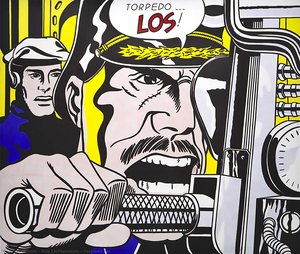
Roy Lichtenstein'i ‘Interjöör Punast Tooliga’ (1993) annab lummav vaatepuudutuse kunstniku hilisematele uurimustele kodu- ja maamärgide teemadel – teemadel, mida ta lähenes sama julge visuaalse keelemärgusega, mis määrati tema Pop Art'i puhkusemõõduks kümnete aastaid varem. Kuigi see on kohe tunnetav kui Lichtenstein, tänu oma erandilise Ben-Day’s punktidele ja tugevatele joonetele, paljastab see töö peensuse muutust keskendudes massiproduktiivsete kujundite pildi poole võrreldes rohkem mõtestatud uurimisele interjööri ja isikliku ruumi. Maal pole lihtsalt *interjöör*, see tundub kui hoolikalt ehitatud lavet, mis on täidetud objektidega, mis kõnelevad mugavusest, vaba ajast ja võib-olla natuke iroonilisest distantsist. Kaks elavat kollaseid tooli keskenduvad tähelepanu, kinnitades kompositsiooni kumbagi külge, samas kui strateegiliselt paigutatud lillekepid, mis on täidetud punaste õitsevate lilledega, lisavad orgaanilist värvi muudesse geomeetrilisesse ruumi. Seinale ülemises paremas nurgas olev teleekraan tunnustab vaikselt meedia pidevat mõju isegi kõige intimemates kohtades.Mõtted Modernismist ja Pop'i tundmustest
Lichtenstein’i kunstitekitamine oli määratud pidevatele stiilide ja mõjude rehindele. Algselt tõmbuv Abstract Expressionism, ta muutus kuulusaks Pop Art'iks juba 1960-ndatel, võttes kasutusele kujundusi sarjakirjutest ja reklaamidelt, et väljendada tavapäraseid kunstilisi väiteid. ‘Interjöör Punast Tooliga’, mille tegi hilisel perioodil, näitab seda varasemate uurimuste sünteesi koos austusega modernistlikud põhimõtted vastu. Lihtsustatud kujundused, lamedad perspektiivid ja julged värvid meenutavad kunstnike tööd nagu Piet Mondrian, samal ajal kui Ben-Day’s punktid – algselt kasutati sarjakirjastuse masinaalgoritmide jäljendamiseks – toimivad siin stiilsena, lisades tekstuuri ja visuaalset huvi. See pole mitte ainult imitatsioon; Lichtenstein muudab need elemendid midagi ainulaadset endast, luues visuaalselt äratundva kompositsiooni, mis on samas tuntav ja silmapööratav. Maal tundub olevat modernima elu kokkuvõte, filtreerituna Pop Art'i iroonilise tundmuste kaudu.Sümbolism Mõnesuguse Seisu Sises
Maalis ‘Interjöörü Punast Tooliga’ olevad objektid pole mitte ainult dekoratiivsed; neil on ka tähendus. Kollased toolid, elavad ja kutsuvad, annavad soojust ja külalviibimist, kuid nende jäik lihtsus ei tee neid liiga emotsionaalseks. Punased lillekepid, mis on traditsiooniliselt seotud passiooni ja ilu, on kujutatud graafiliselt stiilis, mis eemaldab need looduslikust esindamisest. Isegi teleekraani olemasolu annab tunda modernima elu keerukusele – lõbustav ja informatiivne, kuid ka potentsiaalselt häiriv ausama ühenduse jaoks. Põhja lillekuju lisab eluvoolu ja kasvumist, vastandudes teiste elementide valmistatud esteetile. Kokku on see hoolikalt valitud seis, mis kutsub vaatajat mõtlema sellele, mida nende igapäevaseid objekte seespool on. See tundub samal ajal sobilik ja veidi häiriv, pakkudes küsimusi meie suhte kohta kohtadele, mille me elame ja asjadele, millega me ümbereeldame.Innovatsiooni Üldsus
Lichtenstein’i mõju kunstimaailmas on kindel. Ta väljaldas tavapärased hierarhiad, segas kõrge ja madala kultuuri piire ning avas teed järjekorradest kunstnikele, kes said temast osa. ‘Interjöör Punast Tooliga’ seisab kui tunnistus tema kestvusest ja suutlikkusest pidevalt muuta oma kunstilist sõna. See esitab mitte ainult selle stiilsuste uurimuse kokkuvõtte, vaid ka modernima elu keerukust. Sellega on kohaliku ja interjööri kujundajate jaoks rohkem kui lihtsalt esteetiline atraktiivsus; see pakub vestlusstarterit, visuaalset püsivara ja kunstide võimu mõtlema ja emotsioone äratama. ‘Interjöör Punast Tooliga’ reproduktioon tuuab Pop Art'i stiili täiuslikuse mis tahes ruumi sisse, pakkudes elavat ja intellektuaalset stimuleerimist mis tahes koguduse või interjööri kujundusplaani jaoks.Küsimused ja vastused
Kas teoses „Sealõpp kollase tooliga“, autor Roy Fox Lichtenstein kasutatakse tugevaid kontraste või pehmeid harronioid?
Teose „Sealõpp kollase tooliga“, autor Roy Fox Lichtenstein väruanalüüs on tuvastatud Ütlus kontrast ja Tasakaalustatud harmonii harmoonia.
Kes on teose "Sealõpp kollase tooliga" kunstnik?
Teose "Sealõpp kollase tooliga" autoriks on mõeldud Roy Fox Lichtenstein.
Millist emotsiooni edastab Pop Art suunaga teos "Sealõpp kollase tooliga"?
Pop Art suunangu raames on teos "Sealõpp kollase tooliga" üles seabetud Pehme toonil.
Kas "Sealõpp kollase tooliga" on üks Roy Fox Lichtenstein populaarsemaid teoseid?
Teose „Sealõpp kollase tooliga“, autor Roy Fox Lichtenstein registreeritud populaarsusaste on Ikooniline.
Millist tunnet edastab „Sealõpp kollase tooliga“, autor Roy Fox Lichtenstein?
Teose „Sealõpp kollase tooliga“, autor Roy Fox Lichtenstein edastatud meeleolu on Elegantne ning selle emotsionaalne toon on Pehme.
Kes tegi teose "Sealõpp kollase tooliga" ja millal?
Roy Fox Lichtenstein loomis teose "Sealõpp kollase tooliga" aastal 1993.
Millast ajastu kuulub teos "Sealõpp kollase tooliga"?
Teose „Sealõpp kollase tooliga“, autor Roy Fox Lichtenstein ajalooline periood on Kaasaegne. See klassifikatsioon aitab teost kunstiloostikuliselt paikata.
Millissele kunstisuunale kuulub teos „Sealõpp kollase tooliga“, autor Roy Fox Lichtenstein?
"Sealõpp kollase tooliga" on Pop Art suunaga teos. See suundumine viitab kunstilisele traditsioonile, levinud osa millest teos on.
Kunstniku elulugu
The Genesis of a Pop Visionary
Roy Fox Lichtenstein, born in the vibrant metropolis of New York City on October 27, 1923, indelibly altered the landscape of twentieth-century art. Emerging as a pivotal figure within the Pop Art movement, Lichtenstein didn’t simply reflect his era; he actively interrogated it, transforming commonplace imagery into compelling artistic statements. His upbringing in an upper-middle-class Jewish family fostered both a cultural awareness and an early artistic inclination. Childhood exposure to museums and concerts, coupled with a deep appreciation for jazz music, laid the groundwork for a creative spirit that would challenge conventional notions of fine art. Though initially drawn to realistic drawing and painting during his formative years, Lichtenstein’s formal training commenced at the Art Students League in 1939 under Reginald Marsh, followed by studies at Ohio State University – interrupted briefly by wartime service in the Army. These experiences provided a robust technical foundation that would later be brilliantly re-contextualized through the lens of mass culture and commercial aesthetics. The seeds of his signature style weren’t sown within the hallowed halls of artistic tradition but rather in the often-overlooked world of everyday imagery, particularly comic books and advertising.Early Influences and Artistic Exploration
Lichtenstein's formative years were marked by a fascination with Surrealism, mirroring the dominant aesthetic currents of his time. However, this initial engagement proved transitional, propelling him toward a radical stylistic shift. A crucial encounter transpired during his tenure at Rutgers University where he connected with Allan Kaprow, whose influence rekindled Lichtenstein’s interest in proto-pop iconography. This serendipitous meeting sparked a transformative reconsideration of artistic boundaries, prompting him to question the established dichotomy between “high” and “low” art. He began venturing beyond the subjective realm of Surrealism toward the objective language of popular culture – specifically, comic books and advertising. The year 1961 witnessed a decisive breakthrough with *Look Mickey*, a work that boldly appropriated characters from Disney comics, signaling the commencement of his distinctive style. This wasn’t mere imitation; it was an act of artistic re-evaluation, elevating commonplace imagery to the stature of fine art. He didn't simply replicate comic strip scenes; he meticulously recreated them utilizing techniques mirroring commercial printing processes – a deliberate blurring of distinctions between original artwork and mass production. This appropriation wasn’t about celebrating consumerism uncritically but rather scrutinizing its pervasive dominion over American society and contesting entrenched artistic hierarchies.The Birth of Ben-Day Dots and Bold Color Palettes
Lichtenstein's artistic vocabulary swiftly gained recognition: bold, primary hues, thick black outlines, and most notably, Ben-Day dots – a technique directly borrowed from the mechanical reproduction of comic books. These dots weren’t merely decorative; they constituted integral to his conceptual framework, representing the very process of mass production and challenging the traditional emphasis on the artist's hand. His paintings frequently magnified details from comic strips to monumental scale, compelling viewers to confront the aesthetic qualities of an art form typically dismissed as trivial. Works like *Whaam!*, *Drowning Girl*, and *Oh, Jeff…I Love You, Too…But…* became emblematic representations of Pop Art, encapsulating anxieties and desires inherent in a rapidly evolving consumer culture. These weren’t simply depictions of comic book narratives; they functioned as commentaries on themes of war, romance, and societal expectations – filtered through the visual language of mass media. He aimed to liberate art from subjective expression, presenting his work as impartial reflections of American society—a mirror held up to its own manufactured reality. The deliberate flatness and absence of painterly gesture further underscored this detachment, mirroring the impersonal nature of commercial printing.Major Achievements and Artistic Legacy
Lichtenstein’s influence extended far beyond the confines of painting. His innovative utilization of commercial techniques and appropriation paved the way for subsequent generations of artists investigating themes of consumerism, media saturation, and cultural identity. The sale of *Masterpiece* in 2017 solidified his position as one of the most commercially successful American artists of all time—but his legacy transcends monetary valuation. He challenged conventional notions of artistic authorship and originality, prompting a fundamental reassessment of what constitutes “art” itself. His oeuvre continues to inspire graphic designers, illustrators, and visual artists across diverse disciplines.- Significant Contributions: Spearheaded Pop Art style; achieved international acclaim through groundbreaking exhibitions.
- Iconic Works: *Whaam!*, *Drowning Girl*, *Oh, Jeff…I Love You, Too…But…*, *Masterpiece*.
- Teaching Influence: Shaped aspiring artists at SUNY Oswego and Rutgers University.

Roy Fox Lichtenstein
1923 - 1997 , USA
Lühikest infot
- Artistic Movement Or Style: Pop Art
- Artists Who Influenced This Artist:
- Reginald Marsh
- Allan Kaprow
- Date Of Birth: October 27, 1923
- Date Of Death: September 29, 1997
- Full Name: Roy Fox Lichtenstein
- Nationality: American
- Notable Artworks:
- Whaam!
- Drowning Girl
- Oh, Jeff…I Love You, Too…But…
- Place Of Birth: New York City, USA
Sarnased artiklid

The Psychology of the Palette: Decoding Roy Lichtenstein's Bold Color Theory
Explore the psychological depth of Roy Lichtenstein's color theory. An expert analysis for art students and collectors on Ben-Day dots, primary palettes, and the intersection of Pop Art with mass media history.

Geek-Chic Interiors: The Definitive Guide to Decorating with Sophisticated Pop Culture Art
Elevate your home with our expert guide to Geek-Chic interiors. Discover how to seamlessly integrate sophisticated pop culture art and hand-painted masterpieces into luxury decor for a refined, modern aesthetic.
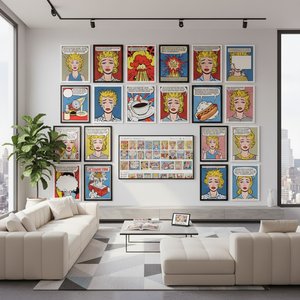
Roy Lichtensteini 25 parimat teost: popkunst ja koduseinte elegants
Avastage Roy Lichtensteini 25 parimat teost! Sukelduge popkunsti maailma, õppige maalidest ja tehnikatest. Kvaliteetsed reproduktsioonid ja interjööridisaini ideed OriginalUniqueArt.com-is. Vaadake kollektsiooni!
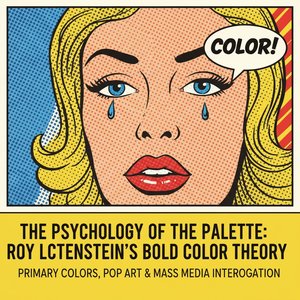
The Psychology of the Palette: Decoding Roy Lichtenstein's Bold Color Theory
Explore the profound psychological depth of Roy Lichtenstein's color theory. Discover how his use of primary colors and Ben-Day dots revolutionized modern art, transforming mass media imagery into sophisticated fine art for the discerning collector.
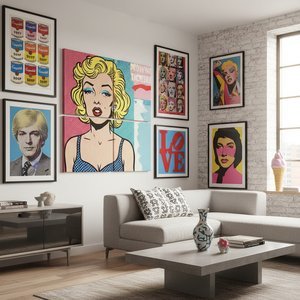
Pop Art meistriteosed: 10 ikoonilist teost, mis muutis kunsti maailma
Avastage 10 popkunstistiili ikoonilist teost Andy Warholist Roy Lichtensteini. Lugege kunstiteoste lugusid, tehnikat ja ajaloogu. Leidke oma seina jaoks täiuslik maali OriginalUniqueArt.com-is! Vaadake kollektsiooni.