Menüü
Text size

() ·

A painting made for you, by hand

Virgin and Child

Käsitsi valmistatud õlimaalireproduktsioon

Meie kunstnike poolt tellimusel valmistatud käsitsi maalitud õli-kainaste teos teie soovitud suuruses ja raamis. ( Lülita trükkitoodetele Lülita digitaalse pildi juurde)

Kogumisobjekti kirjeldus

Experience Rogier van der Weyden's 'Virgin and Child.' A masterpiece of Early Netherlandish art, showcasing tender devotion & intricate detail from the Museum of Fine Arts, Houston.

Kunstniku elulugu

Rogier van der Weyden (u 1400-1464) – varajase flamandliku kunsti meister, tuntud emotsionaalsete religioonimaalingute, rikkalike värvide ja naturalismi poolest. Vaata 'Leinamine' jt!

from ·

Chapter 1

How large should it be?

Slide to change the size; the picture on the left shows the frame at its real width. The proportions of the original are kept.

Standardne suurus
kohandatud
CM
INCH

Vali meie eelmääratud suurused, mis vastavad teose algupärastele proportsioonidele.

laius
kõrgus

Sisestage vajalik laius ja kõrgus, et teos sobiks teie raamile või seinale. Kuna tegu on käsipainatud teosega, siis erineva kujuga suuruse korral võib kunstnik jätta pildi ümber veidi rohkem marginaali või lõigata osa ära — valik on teie. Enne maali alustamist saadame teile kinnitamiseks digitaalse näidisprojektsiooni. Sellel lehel näidatud pilt ei kajasta tegelikku tulemust — seda näitab ainult näidisprojektsioon.

Chapter 2

How should it arrive?

Choose the edges of the stretched canvas

Choose your frame

Corner sample of the WhiteWrap canvas edge finish, stretched on massivpuit bars
White €1
Corner sample of the BlurSideWrap canvas edge finish, stretched on massivpuit bars
Blurside €1
Corner sample of the ExtendedWrap canvas edge finish, stretched on massivpuit bars
Extended €1
Corner sample of the P118B picture frame: vormitud polüstüreen, 5 cm wide and 3 cm thick
P118B €10
Corner sample of the P118H picture frame: vormitud polüstüreen, 5 cm wide and 3 cm thick
P118H €10
Corner sample of the P118W picture frame: vormitud polüstüreen, 5 cm wide and 3 cm thick
P118W €10
Corner sample of the P438Z picture frame: vormitud polüstüreen, 5.5 cm wide and 3.5 cm thick
P438Z €10
Corner sample of the P508JH picture frame: vormitud polüstüreen, 7 cm wide and 3.5 cm thick
P508JH €12
Corner sample of the P508YH picture frame: vormitud polüstüreen, 7 cm wide and 3.5 cm thick
P508YH €12
Corner sample of the P805H picture frame: vormitud polüstüreen, 5 cm wide and 3.5 cm thick
P805H €10
Corner sample of the P805Z picture frame: vormitud polüstüreen, 5 cm wide and 3.5 cm thick
P805Z €10
Corner sample of the P919BZ picture frame: vormitud polüstüreen, 7 cm wide and 3.5 cm thick
P919BZ €10
Corner sample of the P919G picture frame: vormitud polüstüreen, 7 cm wide and 3.5 cm thick
P919G €10
Corner sample of the P919XJ picture frame: vormitud polüstüreen, 7 cm wide and 3.5 cm thick
P919XJ €10
Corner sample of the P959ZH picture frame: vormitud polüstüreen, 5 cm wide and 3 cm thick
P959ZH €10
Corner sample of the P968JZ picture frame: vormitud polüstüreen, 6 cm wide and 4 cm thick
P968JZ €12
Corner sample of the W106C picture frame: massivpuit, 5 cm wide and 3 cm thick
W106C €8
Corner sample of the W218G picture frame: massivpuit, 5 cm wide and 3 cm thick
W218G €10
Corner sample of the W218JH picture frame: massivpuit, 5 cm wide and 3 cm thick
W218JH €8
Corner sample of the W218Y picture frame: massivpuit, 5 cm wide and 3 cm thick
W218Y €10
Corner sample of the W307PJ picture frame: massivpuit, 6 cm wide and 3 cm thick
W307PJ €10
Corner sample of the W316G picture frame: massivpuit, 6 cm wide and 3 cm thick
W316G €10
Corner sample of the W316PJ picture frame: massivpuit, 6 cm wide and 3 cm thick
W316PJ €8
Corner sample of the W316Y picture frame: massivpuit, 6 cm wide and 3 cm thick
W316Y €10
Corner sample of the W398PJ picture frame: massivpuit, 5 cm wide and 3 cm thick
W398PJ €8
Corner sample of the W4111J picture frame: massivpuit, 6.5 cm wide and 3.5 cm thick
W4111J €10
Corner sample of the W500HY picture frame: massivpuit, 7 cm wide and 5 cm thick
W500HY €15
Corner sample of the W500JH picture frame: massivpuit, 7 cm wide and 5 cm thick
W500JH €15
Corner sample of the W692G picture frame: massivpuit, 8 cm wide and 4 cm thick
W692G €12
Corner sample of the W849H picture frame: massivpuit, 5 cm wide and 3 cm thick
W849H €8
Corner sample of the W940BG picture frame: massivpuit, 7.5 cm wide and 4.5 cm thick
W940BG €15
Corner sample of the W953PJ picture frame: massivpuit, 6 cm wide and 3.5 cm thick
W953PJ €8
Corner sample of the H24-GOLD picture frame: kareeritud puit ja gesso, 10 cm wide and 6 cm thick
H24-GOLD €30
Corner sample of the H24-SILVER picture frame: kareeritud puit ja gesso, 10 cm wide and 6 cm thick
H24-SILVER €30
Corner sample of the H36-GOLD picture frame: kareeritud puit ja gesso, 15 cm wide and 6.5 cm thick
H36-GOLD €45
Corner sample of the H36-SILVER picture frame: kareeritud puit ja gesso, 15 cm wide and 6.5 cm thick
H36-SILVER €45
Raami eelvaade
Raamitud

Moulding: . Overall size with the frame: .

Chapter 3

Who paints it, and should anything change?

Examples of what can be changed: Replace face with customer photo; Add pet (e.g., replace cat with dog); Include hidden message in background; Change background landscape or elements.
After order, OriginalUniqueArt.com team will email client for instructions and provide a mockup preview

Maailmline tarne 3–4 nädala jooksul tavalise 5 nädala asemel. (29 oktoober). Kvaliteedis kompromisse ei tehta.

Chapter 4

The finishing touches

A nameplate, as in a museum?

Graveeritud pronksplaadi üksikasjad

This elegant plaque features the artist's name and the title of the artwork, finely engraved for a timeless presentation.

It is made from bronze with a refined, elegant finish. The text is precisely laser-engraved for a sharp and permanent result. Measuring 9x2 cm, the plaque is compact yet easy to read. It's built to be durable and scratch-resistant, offering a professional, museum-quality look. Mounting is simple thanks to the included adhesive backing.

Läbipaistva akrüülplaadi üksikasjad

The plaque includes essential engraved details such as the artist's name, the title of the artwork, the date it was created, the type of media used-like oil on canvas or watercolor-a brief description of the piece, and a QR code that links to the complete artwork information.

It is crafted from clear acrylic, offering a sleek, modern appearance. The text is UV-engraved in black to ensure strong visual contrast. With a size of 10x15 cm, it ensures optimal readability. It comes equipped with two metal hooks for secure wall mounting. The plaque is designed to be weather-resistant, making it suitable for various environments, and it includes interactive features that work seamlessly with smartphone scanning.

Musta akrüülplaadiรายละเอียด (Note: The user provided "Musta akrüülplaadi detailid" as the current translation and asked for an improved version. Since "Musta akrüülplaadi

This elegant plaque includes engraved information such as the artist's name, the title of the artwork, the date it was created, the type of media used (like oil on canvas or watercolor), a short description of the artwork, and a QR code for quick access to more information.

The plaque itself is made from refined black acrylic with a premium finish. The text is laser-engraved in white for high contrast and readability. Its size is 10x15 cm, designed to be easy to read. It comes with two metal hooks for professional mounting. The design is sleek and fits any interior style. It is also weather-resistant and durable, with built-in digital integration for mobile compatibility.

A protective varnish?

When do you need it?

Chapter 5

Your painting, as you ordered it

Virgin and Child

Reproduktsiooni tehnika

Reproduktsiooni suurus

-

Eelistatud tippkunstnik

Rohkem detaile, peenust ja lisatootmisaega

-

Reproduktsiooni raamivalikud

-

-

Kunstiteoste või reproduktsioonide puhul, mille üks külg on üle 105 cm (umbikmolt 41 tolli), saadetakse raam kirjal asendis, la Dismantlitud komplektina. See meetod tagab ohutuse kohaletoimetamisel ja väldib transpordil tekkivaid kahjustusi.

Vajalik professionaalne kokkupanek – see ei ole isetegevusega valmistamiseks mõeldud toode.
Komplekt tuleb kokku panna ja lõvet pingutada kogemusega professionaalse raamija, kasutades puiduliim (ei kuulu komplekti), lõvetpingi ja klempe, et hoida raami kande mustad õigena liimi kuivamisaja jooksul. Vale kokkupanek või ebaühtlane lõvetping võib kunstiteost püsivalt kahjustada ning seda ei katta meie garantii.

  • Kaasatud on kõik tahked puidust liistud, täpselt lõigatud vastavaks suuruseks.

  • Kokku panemiseks kasutatakse lisatud kruvisid ning nurkade liimamiseks vajalikku puuliima, mida ei ole komplektis ja mida peab raamivalmistaja ise hankima.

  • Vajalik on kasutada professionaalseid tööriistu, mis ei kuulu komplekti: lõvetelapide pingist (pingutaja) ja klambreid, et hoida raami puidu nurgas õigena liimi kuivamisaja jooksul.

Oluline:
Nurgaliimamiseks on vaja puiduliim, liimimine peab toimuma klempide all kuni liim on täielikult kuivanud ning kokku monteeritud raami kanga pingutamiseks on vajalik kanga pingutustang. Kumbki neist ei kuulu komplekti. Palun veenduge enne selle suuruse tellimist, et teil on saadaval kogenud professionaalne raamistaja.

Nimesildikiri

-

-

Kaitsevärnitsus

Läikiv lakk (muudab värvid elavamaks ning kaitseb valgust ja niiskust eest)

-

Kohanda oma teost

Näiteid muudatuste kohta: Asenda nägu kliendi fotoga; Lisa lemmikloom (nt asenda kass koeraga); Lisa taustale peidetud sõnum; Muuda tausta maastikku või elemente.

-

Kiire tarne

Ülemaailmne tarne riiki 3–4 nädalaga tavalise 5 nädala asemel. (29 oktoober). Kvaliteedis kompromisse ei tehta.

-

Kiirsaatmine

Ülemaailmne tarne () 5 nädala jooksul. (5 november).

Sisse kuuluv

Koguhind

€ 265

Kogu summa € 265

Klaasivalik on saadaval ainult kuni 110 cm suuruses teostes

Included with every order

  • Tasuta ekspresssaatmine üle maailma
  • Kõrgekvaliteediline lina-kangas
  • Täielik transpordikindlustus
  • Tollimaksude tagastamise garantii
  • Värvitoime täpsuse garantii
  • 100 päeva tagastusõigus (ainult valmistusdefektide korral)
  • 100% raha tagasi garantii
  • Hulgusoodustus

A Tender Embrace: Rogier van der Weyden’s “Virgin and Child”

Within the hallowed halls of the Museum of Fine Arts in Houston resides a painting that transcends mere representation, offering instead a profound meditation on motherhood, divinity, and the quiet intimacy of faith – Rogier van der Weyden's "Virgin and Child." Created around 1454-1460 during the height of the Early Netherlandish school’s artistic flourishing, this work is more than just an image; it’s a carefully constructed dialogue between artist, subject, and viewer. Van der Weyden, a master renowned for his meticulous detail and ability to imbue his scenes with palpable emotion, presents us with a tableau that speaks volumes through its subtle gestures and luminous colors.

The painting depicts the Virgin Mary cradling the Christ Child, an iconic motif in Western art yet rendered here with a remarkable freshness. The composition is deceptively simple: a woman, clearly identified as Mary by her traditional attire – a flowing blue gown and a delicate crown – holds the infant Jesus close to her breast. Yet, within this apparent stillness lies a wealth of visual information and symbolic weight. Van der Weyden’s genius lies in his ability to convey complex ideas through deceptively straightforward imagery. The scene is bathed in an ethereal light, characteristic of the Early Netherlandish style, which allowed for intricate details and vibrant colors while maintaining a sense of depth and realism. The use of oil on panel was crucial here, enabling him to build up layers of paint with incredible precision, creating textures that mimic the feel of fabric and skin.

The Language of Symbolism

Beyond its technical brilliance, “Virgin and Child” is rich in symbolism, reflecting the deeply religious context of its creation. The blue robe worn by Mary isn’t merely decorative; it's a deliberate reference to her role as the Mother of God, associating her with heaven and divine grace. The crown adorning the Christ Child symbolizes his royal status – he is, after all, the King of Kings. However, Van der Weyden doesn’t simply present these symbols in an overtly didactic manner. Instead, he integrates them seamlessly into the scene through gesture and expression. Note how Mary's gaze is directed towards her son with a profound tenderness, while the Christ Child appears to be gazing upwards with innocent curiosity – a visual representation of their mutual love and connection.

The inclusion of a small, intricately carved wooden cartouche above the scene adds another layer of complexity. These cartouches were common in Northern European art during this period, often containing inscriptions or prayers. In this case, they likely served as a devotional element, inviting viewers to contemplate the sacredness of the depicted figures. The use of trompe l'oeil – creating an illusion of three-dimensionality – further enhances the painting’s realism and draws the viewer into its world.

A Masterpiece in Context

To fully appreciate “Virgin and Child,” it’s essential to understand the historical context in which it was created. The late Middle Ages witnessed a remarkable cultural and artistic renaissance in the Low Countries, giving rise to a new generation of artists who pushed the boundaries of realism and emotional expression. Rogier van der Weyden was undoubtedly one of the leading figures of this movement, known for his incredible attention to detail and his ability to convey emotion through his paintings. He served as court painter to Philip the Good, Duke of Burgundy, a position that afforded him significant patronage and influence.

Interestingly, “Virgin and Child” is part of a series of Apostle paintings commissioned by Van der Weyden, including depictions of St. Matthew and St. Bartholomew. This suggests a deliberate effort on the artist’s part to explore themes of faith, piety, and devotion through a variety of religious subjects. The painting's meticulous detail and emotional resonance reflect the broader trends in Northern European art during this period – a shift away from the stylized representations of the Gothic era towards a more naturalistic and human-centered approach.

Reproductions: Bringing History Home

OriginalUniqueArt offers meticulously crafted, hand-painted oil painting reproductions of Rogier van der Weyden’s “Virgin and Child,” allowing art lovers to own a piece of this extraordinary masterpiece. Each reproduction is created by skilled artisans who painstakingly recreate the artist's techniques, colors, and textures, ensuring that it captures the essence of the original while retaining its own unique beauty. Measuring 31 x 22 cm, this intimate rendition invites contemplation and serves as a timeless reminder of the enduring power of art to inspire and uplift.

For those seeking to delve deeper into the life and work of Rogier van der Weyden, we encourage you to visit our dedicated page for further information. And if you’re interested in exploring other works by this master of the Early Netherlandish school, please visit our comprehensive artist database.

Korduvad küsimused

Kas ma saan näha teost „Virgin and Child“, autor Rogier Van Der Weyden erinevates valgustingimustes?

Teose „Virgin and Child“, autor Rogier Van Der Weyden röntgenvaade on saadaval selle Röntgenuuring lehel: see on interaktiivne pildi uurimine läbi üheksateist optilise kihti.

Millist atmosfääri toob „Virgin and Child“, autor Rogier Van Der Weyden sisekujundusse?

Teose „Virgin and Child“, autor Rogier Van Der Weyden meeleolu on Elegantne ning seda soovitatakse ruumides, mis on Elutuba. See meeleolu tähistab seda, mida teos ümbritsevale piirkonnale lisab.

Mis on teose "Virgin and Child" formaat ja suurus?

Teose "Virgin and Child" vorming on Vertikaalne orientatsioon ning originaali mõõdud on 31 x 22 cm. Mõlemad on kasulikud reproduktsiooni planeerimisel.

More about this painting

Eelvaade AR-eelvaade Lülita trükkitoodetele Lülita digitaalse pildi juurde Saada
Teave teose kohta Juhend Lisa lemmikutesse Laadi alla Sarnased teosed Röntgenuuring Slaidietendus Q&A Statistika

In numbers

  • 29frames to choose from
  • standard sizes, in its own proportions
  • 5weeks to paint and deliver it
Rogier Van Der Weyden

Rogier Van Der Weyden

1400 - 1464, Belgia

Quick facts about Rogier Van Der Weyden

  • Artistic Movement Or Style: Varajane Hollandi maal
  • Artists Or Movements Influenced By This Artist:
    • Itaalia renessanss
    • Hispaania maalimine
  • Artists Who Influenced This Artist:
    • Robert Campin
    • Jan van Eyck
  • Date Of Birth: u 1400 Tournai
  • Date Of Death: 1464 Brüssel
  • Full Name: Rogier van der Weyden
  • Nationality: Belgia
  • Notable Artworks:
    • St Luke Drawing the Madonna
    • Lamentation
    • Deposition
    • The Annunciation
    • Bladelin Triptych
  • Place Of Birth: Tournai, Belgia

Kunstniku elulugu

Rogeri van der Weideni: Emotsioonide Meister ja Varase Madalmaade Kunsti Põhjajalg

Rogeri van der Weiden, keda tuntakse ka Roger de la Pasture'ina, sündis umbes 1400. aastal Tournais, tänapäeva Belgias. Tema eluvarased aastad on ümbritud müsteeriumiga, kuid on teada, et ta õppis esmalt kuldsepa ametit, mis andis talle suurepärase silma detailidele ja vormile – oskused, mida ta hiljem rakendas oma maalijategevuses. 1427. aastal sai temast Tournai maalijate gildi meister, märk tunnustatud talentidest ja väärtusest. See oli oluline verstapost tema karjääris, mis avas uksi tähtsamatele tellimustele ja võimaldas tal oma kunsti arendada. 1435. aastal astus ta teenistusse Burgundia hertsogi Philips Hea juures, mis kujundas tema hilisemat elu ja loomingut oluliselt. Hertsogi õukonnas nautis Weiden mitte ainult rahalist stabiilsust, vaid ka ligipääsu eliidi ringkondadele ning võimalust näidata oma kunsti silmapaistvatele patroonidele. See periood oli kriitiline tema kunstilise visiooni arengus, kui ta hüljaski varasemate Madalmaade maalijate jäikad konventsioonid ja pöördus emotsionaalselt jõulise ning realistlikuma lähenemise poole. Ta ei maalinud lihtsalt religioosseid teemasid; ta püüdis äratada vaatajas tunde, luues kogemuse, mis ületas pelgalt vaatamise.


Varajased Teosed ja Stiili Areng

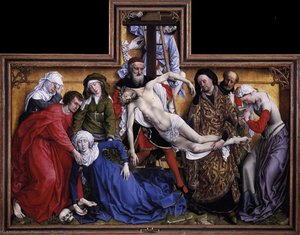
Weideni varasemad tööd näitavad juba tema ainulaadset lähenemist kunstile, kuid aja jooksul täienes ta oskuslikkus ning süvenes tema stiil. Ta oli üks esimesi maalijaid, kes hoidus põhjalikest eeljoonistustest, usaldades oma vahetut vaatlust ja käsitööd. Tema värvilahendused olid rikkad ja mitmekesised, kasutades erinevaid toone ja varjundeid, et luua sügavust ning keerukust kompositsioonis. Eriliselt silmapaistev oli tema võime kujutada inimeste tundeid – *pathos* – eriti Kristuse kannatuslugu käsitlevates teostes. Näiteks "Kristuse ristilt võtmine" (1438), mis asub Hispaania kuningliku lossi kapellis, näitab seda suurepäraselt. Kunstnik kujutas iga figuuri näol ja liigutustes erinevat valu ja kurbust, saavutades dramaatilise efekti, mida varem polnud nii selgelt täheldatud. See oli oluline samm võrreldes Jan van Eyckiga, kelle figuurid säilitasid alati rahu nii poosides kui ka hingeelu väljendustes. Weideni teosed olid sageli dramaatilised ja patneed, täis sügavat ilmekust ning meeleheitmist.

Peamised Teosed ja Pärand

Rogeri van der Weideni looming on rikas ja mitmekesine, kuid mõned teosed eristuvad oma kunstilise väärtuse poolest. "Viimase kohtupäeva" tiibaltar (1445), mis asub Beaune'i haiglas Dijoni lähedal, on üks tema suurimaid saavutusi, näidates suurepärast ruumitaju ja keerukat kompositsiooni. Tema teosed olid väga nõutud kogu Euroopas, eriti Itaalias ja Hispaanis, kus nad tutvustasid uut emotsionaalset sügavust ning naturalismi kohalikele kunstnikele. Weideni mõjutus ulatus kaugemale tema kodumaa piiride, inspireerides lugematuid kunstnikke ja kujundades lääne kunsti arengut sajanditeks. Ta aitas kindlustada õlimaalimise kui peamise tehnikat ning tõstis kunstniku staatust ühiskonnas, muutes nad oskuslikest käsitöölistest austatud loojateks. Tema pärand elab tänapäevani edasi, tuues esile tema geniaalsuse ja sügava arusaamise inimloomusest.

Mõjud ja Kunstnikud, Keda Ta Esitas

Weideni loomingule mõjutasid eelkõige varasemad Madalmaade kunstnikud nagu Robert Campin ning Jan van Eyck, kuid ta suutis luua oma ainulaadse stiili, mis eristus teistest. Tema tööd näitavad ka itaalia renessansikunsti mõju, eriti pärast tema reisi Itaaliasse aastal 1449–1450. See aegas oli märgata pehmemat selgust ning rahulikkust tema piltides. Weideni kunstnikkolleegide seas võib nimetada Hugo van der Goesi, kelle Portinari altarimaal näitab sarnaseid emotsionaalseid sügavusi ja detailset tähelepanu. Ta oli üks kolmest "suurest" varajastest flaami meistritest (koos Jan van Eyckiga ja Robert Campiniga), kes aitasid kujundada Põhja-Renessansi kunsti ning luua aluse hilisemale Euroopa kunstile.