

 Eelvaade
 Saada
Saada Jaga
Jaga
 Teave teose kohta

 Laadi alla
 Sarnased teosed
 Röntgenuuring
 Slaidietendus
Cabrita
 80.0 x 65.0 cm
 Loe lähemalt
Käsitsi valmistatud õlimaalireproduktsioon
Meie kunstnike poolt tellimusel valmistatud käsitsi maalitud õli-kainaste teos teie soovitud suuruses ja raamis. ( Osta print Osta pilt)




































Vali meie eelmääratud suurused, mis vastavad teose algupärastele proportsioonidele.

Sa võite sisestada oma mõõtmed konkreetse raami või ruumi sobivuse tagamiseks. Kui teie valitud suurus ei vasta originaalpildi proportsioonidele, siis kärvime kunstiteost või laiendame maali täiendavate käsitsi maalitud elementidega. Enne tootmise algust saadetakse teile heakskiitmiseks digitaalne eelvaade.
Palun pidage meeles, et ekraanil kuvatav eelvaade ei kajasta tegelikku kärpimist või laiendamist. Ainult eelvaade näitab täpselt lõplikku kompositsiooni.
Kuigi on saadaval kohandatud suurused, soovitame originaalproportsioonide säilimiseks valida mõõdud eelmääratletud nimekirjast.
Pärast tellimust saadab OriginalUniqueArt.com meeskond kliendile e-posti juhised ning esitab eelvaate kavandi.
Maailmline tarne 3–4 nädala jooksul tavalise 5 nädala asemel. (13 august). Kvaliteedis kompromisse ei tehta.

Tasuta ekspresssaatmine üle maailma

Kõrgekvaliteediline linakangas

Täielik transpordikindlustus

Tollimaksude tagastamise garantii

Värvitoime täpsuse garantii

60-päevane tagastusõig: ainult tootmisdefektide korral

100% raha tagasi garantii

Hulgusoodustus
 Klaasivalik on saadaval ainult suuruses kuni 110 cm

Cabrita
Reproduktsiooni tehnika
Reproduktsiooni suurus
-


Kogusumma
$ 300
Kunstniku elulugu
The Soul of Oaxaca: The Life and Vision of Rodolfo Nieto
Born amidst the vibrant, sun-drenched landscapes of Oaxaca, Mexico, in 1936, Rodolfo Nieto emerged as a profound voice within the Oaxacan School, weaving together the raw energy of his indigenous roots with the sophisticated nuances of European modernism. His early life was marked by both sudden hardship and extraordinary promise. Following the mysterious disappearance of his father, a medical epidemiologist, in 1949, Nieto’s family faced profound destitution, forcing a move to Mexico City. It was during this period of transition that a chance encounter with the dancer and professor Santos Balmori revealed the young artist's latent genius; a simple sketch of a cat served as the catalyst for a lifelong devotion to the brush and the chisel.
Nieto’s formal artistic journey began in earnest at the prestigious Escuela Nacional de Pintura, Escultura y Grabado "La Esmeralda". Under the tutelage of masters like Carlos Orozco Romero, he began to navigate the complex intersections of Mexican identity and international avant-garde movements. His early years were deeply intertwined with the giants of Mexican muralism; having apprenticed under Diego Rivera, Nieto absorbed the monumental scale and social consciousness of the era, yet he possessed an innate desire to transcend the purely didactic nature of much of the period's art. This thirst for expansion eventually led him to Paris in the early 1960s, a move that would fundamentally reshape his aesthetic language.
A Synthesis of Worlds: From Paris to the Alebrijes
In the bohemian heart of Paris, Nieto found himself immersed in a rich tapestry of intellectual and artistic exchange. He moved within circles that included literary luminaries like Julio Cortázar and fellow painters such as Severo Toledo and José Biasi. It was during this European sojourn that his work underwent a transformative metamorphosis. Working at Atelier 17 under Stanley William Hayter, he discovered the intricate possibilities of printmaking, while the haunting, emotive works of Edvard Munch ignited a deep fascination with wood engraving. This period allowed him to view his native heritage through a detached, analytical lens, stripping away the purely folkloric to find the universal spirit beneath.
The most striking achievement of Nieto’s mature style was his ability to reimagine the alebrijes—the brightly painted, hand-carved wooden creatures of Oaxacan tradition. Rather than merely replicating folk art, he synthesized these fantastical beasts with a surrealist sensibility, creating what many call his "bestiarios." His canvases became dreamscapes populated by hybrid creatures that felt both ancient and modern, blending the tactile textures of Mexican craftsmanship with the psychological depth of European Surrealism and Art Brut. This fusion created a unique visual vocabulary that spoke to the subconscious, bridging the gap between the earthly traditions of his homeland and the abstract explorations of the global art scene.
Legacy of a Tragic Master
Despite his immense talent and the significant connections he maintained across continents, Rodolfo Nieto’s life was cut tragically short in 1985. His death marked the loss of an artist who had successfully navigated the delicate balance between the local and the universal. He did not merely paint scenes; he constructed worlds where the boundaries between animal, human, and myth were perpetually blurred.
The historical significance of Nieto lies in his role as a bridge-builder. His work remains a testament to several key artistic pillars:
- Cultural Synthesis: The seamless integration of Oaxacan folk motifs with European modernism.
- Technical Versatility: Mastery across various media, including painting, lithography, and wood engraving.
- Symbolic Depth: The use of the bestiario to explore themes of identity, metamorphosis, and the subconscious.
- Artistic Lineage: Carrying forward the legacy of the Mexican School while pushing it toward a more personal, surrealist frontier.
Today, Rodolfo Nieto is remembered not just as an assistant to Rivera or a student of the Oaxacan tradition, but as a visionary who transformed the colorful legends of his childhood into a sophisticated, haunting, and eternally captivating body of work.
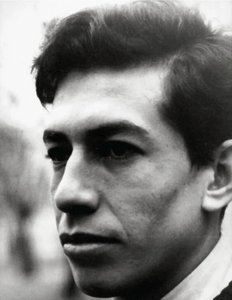
rodolfo nieto
1936 - 1985 , Mexico
Lühikesed faktid
- Artistic Movement Or Style: Oaxacan School, Surrealism
- Artists Who Influenced This Artist:
- Diego Rivera
- Edvard Munch
- Carlos Orozco Romero
- Date Of Birth: July 13, 1936
- Date Of Death: 1985
- Full Name: Rodolfo Nieto Labastida
- Nationality: Mexican
- Place Of Birth: Oaxaca, Mexico

