Vaata sisu
 Jaga teost
 Jaga
Jaga
 Detailid
 Õppekate juhend

 Laadi alla
 Sarnased teosed
 Röntgenuuring
 Slaidietendus
 Statistika
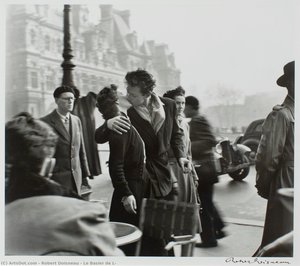
Les Amoureux de l'Opera


 Loe lähemalt
Sellel lehel kuvatav kunstiteos on kaitstud autoriõigusega, mis tähendab, et meil ei ole seaduslikku õigust luua või müüa identset reproduktsiooni. Seda kaitset rakendatakse rahvusvaheliste kokkulepete alusel, nagu näiteks Berne konventsioon ning riiklike seadustega, sealhulgas nendega, mida on sätestatud USA autoriõiguse seadus – 17. peatükk.
See meetod järgib täielikult autoriõiguse reegleid, kuna see ei põhine kaitstud kunstiteose kopeerimisel või dupliteerimisel. Selle asemel on tegu loova reinterpreetatsiooniga – uue maaldisega, mis on algteosest inspireeritud, kuid ei ole sellest identiline.
Giclée / Kunstiprint
Muuseumikvaliteediga giclée- või kangasprint kiire tootmisega ja paindlikud viimistlusvõimalused. ( Telli käsitsi maalitud reproduktsioon Ülemineku digitaalse pildi müügi kanalisse)




P118B €10

P118H €10

P118W €10

P438Z €10

P508JH €12

P508YH €12

P805H €10

P805Z €10

P919BZ €10

P919G €10

P919XJ €10

P959ZH €10

P968JZ €12

W106C €8

W218G €10

W218JH €8

W218Y €10

W307PJ €10

W316G €10

W316PJ €8

W316Y €10

W398PJ €8

W4111J €10

W500HY €15

W500JH €15

W692G €12

W849H €8

W940BG €15

W953PJ €8




Vali meie eelmääratud suurused, mis vastavad teose algupärastele proportsioonidele.

Sisestage vajalik laius ja kõrgus, et see sobiks teie raamile või seinale. Trükki saab ainult lõigata, seda ei saa kunagi pildist suuremaks teha, seega ka differentse vormiga suurus kaotab osa pildist. Enne trükkimist saadame teile kinnitamiseks digitaalse näidisprojektsiooni. Sellel lehel näidatud pilt ei kujuta reaalset lõiget — seda näitab ainult näidisprojekttsioon.
Ülemaailmne tarne () 2 nädala jooksul, tavalise 4/5 nädala asemel. (27 oktoober)

Tasuta ekspresssaatmine üle maailma

Kõrgekvaliteediline lina-kangastest muld

Täielik transpordikindlustus

Tollimaksude tagastamise garantii

Värvitoime täpsuse garantii

100 päeva tagastusõigus (ainult defektide korral)

100% raha tagasi garantii

Hulgusoodustus
 Klaasivalik on saadaval ainult kuni 110 cm suuruses teostes

Les Amoureux de l'Opera
Giclée / Kunstiprint
Reproduktsiooni mõõtmed
-


Lõppsumma
€ 70
Les Amoureux de l'Opera: Een Parijse Moment Gefrozen in Tijd
Robert Doisneau’s “Les Amoureux de l’Opera” transcended mere photographic documentation; it embodied the spirit of postwar Paris—a city grappling with optimism and melancholy, yearning for connection amidst urban anonymity. Captured in 1950, this iconic image depicts a young couple embracing on the steps of Hôtel de Ville (City Hall), bathed in diffused daylight that lends an ethereal quality to the scene.
Doisneau’s oeuvre stands as a testament to his unwavering belief in capturing the essence of human experience—often focusing on marginalized communities and portraying everyday life with remarkable sensitivity. His artistic vision aligns seamlessly with the principles of humanist realism, prioritizing truthful representation alongside empathetic understanding.
Technische Uitvoering en Stijl
The photograph’s brilliance lies in Doisneau’s masterful use of slow shutter speed—a technique known as ‘motion blur.’ This deliberate manipulation transforms movement into an artistic element, creating streaks of light that heighten the image's sense of immediacy and transient beauty. The resulting monochrome palette—ranging from deep blacks to bright whites—accentuates tonal variations and contributes to a mood of understated elegance.
Doisneau’s compositional eye demonstrates remarkable precision, utilizing a slightly low angle perspective to emphasize Hôtel de Ville’s grandeur and guiding the viewer upwards towards its imposing façade. Diagonal lines created by the staircase intersect with horizontal lines formed by the building’s walls, establishing a dynamic visual rhythm that draws attention across the frame.
Historische Context en Symboliek
Doisneau’s work emerged from a period marked by significant social change in France following World War II. He was part of a generation that embraced documentary photography as a means of portraying everyday life and capturing the emotional resonance of ordinary experiences. Doisneau's style reflects the humanist movement—a reaction against academic formalism, prioritizing human subjects truthfully and sympathetically.
"Les Amoureux de l’Opera" speaks powerfully to themes of love, intimacy, and vulnerability. The couple’s embrace symbolizes connection amidst the bustling cityscape—a poignant reminder that even in moments of isolation, human relationships endure. Doisneau's deliberate use of motion blur underscores the ephemeral nature of time and experience, inviting viewers to contemplate the beauty found within fleeting instants.
Een Iconische Erfgoed
Doisneau’s photograph has become a symbol of Parisian charm and romantic idealism. Its enduring popularity underscores its significance within the broader canon of twentieth-century art—serving as inspiration for artists and designers alike. A high-quality reproduction captures the essence of Doisneau's vision, allowing admirers to experience the beauty and emotion conveyed in this unforgettable image.
Küsimused ja vastused
Mis on soovitatav trükkimõõt teosele „Les Amoureux de l'Opera“, autor Robert Doisneau?
Teose "Les Amoureux de l'Opera" trükkimiseks on soovitatav kasutada suurust Suur. Samade proportsioonidega on saadaval ka teisi mõõtmeid.
Milline paigutus sobib teose „Les Amoureux de l'Opera“, autor Robert Doisneau formaadile?
Olles vormilt Vertikaalne orientatsioon, on teose "Les Amoureux de l'Opera" reproduktsiooni soovitatud kasutada ruumis Elutuba.
Millise riigi kunstilihubast pärineb Street Photography teos "Les Amoureux de l'Opera"?
Teose "Les Amoureux de l'Opera" on loonud France-s sündinud Robert Doisneau, tuginedes Street Photography suunale. Kunstniku päritolu seob teose Street Photography stiiliga, mida praktiseerivad France kunstnikud.
Kunstniku elulugu
A Parisian Chronicler: The Life and Legacy of Robert Doisneau
Robert Doisneau, born in Gentilly, France, in 1912, wasn’t merely a photographer; he was a visual poet of the streets, a chronicler of everyday life who captured the heart and soul of post-war Paris with an unparalleled blend of humanism, irony, and playful observation. His journey began amidst personal hardship – orphaned at a young age, raised by an unloving aunt – yet it blossomed into a career that celebrated the resilience and charm of the human spirit. Initially drawn to the technical arts, Doisneau trained in engraving and lithography at the École Estienne, skills that would later inform his compositional eye. However, it was the allure of the streets, the spontaneous narratives unfolding before him, that truly ignited his artistic passion. He began tentatively, reportedly photographing cobblestones to overcome initial shyness, gradually building confidence to capture the lives of children and adults in their natural environment.From Advertising to Artistic Vision
Doisneau’s early career was a pragmatic blend of necessity and opportunity. He navigated the world of advertising, working first as a draughtsman at Atelier Ullmann and later as a photographer for Renault. While these roles provided financial stability, they also fueled his growing interest in people and their interactions. His time at Renault, though ultimately cut short by his habitual tardiness, proved formative, exposing him to the possibilities of photography beyond mere commercial application. The late 1930s saw him join the Rapho photographic agency, a pivotal moment that allowed him to pursue street photography more seriously. This period coincided with the looming shadow of World War II, and Doisneau’s life took on another layer of complexity as he served in the French army and actively participated in the Resistance, utilizing his skills to forge documents for those fleeing persecution. It was a time of immense risk and moral responsibility, shaping his commitment to documenting the lives of ordinary people with dignity and respect.The Humanist Lens: Style and Influences
Doisneau’s photographic style is instantly recognizable – a masterful blend of candid observation, carefully composed framing, and a gentle, often ironic, perspective. He wasn't interested in grand narratives or dramatic events; instead, he found beauty and meaning in the mundane, the fleeting moments of everyday life. Influenced by masters like André Kertész, Eugène Atget, and Henri Cartier-Bresson, Doisneau developed his own unique voice, one that prioritized human connection over technical perfection. He possessed an extraordinary ability to anticipate and capture decisive moments, often with a touch of humor or whimsy. His work frequently features amusing juxtapositions, contrasting social classes, and eccentric characters, all set against the backdrop of bustling Parisian streets and cafes. Le Baiser de l'Hôtel de Ville (The Kiss by the Town Hall), his most iconic image from 1950, perfectly encapsulates this approach – a spontaneous moment of intimacy amidst the chaos of city life, an enduring symbol of love and freedom. He famously stated, “The marvels of daily life are so exciting; no movie director can arrange the unexpected that you find in the street.”A Legacy of Empathy and Observation
Throughout his career, Doisneau consistently championed the overlooked and marginalized. He had a particular fondness for children, portraying their play with seriousness and respect, recognizing their inherent dignity and freedom from adult constraints. His photographs offer a poignant glimpse into a post-war Paris rebuilding itself, grappling with social change, yet retaining its unique charm and spirit. While he briefly experimented with fashion photography for Vogue, his heart remained on the streets, capturing the authentic pulse of Parisian life. Despite receiving an invitation to join Magnum Photos from Henri Cartier-Bresson, Doisneau chose to remain with Rapho, valuing the agency’s independence and allowing him greater creative freedom. He was appointed a Chevalier (Knight) of the Legion of Honour in 1984, a testament to his significant contribution to French culture. Robert Doisneau passed away in 1994, leaving behind a vast body of work that continues to inspire and captivate audiences worldwide. His photographs are not simply records of a time and place; they are enduring celebrations of the human condition, reminding us to find beauty and meaning in the everyday moments that shape our lives.
Robert Doisneau
1922 - 1994 , France
Lühikest infot
- Full Name: Robert Doisneau
- Nationality: French
- Date Of Birth: 1922
- Date Of Death: 1994
- Place Of Birth: Gennevilliers, France
- Notable Artworks: ["Le Baiser de l'hôtel de ville"]
- Artistic Movement Or Style: Humanist photography
- Artists Who Influenced This Artist:
- André Kertész
- Eugène Atget
- Henri Cartier-Bresson
Sarnased artiklid
Shadow & Soul: Why Black & White Photography Remains the Ultimate Power Move in Modern Art
Discover why black & white photography remains a powerful force in contemporary art. Explore the impact of light, shadow, and texture through a visual journey of monochrome mastery and learn how to elevate your space with timeless grayscale aesthetics.
Timeless Shadows: The Artistry, History, and Emotional Resonance of Black and White Photography
Explore the profound artistry of black and white photography. From historical mastery to the interplay of light and shadow, discover how monochrome captures timeless emotion and form through a sophisticated lens of art history.

Monochrome Visions: Exploring the Aesthetic & Historical Significance of Black & White Photography
Explore the rich history & artistic power of black and white photography. From early techniques to iconic masters like Ansel Adams, discover why monochrome continues to captivate art lovers today. Expert insights for collectors.
Beyond Color: The Timeless Power and Artistry of Black and White Photography
Explore the profound artistry of black and white photography. From the chemistry of gelatin silver to the chiaroscuro of the Old Masters, discover how monochrome captures the eternal essence of light, form, and emotion for the discerning art collector.

White on Canvas: 10 Masterpieces & Timeless Elegance for Your Home Decor
Explore 10 iconic white paintings by Monet, Whistler & Rothko! Discover the stories behind these serene masterpieces and their impact on art history. Find museum-quality reproductions for your home decor at .