

 Vaata sisu
 Jaga teost
 Jaga
Jaga
 Detailid
 Õppekate juhend

 Laadi alla
 Sarnased teosed
 Röntgenuuring
 Slaidietendus
 Statistika
Demonstratsioonijoonised


 Loe lähemalt
Sellel lehel kuvatav kunstiteos on kaitstud autoriõigusega, mis tähendab, et meil ei ole seaduslikku õigust luua või müüa identset reproduktsiooni. Seda kaitset rakendatakse rahvusvaheliste kokkulepete alusel, nagu näiteks Berne konventsioon ning riiklike seadustega, sealhulgas nendega, mida on sätestatud USA autoriõiguse seadus – 17. peatükk.
See meetod järgib täielikult autoriõiguse reegleid, kuna see ei põhine kaitstud kunstiteose kopeerimisel või dupliteerimisel. Selle asemel on tegu loova reinterpreetatsiooniga – uue maaldisega, mis on algteosest inspireeritud, kuid ei ole sellest identiline.
Giclée / Kunstiprint
Muuseumikvaliteediga giclée- või kangasprint kiire tootmisega ja paindlikud viimistlusvõimalused. ( Telli käsitsi maalitud reproduktsioon Ülemineku digitaalse pildi müügi kanalisse)




P118B €10

P118H €10

P118W €10

P438Z €10

P508JH €12

P508YH €12

P805H €10

P805Z €10

P919BZ €10

P919G €10

P919XJ €10

P959ZH €10

P968JZ €12

W106C €8

W218G €10

W218JH €8

W218Y €10

W307PJ €10

W316G €10

W316PJ €8

W316Y €10

W398PJ €8

W4111J €10

W500HY €15

W500JH €15

W692G €12

W849H €8

W940BG €15

W953PJ €8




Vali meie eelmääratud suurused, mis vastavad teose algupärastele proportsioonidele.

Sisestage vajalik laius ja kõrgus, et see sobiks teie raamile või seinale. Trükki saab ainult lõigata, seda ei saa kunagi pildist suuremaks teha, seega ka differentse vormiga suurus kaotab osa pildist. Enne trükkimist saadame teile kinnitamiseks digitaalse näidisprojektsiooni. Sellel lehel näidatud pilt ei kujuta reaalset lõiget — seda näitab ainult näidisprojekttsioon.
Ülemaailmne tarne () 2 nädala jooksul, tavalise 4/5 nädala asemel. (26 oktoober)

Tasuta ekspresssaatmine üle maailma

Kõrgekvaliteediline lina-kangastest muld

Täielik transpordikindlustus

Tollimaksude tagastamise garantii

Värvitoime täpsuse garantii

100 päeva tagastusõigus (ainult defektide korral)

100% raha tagasi garantii

Hulgusoodustus
 Klaasivalik on saadaval ainult kuni 110 cm suuruses teostes

Demonstratsioonijoonised
Giclée / Kunstiprint
Reproduktsiooni mõõtmed
-


Lõppsumma
€ 70
Demonstration Drawings - Rirkrit Tiravanija: A Dialogue Between Art and Everyday Life
Rirkrit Tiravanija is an artist whose work distinguishes itself by prioritizing social interaction and communal engagement as core components of his creative process—a philosophy he succinctly describes as “bringing people together.” This ethos stems from a childhood marked by nomadic upbringing across Thailand, Ethiopia, and Canada, shaping his worldview and informing the very fabric of his artistic vision. He’s not merely creating images; he's crafting experiences that invite participation and foster connections between individuals and their surroundings. His artistic trajectory began with studies in history at Carleton University, yet it swiftly pivoted towards visual arts, culminating in intensive explorations at Ontario College of Art and Banff Centre School of Fine Arts before embarking on postgraduate pursuits through the School of the Art Institute of Chicago and Whitney Independent Studies Program. This multifaceted academic background undoubtedly contributed to his ability to synthesize diverse influences into a singular artistic voice—one that consistently challenges conventional notions of art’s role in society. The cornerstone of Tiravanija's oeuvre lies in installations that transcend traditional gallery spaces, transforming them into environments designed for shared activity and convivial exchange. Consider “Pad thai,” for instance – not just a dish served at an event but a carefully orchestrated ritual where participants collaboratively prepare the meal, fostering dialogue and creating a tangible connection to Thai culture. Similarly, his "Untitled (free/still)" projects explore themes of stillness and contemplation within public spaces, prompting viewers to reconsider their relationship with time and place. These endeavors aren’t about passively observing art; they're about actively participating in its creation and experiencing its transformative potential. Tiravanija’s artistic approach aligns powerfully with the principles of Relational Aesthetics, championed by artists like Nicolas Bourriaud, who argued that art should operate as a catalyst for social interaction rather than merely presenting aesthetic pleasure. This perspective is evident in his meticulous attention to detail—from selecting locally sourced ingredients for his culinary events to constructing architectural structures designed to encourage conversation and connection. He seeks to disrupt the boundaries between art and life, demonstrating that artistic expression can enrich our daily existence and contribute to a broader understanding of human experience. The artist’s exploration of symbolism is equally noteworthy. His “Tom kha soup” projects aren't simply about replicating a familiar flavor profile; they represent an invitation to engage in cultural exchange and celebrate the diversity of gastronomic traditions. Furthermore, Tiravanija’s use of architectural forms—often minimalist yet thoughtfully considered—reflects his belief that spaces can influence behavior and foster a sense of community. The deliberate arrangement of elements within these installations serves as a visual metaphor for the artist's overarching aim: to provoke reflection on how we inhabit our environment and interact with one another. Ultimately, Tiravanija’s work resonates deeply because it acknowledges the inherent human desire for connection and shared experience. He doesn’t offer answers; he poses questions—questions about identity, culture, and the role of art in shaping our perceptions of the world. By transforming mundane activities into artistic endeavors, he compels us to reconsider what constitutes “art” itself—suggesting that beauty and meaning can be found not only in grand masterpieces but also in the simplest gestures of human interaction.Küsimused ja vastused
Milline ruum sobib kokku teose „Demonstratsioonijoonised“, autor Rirkrit Tiravanija värvidega?
Olles värvipalett Neutraalsed toonid, on teos „Demonstratsioonijoonised“, autor Rirkrit Tiravanija soovitatav ruumideks Elutuba. Just needistlikud toonid on üks põhjuseid selle soovituse taga.
Kust saan osta teose „Demonstratsioonijoonised“, autor Rirkrit Tiravanija käsitsi maalatud reproduktsiooni?
Teose „Demonstratsioonijoonised“, autor Rirkrit Tiravanija käsitsi maalatud koopiaid müüakse saidil see veebileht: käsitsi maalatud õlireproduktsioon linaelapale, neid saab tellida sellelt lehelt Käsitsi maalatud reproduktsioon.
Kas teos „Demonstratsioonijoonised“, autor Rirkrit Tiravanija on värvitoonilt kerge või tumenev?
Teose "Demonstratsioonijoonised" üldine ere on kõrgema valguslahjususega ja selle luminants on Kerge luminants.
Kunstniku elulugu
The Art of Shared Experience: The Life and Vision of Rirkrit Tiravanija
To encounter the work of Rirkrit Tiravanija is to step away from the silent, sterile halls of traditional galleries and into a living, breathing space of human connection. Born in Buenos Aires, Argentina, in 1961, Tiravanija’s identity was forged through a nomadic childhood that spanned the diverse landscapes of Thailand, Ethiopia, and Canada. This global upbringing instilled in him a profound understanding of cultural fluidity and the universal language of shared existence. His artistic journey, while academically rooted in history and fine arts—spanning institutions from Carleton University to the School of the Art Institute of Chicago—eventually transcended the boundaries of the canvas and the sculpture to embrace the very essence of social interaction.
Tiravanija’s practice is famously defined by the concept of Relational Aesthetics, a term coined by curator Nicolas Bourriaud to describe art that takes as its theoretical horizon the realm of human interactions and its social context. Rather than producing static objects for passive observation, Tiravan andija creates environments that function as stages for living. His work rejects the idea of the artwork as an isolated commodity, instead prioritizing the ephemeral magic that occurs when strangers become participants in a shared moment. Through his lens, art is not something to be looked at, but something to be lived, tasted, and felt.
Breaking Bread: The Radicalism of the Everyday
The early 1990s marked a seismic shift in contemporary art with the arrival of Tiravanija’s groundbreaking installations. In his seminal work, “Pad Thai,” presented at the Paula Allen Gallery, he famously abandoned the traditional gallery object entirely. Instead of hanging paintings or placing pedestals, he transformed the exhibition space into a communal kitchen, preparing and serving Pad Thai to visitors. This audacious act of hospitality turned the gallery into a site of nourishment and dialogue, blurring the line between the artist’s labor and the audience's experience. This practice was not merely a performance but an invitation to engage with the conviviality of the everyday.
This theme of culinary connection continued through subsequent projects, such as his 1995 Carnegie International exhibition, where he provided instructions for cooking South-East Asian green curry. By utilizing familiar, domestic tasks like cooking and eating, Tiravanija strips away the pretension often associated with high art, replacing it with a sense of ritual and intimacy. His work serves as a powerful reminder that the most profound artistic experiences can be found in the simplest acts of togetherness, echoing his childhood memories of his grandmother’s garden restaurant where food was always a catalyst for community.
A Legacy of Connection and Social Dialogue
Beyond the sensory delights of shared meals, Tiravanija’s work carries a deep sociopolitical resonance. His more recent endeavors, such as his “Demonstration Drawings,” showcase a different facet of his practice—one that uses visual imagery to reflect on mass uprisings, power, and global capital. By commissioning Thai artists to translate photojournalistic images into drawings, he bridges the gap between historical documentation and contemporary social critique, proving that his commitment to "bringing people together" also extends to fostering critical awareness of the world around us.
The historical significance of Rirkrit Tiravanija lies in his ability to redefine the role of the artist from a creator of objects to a facilitator of experiences. His influence can be seen across generations of artists who seek to dismantle the walls between art and life. As he continues to work between New York, Berlin, and Chiang Mai, his practice remains an enduring testament to the power of relationality—a belief that in an increasingly fragmented world, the most radical act an artist can perform is to create a space where we might truly encounter one another.

Rirkrit Tiravanija
1961 -
Lühikest infot
- Artistic Movement Or Style: Relational Aesthetics
- Artists Or Movements Influenced By This Artist: ['Social Sculpture']
- Artists Who Influenced This Artist:
- Minimalism
- Conceptual Art
- Date Of Birth: 1961
- Full Name: Rirkrit Tiravanija
- Nationality: Thai
- Notable Artworks:
- Pad thai
- Untitled (free/still)
- Tom kha soup
- Place Of Birth: Buenos Aires, Argentina
Sarnased artiklid

The Enduring Form: Sculpture Across History, Technique & Emotional Resonance
Explore the rich history of sculpture with OriginalUniqueArt. Discover key techniques, influential artists & investment potential for discerning collectors. Expert insights into valuing and collecting timeless masterpieces.

Bronze Age to Modern Masters: 10 Sculptures That Redefined Art | OriginalUniqueArt
Journey through art history with 10 legendary bronze sculptures – from Michelangelo's David to Rodin’s Thinker. Explore the stories, techniques & timeless beauty of these masterpieces. Find museum-quality reproductions & elevate your home decor on OriginalUniqueArt.com.

The Enduring Form: Exploring Themes & Techniques in Sculpture Across Historical Periods
Explore the rich history of sculpture from ancient masterpieces to contemporary innovations. Discover key techniques, influential artists & investment potential for discerning art collectors.

Bronze Sculptures That Defined Art History | OriginalUniqueArt
Journey through art history with our Top 10 bronze sculptures! Explore masterpieces by Rodin, Michelangelo & more. Discover stories behind iconic statues and find museum-quality reproductions for your home decor at OriginalUniqueArt.com.
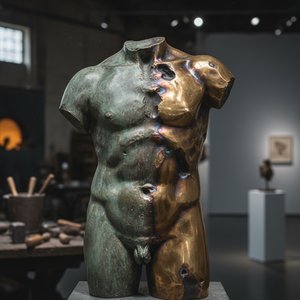
Pronksi Skulptuuride Püsiv Pärand: Ajalugu, Tehnikad ja Kaasaegsed Interpretatsioonid
Avastage pronksivalu rikkalik ajalugu ja tehnikaid! Lugege meie eksperdiartiklit pronksi skulptuuride kollektsioneerimisest, hindamisest ja kaasaegsetest interpretatsioonidest. Lisaks tutvume "Pronksivalu" muusikali taustaga.

