

 Eelvaade
 Saada
Saada Jaga
Jaga
 Teave teose kohta
 Juhend

 Laadi alla
 Sarnased teosed
 Röntgenuuring
 Slaidietendus
 Q&A
Q&A Statistika
The looking glass
 Acrylic On Canvas
- WallArt
- Surrealist Movement
 1963
1963 76.0 x 115.0 cm
 Loe lähemalt
Hankige trükiivaldatav fail, mis on kvaliteedilt palju parem kui veebilehel näidatud eelvaade. Kõik meie müüdavad digitaalsed pildid pärinevad meie arhiivist kõrge resolutsiooniga originaalfailidest — tavaliselt 5000 kuni 15 000 pikslit laiust — nii et saate julgelt trükida suurematsat, lüüdist teha või detailset sisu reproduktsiooni teha.
Meie stuudiost ei lahtu ükski fail puutumatuna. Digiekpert võrdleb värve algsest maalistimusega ja vajadusel korrigeerib neid, seejärel parandab selgust ja detaile professionaalsete retušimisvahendite abil — püüdes alati jääda truudeks kunstniku pintoonile ja stiilile. Tulemuseks on pilt, mis näeb välja nagu maali, mitte nagu filtreeritud skann.
Teet kinnituse enne lõplikku valmimist: meie ekspert saadab pildi 72 tunni jooksul e-posti ülevaatamiseks. Ei ole rahul? Paluge parandusi või korrektsioone ning kui kvaliteet ei vasta ootustele, võite paluda tagastamist.
See on kvaliteet, millele tuguvad väljaandjad, disainistuudiod, galeriid ja trükikojad.
Digitaalne kunstiteos
Laadi alla kõrge resolutsiooniga fail isiklikuks vaatamiseks, trükkimiseks ja loomingulisteks projektideks. ( Lülita trükkitoodetele Osta käsitsi maalatud teos)
Sisse kuulub iga digitaalse pildi tellimusega
Eksperdi digitaalne kohaletoimetamine, garanteeritud
Valides OriginalUniqueArt.com, ei saa sa lihtsalt pilti – saad professionaalselt parandatud digitaalse teose, mida on valmistatud täpsusega ja mis on toetatud rahuldamatusgarantiiga. Siin on kõik, mis sinu tellimusega automaatselt kaasneb:

Kiire digitaalne edastus
Teie kõrge resolutsiooniga digitaalne pildifail saadetakse teile e-posti 72 tunni jooksul pärast tellimist – kohe kasutamiseks valmis.

Tehisintellektiga täiustatud digitaalne fail
Teie teos on professionaalselt optimeeritud arenenud tehisintellekti tööriistade ja käsitsi redigeerimise abil, tagades maksimaalse detailitaseme, selguse ja värvitäpsuse.

Tasuta eluaegne uuesti saatmine
Kas kustutasid faili kogukalu unustamisel või kustutamisel? Puudub mure – saad selle uuesti igal ajal ilma lisatasuta.

Puuduvad importimaksud – alati
Nautige oma teoseid koheselt ilma tolli-, maksude või tarnimaskuludeta – digiletchargused on alati maksuvabadud.

Värvitäpsuse garantii
Me tagame, et teie digitaalne pilt kajastaks originaali värve professionaalsete tööriistade ja värvihalduse abil võimalikult täpselt.

100 päeva rahuldamatuse garantii
Kui te ei ole oma digitaalse pildi eest rahul, siis me parandame seda või tagastame 100% summast 100 päeva jooksul – küsimusteta.

100% raha tagastamise garantii
Ei ole rahul? Saate täielise tagastaja 100 päeva jooksul pärast digitaalse faili kättesaamist – ilma küsimusteta.

Suurema tellimuse soodustused
Osta 3 pilti, säästa 10% - Osta 5, säästa 15% - Osta 10+, säästa 20%. Sobib suurepäraselt loomingulisteks projektideks, galeriideks ja agentuurideks.
A Window Into Unreality: René Magritte’s “The Looking Glass”
René Magritte's "The Looking Glass," painted in 1963, isn’t merely a depiction of a window; it’s an invitation to dismantle the very foundations of perception. This deceptively simple oil on canvas—measuring a modest 76 x 115 cm—embodies the core tenets of Magritte's surrealist philosophy: a deliberate blurring of reality and representation, a playful subversion of expectations, and a profound meditation on the nature of seeing itself. The painting immediately draws the viewer in with its stark contrast – a vibrant red frame enclosing a pristine white door that opens onto an idyllic blue sky dotted with fluffy clouds. Yet, crucially, there’s no mirror within the window, no reflection to confirm what we instinctively assume is ‘real.’ This absence, this carefully constructed void, is precisely where Magritte's genius lies.
The Seeds of Surrealism: Early Trauma and Artistic Vision
Born René François Ghislain Magritte in Lessines, Belgium, in 1898, Magritte’s life was profoundly shaped by early loss. The tragic death of his mother – a haunting image of her body recovered from the River Sambre with her dress concealing her face – became a recurring motif throughout his oeuvre. This deeply personal experience instilled within him a fascination with hidden realities and the unsettling power of what remains unseen, themes that resonate powerfully in “The Looking Glass.” His artistic journey began with Impressionism, but he quickly gravitated towards the burgeoning surrealist movement, finding kindred spirits in artists like André Breton who sought to liberate art from the constraints of logic and reason. Magritte’s early training in drawing provided a solid foundation for his later explorations of form and composition, while his exposure to Cubism and Dadaism further informed his unique visual language.
Symbolic Layers: Beyond the Surface
“The Looking Glass” operates on multiple symbolic levels. The window itself represents a portal – not just to an external world, but also to the realm of imagination and the subconscious. The red frame, often associated with passion or warning, introduces an element of tension and disruption. More significantly, the open white door leading to the blue sky symbolizes possibility and escape, yet its lack of reflection highlights the impossibility of truly knowing what lies beyond our immediate perception. The clouds themselves are not merely atmospheric details; they evoke a sense of mystery and uncertainty, mirroring the elusive nature of truth. Magritte’s deliberate choice to omit any reflective surface is key – it forces us to confront the fact that our understanding of reality is always mediated by representation.
A Legacy of Illusion: Context and Influence
“The Looking Glass” was created during a period when Magritte was deeply engaged with exploring the relationship between objects and their representations, a central concern for many surrealist artists. His work stands as a significant contribution to 20th-century Western painting, aligning it within the broader context of avant-garde movements that challenged conventional notions of art and reality. The influence of Marcel Duchamp is undeniable; both artists questioned the role of the artist and the nature of artistic creation through their explorations of representation. Magritte’s meticulous technique—characterized by a precise realism combined with deliberately unsettling juxtapositions—has had a lasting impact on contemporary art, inspiring generations of artists to question the boundaries between what we see and what we believe.
A reproduction of “The Looking Glass” offers a captivating glimpse into Magritte’s visionary world. Its evocative imagery and thought-provoking symbolism make it an ideal addition to any collection or interior space, inviting contemplation and sparking dialogue about the nature of perception and reality. OriginalUniqueArt's hand-painted reproductions capture the essence of this iconic masterpiece with exceptional detail and fidelity, ensuring that its enigmatic beauty can be enjoyed for years to come.
Korduvad küsimused
Mis on originaalteose "The looking glass" mõõdud?
Originaalteose „The looking glass“, autor René Magritte mõõdud on 76 x 115 cm.
Kas teos „The looking glass“, autor René Magritte on värvitoonilt kerge või tumenev?
Teose „The looking glass“, autor René Magritte registreeritud väärtused on: eregus balanced ja luminants Gentle Luminance.
Kust leian juhendi teose "The looking glass" kohta?
Teosele „The looking glass“, autor René Magritte on saadaval Õppekasutusjuhend leht: trüvitav infoleht teose kohta, mis on loodud õpilasteks ja klassiruumis kasutamiseks.
Kunstniku elulugu
René Magritte (1898–1967): Exploring the Surrealist Landscape
René Magritte, born René François Ghislain Magritte on November 21, 1898, in Lessines, Belgium, emerged from a childhood profoundly shaped by tragedy – the untimely death of his mother when he was merely thirteen. This formative experience instilled within him an unwavering fascination with mystery, loss, and the unsettling power of what remains unseen; it would subtly permeate his artistic vision throughout his prolific career.
Early Artistic Explorations: Impressionism and Beyond
Despite initial inclinations toward Impressionism, Magritte swiftly recognized its limitations in conveying the complexities he wished to explore. He enrolled at the Académie Royale des Beaux-Arts in Brussels, seeking a more rigorous training but ultimately rejecting its formal conventions. Recognizing the influence of Giorgio de Chirico’s *The Song of Love* (1922), Magritte discovered a new aesthetic path—one where familiar landscapes could transform into dreamlike realms and commonplace objects could provoke unsettling questions about reality.
The Surrealist Breakthrough: Challenging Perception
Magritte's commitment to Surrealism solidified in 1926 with *Le Jockey Perdu*, marking his decisive departure from traditional artistic styles. Embracing the principles of automatism championed by André Breton, he sought to liberate creativity from conscious control, mirroring the broader intellectual currents of the era. His distinctive approach distinguished him from many fellow Surrealists; Magritte wasn’t interested in delving into subconscious anxieties through free association but rather in meticulously crafting visual paradoxes that disrupted viewers' perceptions.
Iconic Works and Recurring Themes: Paradoxical Imagery
Magritte’s oeuvre is characterized by a masterful manipulation of illusion and representation. *The Treachery of Images (This is not a pipe)* (1929) exemplifies his genius—a deceptively simple depiction that compels us to reconsider the relationship between image and object, mirroring the core tenets of Surrealist thought. Similarly, *Les Amants* (1927-1928), featuring shrouded figures, echoes the trauma of his mother’s death while simultaneously exploring themes of concealment and intimacy. Masterpieces like *Time Transfixed* (1938) and *The Human Condition* (1933) further demonstrate Magritte's ability to unsettle viewers with unsettling juxtapositions and visual puzzles.
Legacy and Influence: A Surrealist Pioneer
René Magritte’s artistic legacy extends far beyond the confines of Belgian art history. His pioneering exploration of Surrealism profoundly impacted subsequent generations of artists—from Pop Art luminaries like Andy Warhol to Minimalist sculptors such as Donald Judd—establishing him as a cornerstone of 20th-century visual culture. Today, his paintings reside in prestigious museum collections worldwide, including the Musées royaux des beaux-arts de Belgique and the Magritte Museum, ensuring that his visionary aesthetic continues to inspire awe and provoke contemplation for decades to come.
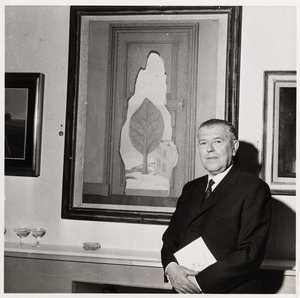
René Magritte
1898 - 1967 , Belgia
Lühikesed faktid
- Artistic Movement Or Style: Surrealism
- Artists Who Influenced This Artist: ['Giorgio de Chirico']
- Date Of Birth: November 21, 1898
- Date Of Death: August 15, 1967
- Full Name: René François Ghislain Magritte
- Nationality: Belgian
- Notable Artworks:
- Les Amants
- The Treachery of Images
- Time Transfixed
- Place Of Birth: Lessines, Belgium