Eelvaade
 Saada
Saada Jaga
Jaga
 Teave teose kohta
 Juhend

 Laadi alla
 Sarnased teosed
 Röntgenuuring
 Slaidietendus
 KÜSIMUSED JA VASTUSID
 Statistika
Le Beau Monde


 Loe lähemalt
Sellel lehel kuvatav kunstiteos on kaitstud autoriõigusega, mis tähendab, et meil ei ole seaduslikku õigust luua või müüa identset reproduktsiooni. Seda kaitset rakendatakse rahvusvaheliste kokkulepete alusel, nagu näiteks Berne konventsioon ning riiklike seadustega, sealhulgas nendega, mida on sätestatud USA autoriõiguse seadus – 17. peatükk.
See meetod järgib täielikult autoriõiguse reegleid, kuna see ei põhine kaitstud kunstiteose kopeerimisel või dupliteerimisel. Selle asemel on tegu loova reinterpreetatsiooniga – uue maaldisega, mis on algteosest inspireeritud, kuid ei ole sellest identiline.
Giclée / Kunstiprint
Muuseumikvaliteediga giclée- või kangasprint kiire tootmisega ja paindlikud viimistlusvõimalused. ( Osta käsitsi maalatud teos Lülita digitaalse pildi juurde)




P118B €10

P118H €10

P118W €10

P438Z €10

P508JH €12

P508YH €12

P805H €10

P805Z €10

P919BZ €10

P919G €10

P919XJ €10

P959ZH €10

P968JZ €12

W106C €8

W218G €10

W218JH €8

W218Y €10

W307PJ €10

W316G €10

W316PJ €8

W316Y €10

W398PJ €8

W4111J €10

W500HY €15

W500JH €15

W692G €12

W849H €8

W940BG €15

W953PJ €8




Vali meie eelmääratud suurused, mis vastavad teose algupärastele proportsioonidele.

Sisestage vajalik laius ja kõrgus, et see sobiks teie raamile või seinale. Trükki saab ainult lõigata, seda ei saa kunagi pildist suuremaks teha, seega ka erineva mustega suurus kaotab osa pildist. Enne trükkimist saadame teile kinnitamiseks digitaalse näidisprojektsiooni. Sellel lehel näidatud pilt ei kujuta reaalset lõiget — seda näitab ainult näidisprojektsioon.
Ülemaailmne tarne () 2 nädala jooksul, tavalise 4/5 nädala asemel. (7 november)

Tasuta ekspresssaatmine üle maailma

Kõrgekvaliteediline lina-kangas

Täielik transpordikindlustus

Tollimaksude tagastamise garantii

Värvitoime täpsuse garantii

100 päeva tagastusõigus (ainult valmistusdefektide korral)

100% raha tagasi garantii

Hulgusoodustus
 Klaasivalik on saadaval ainult kuni 110 cm suuruses teostes

Le Beau Monde
Giclée / Kunstiprint
Reproduktsiooni suurus
-


Koguhind
€ 72
Le Beau Monde: A Surrealist Reverie by René Magritte
Le Beau Monde (“The Beautiful World”) is a quintessential example of René Magritte’s signature surrealist style, inviting viewers into a world where the familiar becomes unsettlingly strange. Painted sometime during his prolific career, this work encapsulates Magritte's lifelong exploration of perception, reality, and the power of representation.Subject & Composition
The painting presents an impossible scene: a large, rectangular prism seemingly suspended in a cloud-filled sky. Draped with vibrant blue curtains – suggesting an interior space inexplicably existing outdoors – the prism dominates the composition. Below, on a flat plane that could be land or simply another surface, rests a single green apple and a small plant. This juxtaposition of elements—the architectural form against the natural world, the indoor versus outdoor—creates a deliberate sense of disorientation. The verticality of the prism and curtains is powerfully contrasted by the expansive horizontality of the sky and ground plane, drawing the eye upwards while simultaneously grounding it with the earthly objects below.Style & Technique
Magritte masterfully employs a realistic technique to depict utterly unrealistic scenarios. His brushwork is meticulous, rendering each element – from the texture of the clouds to the sheen on the apple – with precise detail. This hyperrealism amplifies the surreal effect; by presenting illogical combinations with such clarity, Magritte forces us to question what we see and how we interpret it. The painting’s style firmly places it within the Surrealist movement, which sought to unlock the creative potential of the unconscious mind.Historical Context & Influences
Born in Belgium in 1898, René Magritte initially experimented with Impressionism and Futurism before fully embracing Surrealism in the 1920s. He was deeply influenced by the writings of Sigmund Freud and sought to visually represent the illogicality and dreamlike quality of the subconscious. Unlike some Surrealists who embraced automatism (spontaneous creation), Magritte favored a more calculated approach, carefully constructing his images with precise symbolism. His work emerged during a period of significant social and political upheaval, reflecting a broader sense of uncertainty and disillusionment following World War I.Symbolism & Interpretation
The symbolism in Le Beau Monde is deliberately ambiguous, inviting multiple interpretations. The prism could represent the constraints of human perception or the artificial structures we impose on reality. The curtains hint at concealment and illusion – what lies *behind* the perceived world? The apple, a recurring motif in Magritte’s work, often symbolizes temptation, knowledge, or simply the everyday object elevated to symbolic significance. The overall effect is one of quiet mystery, prompting viewers to contemplate the nature of reality itself.Emotional Impact & Aesthetic Appeal
Le Beau Monde evokes a sense of both wonder and unease. The dreamlike quality of the painting creates a captivating atmosphere, while its inherent illogicality challenges our expectations. Its restrained color palette – blues, greens, and soft whites – contributes to the overall mood of serenity tinged with melancholy. This artwork is not merely a visual experience; it’s an invitation to philosophical contemplation.Collecting & Interior Design
A reproduction of Le Beau Monde would be a striking addition to any art collection or interior space. Its surrealist aesthetic lends itself well to modern and contemporary settings, adding a touch of intellectual sophistication and visual intrigue. The painting’s cool color palette complements minimalist décor while providing a captivating focal point. It's an ideal piece for those seeking artwork that sparks conversation and encourages deeper thought.Korduvad küsimused
Kas teose „Le Beau Monde“, autor René Magritte värvid on kütkestatud või pehmed?
Teose "Le Beau Monde" värvipalett on koonuse方面 Subtle Color.
Kuidas teos "Le Beau Monde" sobitub artisti René Magritte teemade ja stiiliga?
"Le Beau Monde" kuulub René Magritte Surrealism perioodi teosetele, mille tuntud teemad hõlmavad duchamp's readymades, magical realism", symbolist imagery, questioning perception, existential themes, "recurr, exploration of the mind.
Millist ruumi on „Le Beau Monde“, autor René Magritte jaoks soovitatav?
Teose "Le Beau Monde" reproduktsioon sobib hästi Living Room-i.
Kunstniku elulugu
René Magritte (1898–1967): Exploring the Surrealist Landscape
René Magritte, born René François Ghislain Magritte on November 21, 1898, in Lessines, Belgium, emerged from a childhood profoundly shaped by tragedy – the untimely death of his mother when he was merely thirteen. This formative experience instilled within him an unwavering fascination with mystery, loss, and the unsettling power of what remains unseen; it would subtly permeate his artistic vision throughout his prolific career.
Early Artistic Explorations: Impressionism and Beyond
Despite initial inclinations toward Impressionism, Magritte swiftly recognized its limitations in conveying the complexities he wished to explore. He enrolled at the Académie Royale des Beaux-Arts in Brussels, seeking a more rigorous training but ultimately rejecting its formal conventions. Recognizing the influence of Giorgio de Chirico’s *The Song of Love* (1922), Magritte discovered a new aesthetic path—one where familiar landscapes could transform into dreamlike realms and commonplace objects could provoke unsettling questions about reality.
The Surrealist Breakthrough: Challenging Perception
Magritte's commitment to Surrealism solidified in 1926 with *Le Jockey Perdu*, marking his decisive departure from traditional artistic styles. Embracing the principles of automatism championed by André Breton, he sought to liberate creativity from conscious control, mirroring the broader intellectual currents of the era. His distinctive approach distinguished him from many fellow Surrealists; Magritte wasn’t interested in delving into subconscious anxieties through free association but rather in meticulously crafting visual paradoxes that disrupted viewers' perceptions.
Iconic Works and Recurring Themes: Paradoxical Imagery
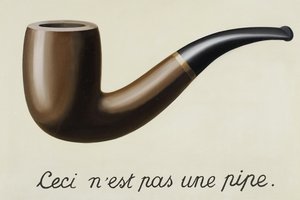
Magritte’s oeuvre is characterized by a masterful manipulation of illusion and representation. *The Treachery of Images (This is not a pipe)* (1929) exemplifies his genius—a deceptively simple depiction that compels us to reconsider the relationship between image and object, mirroring the core tenets of Surrealist thought. Similarly, *Les Amants* (1927-1928), featuring shrouded figures, echoes the trauma of his mother’s death while simultaneously exploring themes of concealment and intimacy. Masterpieces like *Time Transfixed* (1938) and *The Human Condition* (1933) further demonstrate Magritte's ability to unsettle viewers with unsettling juxtapositions and visual puzzles.
Legacy and Influence: A Surrealist Pioneer
René Magritte’s artistic legacy extends far beyond the confines of Belgian art history. His pioneering exploration of Surrealism profoundly impacted subsequent generations of artists—from Pop Art luminaries like Andy Warhol to Minimalist sculptors such as Donald Judd—establishing him as a cornerstone of 20th-century visual culture. Today, his paintings reside in prestigious museum collections worldwide, including the Musées royaux des beaux-arts de Belgique and the Magritte Museum, ensuring that his visionary aesthetic continues to inspire awe and provoke contemplation for decades to come.
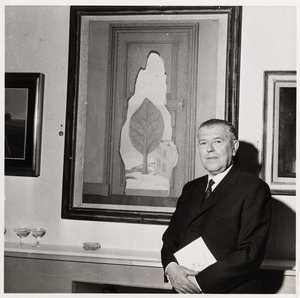
René Magritte
1898 - 1967 , Belgia
Lühikest infot
- Artistic Movement Or Style: Surrealism
- Artists Who Influenced This Artist: ['Giorgio de Chirico']
- Date Of Birth: November 21, 1898
- Date Of Death: August 15, 1967
- Full Name: René François Ghislain Magritte
- Nationality: Belgian
- Notable Artworks:
- Les Amants
- The Treachery of Images
- Time Transfixed
- Place Of Birth: Lessines, Belgium
Sarnased artiklid

The Treachery of Images: Decoding René Magritte’s Surrealist Vision and the Paradox of Representation
Delve into the profound mysteries of René Magritte’s Surrealism. Explore an expert analysis of 'The Treachery of Images,' decoding the philosophical paradoxes and visual subversions that redefined modern art history for collectors and connoisseurs alike.

Serene Blue Backgrounds: Discover Soulful Art to Transform Your Space with Timeless Elegance
Transform your home with soulful blue art. From serene Monet impressions to modern textured sculptures, discover curated masterpieces designed to inspire calm. Explore expert art consultations and bespoke hand-painted reproductions to create your personal sanctuary.
The Treachery of Images: Decoding René Magritte’s Surrealist Philosophy and the Paradox of Representation
Explore the profound mystery of René Magritte’s 'The Treachery of Images.' Dive into an expert analysis of his Surrealist philosophy, the paradox of representation, and how he challenged reality through the interplay of language and visual perception.

Slate Blue Masterpieces: 10 Iconic Paintings & Timeless Home Decor Ideas
Immerse yourself in the captivating world of slate blue! Explore 10 iconic paintings by Monet, Van Gogh & Renoir. Discover their stories, techniques & find museum-quality art reproductions for your home at .

The Allure of Azure: Exploring the Symbolic & Aesthetic Depths of Blue in Art History
Explore the rich history of blue in art! Discover its symbolism, from ancient pigments to modern masterpieces by Kandinsky & Seurat. Uncover the psychological impact and cultural meanings behind this captivating hue.