Eelvaade
 Saada
Saada Jaga
Jaga
 Teave teose kohta

 Laadi alla
 Sarnased teosed
 Röntgenuuring
 Slaidietendus
 Statistika
Composition with locomotive


 Loe lähemalt
Giclée / Kunstiprint
Muuseumikvaliteediga giclée- või kangasprint kiire tootmisega ja paindlikud viimistlusvõimalused. ( Osta käsitsi maalitud maal Ülemineks digitaalse pildiga müügi kanalisse)




P118B $10

P118H $10

P118W $10

P438Z $10

P508JH $12

P508YH $12

P805H $10

P805Z $10

P919BZ $10

P919G $10

P919XJ $10

P959ZH $10

P968JZ $12

W106C $8

W218G $10

W218JH $8

W218Y $10

W307PJ $10

W316G $10

W316PJ $8

W316Y $10

W398PJ $8

W4111J $10

W500HY $15

W500JH $15

W692G $12

W849H $8

W940BG $15

W953PJ $8




Vali meie eelmääratud suurused, mis vastavad teose algupärastele proportsioonidele.

Saate sisestada oma mõõdud, et need sobiks konkreetse raami või ruumi sisse. Kui valitud suurus ei vasta originaalteose proportsioonidele, lõigame teose ära või laiendame pilti peegeldatud või ühtlase servaga. Enne tootmisprotsessi algust saadetakse Teie kinnitamiseks digitaalne näidis.
Palun märka, et ekraanil kuvatav eelvaade ei kajasta tegelikku lõigamist või laiendamist. Ainult näidis kujutab täpselt lõplikku kompositsiooni.
Kuigi erimõõdu on saadaval, soovitame originaaproportsioonide säilitamiseks valida mõõt ette määratud nimekirjast.
Ülemaailmne tarne () 2 nädala jooksul, tavalise 4/5 nädala asemel. (11 september)

Tasuta ekspresssaatmine üle maailma

Kõrgekvaliteediline linakangas

Täielik transpordikindlustus

Tollimaksude tagastamise garantii

Värvitoime täpsuse garantii

100 päeva tagastusõigus (ainult tootmisdefektide korral)

100% raha tagasi garantii

Hulgusoodustus
 Klaasivalik on saadaval ainult suuruses kuni 110 cm

Composition with locomotive
Giclée / Kunstiprint
Reproduktsiooni suurus
-


Kogusumma
$ 80
René Magritte’s “Composition with Locomotive”: A Dream of Industrial Reality
René Magritte's "Composition with Locomotive," painted in 1923, isn’t merely a depiction of a train; it’s an invitation to question the very nature of perception and representation. This iconic work, housed within the Winterbotham Collection at the Art Institute of Chicago, exemplifies Magritte’s unique brand of surrealism – a deliberate disruption of familiar realities that compels viewers to actively engage with the artwork and their own assumptions about what they see.
The painting immediately draws the eye with its stark geometric composition. Bold, angular lines delineate planes of color—primarily shades of brown, grey, blue, white, and black—creating a fragmented cityscape or interior space. The locomotive itself is rendered in simplified forms, almost as if constructed from basic shapes rather than faithfully representing a specific machine. This abstraction isn’t arbitrary; it reflects Magritte's fascination with deconstructing objects to reveal their underlying structure and challenging the viewer’s ability to easily recognize familiar subjects. The influence of Cubism, particularly its emphasis on flattened perspective and multiple viewpoints, is undeniable, yet Magritte transcends mere imitation, imbuing these techniques with a distinctly personal and unsettling quality.
A Dialogue Between Industrial and Domestic
What makes “Composition with Locomotive” so compelling isn’t just the formal arrangement but also the subtle interplay of contrasting elements. The industrial power of the train—symbolic of modernity, progress, and perhaps even alienation—is juxtaposed against the domesticity of a fireplace. The billowing smoke from the locomotive is cleverly integrated with the plumes rising from the chimney, creating a visual metaphor for connection and shared experience. This pairing suggests that even seemingly disparate elements can be linked through abstract associations, prompting viewers to consider how our minds construct meaning from seemingly unrelated sensory information.
Magritte’s choice of color palette further enhances this duality. The cool blues and greys of the locomotive contrast sharply with the warmer browns and blacks of the fireplace, creating a visual tension that mirrors the conceptual one. The limited range of colors contributes to the painting's overall sense of stillness and contemplation, inviting viewers to linger and decipher the hidden connections within the composition.
Roots in Futurism and Surrealist Exploration
To fully appreciate “Composition with Locomotive,” it’s crucial to understand Magritte’s artistic journey. Early influences included Impressionism and Cubism, but a pivotal moment arrived in 1916 when he encountered the work of Italian futurists like Gino Severini. The dynamism and rhythmic energy of Futurist painting—particularly their use of lines and color to convey movement—resonated deeply with Magritte’s own desire to break free from traditional representational conventions. He described this encounter as a revelation, stating that it opened his eyes to “thought for the first time.”
Magritte's engagement with Surrealism, spearheaded by André Breton, provided him with a framework for exploring the subconscious and challenging rational thought. However, Magritte’s surrealism wasn’t driven by dreamlike imagery or irrationality in the traditional sense. Instead, he sought to expose the inherent strangeness of everyday reality—to reveal the “hidden” aspects of our perception that we often overlook. “La duree poignadee,” as it was known at the time, exemplifies this approach, presenting a familiar scene (a train and a fireplace) in an arrangement that defies immediate comprehension.
A Legacy of Ambiguity and Intrigue
“Composition with Locomotive” remains one of Magritte’s most enduringly enigmatic works. It's not a painting that offers easy answers or straightforward narratives; rather, it invites viewers to engage in a process of active interpretation. The ambiguity inherent in the composition—the blurred boundaries between industrial and domestic, reality and representation—is precisely what makes the painting so captivating. It’s a testament to Magritte’s genius that he could create an artwork that simultaneously challenges our assumptions about the world and invites us to contemplate the mysteries of perception itself.
Reproductions of this piece offer a remarkable opportunity to bring this surreal vision into your own space, allowing you to experience the same sense of wonder and contemplation that Magritte intended. Its geometric precision and evocative color palette make it a striking addition to any collection, sparking conversation and inviting viewers to question the familiar.
Kunstniku elulugu
René Magritte (1898–1967): Exploring the Surrealist Landscape
René Magritte, born René François Ghislain Magritte on November 21, 1898, in Lessines, Belgium, emerged from a childhood profoundly shaped by tragedy – the untimely death of his mother when he was merely thirteen. This formative experience instilled within him an unwavering fascination with mystery, loss, and the unsettling power of what remains unseen; it would subtly permeate his artistic vision throughout his prolific career.
Early Artistic Explorations: Impressionism and Beyond
Despite initial inclinations toward Impressionism, Magritte swiftly recognized its limitations in conveying the complexities he wished to explore. He enrolled at the Académie Royale des Beaux-Arts in Brussels, seeking a more rigorous training but ultimately rejecting its formal conventions. Recognizing the influence of Giorgio de Chirico’s *The Song of Love* (1922), Magritte discovered a new aesthetic path—one where familiar landscapes could transform into dreamlike realms and commonplace objects could provoke unsettling questions about reality.
The Surrealist Breakthrough: Challenging Perception
Magritte's commitment to Surrealism solidified in 1926 with *Le Jockey Perdu*, marking his decisive departure from traditional artistic styles. Embracing the principles of automatism championed by André Breton, he sought to liberate creativity from conscious control, mirroring the broader intellectual currents of the era. His distinctive approach distinguished him from many fellow Surrealists; Magritte wasn’t interested in delving into subconscious anxieties through free association but rather in meticulously crafting visual paradoxes that disrupted viewers' perceptions.
Iconic Works and Recurring Themes: Paradoxical Imagery
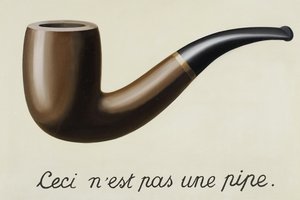
Magritte’s oeuvre is characterized by a masterful manipulation of illusion and representation. *The Treachery of Images (This is not a pipe)* (1929) exemplifies his genius—a deceptively simple depiction that compels us to reconsider the relationship between image and object, mirroring the core tenets of Surrealist thought. Similarly, *Les Amants* (1927-1928), featuring shrouded figures, echoes the trauma of his mother’s death while simultaneously exploring themes of concealment and intimacy. Masterpieces like *Time Transfixed* (1938) and *The Human Condition* (1933) further demonstrate Magritte's ability to unsettle viewers with unsettling juxtapositions and visual puzzles.
Legacy and Influence: A Surrealist Pioneer
René Magritte’s artistic legacy extends far beyond the confines of Belgian art history. His pioneering exploration of Surrealism profoundly impacted subsequent generations of artists—from Pop Art luminaries like Andy Warhol to Minimalist sculptors such as Donald Judd—establishing him as a cornerstone of 20th-century visual culture. Today, his paintings reside in prestigious museum collections worldwide, including the Musées royaux des beaux-arts de Belgique and the Magritte Museum, ensuring that his visionary aesthetic continues to inspire awe and provoke contemplation for decades to come.
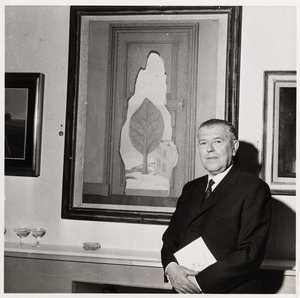
René Magritte
1898 - 1967 , Belgia
Lühikesed faktid
- Artistic Movement Or Style: Surrealism
- Artists Who Influenced This Artist: ['Giorgio de Chirico']
- Date Of Birth: November 21, 1898
- Date Of Death: August 15, 1967
- Full Name: René François Ghislain Magritte
- Nationality: Belgian
- Notable Artworks:
- Les Amants
- The Treachery of Images
- Time Transfixed
- Place Of Birth: Lessines, Belgium
Seotud artiklid

Cubist Expressionism: The Profound Intersection of Geometric Structure and Raw Emotion
Discover the profound intersection of geometry and emotion in Cubist Expressionism. Explore art history through our expert analysis of modern masters and find museum-quality, hand-painted oil reproductions of iconic masterpieces for your collection.

Geomeetrilise Abstraktsiooni 10 Meisterteost: Kunst ja Kodukaunistus OriginalUniqueArt.com-is
Avastage geomeetrilise abstraktsiooni 10 suurteost – Kandinsky, Mondrian ja teised. Lugege kunstiteoste lugusid ning leidke inspiratsiooni kodukaunistuseks OriginalUniqueArt.com-is! Kunstikollektsioon ja reprodutsioonid.

Kandinsky's Masterpieces: 25 Paintings That Define Abstract Art | OriginalUniqueArt
Journey through Wassily Kandinsky's 25 most iconic abstract paintings. Explore his revolutionary use of color, form & spiritual expressionism. Find museum-quality Kandinsky reproductions and elevate your home decor with OriginalUniqueArt.com. Discover all masterpieces on OriginalUniqueArt.com!

Beyond Form & Color: Geometric Abstraction's Evolution in 20th/21st Century Art
Explore the evolution of geometric abstraction from Cubism to contemporary art. Discover key artists like Malevich & Mondrian, investment insights, and expert collecting advice at OriginalUniqueArt.

Neo-Abstract Art: The High-Impact Evolution of Modern Visual Energy and Geometric Sophistication
Discover the power of Neo-Abstract art. Explore how bold geometric forms and high-impact visual energy are redefining modern design. Learn to curate sophisticated, high-energy spaces with the latest trends in contemporary abstraction and structural color.