- Avaleht

- Trükk lõendile
- Raymond James Coxon
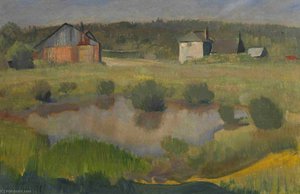
- Dewpond, Surrey

 Preview
 Tellimaks maali Osta digipilt
 Saada
Saada
 Jaga
Jaga
 Teave teose kohta
 Lisa lemmikutesse

 Laadi alla
 Sarnased teosed
 Röntgenuuring
 Slaidietendus
Dewpond, Surrey


 Loe lähemalt
Giclée / Kunstiprint
Muuseumikvaliteediga giclée- või kangasprint kiire tootmisega ja paindlikud viimistlusvõimalused.




P118B $10

P118H $10

P118W $10

P438Z $10

P508JH $12

P508YH $12

P805H $10

P805Z $10

P919BZ $10

P919G $10

P919XJ $10

P959ZH $10

P968JZ $12

W106C $8

W218G $10

W218JH $8

W218Y $10

W307PJ $10

W316G $10

W316PJ $8

W316Y $10

W398PJ $8

W4111J $10

W500HY $15

W500JH $15

W692G $12

W849H $8

W940BG $15

W953PJ $8




Vali meie eelmääratud suurused, mis vastavad teose algupärastele proportsioonidele.

Saate sisestada oma mõõdud, et need sobiks konkreetse raami või ruumi sisse. Kui valitud suurus ei vasta originaalteose proportsioonidele, lõigame teose ära või laiendame pilti peegeldatud või ühtlase servaga. Enne tootmisprotsessi algust saadetakse Teie kinnitamiseks digitaalne näidis.
Palun märka, et ekraanil kuvatav eelvaade ei kajasta tegelikku lõigamist või laiendamist. Ainult näidis kujutab täpselt lõplikku kompositsiooni.
Kuigi erimõõdu on saadaval, soovitame originaaproportsioonide säilitamiseks valida mõõt ette määratud nimekirjast.
Ülemaailmne tarne () 2 nädala jooksul, tavalise 4/5 nädala asemel. (26 juuli)

Tasuta ekspresssaatmine üle maailma

Kõrgekvaliteediline linakangas

Täielik transpordikindlustus

Tollimaksude tagastamise garantii

Värvitoime täpsuse garantii

60-päevane tagastusõig: ainult tootmisdefektide korral

100% raha tagasi garantii

Hulgusoodustus
 Klaasivalik on saadaval ainult suuruses kuni 110 cm

Dewpond, Surrey
Giclée / Kunstiprint
Reproduktsiooni suurus
-


Kogusumma
-
Kogumuse kirjeldus
A Rural Scene
The painting depicts a rural scene with a farmhouse surrounded by a field of grass. The house is located near a pond, which adds to the serene atmosphere of the countryside. There are several trees in the background, further enhancing the natural setting. A barn can be seen close to the house, and a car is parked nearby. This peaceful scene is reminiscent of other works by Raymond James Coxon, such as Midday and Grassington, which can be found on OriginalUniqueArt.com and OriginalUniqueArt.com.Artist's Style
Raymond James Coxon was a British artist known for his landscape and portrait paintings, as well as his abstract works. His style is characterized by the use of bright colors and bold brushstrokes, which give his paintings a sense of energy and movement. In Dewpond, Surrey, the artist's use of soft colors and delicate brushstrokes creates a sense of calmness and serenity.- Raymond James Coxon was born on August 18, 1896, and died on January 31, 1997.
- He enrolled at the Leeds School of Art and the Royal College of Art.
- His work can be found in various museums, including The Courtauld Gallery and Robinson College.
The beauty of Dewpond, Surrey lies in its ability to transport the viewer to a peaceful and serene world. The painting is a testament to the artist's skill and his ability to capture the essence of rural life. As seen on OriginalUniqueArt.com, Raymond James Coxon's work continues to inspire and captivate art lovers around the world.
Kunstniku elulugu
A Century of Vision: The Life and Legacy of Raymond James Coxon
The history of twentieth-century British art is often told through the lens of sudden movements and radical shifts, yet few lives embody the enduring spirit of artistic evolution as profoundly as that of Raymond James Coxon. Born in Hanley, Staffordshire, in 1896, Coxon’s journey was one of remarkable longevity and stylistic breadth, spanning nearly a full century of creative exploration. His life was shaped by the tumultuous tides of history, from the harrowing experiences of the Great War to the quiet, contemplative moments of post-war reconstruction. This vast temporal canvas allowed him to witness—and participate in—the transformation of the British aesthetic landscape, moving from the rigorous classical foundations of his youth toward a more nuanced and experimental modernism.
Coxon’s artistic identity was forged in the prestigious halls of the Leeds School of Art and the Royal College of Art. It was during these formative years that he developed a deep-seated respect for technical mastery, a trait nurtured under the guidance of influential figures such as Sir William Rothenstein. His early academic achievements were nothing short of ambitious; his diploma submission, a monumental mural inspired by Masaccio’s Expulsion from Paradise, revealed a young artist capable of grappling with grand, classical narratives and complex human emotion. This period was also marked by significant social connections, most notably a friendship with the legendary sculptor Henry Moore, which placed Coxon within a vibrant circle of artists who would redefine the boundaries of British sculpture and painting.
From the Battlefield to the Canvas
The trajectory of Coxon’s career was irrevocately altered by his service in the Machine Gun Corps during World War I. While the conflict brought immense hardship, it also provided a unique, visceral perspective that would forever inform his observational skills. Serving within the cavalry section, Coxon utilized watercolor miniatures to document the fleeting, often brutal realities of the front lines. These small-scale works served as intimate windows into a world in chaos, demanding a precision and an ability to capture atmosphere that would later become hallmarks of his broader repertoire. This period of documentation instilled in him a profound sense of the importance of the "moment"—the ability to freeze time through the tip of a brush.
As the decades progressed, Coxon’s work began to reflect a fascinating departure from purely representational forms. While he remained deeply rooted in the traditions of landscape and portraiture, there was an unmistakable pull toward abstraction. His landscapes, such as the evocative Dewpond, Surrey, demonstrate a masterful command over light and topography, yet they also hint at a deeper, more structural understanding of the natural world. Similarly, his portraits, exemplified by the elegant Model Resting, showcase a sophisticated use of tone and form to convey character and presence, blending the classical discipline of his training with a modern sensibility for texture and space.
An Enduring Artistic Impression
The significance of Raymond James Coxon lies not only in the breadth of his subject matter but in his ability to remain relevant across shifting artistic epochs. His oeuvre serves as a bridge between the traditionalist values of the late Victorian era and the experimental spirit of the mid-twentieth century. Whether capturing the rugged beauty of Tremadoc or exploring the complexities of the human figure, Coxon’s work remains anchored by a sincere commitment to the craft of painting.
To reflect on his life is to trace the evolution of British art itself:
- Technical Mastery: A foundation built upon classical principles and rigorous academic training.
- Historical Witness: An artist whose vision was sharpened by the direct experience of global conflict.
- Stylistic Versatility: A seamless transition from detailed watercolor miniatures to bold, abstract explorations.
- Lasting Influence: A legacy defined by a lifelong dedication to observing and interpreting the world around him.

Raymond James Coxon
1896 - 1997 , United Kingdom
Lühikesed faktid
- Artistic Movement Or Style: Landscape & Portrait Painting; Abstract Works
- Artists Or Movements Influenced By This Artist: ['Masaccio']
- Artists Who Influenced This Artist: ['Henry Moore']
- Date Of Birth: 18 August 1896
- Date Of Death: 31 January 1997
- Full Name: Raymond James Coxon
- Nationality: British
- Notable Artworks:
- Model Resting
- Tremadoc
- Midday
- Place Of Birth: Hanley, United Kingdom
Seotud artiklid
Brian Hatton: A Study in Early 20th-Century British Landscape Painting & Rural Identity
Explore the captivating landscapes & portraits of Brian Hatton (1887-1916), a promising British artist lost too soon. Discover his unique style, Herefordshire roots, and lasting legacy in early 20th-century art.
James Sant: Capturing Victorian Childhood & the Evolving Landscape of British Genre Painting
Explore the life & art of James Sant (1820-1916), renowned Victorian portraitist to Queen Victoria. Discover his captivating depictions of childhood, landscapes, and aristocratic society. Learn about his legacy & find fine art reproductions.

Sir Alfred Munnings' Masterpieces: 25 Paintings That Define Equine Art | OriginalUniqueArt
Explore 25 iconic Sir Alfred Munnings paintings! Discover the beauty of British Impressionism, equine art & rural England. Find museum-quality reproductions and elevate your home decor with OriginalUniqueArt. Explore the full collection online.
John Frederick Lewis: Orientalism, Detail & Genre Painting in 19th-Century British Art
Explore the captivating Orientalist paintings of John Frederick Lewis! Discover his mastery of detail, genre scenes & influence on 19th-century British art. Learn about his life, techniques & legacy at OriginalUniqueArt.
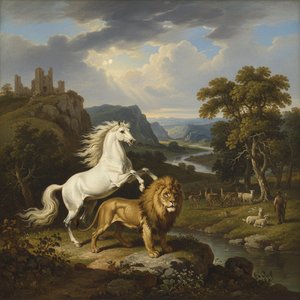
James Ward: A Study in British Romantic Landscape and Animal Painting
Explore the captivating world of James Ward (1769-1859), a master of British Romantic landscape & animal painting. Discover his iconic 'Gordale Scar' and exquisite portraits – a timeless art investment. Learn about his influences, style, and enduring legacy.