Kõrgrenessanss
Disputa (Raffael)
Disputa on teos kunstnikult Raffael (1483–1520). See kuulub Kõrgrenessanss suuntrime. Teos on valmistatud materjalist Fresko.
- Fresko

 Käsitsi maalatud õlimaalatsioon
 Saada
 Jaga
 Juhend


 Laadi alla
 Sarnased teosed
 Slaidietendus
 KÜSIMUSED JA VASTUSID

 Statistika
Disputa: põhitooded
- Pealkiri
- Disputa
- Kunstnik
- Raffael (1483–1520)
- Kunstnik on sündinud
- Urbino, Itaalia
- Tehnika
- Fresko
- Suunad
- Kõrgrenessanss
- Aeglkond
- Renessanss
Teos: Disputa
A Divine Dialogue: Unveiling Raphael’s *Disputa*
Raphael's *Disputa*, painted between 1509 and 1510, is a cornerstone of High Renaissance art, residing within the breathtaking Stanze di Raffaello in the Apostolic Palace at Vatican City. This monumental fresco isn’t merely a painting; it’s a theological statement rendered with unparalleled grace and intellectual depth, inviting viewers into a visual discourse on faith, reason, and divine truth.Subject & Composition: Heaven Meets Earth
The *Disputa* presents a complex yet harmonious composition divided into two distinct realms. The upper portion depicts a celestial gathering of theologians, saints, prophets, and martyrs arranged in a semi-circular formation around Christ and the Virgin Mary. They engage in animated discussion, their gestures conveying reverence and intellectual fervor. Below, on an architectural platform resembling a classical temple apse, earthly theologians – recognizable figures like Saint Augustine, Saint Thomas Aquinas, and Saint Gregory – continue the debate concerning the Holy Sacrament. This deliberate juxtaposition visually represents the convergence of heavenly wisdom and human inquiry. The composition is masterfully structured with a pyramidal form culminating in Christ, drawing the eye upwards towards the divine source.Style & Technique: The High Renaissance Ideal
*Disputa* exemplifies the hallmarks of the High Renaissance: balance, clarity, and idealized beauty. Raphael’s mastery of perspective creates a convincing sense of depth, while his use of *sfumato* – subtle gradations of light and shadow – lends an ethereal quality to the figures. Executed as a fresco, the painting demonstrates Raphael's technical brilliance in applying pigments to wet plaster, resulting in vibrant colors that have endured for centuries. The figures are not static; they possess dynamic poses and expressive faces, conveying a sense of lively intellectual exchange.Historical Context & Symbolism
Commissioned by Pope Julius II as part of the decoration of his private library (the *Stanza della Segnatura*), *Disputa* reflects the humanist spirit of the Renaissance – a renewed interest in classical learning and philosophical inquiry alongside religious faith. The room itself was intended to represent different branches of human knowledge: theology, law, poetry, and philosophy. The painting’s symbolism is rich and layered. The Holy Spirit, represented as a dove emanating light, signifies divine inspiration. The inclusion of prominent theologians underscores the importance of reason and scholarship in understanding religious doctrine. The architectural setting evokes the grandeur of ancient Rome, linking Christian theology to classical tradition.Emotional Impact & Lasting Legacy
*Disputa* transcends its theological subject matter to evoke a profound sense of awe, reverence, and intellectual curiosity. The painting’s harmonious composition and idealized figures inspire contemplation on the nature of truth, faith, and knowledge. It is not merely a depiction of a debate but an invitation to participate in it – to engage with the eternal questions that have occupied humanity for centuries. Raphael's *Disputa* remains a testament to his artistic genius and continues to captivate viewers with its beauty, intellectual depth, and enduring spiritual power.- Explore high-quality reproductions of *The Disputation of the Holy Sacrament* to bring Renaissance grandeur into your space.
- Discover more about Raphael’s life and artistic contributions within the context of the High Renaissance movement.
Disputa kõrgel resolutsioonil

Avalik omanik: kunstnik suri aastal 1520.
Veel erinevaid mõõdu, u recorte ja allviiteid →Raffael, Disputa. Avalik omaniklik õigus
Küsimused teemal Disputa
Milline ruum sobib kokku teose „Disputa“, autor Raffael värvidega?
Kuna teose "Disputa" värvigamma on Maapõhine, soovitame selle paigutamiseks Elutuba.
Millist meeleheust väljendab teos „Disputa“, autor Raffael suunatud stiilis Kõrgrenessanss?
"Disputa" kannab endas Vaimne emotsionaalset toonist, mis on omane Kõrgrenessanss suunale.
Milline rahvuslik päritolu seisab teose "Disputa" Kõrgrenessanss taga?
Millist tooni suundub "Disputa"?
Millist kasutusviisi ja ruumi on „Disputa“, autor Raffael jaoks soovitatav?
Teost "Disputa" on soovitatav kasutada Kinnisitus jaoks ning selleks soovitellav ruum on Elutuba.
Millist ruumi on „Disputa“, autor Raffael jaoks soovitatav?
Teose "Disputa" reproduktsioon sobib hästi Elutuba-i.
Kellele on teost „Disputa“, autor Raffael soovitatav kingitusena osta?
Kuhu Raffael loomingulisse perioodi kuulub teos "Disputa"?
Millist atmosfääri toob ruumi „Disputa“, autor Raffael reproduktsioon?
Olles meeleoluult Eeterlik, sobib teos "Disputa" suurepäraselt ruumiks Elutuba.
Kunstnikust, Raffael

1483–1520, Itaalia
Raffael
Urbino Renessanssi Sünd: Rafaeli Varase Elu ja Moodustumine Raffaello Sanzio da Urbino, maailmale tuntud kui Raphael, tekkis märkimisväärselt viljakas kultuurikeskkonnas. 1483. aastal sündinud Urbino müüride sees, keskijääma Itaalias asuva väikese, kuid intellektuaalselt elava linna-riigi seinte vahel, olid tema varased aastad läbi imbunud atmosfäärist, mis väärtustas nii kunstilisi oskusi kui humanistlikku õpetust. Tema isa, Giovanni Santi, ei olnud pelgalt Duke Federico da Montefeltro poolt teenitud maalija – ta oli mees, kes osales sügavalt renessanssiaegsete mõttevoolude seas, luuletaja, kes kroonikas hertsogi elu ja püüdis aktiivselt leida uuenduslikke kunstilisi ideid kogu Itaaliast ja mujalt.
Ka Raffael teosed
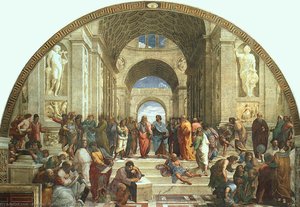 Atene kool1511
 Siistine Madonna1513
 Transfiguratsioon1520
 Neitsi Maarja abiellumine1504

Essays around Disputa
 Giotto di Bondone: Revolutionizing Late Medieval Painting through Narrative InnovationExplore the revolutionary art of Giotto di Bondone! Discover his groundbreaking techniques, iconic frescoes like those in the Arena Chapel,…
 Masterpieces of Light: The Top 25 Artworks by Duccio di BuoninsegnaJourney through the divine elegance of Duccio di Buoninsegna. Explore 25 iconic Sienese masterpieces, from the Maestà to the Rucellai Madon…
 Raphaeli 25 parimat teost: Renessansi meistriteosed kodus – OriginalUniqueArt.comAvastage Raphaeli 25 parimat teost! Sukeldu renessanssimaali ilu, luksuslikesse portreedesse ja atmosfäärilistesse freskode. Leia inspirats…