Eelvaade
 Saada
Saada Jaga
Jaga
 Teave teose kohta
 Juhend

 Laadi alla
 Sarnased teosed
 Röntgenuuring
 Slaidietendus
 KÜSIMUSED JA VASTUSID
 Statistika
Coronation of the Virgin


 Loe lähemalt
Giclée / Kunstiprint
Muuseumikvaliteediga giclée- või kangasprint kiire tootmisega ja paindlikud viimistlusvõimalused. ( Osta käsitsi maalatud teos Lülita digitaalse pildi juurde)




P118B €10

P118H €10

P118W €10

P438Z €10

P508JH €12

P508YH €12

P805H €10

P805Z €10

P919BZ €10

P919G €10

P919XJ €10

P959ZH €10

P968JZ €12

W106C €8

W218G €10

W218JH €8

W218Y €10

W307PJ €10

W316G €10

W316PJ €8

W316Y €10

W398PJ €8

W4111J €10

W500HY €15

W500JH €15

W692G €12

W849H €8

W940BG €15

W953PJ €8




Vali meie eelmääratud suurused, mis vastavad teose algupärastele proportsioonidele.

Sisestage vajalik laius ja kõrgus, et see sobiks teie raamile või seinale. Trükki saab ainult lõigata, seda ei saa kunagi pildist suuremaks teha, seega ka erineva mustega suurus kaotab osa pildist. Enne trükkimist saadame teile kinnitamiseks digitaalse näidisprojektsiooni. Sellel lehel näidatud pilt ei kujuta reaalset lõiget — seda näitab ainult näidisprojektsioon.
Ülemaailmne tarne () 2 nädala jooksul, tavalise 4/5 nädala asemel. (11 november)

Tasuta ekspresssaatmine üle maailma

Kõrgekvaliteediline lina-kangas

Täielik transpordikindlustus

Tollimaksude tagastamise garantii

Värvitoime täpsuse garantii

100 päeva tagastusõigus (ainult valmistusdefektide korral)

100% raha tagasi garantii

Hulgusoodustus
 Klaasivalik on saadaval ainult kuni 110 cm suuruses teostes

Coronation of the Virgin
Giclée / Kunstiprint
Reproduktsiooni suurus
-


Koguhind
€ 73
The Coronation of the Virgin: A Renaissance Revelation
Raphael’s “Coronation of the Virgin,” a masterpiece born between 1502 and 1504, stands as more than just a painting; it's a pivotal moment in artistic history – a visual declaration of a young master’s arrival on the scene. Originally commissioned for the Oddi family chapel in Perugia, Italy, this oil-on-wood panel, later transferred to canvas, now graces the hallowed halls of the Vatican Pinacoteca, inviting us into a world where earthly sorrow and celestial glory intertwine. The painting immediately captivates with its dual narrative: on one side, we witness the majestic coronation of Mary by Christ in the radiant expanse of heaven, surrounded by an array of cherubic angels; on the other, the apostles gather somberly around her empty tomb, a poignant reminder of her divine role and humanity’s yearning for salvation. This carefully orchestrated juxtaposition isn't merely decorative; it establishes a profound dialogue between faith, loss, and hope – a cornerstone of Renaissance thought.
The painting’s genesis is inextricably linked to Raphael’s formative years under the tutelage of Perugino, his predecessor in Umbria. While undeniably influenced by Perugino's harmonious style—characterized by graceful figures and a meticulous attention to detail—Raphael swiftly transcends his teacher’s approach, injecting a dynamism and emotional intensity that mark his unique artistic voice. Notice how the drapery flows with an unprecedented sense of movement, how the faces of the apostles convey a spectrum of reactions – from quiet contemplation to profound grief – and how the landscape, rendered in atmospheric perspective, feels both distant and deeply resonant. This shift signals Raphael’s transition from apprentice to independent master, a bold assertion of his artistic identity.
A Symphony of Symbolism
The “Coronation of the Virgin” is rich with symbolic meaning, reflecting the theological concerns of the High Renaissance. Mary's crown, bestowed by Christ, signifies her elevation to the status of Queen of Heaven and Earth – a concept central to Marian devotion during this period. The angels surrounding her represent divine grace and the fulfillment of God’s plan for humanity. However, the scene isn’t solely focused on celestial splendor; the presence of the apostles gathered around the tomb underscores the reality of human mortality and the need for redemption. The empty tomb itself serves as a potent symbol of Christ's sacrifice and Mary’s role as the Mother of God, whose son willingly gave his life to atone for humanity’s sins.
Further enriching the painting’s symbolic tapestry are the details scattered throughout the composition. Observe the instruments of music played by the angels – a visual representation of heavenly harmony. The sarcophagus, resting beneath Mary's feet, symbolizes her role as the Queen of Rest and the promise of eternal peace. Even the landscape—a blend of Umbrian and Netherlandish influences—contributes to the painting’s symbolic weight, evoking both earthly beauty and spiritual transcendence. The use of color is particularly noteworthy; Raphael employs a palette dominated by blues and violets, creating an atmosphere of solemnity and reverence, while strategically placed reds draw attention to key figures and elements.
Historical Significance & Artistic Legacy
The “Coronation of the Virgin” holds immense historical significance as it represents a crucial turning point in Raphael’s artistic development. It marks his departure from the purely decorative style of Perugino and establishes him as a distinct artistic voice, capable of synthesizing influences while forging his own unique vision. Giorgio Vasari famously described Raphael's early works as exhibiting “Perugino’s grace,” but he quickly recognized the burgeoning talent that would propel the artist to unparalleled heights of fame. This painting is not simply a beautiful depiction of a biblical scene; it’s a testament to Raphael’s artistic ambition and his willingness to push beyond the boundaries of convention.
The influence of this masterpiece reverberates throughout the subsequent history of Western art. Raphael's ability to seamlessly blend classical ideals with Christian iconography—his mastery of composition, color, and human form—became a model for generations of artists. The painting’s emphasis on clarity, harmony, and emotional resonance profoundly shaped the trajectory of Renaissance art, paving the way for the High Renaissance and beyond. It is no exaggeration to say that Raphael's "Coronation of the Virgin" helped define the aesthetic standards of an entire era.
Hand-Painted Reproductions: Bringing Renaissance Beauty Home
At OriginalUniqueArt.com, we are proud to offer meticulously crafted, hand-painted oil painting reproductions of Raphael’s “Coronation of the Virgin.” Our skilled artisans painstakingly recreate every detail of this iconic masterpiece, from the delicate folds of Mary's robes to the expressive faces of the apostles, ensuring an authentic and captivating piece of art for your collection. Each reproduction is created using traditional techniques and archival-quality materials, guaranteeing its longevity and beauty for generations to come.
Owning a hand-painted replica of the “Coronation of the Virgin” isn’t just acquiring a beautiful artwork; it's gaining a tangible connection to one of the most celebrated figures in art history. Whether you are an art enthusiast, a collector seeking to enrich your collection, or simply someone who appreciates the timeless beauty of Renaissance art, our reproductions offer a unique opportunity to experience the majesty and spiritual depth of Raphael’s masterpiece in your own home. Explore our complete selection of Raphael's works, including “The Annunciation (from the predella of the Coronation of the Virgin),” on OriginalUniqueArt.com today.
Korduvad küsimused
Kas „Coronation of the Virgin“, autor Raphael kuulub nõutudud High Renaissance teostega?
Teos "Coronation of the Virgin" on kataloogis High Renaissance suunaga teoste seas registreeritud kui Ikooniline.
Milline ruum sobib kokku teose „Coronation of the Virgin“, autor Raphael värvidega?
Olles värvipalett Maapõhine, on teos „Coronation of the Virgin“, autor Raphael soovitatav ruumideks Elutuba. Just needistlikud toonid on üks põhjuseid selle soovituse taga.
Kui suur on kontrasst teoses „Coronation of the Virgin“, autor Raphael?
Teose "Coronation of the Virgin" valgus-varjundite kontrast on Õrna. Kontrast kirjeldab, kui teravalt erinevad heeled ja tumedad alad.
Kunstniku elulugu
Urbino Renessanssi Sünd: Rafaeli Varase Elu ja Moodustumine
Raffaello Sanzio da Urbino, maailmale tuntud kui Raphael, tekkis märkimisväärselt viljakas kultuurikeskkonnas. 1483. aastal sündinud Urbino müüride sees, keskijääma Itaalias asuva väikese, kuid intellektuaalselt elava linna-riigi seinte vahel, olid tema varased aastad läbi imbunud atmosfäärist, mis väärtustas nii kunstilisi oskusi kui humanistlikku õpetust. Tema isa, Giovanni Santi, ei olnud pelgalt Duke Federico da Montefeltro poolt teenitud maalija – ta oli mees, kes osales sügavalt renessanssiaegsete mõttevoolude seas, luuletaja, kes kroonikas hertsogi elu ja püüdis aktiivselt leida uuenduslikke kunstilisi ideid kogu Itaaliast ja mujalt. See sündimine uhkes õukonnas, mis väärtustas peenust ja intellektuaalset arutlust, kujundas sügavalt noore Rafaeli tundmusi. Tema isa surma pärast üheteistkümnendal aastal lasus tema õlgadele vastutus, kuid see andis ka võimaluse oma oskusi arendada pere töökojas, omandades tehnikuid ja traditsioone kohalike kunstnike juhendamisel. Juba varajastes teostes hakkasid ilmuma pehme graatsia ja tähelepanelik detailile – tema küpse stiili tuntumad jooned.
Umbriast Firenzasse: Uute Mõjude Omandamine
Rafaeli kunstiline tee oli pideva arengu teekond, mida märgistavad intensiivse õppimise ja assimileerimise perioodid. Perugia all Pietro Perugino juures saadud algne koolitus pani kindla aluse umbri stiilile – mis iseloomustab seda pehme modelleerimisega, harmooniumsetest kompositsioonidest ja rahulikest religioossetest stseenidest. Kuid Raphaelil oli kustamatu uudishimu, mis ajas teda otsima uusi väljakutseid ja laiendama oma kunstilisi horisonte. 1504. aastal sõitis ta Firenzasse, linna, kus pulsis tollal kunstilise innovatsiooni energia. Siin kohtus ta Leonardo da Vinci ja Michelangelo meistriteoste – kunstnike, kes ajasid maalimispiire senikuulmatu viisil. Ta õppis hoolikalt nende tehnikaid – Leonardo sfumato, tema peenete valguse ja varju gradiatsioonide ning Michelangelo võimsa anatoomilise täpsuse ja dramaatiliste kompositsioonidega. See Firenze periood oli Rafaeli jaoks sulatuskolde, sundides teda silmaringi avardama uusi kunstilisi võimalikkusi ja sünteesima need oma ainulaadseks visiooniks. Mõju on näha tema teostest selle aja suurenenud dünaamilisuses ja psühholoogilisemas sügavuses, eriti tema Madonna seerias.
Rooma Triumpf: Tellimused ja Meisterteosed
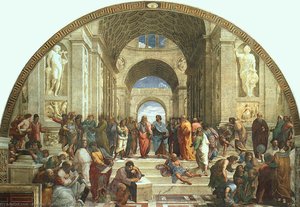
1508. aastal sai Raphael kutse, mis muutis tema karjääri – kutsed Paavst Julius II poolt Rooma. See tähistas tema kõige produktiivsema ja kuulsama perioodi algust. Igavese linn pakkus talle võrratu võimaluse näidata oma andeid hiiglaslikul skaalal, kaunistades Vatikani paavstiapartmendid vapustavate freskodega. The School of Athens, võib-olla tema kuulsaim teos, on tunnistuseks tema kompositsiooni, perspektiivi ja filosoofilise alegoria meistriõiguse kohta. Selle majesteetlilises ruumis tõi Raphael kokku klassikalise antiikkultuuri figuurid – Platoni, Aristotelese, Pythagorase, Euclidi – luues elava vaatepildi, mis tähistas inimliku mõistuse ja teadmiste otsingut. Ta jätkas tööd hiljem ka järgnevate paavstide jaoks, Leo X seas, võttes ette monumentaalseid projekte, nagu Stanze della Segnatura ja Stanza d'Eliodoro dekoreerimine. Need ruumid on freskod mitte ainult dekoratiivsed; need on sügavuti avaldusi paavsti võimu, religioosse uskumuse ja renessansi ideaalide kohta.
Graatsia ja Suursugusus Süntees: Rafaeli Kunstistiil
Rafaeli kunstistiili kirjeldatakse sageli graatsia, selguse ja idealiseeritud ilu harmoonilise seguna. Tal oli erandusuus oskus sünteesida erinevaid mõjutusi – umbri traditsiooni, Firenze uuendusi, klassikalist antiikkultuuri – ainulaadseks tasakaalukaks esteetikaks. Tema kompositsioonid on hoolikalt planeeritud, näidates korra ja proportsiooni tunde, mis peegeldab tema sügavat arusaamist renessansi põhimõtetest. Tema figuurid kiirgavad rahulikku väärikust ja emotsionaalset väljendusrikkust, kehastades humanistliku inimese täiuslikkuse ideaali. Ta oli ka meister kolorist, kasutades rikkalikke, sädelevaid toone, et luua teoseid, mis on nii visuaalselt köitva kui ka intellektuaalselt stimuleerivad. Eranditult Michelangelo sageli dramaatilise ja turbulentse stiili võrreldes kiirgab Rafaeli töö rahu ja harmooniat – kvaliteeti, mis on sajandeid publikut vaimustanud.
Pärand ja Püsiv Mõjutus
Rafaeli enneaegne surm 1520. aastal vaid kolmkümmend seitsme aasta vanusena lõpetas karjääri, mis oli täis potentsiaali. Siiski tema pärand jääb üheks olulisimaks kujuks lääne kunstiajaloos. Tema töö sai renessansi kõrgaegse esteetika nurgakiviks, teenides eeskujuks põlvedele kunstnikke. Kuigi Michelangelo mõju valitses hiljem kunstilist arutlust, Rafaeli rõhutamine selgusel, harmoonial ja idealiseeritud ilul koges uuesti tõusu neoklassitsismi perioodil, mille pooldajad olid nagu Johann Joachim Winckelmann. Tänapäeval jätkavad tema maalijad vaimustavat imetlust ja tunnustamist, köitma vaatajaid oma tehnilise briljansiga, emotsionaalse sügavusega ja püsiva võluga. Tema mõju on näha arvukates hiljem loodud kunstiteostes, mis kinnistavad tema koha tõelise renessansimeistrina – maalijana, kes suutis jäädvustada mitte ainult oma subjektide füüsiliku sarnase, vaid ka inimliku graatsia ja väärikuse olemuse.

Raphael
1483 - 1520 , Itaalia
Lühikest infot
- Artistic Movement Or Style: Kõrge renessanss
- Artists Or Movements Influenced By This Artist:
- Giulio Romano
- Akadeemiline traditsioon
- Artists Who Influenced This Artist:
- Pietro Perugino
- Leonardo da Vinci
- Michelangelo
- Date Of Birth: 1483
- Date Of Death: 1520
- Full Name: Raffaello Sanzio
- Nationality: Itaalia
- Notable Artworks:
- Ateenes Akadeemia
- Sixtiina Madonna
- Ülesilmutamine
- Alba Madonna
- Place Of Birth: Urbino, Itaalia
Sarnased artiklid

Divine Grace: An Art Historian's Journey Through Iconic Masterpieces of the Virgin Mary
Explore the profound beauty of Marian iconography through an art historian's lens. Discover iconic masterpieces by Raphael and Renaissance masters, celebrating the divine grace and timeless elegance of the Virgin Mary in classical fine art.
Divine Grace: A Journey Through the Most Iconic Depictions of the Virgin Mary in Art History
Embark on a profound journey through art history with our exploration of the most iconic depictions of the Virgin Mary. Discover the divine grace, symbolism, and masterful techniques found in Renaissance masterpieces and sacred iconography.

Raphaeli 25 parimat teost: Renessansi meistriteosed kodus – OriginalUniqueArt.com
Avastage Raphaeli 25 parimat teost! Sukeldu renessanssimaali ilu, luksuslikesse portreedesse ja atmosfäärilistesse freskode. Leia inspiratsiooni kodukaunistuseks OriginalUniqueArt.com-is – kvaliteetsed maalide reproduktsioonid ja kunstikollektsioonid.
Jacob Henricus Maris: A Master of Dutch Atmospheric Realism & the Intimate Landscape
Explore the captivating world of Jacob Henricus Maris, a leading figure of the Dutch Hague School. Discover his atmospheric landscapes, signature brushstrokes & lasting influence on 19th-century art. Learn more at OriginalUniqueArt.

Fra Angelico: 25 meistriteost, mis täidavad kodu vaimsust ja ilu
Avastage Fra Angelico 25 võrratut meistriteost! Sukelduge renessansi kunstimaailma, religioossete freskode ja altarimaalide lummusesse. Leidke inspiratsiooni kodukaunistuseks OriginalUniqueArt.com-is – kvaliteetsed reproduktsioonid otse teie seinale. Vaadake kogu kollektsiooni online!