

 Eelvaade
 Saada
Saada Jaga
Jaga
 Teave teose kohta
 Juhend

 Laadi alla
 Sarnased teosed
 Röntgenuuring
 Slaidietendus
 Statistika
October Rose


 Loe lähemalt
Sellel lehel kuvatav kunstiteos on kaitstud autoriõigusega, mis tähendab, et meil ei ole seaduslikku õigust luua või müüa identset reproduktsiooni. Seda kaitset rakendatakse rahvusvaheliste kokkulepete alusel, nagu näiteks Berne konventsioon ning riiklike seadustega, sealhulgas nendega, mida on sätestatud USA autoriõiguse seadus – 17. peatükk.
See meetod järgib täielikult autoriõiguse reegleid, kuna see ei põhine kaitstud kunstiteose kopeerimisel või dupliteerimisel. Selle asemel on tegu loova reinterpreetatsiooniga – uue maaldisega, mis on algteosest inspireeritud, kuid ei ole sellest identiline.
Giclée / Kunstiprint
Muuseumikvaliteediga giclée- või kangasprint kiire tootmisega ja paindlikud viimistlusvõimalused. ( Osta käsitsi maalatud teos Lülita digitaalse pildi juurde)




P118B €10

P118H €10

P118W €10

P438Z €10

P508JH €12

P508YH €12

P805H €10

P805Z €10

P919BZ €10

P919G €10

P919XJ €10

P959ZH €10

P968JZ €12

W106C €8

W218G €10

W218JH €8

W218Y €10

W307PJ €10

W316G €10

W316PJ €8

W316Y €10

W398PJ €8

W4111J €10

W500HY €15

W500JH €15

W692G €12

W849H €8

W940BG €15

W953PJ €8




Vali meie eelmääratud suurused, mis vastavad teose algupärastele proportsioonidele.

Sisestage vajalik laius ja kõrgus, et see sobiks teie raamile või seinale. Trükki saab ainult lõigata, seda ei saa kunagi pildist suuremaks teha, seega ka erineva mustega suurus kaotab osa pildist. Enne trükkimist saadame teile kinnitamiseks digitaalse näidisprojektsiooni. Sellel lehel näidatud pilt ei kujuta reaalset lõiget — seda näitab ainult näidisprojektsioon.
Ülemaailmne tarne () 2 nädala jooksul, tavalise 4/5 nädala asemel. (28 oktoober)

Tasuta ekspresssaatmine üle maailma

Kõrgekvaliteediline lina-kangas

Täielik transpordikindlustus

Tollimaksude tagastamise garantii

Värvitoime täpsuse garantii

100 päeva tagastusõigus (ainult valmistusdefektide korral)

100% raha tagasi garantii

Hulgusoodustus
 Klaasivalik on saadaval ainult kuni 110 cm suuruses teostes

October Rose
Giclée / Kunstiprint
Reproduktsiooni suurus
-


Koguhind
€ 70
A Symphony of Petals: The Intimacy of October Rose
In the quiet, evocative realm of Paraskeva Clark, nature is not merely observed but deeply felt. Her 1941 masterpiece, October Rose, serves as a breathtaking testament to the artist's ability to capture the fleeting essence of life through the lens of botanical beauty. At first glance, the viewer is drawn into an intimate encounter with a singular rose, cradled within a vase and surrounded by a lush tapestry of verdant leaves. The composition is masterfully tight, pulling the observer into a close-up view that celebrates the delicate architecture of each petal. This is not a mere study of flora; it is a profound exploration of texture and light, where the velvety softness of the rose stands in striking contrast to the intricate, shadowed depths of the surrounding blossoms.
The painting breathes with a sense of layered complexity. While the central rose commands the stage, Clark skillfully utilizes the background to create a rhythmic dance of shapes and sizes. These secondary flowers emerge from the periphery like whispered memories, adding a structural depth that prevents the composition from feeling static. The interplay between the primary subject and its supporting cast creates a visual tension—a balance between the singular focus of the foreground and the atmospheric mystery of the background. For the discerning collector or interior designer, this piece offers a sophisticated focal point, capable of anchoring a room with its quiet strength and organic elegance.
Technique and the Legacy of the Petrograd Academy
The technical prowess displayed in October Rose is deeply rooted in Clark’s rigorous training at the Petrograd Academy of Fine Arts. Her brushwork reflects a disciplined hand, capable of rendering the translucent quality of light as it filters through organic membranes. There is a palpable sense of tactile realism here; one can almost feel the moisture on the leaves and the fragile weight of the blooming head. The artist employs a nuanced palette that honors the transition of seasons, using tones that evoke the cooling air of an October afternoon. This mastery of light and shadow—the chiaroscuro of the natural world—imbues the work with a three-dimensional presence that transcends the flat surface of the canvas.
Beyond its aesthetic appeal, the painting carries a profound emotional resonance. Born from a life shaped by both the modest struggles of her Russian upbringing and an unyielding intellectual curiosity, Clark’s work often touches upon themes of resilience and beauty amidst change. The rose, a universal symbol of love and ephemeral grace, becomes a metaphor for the enduring spirit. To possess a reproduction of this work is to invite a sense of contemplative peace into a living space. It is an ideal selection for those seeking to infuse their interiors with art that speaks of timelessness, offering a sophisticated touch of classical beauty that remains strikingly modern in its emotional honesty.
Korduvad küsimused
Kui palju oli Plistik, Paraskeva aastane, kui teos "October Rose" loodi?
Kui teos "October Rose" loodi aastal 1941, oli Plistik, Paraskeva (sündinud aastal 1898) 43 aastane.
Kes on teose "October Rose" autor ja millal see on loodud?
Teose "October Rose" on loonud Plistik, Paraskeva aastal 1941.
Kuidas teose "October Rose" motiiv seobub Plistik, Paraskeva tavalistega teemadega?
"October Rose" kujutab teemasid rose, still life, flowers, nature, floral, petals, vase, samal ajal kui Plistik, Paraskeva tuntud teemad on floral realism, nature study, still life tradition, detailed botanical focus. Nende kahe võrdlemine näitab, kuidas teos seobub kunstniku tavalistega motiividega.
Kunstniku elulugu
Early Life and Artistic Beginnings
Paraskeva Clark (née Plistik), born October 28, 1898, in Saint Petersburg, Russia, was the eldest daughter of Avdey Plistik and Olga Fedorevna—a peasant factory worker who instilled in her a deep appreciation for education and learning. Her family’s modest circumstances fostered an early awareness of societal challenges, shaping her artistic vision throughout her life. From a young age, Clark demonstrated a passion for literature and the arts, attending theatre performances whenever possible – a formative experience that would later inform her approach to visual storytelling. She received four years more schooling than most girls of her time due to her father’s dedication to fostering intellectual curiosity. Her mother's skill in crafting artificial flowers supplemented the family income, highlighting the resourceful spirit characteristic of her upbringing. Clark pursued formal artistic training at Petrograd Academy of Fine Arts from 1916 into 1918, where she studied under Savely Seidenberg and was exposed to influential movements like Impressionism and Cubism. The academy’s closure during the October Revolution necessitated a shift towards tuition-free studios—a pivotal moment that cemented Clark's commitment to socialist ideals and artistic engagement with social issues. She embraced the opportunity to collaborate with fellow students on theatrical productions, honing her skills in set design and furthering her understanding of visual communication. Notably, she met Oreste Allegri Jr., an Italian stage designer who would become her husband, initiating a relationship that spanned decades and profoundly impacted her life’s trajectory.Influence of Constructivism and Modernist Style
Clark's artistic sensibilities were deeply rooted in the Constructivist movement—a radical rejection of decorative embellishment in favor of industrial assemblage and functional materiality. This aesthetic philosophy directly informed her stylistic choices, prioritizing clarity of form and conveying ideas through geometric abstraction. She absorbed the lessons of Impressionism and Post-Impressionism, recognizing their expressive potential while simultaneously rejecting sentimentality. Artists like Picasso and Braque served as crucial mentors during her formative years at Petrograd Academy, exposing her to groundbreaking innovations in artistic technique and conceptual exploration. Her early works demonstrate a deliberate effort to distill visual experience into its essential elements—a hallmark of Constructivist principles that would persist throughout her career.Career Highlights: Painting Landscapes and Portraits
Following the Russian Revolution, Clark embarked on a prolific artistic journey, establishing herself as a respected painter in Paris during the 1920s and relocating to Toronto in 1931 with her husband, Oreste Allegri Jr. Initially hesitant about embracing the landscapes championed by the Group of Seven—a movement she deemed overly sentimental—Clark nevertheless found inspiration in the natural beauty of Ontario and Québec. Her canvases captured serene vistas of Georgian Bay and Algonquin Park, reflecting a contemplative engagement with the environment. She gained recognition for her self-portraits and still lifes, which explored themes of identity and introspection—often rendered with meticulous detail and imbued with subtle psychological nuance. Clark’s work was exhibited extensively throughout the 1930s and 1940s, solidifying her reputation as a skilled artist and fostering connections within Toronto's burgeoning art community.Recognition and Legacy
Clark’s artistic achievements were formally acknowledged by the Royal Canadian Academy of Arts in 1966—a testament to her unwavering dedication to her craft and her commitment to social engagement. Her paintings gained prominence at institutions like the National Gallery of Canada and Art Gallery of Ontario, securing her place as a cornerstone of Canadian art history. Particularly noteworthy is “October Rose” (1941), which resides in Oshawa’s Robert McLaughlin Gallery—a poignant depiction of resilience amidst adversity—and “Design for a Puppet Show ‘The Young Devil’” (1937), commissioned by the Kramskoy Museum of Fine Arts in Voronezh, Russia—a bold exploration of theatrical symbolism. Clark's enduring influence extends beyond her artistic output; she championed social justice and actively participated in organizations dedicated to promoting art education and fostering cultural dialogue. Her legacy continues to inspire artists and scholars alike, ensuring that Paraskeva Clark’s contribution to Canadian visual culture remains vividly remembered.
Plistik, Paraskeva
1898 - 1986 , Russia
Lühikest infot
- Full Name: Paraskeva Avdeyevna Clark
- Nationality: Canadian
- Date Of Birth: 1898
- Date Of Death: 1986
- Place Of Birth: Saint Petersburg, Russia
- Notable Artworks:
- October Rose
- Design for a puppet show "The Young Devil"
- Artistic Movement Or Style: Constructivism, Modernist Art
- Artists Who Influenced This Artist: ['Savely Seidenberg']
- Artists Or Movements Influenced By This Artist: ['Group of Painters']
Sarnased artiklid

Silent Narratives: Exploring the Enduring Appeal of Still Life Painting Across Centuries
Explore the rich history of still life painting with OriginalUniqueArt. Discover Dutch Masters, decode vanitas symbolism & learn about collecting timeless art. Expert insights and museum-quality reproductions.
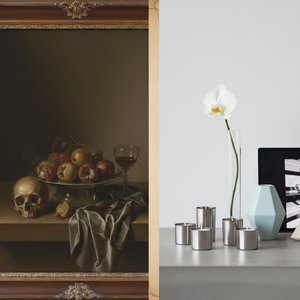
The Enduring Appeal of Still Life: A Historical & Contemporary Exploration
Explore the rich history & symbolism of still life painting with OriginalUniqueArt. Discover masterpieces from the Dutch Golden Age, learn about vanitas art, and find expert guidance for collecting timeless artworks.
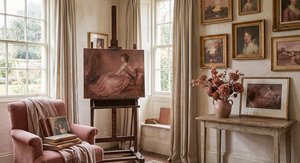
Dusty Rose Hues: 10 Master Paintings & Timeless Decor Inspiration
Explore 10 famous paintings bathed in captivating dusty rose tones! From Monet to Bouguereau, discover romantic Impressionism & Renaissance masterpieces. Find museum-quality art reproductions and elevate your home decor with OriginalUniqueArt.com. Explore the full collection online.
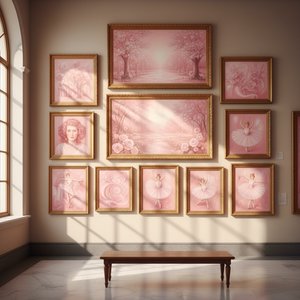
Blush & Brilliance: 10 Iconic Paintings Dominated by Light Pink Tones |
Explore 10 iconic paintings bathed in captivating light pink tones! From Monet's Impressionism to Renoir’s romance, discover the stories behind these blush-hued masterpieces. Find museum-quality art reproductions & decor inspiration at .
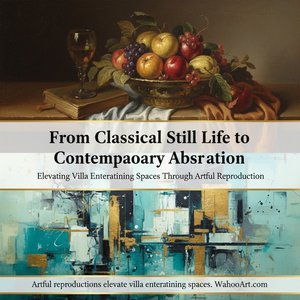
Klassikalisest natüürstildist kaasaegse abstraktsionismi kauniks koduks: Kunstireproduktsioonide abil luksusliku atmosfääri loomine
Avastage klassikalisest natüürstildist kaasaegse abstraktsionismini ulatuvat kunstivalikut OriginalUniqueArt'is! Tellige kvaliteetsed reproduktsioonid, kohandatud maalid ja professionaalne konsultatsioon luksusliku kodu loomiseks.