

 Vaata sisu
 Jaga teost
 Jaga
Jaga
 Detailid
 Õppekate juhend

 Laadi alla
 Sarnased teosed
 Röntgenuuring
 Slaidietendus
 Statistika
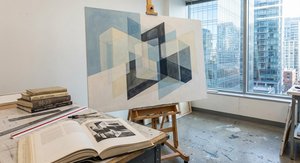
Painting R
 Geometric Abstraction
 37.0 x 31.0 cm
 MAGA - Museo Arte Gallarate
 Loe lähemalt
Sellel lehel kuvatav kunstiteos on kaitstud autoriõigusega, mis tähendab, et meil ei ole seaduslikku õigust luua või müüa identset reproduktsiooni. Seda kaitset rakendatakse rahvusvaheliste kokkulepete alusel, nagu näiteks Berne konventsioon ning riiklike seadustega, sealhulgas nendega, mida on sätestatud USA autoriõiguse seadus – 17. peatükk.
Austasena ja seaduslikuna alternatiivina pakume originaalist inspireeritud, käsitsi maalitud isikupärastatud teoseid. Meie osutavad ja professionalsed kunstnikud uurivad hoolikalt originaali stiili, meelemoi ja kunstilist olemust, et luua uus, ainulaadne teos, mis tekitab sama tunnet – olles samal ajal omaette originaalne looming.
See meetod järgib täielikult autoriõiguse reegleid, kuna see ei põhine kaitstud kunstiteose kopeerimisel või dupliteerimisel. Selle asemel on tegu loova reinterpreetatsiooniga – uue maaldisega, mis on algteosest inspireeritud, kuid ei ole sellest identiline.
Käsitsi valmistatud õlimaalireproduktsioon
Meie kunstnike poolt tellimusel valmistatud käsitsi maalitud õli-kainaste teos teie soovitud suuruses ja raamis. ( Lülita trükkitoodetele Ülemineku digitaalse pildi müügi kanalisse)




































Vali meie eelmääratud suurused, mis vastavad teose algupärastele proportsioonidele.

Sisestage vajalik laius ja kõrgus, et teos sobiks teie raamile või seinale. Kuna tegu on käsipainatud teosega, siis erineva kujuga suuruse korral võib kunstnik jätta pildi ümber veidi rohkem marginaali või lõigata osa ära — valik on teie. Enne maali alustamist saadame teile kinnitamiseks digitaalse näidisprojektsiooni. Sellel lehel näidatud pilt ei kajasta tegelikku tulemust — seda näitab ainult näidisprojekttsioon.
Pärast tellimust saadab OriginalUniqueArt.com meeskond kliendile e-posti juhised ning esitab eelvaate kavandi
Maailmline tarne 3–4 nädala jooksul tavalise 5 nädala asemel. (27 oktoober). Kvaliteedis kompromisse ei tehta.

Tasuta ekspresssaatmine üle maailma

Kõrgekvaliteediline lina-kangastest muld

Täielik transpordikindlustus

Tollimaksude tagastamise garantii

Värvitoime täpsuse garantii

100 päeva tagastusõigus (ainult defektide korral)

100% raha tagasi garantii

Hulgusoodustus
 Klaasivalik on saadaval ainult kuni 110 cm suuruses teostes

Painting R
Reproduktsiooni materjal
Reproduktsiooni mõõtmed
-


Lõppsumma
€ 264
Kunstniku elulugu
Early Life and Artistic Awakening
Giuseppe “Pino” Pinelli was born on October 1st, 1938, in Catania, Italy, a city steeped in history and vibrant Mediterranean light. Though his artistic foundations were laid in Sicily, the true blossoming of his creative vision occurred after his move to Milan in 1963. This relocation wasn’t merely a change of scenery; it was an immersion into the heart of Italy's postwar avant-garde, a period buzzing with intellectual ferment and radical experimentation. Pinelli found himself drawn to the pioneering work of Lucio Fontana and Piero Manzoni, artists who were actively dismantling traditional notions of painting and sculpture. Their influence wasn’t about imitation but rather a catalyst for his own unique exploration—a quest to understand the very essence of what constituted a painted image. He quickly became involved in the artistic debate of those years, participating in exhibitions like the San Fedele awards and holding his first solo show at the Galleria Bergamini in 1968.The Rise of Pittura Analitica
By the early 1970s, Pinelli had firmly established himself as a key figure within the Pittura Analitica movement—a group dedicated to dissecting and analyzing the fundamental elements of painting: color, surface, form, and space. This wasn’t about creating visually arresting compositions in the traditional sense; it was an intellectual undertaking, a systematic investigation into the building blocks of visual perception. Pinelli's early works from this period reflect this analytical approach, often featuring topological studies and monochromatic canvases that served as testing grounds for his evolving ideas. He began to question the necessity of the canvas itself, exploring how painting could exist beyond its conventional boundaries. This led him towards a radical simplification, stripping away all extraneous elements to focus on the pure sensation of color and the interplay between surface and space.Fragmentation and Sensory Totality
A pivotal shift in Pinelli’s work occurred around 1976 with his “La rottura del quadro” (“The Breaking of the Painting”) series, marking a decisive departure from traditional painting techniques. He liberated the image from its support, creating fragmented compositions that were directly applied to the wall. These weren't simply broken pieces; they were carefully considered elements designed to interact with the surrounding architecture and engage the viewer in a new way. This fragmentation wasn’t an act of destruction but rather a means of expanding the possibilities of painting—a desire to create a more immersive, experiential artwork. Pinelli believed that perception was integral to experiencing art, describing it as “part and parcel of an indivisible sensory and psychic totality” that shapes our emotional and rational response to images. His work aimed to tap into this holistic experience, engaging not just the eye but also the body and mind.Materials and Tactile Qualities
Throughout his career, Pinelli demonstrated a remarkable sensitivity to materials. He wasn’t content with conventional paints and canvases; he experimented with unconventional substances—flannel, industrial powders, polyurethane—each chosen for its unique tactile qualities and visual properties. These materials weren't merely supports or mediums but active participants in the artwork, contributing to its overall texture, color, and spatial presence. The artist often manipulated these materials with his hands, imbuing them with a sense of physicality and warmth. This emphasis on tactility wasn’t accidental; it was a deliberate attempt to heighten the viewer's sensory experience, inviting them to engage with the artwork on a more intimate level. He sought to create works that were not just seen but also *felt*, resonating with a primal connection between art and the human body.Legacy and Lasting Influence
Pino Pinelli passed away in Milan on April 30th, 2024, at the age of 85, leaving behind a rich and complex body of work that continues to inspire artists and scholars alike. His contributions to Pittura Analitica were significant, challenging conventional notions of painting and paving the way for new forms of artistic expression. He exhibited extensively throughout Italy and internationally, with his works finding homes in prestigious collections such as the Centre Pompidou in Paris and the Museo del Novecento in Milan. Pinelli’s legacy lies not only in his innovative techniques but also in his profound exploration of perception, emotion, and the very nature of visual experience. He redefined the boundaries of painting, transforming it from a purely representational medium into an immersive, sensory encounter—a testament to his unwavering commitment to artistic experimentation and intellectual rigor.
Pino Pinelli
1938 - 2024 , Italy
Lühikest infot
- Full Name: Giuseppe "Pino" Pinelli
- Nationality: Italian
- Date Of Birth: 1938
- Date Of Death: 2024
- Place Of Birth: Catania, Italy
- Artistic Movement Or Style: Pittura Analitica
- Artists Who Influenced This Artist:
- Lucio Fontana
- Piero Manzoni
Sarnased artiklid

Geomeetrilise Abstraktsiooni 10 Meisterteost: Kunst ja Kodukaunistus OriginalUniqueArt.com-is
Avastage geomeetrilise abstraktsiooni 10 suurteost – Kandinsky, Mondrian ja teised. Lugege kunstiteoste lugusid ning leidke inspiratsiooni kodukaunistuseks OriginalUniqueArt.com-is! Kunstikollektsioon ja reprodutsioonid.

Kandinsky's Masterpieces: 25 Paintings That Define Abstract Art | OriginalUniqueArt
Journey through Wassily Kandinsky's 25 most iconic abstract paintings. Explore his revolutionary use of color, form & spiritual expressionism. Find museum-quality Kandinsky reproductions and elevate your home decor with OriginalUniqueArt.com. Discover all masterpieces on OriginalUniqueArt.com!
Beyond Form & Color: Geometric Abstraction's Enduring Legacy in Art History
Explore the captivating world of geometric abstraction! Discover its origins, key artists like Malevich & Mondrian, and why this movement remains highly valued by art collectors today. Expert insights at OriginalUniqueArt.

Beyond Form & Color: Geometric Abstraction's Evolution in 20th/21st Century Art
Explore the evolution of geometric abstraction from Cubism to contemporary art. Discover key artists like Malevich & Mondrian, investment insights, and expert collecting advice at OriginalUniqueArt.

Neo-Abstract Art: The High-Impact Evolution of Modern Visual Energy and Geometric Sophistication
Discover the power of Neo-Abstract art. Explore how bold geometric forms and high-impact visual energy are redefining modern design. Learn to curate sophisticated, high-energy spaces with the latest trends in contemporary abstraction and structural color.