

 Vaata sisu
 Jaga teost
 Jaga
Jaga
 Detailid
 Õppekate juhend

 Laadi alla
 Sarnased teosed
 Röntgenuuring
 Slaidietendus
 Statistika
Paying the Hostess
 Oil On Canvas
- WallArt
- Baroque
 1670
1670 95.0 x 111.0 cm
 Metropolitani Kunstimuuseum
 Loe lähemalt
Käsitsi valmistatud õlimaalireproduktsioon
Meie kunstnike poolt tellimusel valmistatud käsitsi maalitud õli-kainaste teos teie soovitud suuruses ja raamis. ( Lülita trükkitoodetele Ülemineku digitaalse pildi müügi kanalisse)




P118B €10

P118H €10

P118W €10

P438Z €10

P508JH €12

P508YH €12

P805H €10

P805Z €10

P919BZ €10

P919G €10

P919XJ €10

P959ZH €10

P968JZ €12

W106C €8

W218G €10

W218JH €8

W218Y €10

W307PJ €10

W316G €10

W316PJ €8

W316Y €10

W398PJ €8

W4111J €10

W500HY €15

W500JH €15

W692G €12

W849H €8

W940BG €15

W953PJ €8




Vali meie eelmääratud suurused, mis vastavad teose algupärastele proportsioonidele.

Sisestage vajalik laius ja kõrgus, et teos sobiks teie raamile või seinale. Kuna tegu on käsipainatud teosega, siis erineva kujuga suuruse korral võib kunstnik jätta pildi ümber veidi rohkem marginaali või lõigata osa ära — valik on teie. Enne maali alustamist saadame teile kinnitamiseks digitaalse näidisprojektsiooni. Sellel lehel näidatud pilt ei kajasta tegelikku tulemust — seda näitab ainult näidisprojekttsioon.
Pärast tellimust saadab OriginalUniqueArt.com meeskond kliendile e-posti juhised ning esitab eelvaate kavandi
Maailmline tarne 3–4 nädala jooksul tavalise 5 nädala asemel. (23 oktoober). Kvaliteedis kompromisse ei tehta.

Tasuta ekspresssaatmine üle maailma

Kõrgekvaliteediline lina-kangastest muld

Täielik transpordikindlustus

Tollimaksude tagastamise garantii

Värvitoime täpsuse garantii

100 päeva tagastusõigus (ainult defektide korral)

100% raha tagasi garantii

Hulgusoodustus
 Klaasivalik on saadaval ainult kuni 110 cm suuruses teostes

Paying the Hostess
Reproduktsiooni materjal
Reproduktsiooni mõõtmed
-


Lõppsumma
€ 308
A Quiet Moment in Delft: Pieter de Hooch’s “Paying the Hostess”
Pieter de Hooch's "Paying the Hostess," painted around 1670, isn’t merely a depiction of a transaction; it’s a masterful distillation of Dutch Golden Age life—a fleeting glimpse into the subtle social dynamics and quiet elegance of a Delft inn. The painting immediately draws the eye with its luminous quality, achieved through de Hooch's signature use of light and shadow, creating an atmosphere both intimate and subtly charged. It’s a scene brimming with unspoken narratives, inviting viewers to become silent observers of this private moment within a bustling world. De Hooch was a pivotal figure in the Delft School of painting, known for his ability to capture the essence of domestic life—not grand portraits or heroic scenes, but rather the everyday rituals and interactions that shaped the lives of the burgeoning middle class. His work stands apart through its remarkable realism, capturing not just appearances but also the nuances of human behavior and the play of light on surfaces.The Composition: A Dance of Observation
The composition itself is a testament to de Hooch’s skill. The scene unfolds within what appears to be a modest inn yard—a space simultaneously public and private. A smartly dressed gentleman, likely a wealthy merchant or official, stands poised before a young woman, presumably the hostess, as she presents him with a bill. Their hands are subtly overlapping, creating an immediate visual tension – a delicate dance of negotiation and perhaps even flirtation. The background is deliberately blurred, populated by other patrons engaged in their own conversations and activities—a lively tableau that hints at the inn’s vibrant atmosphere without distracting from the central drama. Notice how de Hooch uses architectural details—the rough-hewn beams of the barn, the simple wooden furniture, the straw bales – to ground the scene in a tangible reality. The placement of figures within the space is carefully considered, creating depth and guiding the viewer’s eye through the composition.Technique and Style: Light, Shadow, and Texture
De Hooch's technique is characterized by its meticulous attention to detail and his masterful manipulation of light. He employed a technique known as *chiaroscuro*, using strong contrasts between light and shadow to create a sense of volume and drama. The light streams in from the open doorway on the left, illuminating the figures and casting long shadows across the yard, adding depth and atmosphere. The artist’s brushwork is remarkably subtle—a delicate layering of paint that creates a rich texture without sacrificing clarity. You can almost feel the roughness of the wooden surfaces, the warmth of the straw bales, and the softness of the fabrics. This textured approach adds to the painting's realism and invites close inspection. The use of muted colors – browns, grays, and ochres – further enhances the sense of atmosphere and contributes to the painting’s overall mood.Symbolism and Context: A Glimpse into Dutch Society
“Paying the Hostess” offers a fascinating window into 17th-century Dutch society. The scene is not simply about settling an account; it's laden with symbolic meaning. The overlapping hands of the couple suggest a complex interplay of power, attraction, and social expectations. In Dutch art of this period, such interactions often carried connotations of flirtation and even illicit desire – a subtle commentary on the constraints and freedoms of the time. The presence of other guests in the background underscores the importance of social interaction within the community. The inclusion of the delivery boy with sheaves of wheat hints at the economic realities of rural life—the exchange of goods and services that underpinned the prosperity of the region. The painting reflects a shift towards a more secular, bourgeois culture, where commerce and social interactions were increasingly valued alongside religious piety.Emotional Resonance: A Moment Frozen in Time
Ultimately, “Paying the Hostess” is a profoundly evocative work of art. It’s not a grand statement or a dramatic event; it's a quiet moment—a snapshot of everyday life that captures something essential about the human condition. The painting invites us to contemplate the complexities of social interaction, the subtle nuances of human relationships, and the beauty found in the ordinary. It possesses a timeless quality, resonating with viewers across centuries because it speaks to universal themes of connection, negotiation, and the quiet dramas that unfold within our daily lives. It’s a piece that rewards careful observation and invites repeated viewing, revealing new layers of meaning with each encounter.Küsimused ja vastused
Milline paigutus sobib teose „Paying the Hostess“, autor Pieter De Hooch formaadile?
Formaat (Landscape) ja soovitatav ruum (Living Room) on kaks teosest „Paying the Hostess“, autor Pieter De Hooch saadud paigutusandmet.
Kui harmoniliselt on teoses „Paying the Hostess“, autor Pieter De Hooch värvid ühendatud?
Teose "Paying the Hostess" värviharmonia on Unified Palette.
Mis on teose „Paying the Hostess“, autor Pieter De Hooch orientatsioon?
Teose „Paying the Hostess“, autor Pieter De Hooch vorm on Landscape. See vorm kirjeldab kompositsiooni proportsioone.
Kunstniku elulugu
varajärglut ja õppimisaastad
Pieter de Hooch, Hollandi kuldaja üks silmapaistvamaid isikuid, sündis 20. detsembri 1629. aastal Rotterdamis, Hollandis. Ta oli kukkunud kivi ehitaja Hendrick Hendricksz de Hoochi ja kelsnaine Annetge Pietersi vanim viiest lapsest. Tema varajastest aastad on ajaloo jaoks pigem saladuslikud, kuid uskutakse, et ta tegutses Rotterdamis, Delftis ja Amsterdamis. De Hoochi kunstiline haridus toimus Haarlemis koos Jacob Ochtervelti, õppeajal olnud maaparstaja Nicolaes Berchemiga. See periood pani aluse tema tulevasele edukusele vaikete kodumajanduste ja avatud uksestike ilmestatud stseenide maalajana.kunstiline stiil ja teemad
De Hoochi loomingut iseloomustab detailide täpsus, naturalism ja valguse meisterlik kasutamine. Tema maalid peegeldasid sageli igapäevaelu, edustades uuenemiskasvu keskklassi väärtusi ja ambitsioone. Sellise stiili suurepärane näide on "maja aukoid Delftis" (1658), mis demonstreerib tema võimekust tabada igapäevaelu kõige banalsemid, kuid olemuslikud detailid. Kuigi de Hoochi teosest löytyvad sarnased teemad ja kompositsioonid ka Emanuel de Wittel, eristub ta inimkesknema fookuse ja suhete sügavuma uurimisega. See on selgelt nähtav teostes "nõustav naine" (1658) ja "naine laps lapsel" (1658), mis kinnistavad tema huvi kodustele stseenidele.olulised teosed ja pärand
De Hoochi kõige märkimistavamate teostega on:- "rõõmus jooj" (umbik. 1650)
- "kaardimängijad päikeseloenduses" (1658)
- "naine valmistamas leiba ja võid poiale" (1661)
muuseumid ja kogumikud
De Hoochi teoseid saab leida erinevatest muuseumidest, sealhulgas Antwerpis, Belgias asuvast Koninklijk Museum voor Schone Kunsten muuseumist, mis hoiab endas tohutut kogumist Euroopa kunstist 15. kuni 20. sajandini. Lugege rohkem Pieter de Hoochi ja tema teoste kohta OriginalUniqueArt lehel: [https://OriginalUniqueArt.com/@/pieter-de-hooch](https://OriginalUniqueArt.com/@/pieter-de-hooch) /et/art/show/art-d3b4kt-et/ (avastage Belgias asuva Koninklijk Museum voor Schone Kunstensi meistriteoseid)
Pieter De Hooch
1629 - 1694 , Holland
Lühikest infot
- Artistic Movement Or Style: Delfti kool, Hollandi kuldajärg
- Artists Or Movements Influenced By This Artist: ['Jan Vermeer']
- Artists Who Influenced This Artist: ['Nicolaes Berchem']
- Date Of Birth: 20. detsembri 1629
- Full Name: Pieter Hendricksz de Hooch
- Nationality: Hollandi
- Notable Artworks:
- Tühi klaas
- Naine kirja lugemisel
- Kaardimängijad päikeselootes ruumis
- Naine valmistamas leiba ja võid
- Place Of Birth: Rotterdam, Holland
Sarnased artiklid

Golden Age Reflections: Dutch Baroque Painting & Cultural Innovation
Explore the Dutch Golden Age of painting! Discover key artists like Vermeer & ter Borch, their innovative techniques, and the rich cultural context behind these Baroque masterpieces. Learn about collecting & appreciating this iconic art period.

Francisco Goya Parimad Teosed: Hingematvad Kunstiteosed Kodudesse – OriginalUniqueArt
Avastage Francisco Goya 25 parimat teost! Sukelduge Hispaania kunsti, romantismisse ja portree maalide maailma. Leidke inspiratsiooni kodudekoriks OriginalUniqueArt.com-is – kvaliteetsed kunstireproduktsioonid ja kollektsioonid.
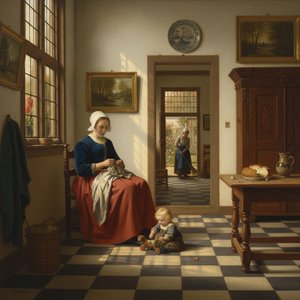
Pieter de Hooch: Illuminating Dutch Domestic Life & Golden Age Charm
Explore the captivating world of Pieter de Hooch, a master of Dutch Golden Age painting. Discover his innovative use of light, intimate domestic scenes, and lasting influence on art history. Learn more at OriginalUniqueArt.

Willem van de Velde the Elder: Master of Maritime Painting & Chronicler of the Dutch Golden Age
Discover the captivating maritime paintings of Willem van de Velde the Elder, a master chronicler of the Dutch Golden Age. Explore his unparalleled realism and lasting influence on naval art history.

Hollandi Kuldaja Särgas Kunstipärit: 10 Meisterteost Sinu Koduks
Sukeldu Hollandi Kuldaja kunstivorme! Avasta 10 ikoonilist meistriteost – Rembrandt, Vermeer jt. - ning nende ajatu loojatööd. Leia inspiratsiooni interjöörile ja kaunista kodu OriginalUniqueArt.com kvaliteetsete reproduktsioonidega. Uuri kollektsiooni!
