
 Eelvaade
 Saada
Saada Jaga
Jaga
 Teave teose kohta
 Juhend

 Laadi alla
 Sarnased teosed
 Röntgenuuring
 Slaidietendus
 Q&A
Q&A Statistika
Couple with Parrot

- 73.0 x 62.0 cm


 Loe lähemalt
Giclée / Kunstiprint
Muuseumikvaliteediga giclée- või kangasprint kiire tootmisega ja paindlikud viimistlusvõimalused. ( Osta käsitsi maalatud teos Lülita digitaalse pildi juurde)




P118B €10

P118H €10

P118W €10

P438Z €10

P508JH €12

P508YH €12

P805H €10

P805Z €10

P919BZ €10

P919G €10

P919XJ €10

P959ZH €10

P968JZ €12

W106C €8

W218G €10

W218JH €8

W218Y €10

W307PJ €10

W316G €10

W316PJ €8

W316Y €10

W398PJ €8

W4111J €10

W500HY €15

W500JH €15

W692G €12

W849H €8

W940BG €15

W953PJ €8




Vali meie eelmääratud suurused, mis vastavad teose algupärastele proportsioonidele.

Sisestage vajalik laius ja kõrgus, et see sobiks teie raamile või seinale. Trükki saab ainult lõigata, seda ei saa kunagi pildist suuremaks teha, seega ka erineva mustega suurus kaotab osa pildist. Enne trükkimist saadame teile kinnitamiseks digitaalse näidisprojektsiooni. Sellel lehel näidatud pilt ei kujuta reaalset lõiget — seda näitab ainult näidisprojektsioon.
Ülemaailmne tarne () 2 nädala jooksul, tavalise 4/5 nädala asemel. (1 november)

Tasuta ekspresssaatmine üle maailma

Kõrgekvaliteediline lina-kangas

Täielik transpordikindlustus

Tollimaksude tagastamise garantii

Värvitoime täpsuse garantii

100 päeva tagastusõigus (ainult valmistusdefektide korral)

100% raha tagasi garantii

Hulgusoodustus
 Klaasivalik on saadaval ainult kuni 110 cm suuruses teostes

Couple with Parrot
Giclée / Kunstiprint
Reproduktsiooni suurus
-


Koguhind
€ 71
A Quiet Moment in the Dutch Golden Age
In the soft, diffused light of a seventeenth-century interior, Pieter de Hooch invites us into a world of profound intimacy and domestic tranquility. Couple with Parrot, painted in 1668, is far more than a mere portrait; it is a masterclass in the art of observation. The scene unfolds with a gentle grace, capturing a man and a woman caught in a moment of quiet connection. As the gentleman stands protectively behind his seated companion, there is an unmistakable sense of shared history and unspoken affection between them. De Hooch, a luminary of the Dutch Golden Age, possessed a singular ability to elevate the mundane into the magnificent, turning a simple room into a stage for the subtle complexities of human emotion.
The composition is enriched by a meticulous attention to detail that delights both the eye and the intellect. A clock hangs upon the wall, its steady presence serving as a silent reminder of the passage of time, while a small bird perched nearby introduces a touch of the natural world into this controlled, indoor setting. Every object—from the delicate cup resting on the table to the textures of the surrounding architecture—is rendered with a precision that suggests a deep reverence for the everyday. For the discerning collector or interior designer, this painting offers a sense of timelessness, providing a focal point that breathes life and narrative depth into any sophisticated space.
Mastery of Light and Domestic Realism
Technically, de Hooch’s work is a triumph of light and spatial depth. His mastery lies in the way he manipulates illumination to guide the viewer's gaze through the room, creating a sense of atmosphere that feels almost tactile. The light does not merely illuminate the subjects; it caresses the surfaces of the furniture and softens the edges of the figures, weaving them into the very fabric of the environment. This technique, often referred to as doorkijkje—the view through an open doorway or into adjacent spaces—creates a layered complexity that makes the room feel expansive yet cozy.
The artist’s palette is restrained yet incredibly effective, utilizing earthy tones and subtle highlights to evoke the warmth of a lived-in home. This realism was deeply rooted in the values of the emerging Dutch middle class, who sought art that reflected their own lives, virtues, and domestic stability. By capturing the quiet dignity of this couple, de Hooch provides an emotional resonance that transcends the centuries. To possess a reproduction of such a piece is to bring a fragment of history’s most peaceful era into one's home, offering an enduring sense of calm, elegance, and cultured sophistication.
Korduvad küsimused
Millist emotsiooni „Couple with Parrot“, autor Pieter De Hooch edastab?
Teose „Couple with Parrot“, autor Pieter De Hooch emotsionaalne toon on Reflective. See kokkuvõtab tunnet, mida teos väljendab.
Kas on "Couple with Parrot" kuulus Dutch Golden Age suunaga teos?
Teos „Couple with Parrot“, autor Pieter De Hooch on klassifitseeritud tasemele Recognized ning kuulub Dutch Golden Age suunasse.
Kas saan teose "Couple with Parrot" näha täiskuunil slideshowina?
Saadaval on diavorama: „Couple with Parrot“, autor Pieter De Hooch teose Pildikava leht.
Kunstniku elulugu
varajärglut ja õppimisaastad
Pieter de Hooch, Hollandi kuldaja üks silmapaistvamaid isikuid, sündis 20. detsembri 1629. aastal Rotterdamis, Hollandis. Ta oli kukkunud kivi ehitaja Hendrick Hendricksz de Hoochi ja kelsnaine Annetge Pietersi vanim viiest lapsest. Tema varajastest aastad on ajaloo jaoks pigem saladuslikud, kuid uskutakse, et ta tegutses Rotterdamis, Delftis ja Amsterdamis. De Hoochi kunstiline haridus toimus Haarlemis koos Jacob Ochtervelti, õppeajal olnud maaparstaja Nicolaes Berchemiga. See periood pani aluse tema tulevasele edukusele vaikete kodumajanduste ja avatud uksestike ilmestatud stseenide maalajana.kunstiline stiil ja teemad
De Hoochi loomingut iseloomustab detailide täpsus, naturalism ja valguse meisterlik kasutamine. Tema maalid peegeldasid sageli igapäevaelu, edustades uuenemiskasvu keskklassi väärtusi ja ambitsioone. Sellise stiili suurepärane näide on "maja aukoid Delftis" (1658), mis demonstreerib tema võimekust tabada igapäevaelu kõige banalsemid, kuid olemuslikud detailid. Kuigi de Hoochi teosest löytyvad sarnased teemad ja kompositsioonid ka Emanuel de Wittel, eristub ta inimkesknema fookuse ja suhete sügavuma uurimisega. See on selgelt nähtav teostes "nõustav naine" (1658) ja "naine laps lapsel" (1658), mis kinnistavad tema huvi kodustele stseenidele.olulised teosed ja pärand
De Hoochi kõige märkimistavamate teostega on:- "rõõmus jooj" (umbik. 1650)
- "kaardimängijad päikeseloenduses" (1658)
- "naine valmistamas leiba ja võid poiale" (1661)
muuseumid ja kogumikud
De Hoochi teoseid saab leida erinevatest muuseumidest, sealhulgas Antwerpis, Belgias asuvast Koninklijk Museum voor Schone Kunsten muuseumist, mis hoiab endas tohutut kogumist Euroopa kunstist 15. kuni 20. sajandini. Lugege rohkem Pieter de Hoochi ja tema teoste kohta OriginalUniqueArt lehel: [https://OriginalUniqueArt.com/@/pieter-de-hooch](https://OriginalUniqueArt.com/@/pieter-de-hooch) /et/art/show/art-d3b4kt-et/ (avastage Belgias asuva Koninklijk Museum voor Schone Kunstensi meistriteoseid)
Pieter De Hooch
1629 - 1694 , Holland
Lühikest infot
- Artistic Movement Or Style: Delfti kool, Hollandi kuldajärg
- Artists Or Movements Influenced By This Artist: ['Jan Vermeer']
- Artists Who Influenced This Artist: ['Nicolaes Berchem']
- Date Of Birth: 20. detsembri 1629
- Full Name: Pieter Hendricksz de Hooch
- Nationality: Hollandi
- Notable Artworks:
- Tühi klaas
- Naine kirja lugemisel
- Kaardimängijad päikeselootes ruumis
- Naine valmistamas leiba ja võid
- Place Of Birth: Rotterdam, Holland
Sarnased artiklid

Willem van de Velde the Elder: Master of Maritime Painting & Chronicler of the Dutch Golden Age
Discover the captivating maritime paintings of Willem van de Velde the Elder, a master chronicler of the Dutch Golden Age. Explore his unparalleled realism and lasting influence on naval art history.
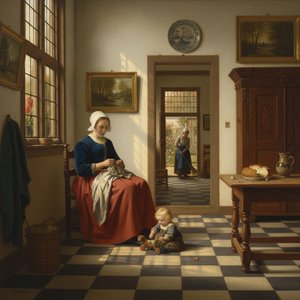
Pieter de Hooch: Illuminating Dutch Domestic Life & Golden Age Charm
Explore the captivating world of Pieter de Hooch, a master of Dutch Golden Age painting. Discover his innovative use of light, intimate domestic scenes, and lasting influence on art history. Learn more at OriginalUniqueArt.

Mastering Light & Shadow: A Journey Through the Dutch Golden Age's Luminous Legacy
Embark on a cultural journey through the Dutch Golden Age. Explore the masterful interplay of light and shadow in 17th-century masterpieces, from Rembrandt to Vermeer, and discover how this era of profound realism continues to inspire fine art collectors today.

Hollandi Kuldaja Särgas Kunstipärit: 10 Meisterteost Sinu Koduks
Sukeldu Hollandi Kuldaja kunstivorme! Avasta 10 ikoonilist meistriteost – Rembrandt, Vermeer jt. - ning nende ajatu loojatööd. Leia inspiratsiooni interjöörile ja kaunista kodu OriginalUniqueArt.com kvaliteetsete reproduktsioonidega. Uuri kollektsiooni!

Golden Light & Dutch Skies: The Timeless Magic of Dutch Golden Age Landscapes
Discover the breathtaking beauty of Dutch Golden Age landscapes. Explore the mastery of light, chiaroscuro, and 17th-century realism through an expert art history lens, celebrating the enduring legacy of the Dutch Masters for discerning collectors and art lovers.
