Lülita trükkitoodetele
 Loe lähemalt







































 Kunstiteoste või reproduktsioonide puhul, mille üks külg on üle 105 cm (umbikmolt 41 tolli), saadetakse raam kirjal asendis, la Dismantlitud komplektina. See meetod tagab ohutuse kohaletoimetamisel ja väldib transpordil tekkivaid kahjustusi.


The Gray Tree: A Pioneer of Cubist Abstraction
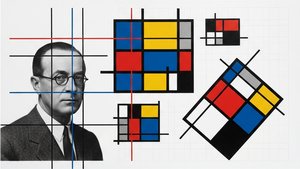
Piet Mondrian’s *The Gray Tree*, painted in 1911, stands as a cornerstone of modern art—a testament to the transformative power of abstraction and the burgeoning influence of Cubism on European artistic sensibilities. More than just a depiction of a tree, it embodies Mondrian's unwavering pursuit of universal beauty through geometric forms and reductive color palettes, marking a decisive step away from representational painting toward a radically new aesthetic vision.Early Influences and Impressionistic Roots
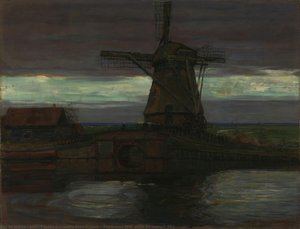
Before embracing the bold experimentation of Cubism, Mondrian honed his skills in Impressionism and Fauvism. Paintings like *The Red Mill*, created around 1908, reveal an artist deeply attuned to capturing fleeting moments of light and color—a characteristic that would linger subtly within his later works. However, Mondrian recognized the limitations of these styles in conveying deeper philosophical concepts; he sought a more profound articulation of spiritual truth through visual language. This desire fueled his exploration of alternative approaches, culminating in his groundbreaking embrace of Cubist principles.Cubist Elements: Fragmented Form and Geometric Precision
The Gray Tree exemplifies Mondrian’s masterful application of Cubist techniques. The tree itself is rendered as a series of intersecting black and white rectangles—a deliberate simplification that abandons naturalistic detail for structural clarity. These geometric shapes aren't merely decorative; they represent fundamental building blocks of the universe, mirroring Mondrian’s belief in the primacy of mathematical order. The artist meticulously crafted each element to create a sense of depth and dimensionality, despite the absence of traditional shading or perspective—a feat achieved through careful consideration of spatial relationships and rhythmic composition.Symbolism Beyond Representation
Beyond its formal structure, *The Gray Tree* carries significant symbolic weight. Mondrian’s choice of monochrome colors—black, white, and gray—reflects his spiritual quest for purity and transcendence. These hues symbolize the essential elements of existence—the void and the divine—and represent a rejection of earthly materiality. The tree itself serves as an emblem of resilience and growth—a visual metaphor for overcoming obstacles and striving toward enlightenment. Mondrian’s intention was not to depict reality but rather to express its underlying spiritual essence through abstract forms, aligning with his broader philosophical convictions.A Legacy of Influence: Shaping Modern Art Movements
Mondrian's *The Gray Tree* profoundly impacted subsequent art movements—most notably Color Field painting and Minimalism—establishing a precedent for prioritizing pure color and geometric abstraction. Artists like Mark Rothko and Agnes Martin drew inspiration from Mondrian’s reductive aesthetic, adopting similar palettes and compositional strategies to explore themes of spirituality and contemplation. As Stephen Bayley eloquently stated, “Mondrian has come to mean Modernism. His name and his work sum up the High Modernist ideal.” The Gray Tree remains a pivotal piece in this artistic journey—a symbol of innovation and a testament to Mondrian’s enduring contribution to the evolution of modern art. For those eager to delve deeper into Mondrian's oeuvre, *The Gray Tree* is available for viewing at OriginalUniqueArt.com: The Gray Tree.- Piet Mondrian was a Dutch painter and art theoretician known for his contributions to abstract art.
- Lehmbruck Museum in Germany houses an important collection of modern sculptures, including works by prominent artists like A.
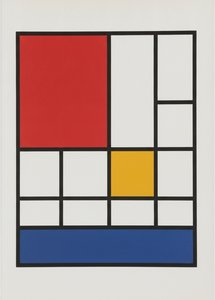
- Tableau no. 2 Composition no. V is another notable work by Mondrian available at OriginalUniqueArt.com.
Korduvad küsimused
Millist suurust ja orientatsiooni soovitatakse teosele „The Gray Tree“, autor Piet Mondriaan trükkimisel?
Teose "The Gray Tree" puhul on soovitatav trükiformaat Suur suurusega ja Horisontaalne suund suunaga.
Kui palju oli Piet Mondriaan aastane, kui teos "The Gray Tree" loodi?
Piet Mondriaan loobus teose "The Gray Tree" 39 aasta vanuses. Kunstnik on sündinud aastal 1872 ning teos on dateeritud 1911.
Kas teosele „The Gray Tree“, autor Piet Mondriaan on olemas juhend?
Teosele „The Gray Tree“, autor Piet Mondriaan on saadaval Õppekasutusjuhend leht: trüvitav infoleht teose kohta, mis on loodud õpilasteks ja klassiruumis kasutamiseks.
 Eelvaade
 Saada
Saada Jaga
Jaga
 Teave teose kohta
 Juhend

 Laadi alla
 Sarnased teosed
 Röntgenuuring
 Slaidietendus
 Q&A
Q&A Statistika