Expressionism
Self-portrait (Paula Modersohn-Becker)
Paula Modersohn-Becker (1876–1907) on loonud teose Self-portrait. See kuulub Expressionism suuntrime. Teos on valmistatud materjalist Oil On Canvas.
- Oil On Canvas

 Eelvaade

 Käsitsi maalatud õlimaalatsioon
 Saada
 Jaga
 Teave teose kohta


 Laadi alla
 Sarnased teosed
 Röntgenuuring
 Slaidietendus
 KÜSIMUSED JA VASTUSID

 Statistika
Self-portrait lühidalt
- Pealkiri
- Self-portrait
- Kunstnik
- Paula Modersohn-Becker (1876–1907)
- Kunstnik on sündinud
- Dresden, Saksamaa
- Tehnika
- Oil On Canvas
- Suunad
- Expressionism
- Aeglkond
- Modern
- Teema
- woman, red hair, green shirt, face, eyes, wall
Mida Self-portrait kujutab?
Identification of the Self-portrait
Self-portrait is a creation by the German Expressionist painter and draftswoman Paula Modersohn-Becker. This specific piece belongs to a vast body of work produced during her active life. The artist was born on 8 February 1876 in Dresden, Germany, and passed away on 30 November 1907 in Worpswede.
In this work, Paula Modersohn-Becker turns her gaze toward the viewer. The image captures a moment of quiet intensity through the artist's own likeness. It remains a direct encounter with her presence.
The Composition and Visual Details
The subject is positioned in front of a plain wall, seated in a manner that brings her face into sharp prominence. She wears a green shirt that contrasts with her red hair. Her hair is styled in an unconventional manner, contributing to the singular presence of the figure. The composition focuses heavily on the facial features, emphasizing a directness of gaze. Her eyes are open wide, looking straight ahead to meet the viewer's eyes with quiet intensity.
The arrangement of the figure against the background creates a sense of immediate, unmediated encounter. There is a notable focus on the psychological weight of the stare. The simplicity of the setting ensures that the viewer's attention remains fixed on the subject's expression and the specific arrangement of her features. This directness removes any sense of artifice from the encounter.
Technique and Artistic Medium
Executed in oil on canvas, this work exemplifies the principles of Expressionism. The medium allows for a directness of form that prioritizes the psychological state over mere physical likeness. Through the application of pigment, the artist achieves a sense of quiet intensity, focusing on the essential features of the face and the gaze to facilitate a moment of introspection.
The application of paint emphasizes a recognizable simplicity of form. This approach moves away from the atmospheric concerns of Impressionism, opting instead for a more structured and subjective visual language. The surface carries the weight of the artist's presence, using color and composition to explore the nuances of identity.
Where to See This Artwork Today
This work is held at the Paula Modersohn-Becker Museum in Bremen, Germany. The institution serves as a primary repository for the artist's output, housing a significant portion of her creative legacy.
Founded in 1927, the museum holds a unique position in art history as the first museum in the world devoted solely to a female artist. Its collection provides a comprehensive view of her development from her early training to her final years in Paris.
Related Works by the Artist
The artist's exploration of the self continued through several distinct phases of her career. In 1906, she produced Self-Portrait Looking Slightly Left, a work that shares a similar searching quality with her other studies of identity. During that same year, she completed Self-Portrait at 6th Wedding Anniversary, a piece that captures a specific moment of transition. This work is also known as Self-portrait on the sixth anniversary of marriage.
Earlier compositions reveal a different focus on objects and the female form. Around 1904, she created Self-Portrait with a bowl and a glass. Her interest in the intersection of the female form and the natural world is further evidenced in Self-Portrait with Two Flowers, where she cradles blossoms with a deliberate, steady intention.
Self-portrait kõrge resolutsiooniga pildid
Avalik omanik: kunstnik suri aastal 1907.
Paula Modersohn-Becker, Self-portrait. Avalik omaniklik õigus
Küsimused teemal Self-portrait – vastused
Millises materjalis on teos „Self-portrait“, autor Paula Modersohn-Becker valmistatud?
Teos "Self-portrait" on valmistatud tehnika Oil On Canvas.
Mida „Self-portrait“, autor Paula Modersohn-Becker kujutab?
Teose "Self-portrait" teemad on woman, red hair, green shirt, face, eyes, wall.
Kas teos „Self-portrait“, autor Paula Modersohn-Becker kuulub avalikku omandisse?
Autoriõiguse teave teose „Self-portrait“, autor Paula Modersohn-Becker kohta: teos kuulub luba ala avalikus õiguses – selle autoriõigud onหมดunud. See määrab, kas kujundist on lubatud vabadelt reproduktsioone teha.
Kes on teose "Self-portrait" looja?
Teose "Self-portrait" looja on Paula Modersohn-Becker. Teos on kataloogitud nime Paula Modersohn-Becker all.
Millissele kunstisuunale kuulub teos „Self-portrait“, autor Paula Modersohn-Becker?
Teosest „Self-portrait“, autor Paula Modersohn-Becker tuntud kunstisuuna on Expressionism. See klassifikatsioon aitab teost paigutada sarnaste kunstnike ja teoste hulka.
Miks on teose "Self-portrait" autoriõiguste staatus selline, nagu see on?
Teose "Self-portrait" autoriõiguste staatus - avalikus õiguses – selle autoriõigud onหมดunud - tuleneb kunstniku surma aastast 1907.
Kust koht teoses "Self-portrait" on Paula Modersohn-Becker loomingus?
Teos "Self-portrait" jagab koos Paula Modersohn-Becker teistega Expressionism stiili ja korduvaid teemasid: cézanne, gauguin, van gogh, identity and femininity, self-exploration and agency, pioneer of expressionism.
Kuidas teose "Self-portrait" motiiv seobub Paula Modersohn-Becker tavalistega teemadega?
Paula Modersohn-Becker korduvad teemad hõlmavad cézanne, gauguin, van gogh, identity and femininity, self-exploration and agency, pioneer of expressionism; teos "Self-portrait" keskendub woman, red hair, green shirt, face, eyes, wall.
Kunstnikust, Paula Modersohn-Becker

1876–1907, Saksamaa
Paula Modersohn-Becker
Pioneer Vaimu: Paula Modersohn-Becker Elu ja Kunst Paula Modersohn-Becker, nimi mis kõlab vaikse jõuna varajase modernse kunsti kroonikates, oli kunstnik, kes julges sissepoole vaadata. Sündinud Minna Hermine Paula Beckerina 8. veebruaril 1876. aastal Dresdenis Saksamaal, oli tema elu tragiliselt lühike – ta suri 30.
Teel Paula Modersohn-Becker kohta Paula Modersohn-Becker silmapaistvad teosed
Ka Paula Modersohn-Becker teosed
 Portrait of a young woman with red hat1900
 Half-length portrait of an old farmer1903
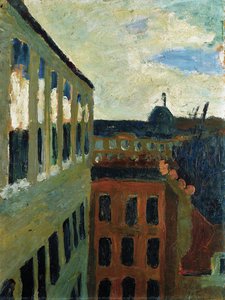 View from the studio window of the artist in Paris1900
 Still life with plant, lemon and orange1906
Essee teemadel Self-portrait
 Polish artworks of the 1900sPolish Symbolism in the 1900s features masterpieces by Jacek Malczewski, Olga Boznańska, and Józef Mehoffer. View the full collection at Or…
 German artworks of the 1900sGerman Expressionism through the works of Franz Marc, Ernst Ludwig Kirchner, and August Macke. Find museum-quality reproductions on Origina…
 Egon Schiele 25 Parimat Teost: Kunsti Sügavus ja Ekspressiivsus OriginalUniqueArt.com-isAvastage Egon Schiele 25 parimat teost! Sukelduge ekspressionismi maailma, portreekunstis ja Austria maalikunsti sügavustesse. Leidke inspi…