Lülita trükkitoodetele
 Loe lähemalt







































 Kunstiteoste või reproduktsioonide puhul, mille üks külg on üle 105 cm (umbikmolt 41 tolli), saadetakse raam kirjal asendis, la Dismantlitud komplektina. See meetod tagab ohutuse kohaletoimetamisel ja väldib transpordil tekkivaid kahjustusi.


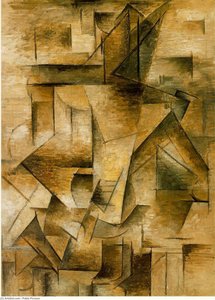
Pablo Picasso – ‘Seated Woman 8’ – A Window into Analytical Cubism
Pablo Picasso's ‘Seated Woman 8’, painted in 1967, isn’t merely a portrait; it’s a meticulously constructed exploration of form and perception, a cornerstone of the analytical cubist movement. This work, often overlooked amidst Picasso’s prolific output, offers a profound insight into his revolutionary approach to representing reality – dismantling it not with broad strokes, but with precise geometric shards.
The painting depicts a woman seated in a chair, her posture relaxed yet imbued with an almost unsettling stillness. However, the viewer isn't presented with a traditional representation of volume or space. Instead, Picasso has fractured the figure into interlocking planes and angles, creating a dynamic composition where perspective is deliberately distorted. The chair itself is similarly deconstructed, its legs and back reduced to sharp, angular forms that seem to float independently within the canvas.
The Language of Fragmentation: Analytical Cubism
‘Seated Woman 8’ exemplifies the core tenets of analytical cubism, a phase initiated by Picasso and Georges Braque around 1907. Unlike the earlier ‘synthetic’ cubism which often incorporated collage elements, this work focuses solely on dissecting and reconstructing form. The artist meticulously renders multiple viewpoints of the subject simultaneously – we see her from various angles at once – creating an illusion of depth through a complex interplay of geometric shapes. Notice the subtle shifts in color; muted blues, browns, and ochres contribute to the painting’s somber mood, reflecting the intellectual rigor behind its creation.
Symbolism and Emotional Resonance
While seemingly abstract, ‘Seated Woman 8’ is rich with symbolic undertones. The woman's gaze, direct and unwavering, invites contemplation. Some art historians suggest that her posture reflects a sense of isolation or introspection – a common theme in Picasso’s work during this period. The fragmented nature of the figure can be interpreted as representing the breakdown of traditional values and beliefs, a hallmark of the early 20th century. The deliberate ambiguity encourages viewers to actively engage with the artwork, projecting their own interpretations onto its fractured surface.
A Legacy of Innovation
'Seated Woman 8' stands as a testament to Picasso’s genius and his pivotal role in transforming the landscape of modern art. It demonstrates how he moved beyond simply depicting what he saw to exploring *how* we see, challenging our assumptions about representation and paving the way for countless artists who followed. Its enduring appeal lies not just in its technical mastery but also in its profound exploration of form, space, and the human condition – a timeless masterpiece that continues to captivate and inspire.
Korduvad küsimused
Kui karge on teose "Istungitüdruk 8" väripalett?
Teose "Istungitüdruk 8" värvipalett on koonuse方面 Kerge värvitoon.
Millist teemat ja atmosfääri „Istungitüdruk 8“, autor Pablo Picasso ühendab?
Teos „Istungitüdruk 8“, autor Pablo Picasso ühendab endas cubism, picasso, woman, portrait, geometric, abstract, fragmented ning loob Draamatiline atmosfääri.
Kui suur on kontrasst teoses „Istungitüdruk 8“, autor Pablo Picasso?
Teose "Istungitüdruk 8" valgus-varjundite kontrast on Kõrge kontrast. Kontrast kirjeldab, kui teravalt erinevad heeled ja tumedad alad.
 Eelvaade
 Saada
Saada Jaga
Jaga
 Teave teose kohta
 Juhend

 Laadi alla
 Sarnased teosed
 Röntgenuuring
 Slaidietendus
 KÜSIMUSED JA VASTUSID
 Statistika