

 Vaata sisu
 Jaga teost
 Jaga
Jaga
 Detailid
 Õppekate juhend

 Laadi alla
 Sarnased teosed
 Röntgenuuring
 Slaidietendus
 Statistika
Roger and Angelica


 Loe lähemalt
Giclée / Kunstiprint
Muuseumikvaliteediga giclée- või kangasprint kiire tootmisega ja paindlikud viimistlusvõimalused. ( Telli käsitsi maalitud reproduktsioon Ülemineku digitaalse pildi müügi kanalisse)




P118B €10

P118H €10

P118W €10

P438Z €10

P508JH €12

P508YH €12

P805H €10

P805Z €10

P919BZ €10

P919G €10

P919XJ €10

P959ZH €10

P968JZ €12

W106C €8

W218G €10

W218JH €8

W218Y €10

W307PJ €10

W316G €10

W316PJ €8

W316Y €10

W398PJ €8

W4111J €10

W500HY €15

W500JH €15

W692G €12

W849H €8

W940BG €15

W953PJ €8




Vali meie eelmääratud suurused, mis vastavad teose algupärastele proportsioonidele.

Sisestage vajalik laius ja kõrgus, et see sobiks teie raamile või seinale. Trükki saab ainult lõigata, seda ei saa kunagi pildist suuremaks teha, seega ka differentse vormiga suurus kaotab osa pildist. Enne trükkimist saadame teile kinnitamiseks digitaalse näidisprojektsiooni. Sellel lehel näidatud pilt ei kujuta reaalset lõiget — seda näitab ainult näidisprojekttsioon.
Ülemaailmne tarne () 2 nädala jooksul, tavalise 4/5 nädala asemel. (23 oktoober)

Tasuta ekspresssaatmine üle maailma

Kõrgekvaliteediline lina-kangastest muld

Täielik transpordikindlustus

Tollimaksude tagastamise garantii

Värvitoime täpsuse garantii

100 päeva tagastusõigus (ainult defektide korral)

100% raha tagasi garantii

Hulgusoodustus
 Klaasivalik on saadaval ainult kuni 110 cm suuruses teostes

Roger and Angelica
Giclée / Kunstiprint
Reproduktsiooni mõõtmed
-


Lõppsumma
€ 70
Unveiling the Dreamscape: Odilon Redon’s “Roger and Angelica”
Odilon Redon's "Roger and Angelica," painted in 1910, is not merely a depiction of a scene; it’s an immersion into a profoundly unsettling and beautiful dream. This work, emerging from the artist’s lifelong exploration of the subconscious and the realms beyond perception, embodies the core tenets of Symbolism and foreshadows the anxieties of Expressionism that would dominate much of the 20th century. The painting immediately commands attention with its dominant palette of deep blues and browns, colors traditionally associated with melancholy, mystery, and the depths of the ocean – a fitting backdrop for the unsettling narrative unfolding before us.
- Subject Matter: The composition centers around a solitary figure emerging from turbulent waves, seemingly adrift in a landscape dominated by an imposing architectural structure. This pairing—the vulnerable human form against the rigid and potentially oppressive architecture—immediately establishes a tension between individual struggle and societal forces.
- Style & Technique: Redon’s brushwork is deliberately loose and expressive, eschewing photographic realism for a focus on conveying emotion and atmosphere. The impasto technique – thick application of paint – adds to the textural richness and reinforces the sense of instability and movement within the scene. It's clear that he was working with oil on canvas, utilizing the medium’s capabilities to create a palpable sense of depth and drama.
A Symphony of Symbolism
“Roger and Angelica” is rich in symbolic resonance, inviting multiple interpretations. The turbulent waves represent chaos, disruption, and perhaps even the overwhelming forces of nature – challenges that threaten to engulf the individual. Conversely, the looming architectural structure suggests power, authority, or perhaps a decaying civilization. The flattened perspective further enhances this dreamlike quality, blurring the boundaries between reality and illusion. Redon’s use of ambiguous forms—the indistinct figure, the blurred lines—forces the viewer to actively participate in constructing meaning, mirroring the experience of navigating one's own subconscious.
- Waves as Metaphor: The waves are not simply a natural element; they symbolize emotional turmoil, uncertainty, and the relentless passage of time.
- Architecture’s Ambiguity: The building could represent societal constraints, oppressive institutions, or even the artist's own anxieties about artistic recognition.
Historical Context & Redon’s Vision
Created in 1910, “Roger and Angelica” reflects a pivotal moment in art history. Redon was working at the cusp of significant stylistic shifts, influenced by the Symbolist movement's emphasis on subjective experience and emotional expression. His early training in etching and lithography – techniques that allowed him to explore shadowy forms and ambiguous narratives – profoundly shaped his artistic vision. Born in Bordeaux in 1840, Redon’s life was marked by a persistent pursuit of the unseen, a desire to translate the hidden landscapes of the imagination onto canvas. His work anticipated many of the concerns explored by later Expressionist artists, demonstrating a remarkable prescience regarding the anxieties of the modern age.
Emotional Impact & Artistic Legacy
The overall emotional tone of “Roger and Angelica” is undeniably melancholic and somewhat ominous. It evokes a sense of isolation, vulnerability, and perhaps even dread. Redon’s masterful manipulation of light and shadow, combined with his expressive brushwork, creates a powerfully evocative image that continues to resonate with viewers today. This painting stands as a testament to Redon's unique ability to tap into the deepest recesses of the human psyche, offering a glimpse into a world beyond the visible—a legacy that continues to inspire artists and captivate art lovers worldwide.
Küsimused ja vastused
Kas teosele „Roger and Angelica“, autor Odilon Redon on olemas juhend?
Teose „Roger and Angelica“, autor Odilon Redon Juhend leht pakub trükkideletavast kahele lehele jaotatud infolehte: teose koos identifiekatsiooniga, ajajooni, mis asetab selle kunstniku eluajale, muid kunstniku teoseid, mõõdetud väripaletti ning neljas stiilis kopeerimiseks valmis allatlusi.
Millised on teose "Roger and Angelica" reprodutseerimissõjaõigused MoMA - Kaasaegse Kunsti Muuseum kogumuses?
Teos „Roger and Angelica“, autor Odilon Redon, mis asub MoMA - Kaasaegse Kunsti Muuseum kogumuses, kuulub lubaõigusliku ala kategoria avalikus õiguses – selle autoriõigud onหมดunud. See staatus määravad, kas teose reproduktsioone on lubatud valmistada.
Kui harmoniliselt on teoses „Roger and Angelica“, autor Odilon Redon värvid ühendatud?
Teose „Roger and Angelica“, autor Odilon Redon värvid kujutavad Discordant Palette harmooniat. Harmoonia kirjeldab, kuidas värvid omavahel seotud on.
Kunstniku elulugu
Odilon Redon (1840-1916), Between Shadow and Light
Odilon Redon, born Bertrand Jean Redon in Bordeaux, France, was an artist perpetually drawn to translate the unseen realms of imagination and dream into tangible form. His artistic journey began not with grand ambition but with quiet observation; at just ten years old he won a drawing prize—a foreshadowing of the visual sensitivity that would define his life’s work. Though initially steered towards architecture by familial expectations, Redon's true calling lay elsewhere, illuminated by instruction from Jean- Léon Gérôme and, crucially, Rodolphe Bresdin, who guided him in the intricate arts of etching and lithography. These techniques became foundational to his early explorations, allowing him to delve into a world of shadowy figures and ambiguous forms that would soon captivate those seeking an alternative to academic realism. The interruption of the Franco-Prussian War saw Redon briefly serving in the military, but it was upon his return to Paris that his artistic vision truly began to coalesce.Early Life and Influences
Redon’s childhood was marked by a profound connection with nature—specifically the landscape surrounding Bordeaux and Peyrelebade vineyard estate near Listrac-Médoc where he spent summers. This formative experience instilled in him an enduring fascination with organic forms and textures, which would permeate his artistic output throughout his life. At seven, a visit to Parisian museums profoundly impacted his artistic sensibility, exposing him to the works of masters like Millet and Corot—artists who championed tonal landscapes and conveyed emotion through subtle shading. Formal art training began at age eleven under Stanislas Gorin, a pupil of Eugène Isabey, who introduced Redon to the Romantic and Symbolist traditions of painting. His father’s insistence on architectural studies ultimately proved unsuccessful in fulfilling his ambitions for a career in design, though he continued to pursue artistic endeavors alongside his professional pursuits. The influence of writers like Edgar Allan Poe and Charles Baudelaire—who shared a fascination with the macabre, the mysterious, and the power of suggestion—is palpable in Redon’s early works, shaping his stylistic choices and thematic concerns. Notably, he was deeply moved by Darwin's theory of evolution, which challenged prevailing scientific dogma and opened up new avenues for artistic exploration.The Birth of Symbolism: ‘Noirs’ and Early Visions
Redon’s artistic breakthrough arrived in 1879 with the publication of *Dans le rêve* (In the Dream)—his first album of lithographs printed by Lemercier—a pivotal moment that cemented his position within the burgeoning Symbolist movement. These monochrome prints, executed primarily in charcoal and lithography, represented a radical departure from academic realism, prioritizing emotional resonance over visual accuracy. The “noirs,” as these works came to be known, weren’t merely studies in darkness; they were explorations of the subconscious mind—populated by unsettling creatures, disembodied eyes, and haunting figures emerging from swirling mists. Redon deliberately rejected conventional artistic conventions, seeking instead to evoke feelings of anxiety, wonder, and melancholy—themes that would recur throughout his oeuvre. The stylistic echoes of Poe and Baudelaire are unmistakable: a shared preoccupation with psychological horror and the unsettling beauty of decay. Critics initially dismissed Redon’s “noirs” as morbid fantasies, yet they quickly gained recognition for their expressive power and masterful technique.Technique and Artistic Vision
Redon's mastery of etching and lithography—skills honed under Rodolphe Bresdin—became indispensable to his artistic process. He meticulously crafted each print, employing subtle tonal gradations and intricate textures to convey mood and atmosphere with remarkable precision. His use of charcoal was particularly distinctive, allowing him to capture the ethereal quality of dreams and visions—a stylistic hallmark that would define his signature style. Beyond technique, Redon possessed a profound philosophical outlook informed by scientific discoveries and literary influences. He believed in “placing the visible at the service of the invisible,” striving to represent not merely what he saw but what he felt—a principle that underpinned his artistic endeavors throughout his life. His fascination with mythology and Eastern religions—particularly Buddhism—manifested itself in symbolic imagery and compositional arrangements that reflected a desire for transcendence.Legacy and Influence
Odilon Redon’s impact on the art world extends far beyond his own lifetime. He was awarded the Legion of Honor in 1903, recognizing his contribution to French culture and artistic innovation. His work gained wider acclaim with exhibitions at the New York Armory Show in 1913—a landmark event that introduced modern art concepts to American audiences—and Mellerio published *Odilon Redon: Painter, Engraver* in 1923. Most importantly, Redon’s exploration of dreams and irrationality profoundly influenced Surrealist artists like Marcel Duchamp and Max Ernst, who adopted his stylistic techniques and thematic concerns as inspiration. His legacy remains one of artistic courage—a willingness to challenge conventions and embrace the ambiguous—and a testament to the transformative power of art to illuminate hidden dimensions of human experience. He truly captured the essence of Symbolism, prioritizing emotion over realism and delving into realms beyond the observable world.
Odilon Redon
1840 - 1916 , Prantsusmaa
Lühikest infot
- Artistic Movement Or Style: Symbolism
- Artists Or Movements Influenced By This Artist:
- Surrealism
- Marcel Duchamp
- Artists Who Influenced This Artist:
- Jean-Léon Gérôme
- Rodolphe Bresdin
- Date Of Birth: 1840
- Full Name: Odilon Redon
- Nationality: Prantsuse
- Notable Artworks:
- Centaurs
- Onnes
- Portrait of Ari Redon
- Place Of Death: Pariis
Sarnased artiklid

Beyond the Visible: Exploring the Dreamscapes and Psychological Depths of Symbolist Masters
Journey into the ethereal realms of Symbolist art. Discover how masters like Gustave Moreau and Odilon Redon translated dreams and the subconscious onto canvas, capturing profound psychological truths beyond the visible world. An evocative exploration for the true art enthusiast.

The Allure of Azure: Exploring the Symbolic & Aesthetic Depths of Blue in Art History
Explore the rich history of blue in art! Discover its symbolism, from ancient pigments to modern masterpieces by Kandinsky & Seurat. Uncover the psychological impact and cultural meanings behind this captivating hue.

Slate Blue Masterpieces: 10 Iconic Paintings & Timeless Home Decor Ideas
Immerse yourself in the captivating world of slate blue! Explore 10 iconic paintings by Monet, Van Gogh & Renoir. Discover their stories, techniques & find museum-quality art reproductions for your home at .
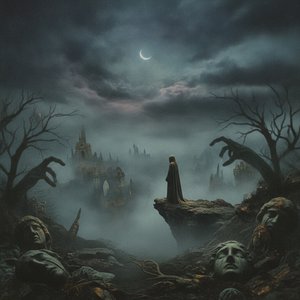
Beyond Reality: The Dark, Dreamy Vibe of the Symbolist Movement
Dive into the dark, hypnotic world of Symbolism. Explore how dreamlike imagery and psychological depth redefined art history, paving the way for Surrealism. Discover how to curate this moody, avant-garde aesthetic for your modern space with expert insights.

Serene Blue Backgrounds: Discover Soulful Art to Transform Your Space with Timeless Elegance
Transform your home with soulful blue art. From serene Monet impressions to modern textured sculptures, discover curated masterpieces designed to inspire calm. Explore expert art consultations and bespoke hand-painted reproductions to create your personal sanctuary.
