

 Vaata sisu
 Jaga teost
 Jaga
Jaga
 Detailid
 Õppekate juhend

 Laadi alla
 Sarnased teosed
 Röntgenuuring
 Slaidietendus
 Statistika
Gethsemane
 Oil On Board
- Neo-Romanticism
 1926
1926- Modern
 42.0 x 32.0 cm
 Bergen Kunstmuseum
 Loe lähemalt
Giclée / Kunstiprint
Muuseumikvaliteediga giclée- või kangasprint kiire tootmisega ja paindlikud viimistlusvõimalused. ( Telli käsitsi maalitud reproduktsioon Ülemineku digitaalse pildi müügi kanalisse)




P118B €10

P118H €10

P118W €10

P438Z €10

P508JH €12

P508YH €12

P805H €10

P805Z €10

P919BZ €10

P919G €10

P919XJ €10

P959ZH €10

P968JZ €12

W106C €8

W218G €10

W218JH €8

W218Y €10

W307PJ €10

W316G €10

W316PJ €8

W316Y €10

W398PJ €8

W4111J €10

W500HY €15

W500JH €15

W692G €12

W849H €8

W940BG €15

W953PJ €8




Vali meie eelmääratud suurused, mis vastavad teose algupärastele proportsioonidele.

Sisestage vajalik laius ja kõrgus, et see sobiks teie raamile või seinale. Trükki saab ainult lõigata, seda ei saa kunagi pildist suuremaks teha, seega ka differentse vormiga suurus kaotab osa pildist. Enne trükkimist saadame teile kinnitamiseks digitaalse näidisprojektsiooni. Sellel lehel näidatud pilt ei kujuta reaalset lõiget — seda näitab ainult näidisprojekttsioon.
Ülemaailmne tarne () 2 nädala jooksul, tavalise 4/5 nädala asemel. (21 oktoober)

Tasuta ekspresssaatmine üle maailma

Kõrgekvaliteediline lina-kangastest muld

Täielik transpordikindlustus

Tollimaksude tagastamise garantii

Värvitoime täpsuse garantii

100 päeva tagastusõigus (ainult defektide korral)

100% raha tagasi garantii

Hulgusoodustus
 Klaasivalik on saadaval ainult kuni 110 cm suuruses teostes

Gethsemane
Giclée / Kunstiprint
Reproduktsiooni mõõtmed
-


Lõppsumma
€ 70
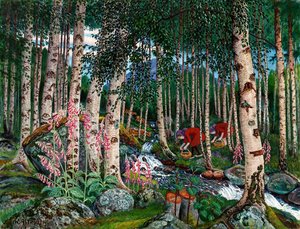
A Visionary Encounter in the Norwegian Garden
In the quiet, evocative depths of Nikolai Astrup’s 1926 masterpiece, Gethsemane, the boundaries between biblical history and the intimate landscapes of Norway begin to dissolve. While the title refers to the sacred garden in Jerusalem where Christ faced his darkest hour, Astrup performs a profound act of artistic localization. He transports this monumental moment of spiritual agony into the familiar, lush surroundings of the parsonage garden in Ålhus. This is not merely a religious illustration; it is a dreamlike fusion of the divine and the terrestrial. The viewer is invited into a space where the heavy atmosphere of the crucifixion narrative meets the verdant, mystical textures of the West Norwegian landscape, creating a scene that feels both ancient and deeply personal.
The composition breathes with a sense of quiet drama, capturing a moment of profound transition. As the eye wanders through the painting, one encounters a scene that oscillates between a somber historical event and a visionary hallucination. The presence of figures—some appearing caught in the weight of the narrative, others seemingly lost in a trance-like state—suggests a world where the veil between reality and the supernatural is perilously thin. This sense of mystery is heightened by the scattered birds that drift through the sky and perch upon the landscape, acting as silent witnesses to the unfolding drama. For the collector or designer, this piece offers more than just a subject; it offers an atmosphere of contemplative depth that can anchor a room with its soulful, introspective energy.
Technique and the Language of Light
Astrup’s technical mastery is evident in his use of oil on cardboard, a medium that allows for a rich, concentrated application of pigment. His style, rooted in Neo-Romanticism, eschews clinical realism in favor of an intense, emotive color palette. The textures are tactile and layered, reflecting the artist's lifelong obsession with the "visual language" of his homeland. He employs light not just to illuminate form, but to evoke mood; the shadows are deep and heavy, yet they are pierced by a spectral luminosity that suggests the presence of a divine vision. This interplay of light and shadow creates a rhythmic movement across the canvas, guiding the viewer through the dense foliage and toward the heart of the spiritual struggle.
The brushwork possesses a certain raw, organic vitality that mirrors the ruggedness of the Norwegian fjords. There is no sterile perfection here; instead, there is a deliberate, expressive quality that celebrates the natural world's untamed spirit. For those seeking to incorporate fine art into a sophisticated interior, a high-quality reproduction of Gethsemane provides a centerpiece of immense character. The painting’s ability to command attention through its complex textures and brooding tones makes it an ideal choice for spaces designed for reflection, such as libraries, study alcoves, or quiet sitting rooms where the interplay of history and nature can be fully appreciated.
A Legacy of Spiritual and National Identity
To understand Gethsemane is to understand Nikolai Astrup’s broader mission: to capture the very soul of Norway. By situating a universal Christian narrative within his own local topography, he elevates the Norwegian landscape to a stage for the eternal. This technique of "sacralizing" the everyday—turning a simple garden patch into a site of cosmic significance—is what makes his work so enduringly powerful. The painting serves as a bridge between the theological and the topographical, making the profound accessible through the familiar.
For the discerning art lover, owning a reproduction of this work is an opportunity to possess a fragment of this visionary legacy. It is a piece that invites continuous re-examination, revealing new layers of symbolism and emotion with every viewing. Whether one is drawn to its historical weight, its masterful use of color, or its ability to evoke the misty, magical atmosphere of a Norwegian night, Gethsemane remains a breathtaking testament to the power of art to transform the world we see into a world we feel.
Küsimused ja vastused
Kas teos "Gethsemane" autorilt Nikolai Astrup kuulub avalikku omandisse ja miks?
Teose "Gethsemane" tegiteks - avalikus õiguses – selle autoriõigud onหมดunud - tuleneb kunstniku surma aastast 1928.
Millised teemad teoses „Gethsemane“, autor Nikolai Astrup esile tõelve?
Teos „Gethsemane“, autor Nikolai Astrup kujutab: biblical scene, religious, jesus christ, gethsemane, norway landscape, night scene, visionary.
Kuidas on "Gethsemane" ajalooliselt positsioneeritud?
Ajalooliselt on "Gethsemane" laiemast Modern ajast pärit Neo-Romanticism teos.
Kunstniku elulugu
Nikolai Astrup: Vestlandeti visjonär
Nikolai Astrup (1880–1928) seisab Eesti kui ka Norra kunstiajaloos eristuvana nähtavena – maalidena, kelle sügavalt tundaudud side Vestlandeti maastikuga ja traditsioonidega kinnitas tema koha oma ajastu kõige eristuvamate neo-romantilike kunstikuid seas. Bremangeris, Sogn og Fjordanes, sündinud Astrupi lapsepuid rugistatud fjordide ja rahustavate orgude kesroll mõmas profoundly tema kunstilist tundlikkust, suunates teda stiili poole, mida iseloomustavad intensiivsed värvipaletid ja vankumatu pühendumus Norra maapiirkondade igapäevase elu kujundamisele. Tema pärand ei peitu pelgalt esteetiliselt nauditavates lakanatest, vaid ka tema uuendusrikkast püüdeldusest tabada „rahvuslik visuaalne keel“, mis kutsub esile tema kodumaa traditsioone ja folklore.- Varajane elu ja haridus: Astrupi kujunendusvuasaid marks õpiõpetlik pühendumus, mida surus talle tema isa Christian Astrup, kirikuraamatust teadlik õpastaja, kes õhutas teda suunama teoloogilisi uuringuid. Vaatamata algsetele kalduvatele kogetusele kiriku teenistuses, viis Astrupi kire joonistamise ja maali vastu armastus lõpuks Trondheimi katedraalikooli hyljatamisele, eelistades kunstilisi tegevusi Kristianias (Oslo), kus ta täisas oma oskusi Harriet Backeri õpetuse all.
- Pariisi mõjud: Lühike peatus Pariisis avas Astrupile uksed kasvavale avantgardistlikule liikumisele, luues sidemeid teiste kunstikollegadega nagu Christian Krohg ning rikkustades oma arusaamist impressionistlikest tehnikatest. See periood kinnistas tema pühendumust eksperimentidele ja laiendas tema kunstilisi horisonti.
- Jølsteri naasmine ja kunstiline areng: Naasdes 1902. aastal oma esivanemate koda Jølsterisse, asutas Astrup kodulise elu oma naise Engel Sunde ümber, kellega tal oli kaheksa last. Elu majanduslikud raskused kütmid tema kunstilist impulssi ja sundis teda uputama end täielikult oma ümbruse kujundamisse – maastikku, mis teenis igavalist inspiratsiooniallikuna.
- Olulised näitusid: Astrupi kunstiline maine kasvas steadily kolme olulise näituse kaudu Kristianias (1lik 1905), Bergenis (1908) ja Oslos (1911). Need esitlused kogusid kriitilist tunnust ja kinnitasid teda kui juhtivaks hääl Norra kunstimaastikul.
- Suured saavutused ja pärand: Astrupi püsiv panus Norra kunstile peitub tema vankumatus püüdelduses kunstilise autentilisuse järele – kohustuses kujundada Vestlandeti ilu ja vaim compromissita aususega. Tema maalid jätkavad täna kõlamist, toimides võimsate sümbolitena rahvusliku pärandi arved ja embodies neo-romantilismide ideaale.
Nikolai Astrup
1880 - 1928 , Norra
Lühikest infot
- Artistic Movement Or Style: Neo-romantilism
- Artists Or Movements Influenced By This Artist: ['Skandinaavne kunst']
- Artists Who Influenced This Artist: ['Christian Krohg']
- Date Of Birth: 1880
- Date Of Death: 1928
- Full Name: Nikolai Johannes Astrup
- Nationality: Norja
- Notable Artworks:
- Ahne kosija
- Alast puud
- Spinnaev tüdruk
- Place Of Birth: Bremanger, Norja
Sarnased artiklid

Johan Christian Dahl: Pioneering Norwegian Romantic Landscape Painting
Explore the life & art of Johan Christian Dahl, Norway's first great Romantic painter. Discover his iconic landscapes, cultural impact, and lasting legacy with OriginalUniqueArt.

Romantilise Maastikukunsti 10 Meisterteost: Kunstiteosed Koduks OriginalUniqueArt.com'ist
Avastage 10 romantilise maastikukunsti meistriteost! Tutvuge Caspar David Friedrichi, J.M.W. Turneri ja teiste suurte kunstnike loominguga OriginalUniqueArt.com-is. Leidke täiuslik õlimaal või reproduktsioon koduks – inspireeriv kollektsioon ootab!

John Constable: 25 Suurimat Teost Inglise Maastikumaali Tippu
Avastage John Constable'i 25 suurimat teost! Sukeldu inglise maastikumaali romantismisse, imetlege Dedham Vale ilu ja leia inspiratsiooni kodukaunistuseks. Kvaliteetsed kunstireprodutsioonid OriginalUniqueArt.com-is. Vaata kohe!

Evocations of Place: A Historical Journey Through Landscape Art
Explore the rich history of landscape art with OriginalUniqueArt. Discover renowned artists, movements like Impressionism & Romanticism, and expert guidance for collecting timeless pieces. Find your perfect serene escape today!

The Sublime and the Picturesque: Exploring Emotion & Nature in Romantic Landscape Painting
Explore the emotional power of Romantic landscape painting! Discover the sublime & picturesque traditions, key artists like Friedrich & Cole, and find your perfect artwork at OriginalUniqueArt.