

 Saada
Saada Jaga
Jaga
 Teave teose kohta

 Laadi alla
 Sarnased teosed
 Slaidietendus
Variability of Similar Forms


 Loe lähemalt
Ostke kõrglahutusel ja täiustatud digitaalne pilt, mis on oluliselt parem kui veebilehel näidatud eelvaade.
Iga fail on meie spetsialistide poolt hoolikalt ette valmistatud, kasutades kaasaegseid tööriistu ja professionaalset käsitsi retušeerimist. Tagame, et igal pildil on erakordne selgus, täpne värvitäpsus ja peen detail.
Lõplik fail saadetakse e-posti teel 72 tunni jooksul, olles optimeeritud koheseks kasutamiseks professionaalsetes, toimetuslikes ja trüki keskkondades. See on sama kvaliteet, mida usaldavad tipptasemel disainistuudiod, kirjastused ja galeriid.
Digitaalne kunstiteos
Laadi alla kõrge resolutsiooniga fail isiklikuks vaatamiseks, trükkimiseks ja loomingulisteks projektideks. ( Osta print Osta käsitsi maalitud maal)
Sisse kuulub iga digitaalse pildi tellimusega
Eksperdi digitaalne kohaletoimetamine, garanteeritud
Valides OriginalUniqueArt.com, ei saa sa lihtsalt pilti – saad professionaalselt parandatud digitaalse teose, mida on valmistatud täpsusega ja mis on toetatud rahuldamatusgarantiiga. Siin on kõik, mis sinu tellimusega automaatselt kaasneb:

Kiire digitaalne saatmine
Teie kõrge resolutsiooniga digitaalne pildifail saadetakse teile e-posti 72 tunni jooksul pärast tellimist – kohe kasutamiseks valmis.

Tehisintellektiga täiustatud digitaalne fail
Teie teos on professionaalselt optimeeritud arenenud tehisintellekti tööriistade ja käsitsi redigeerimise abil, tagades maksimaalse detailitaseme, selguse ja värvitäpsuse.

Tasuta eluaegne uuesti saatmine
Kas kustutasid faili kogukalu unustamisel või kustutamisel? Puudub mure – saad selle uuesti igal ajal ilma lisatasuta.

Puuduvad importimaksed – alati
Nautige oma teoseid koheselt ilma tolli-, maksude või tarnimaskuludeta – digiletchargused on alati maksuvabadud.

Värvitäpsuse garantii
Me tagame, et teie digitaalne pilt kajastaks originaali värve professionaalsete tööriistade ja värvihalduse abil võimalikult täpselt.

60-päevane rahulolu garantii
Kui te ei ole oma digipildiga rahul, parandame seda või tagastame 100% summast 60 päeva jooksul – küsimusi ei esita.

100% raha tagastamise garantii
Ei ole rahul? Saate täielise tagastaja 60 päeva jooksul pärast digitaalse faili kättesaamist – küsimata.

Suurema tellimuse soodustused
Osta 3 pilti, säästa 10% - Osta 5, säästa 15% - Osta 10+, säästa 20%. Sobib suurepäraselt loomingulisteks projektideks, galeriideks ja agentuurideks.
Variability of Similar Forms – A Meditation on Bone and Transformation
Nancy Graves’ “Variability of Similar Forms,” created in 1970, stands as a pivotal work within the trajectory of Minimalist sculpture while simultaneously retaining an undeniable connection to the broader currents of Surrealism and Zoology. The piece isn't merely aesthetically striking; it’s imbued with layers of conceptual significance that invite contemplation on themes of decay, regeneration, and the interconnectedness of life forms across geological time scales. Presented by the Detroit Institute of Arts (DIA), this monumental sculpture—measuring 86 inches × 144 inches × 16 feet—immediately commands attention with its sheer scale and deliberate arrangement of bleached animal bones.Materiality and Technique – Embracing Imperfection
The sculpture’s construction is deceptively simple, yet profoundly sophisticated. Graves utilized steel armature to support a dense assemblage of Pleistocene skeleton fragments—primarily deer bones—alongside carefully positioned sheep and goat skin patches. This technique reflects Graves' fascination with the physicality of materials and her willingness to embrace imperfection as an integral element of artistic expression. The surface finish is deliberately rough, achieved through meticulous sanding and polishing, which emphasizes the texture of the bone itself and contrasts sharply with the smooth expanse of gray acrylic paint that coats the base. This textural juxtaposition underscores Graves’ preoccupation with confronting viewers with the tangible realities of existence—the marks left by time and circumstance on organic matter.Historical Context – Minimalist Dialogue with Surrealism
“Variability of Similar Forms” emerged during a period of intense artistic experimentation following World War II, when Minimalism sought to strip away extraneous ornamentation and reduce art to its essential geometric forms. However, Graves’ work transcends the boundaries of Minimalism by incorporating elements reminiscent of Surrealist imagery—specifically, the evocative juxtaposition of disparate materials and textures. Like Marcel Duchamp's readymades, which challenged conventional notions of artistic creation, Graves’ sculpture disrupts expectations about sculptural form through its unconventional assemblage process. The bones themselves are not idealized representations of animal anatomy but rather fragments of fossilized skeletons—a deliberate reference to paleontological discoveries that captivated the intellectual imagination of the era and fueled speculation about the history of life on Earth.Symbolism – Bones as Vessels of Memory
The choice of bone as sculptural material carries considerable symbolic weight. Throughout human culture, bones have served as emblems of mortality, transformation, and ancestral lineage—representing the cyclical nature of existence and the enduring legacy of past generations. Graves’ meticulous arrangement of the bones—standing alone and overlapping—suggests a deliberate attempt to capture this sense of temporal continuity. Furthermore, the gray acrylic paint serves as an understated counterpoint to the bone fragments, symbolizing the pervasive influence of geological forces on organic life forms. The sculpture invites viewers to consider the profound connections between individual organisms and the broader environment, prompting reflection on themes of vulnerability, resilience, and the inevitability of decay—processes that ultimately contribute to renewal and rebirth.Emotional Impact – Confronting Mortality with Quiet Elegance
Ultimately, “Variability of Similar Forms” possesses a remarkable ability to evoke contemplation without resorting to overt emotional expression. Its austere aesthetic—characterized by simplicity and restraint—creates an atmosphere of solemn beauty that compels viewers to confront the realities of mortality. Yet, there’s no sense of despair or melancholy; rather, the sculpture conveys a feeling of acceptance—a recognition that death is not an end but merely a transition into another phase of existence. Like many works of art produced during the Minimalist movement, Graves' piece prioritizes intellectual engagement over sentimental indulgence, leaving viewers with a lingering impression of profound stillness and contemplative wonder. It’s a testament to Graves’ artistic vision—a celebration of both form and concept that continues to resonate powerfully today.Kunstniku biograafia
A Life Interwoven with Observation: The Art of Nancy Graves
Nancy Graves, born in 1939 in Pittsfield, Massachusetts, was an artist whose career unfolded as a restless exploration—a continuous questioning of perception and representation. Her father’s position at the Berkshire Museum instilled in her from a young age a deep appreciation for both art and the natural world, fostering a curiosity that would become central to her artistic practice. This early exposure wasn't merely observational; it was an immersion into the ways humans attempt to categorize and understand existence, whether through scientific display or aesthetic interpretation. Graves pursued formal education at Vassar College, earning a degree in English Literature before dedicating herself fully to visual art at Yale University, where she obtained both Bachelor’s and Master’s degrees. It was within the vibrant artistic community at Yale—populated by future luminaries like Brice Marden, Richard Serra, Chuck Close, and Robert Mangold—that her creative trajectory began to take shape. A Fulbright Scholarship in 1964 propelled her to Paris, followed by studies in Florence, initiating a lifetime of travel that would profoundly influence her work, taking her to Morocco, Germany, Canada, India, Nepal, Kashmir, Egypt, Peru, China, and Australia.From Camels to Cosmos: A Shifting Landscape of Form
Graves first garnered significant attention in the late 1960s with her startlingly life-size sculptures of camels. These weren’t traditional representations; they were constructed from unconventional materials—burlap, wax, fiberglass, and even animal skin—and presented in a manner that evoked natural history dioramas while simultaneously challenging notions of realism. The works felt both familiar and unsettling, prompting viewers to question the boundaries between artifice and authenticity. This initial foray into sculpture wasn’t simply about depicting an animal; it was about examining how we perceive and categorize the natural world, and the inherent limitations of representation. She didn't stop there. Her artistic investigation evolved to incorporate camel skeletons and bones, arranged in floor installations or suspended from ceilings, further probing themes of form, structure, and the passage of time. This period also saw Graves venture into filmmaking, creating two short films, “Goulimine” and “Izy Boukir,” which documented the movement of camels in Morocco, demonstrating a fascination with motion study photography inspired by Eadweard Muybridge’s pioneering work. The 1980s marked a significant shift towards large-scale open-form polychrome sculptures, most notably "Trace," a monumental tree constructed from bronze ribbons and steel mesh foliage—a testament to her growing ambition and mastery of materials. Perhaps most recognizable are the assemblages of found objects cast in bronze that emerged in the early 1980s and continued throughout her career. These works incorporated elements like plants, mechanical parts, tools, architectural fragments, and even food products, creating playful yet intellectually rigorous compositions that spoke to the complexities of modern life. Alongside these three-dimensional explorations, Graves developed a captivating series of aerial landscapes, often based on maps of the moon, showcasing her ability to transform scientific imagery into compelling artistic statements.Influences and Artistic Kinship
Graves’s work wasn't created in isolation; it resonated with and responded to the artistic currents of her time. The influence of Alexander Calder’s stabiles and David Smith’s welded sculptures is evident in her interest in industrial materials and modular construction, while her exploration of natural phenomena and anthropological themes aligns her with a broader tradition that seeks understanding through observation and representation. However, Graves wasn't merely imitating; she was synthesizing these influences into something uniquely her own. Her innovative use of materials—fiberglass, latex, marble dust, wax, bronze—and her willingness to experiment across different media solidified her position as a pioneering figure in post-Minimalist art. She shared an intellectual kinship with artists who were questioning the conventions of representation and exploring the relationship between art and science, but she forged her own path by embracing a diverse range of forms and materials. Her work also subtly engages with the legacy of Surrealism, particularly its interest in the subconscious and the juxtaposition of unexpected objects—a quality that is especially apparent in her assemblages.A Lasting Legacy
Nancy Graves’s career was tragically cut short by her death from ovarian cancer in 1995 at the age of 54, but despite its relatively brief duration, she left behind a substantial and influential body of work. Her exploration of scientific imagery, combined with her innovative use of materials and forms, established her as a distinctive voice in contemporary art—one that continues to resonate with audiences today. Her works have been exhibited extensively in galleries and museums worldwide, including the National Gallery of Art, the Brooklyn Museum of Art, the Smithsonian American Art Museum, and the Walker Art Center. A comprehensive retrospective was organized by the Modern Art Museum of Fort Worth in 1987, solidifying her place in art history. The Nancy Graves Foundation, established after her death, ensures the preservation and promotion of her legacy through exhibitions, research, and grants to artists, ensuring that future generations will continue to encounter and be inspired by her groundbreaking work. Graves’s art remains a powerful reminder of the importance of observation, experimentation, and intellectual rigor in the pursuit of artistic expression. She was an artist who dared to look at the world with fresh eyes, and whose work continues to challenge us to do the same.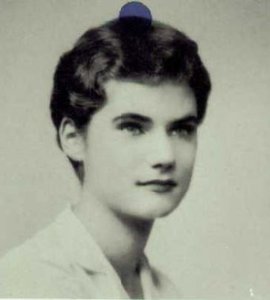
Nancy Graves
1939 - 1995

