Color Field Painting · 1961
Delta Lambda (Morris Louis, 1961)
Morris Louis (1912–1962) on loonud teose Delta Lambda. See on pärinev 1961 aastast. See kuulub Color Field Painting suuntrime. Teos on valmistatud materjalist Acrylic On Canvas. Teos asub Cleveland Museum of Art kogamuses Cleveland, USA. Mõõdud on 260 × 449 cm.
- 1961
- Acrylic On Canvas
- 260 × 449 cm
- Cleveland Museum of Art

 Eelvaade

 Käsitsi maalatud õlimaalatsioon
 Saada
 Jaga
 Teave teose kohta


 Laadi alla
 Sarnased teosed
 Röntgenuuring
 Slaidietendus
 KÜSIMUSED JA VASTUSID

 Statistika
Delta Lambda lühidalt
- Pealkiri
- Delta Lambda
- Kunstnik
- Morris Louis (1912–1962)
- Kunstnik on sündinud
- Baltimore, Ameerika Ühendriigid
- Kuupäev
- 1961
- Tehnika
- Acrylic On Canvas
- Mõõtmed
- 260 × 449 cm
- Kus seda näeb
- Cleveland Museum of Art, Cleveland, USA
- Suunad
- Color Field Painting
- Teema
- color, flowing lines, abstraction, layers, transparency, acrylic
Mida Delta Lambda kujutab?
A Dance of Light and Transparency – Exploring ‘Delta Lambda’
Morris Louis's “Delta Lambda,” painted in 1961, isn’t merely a canvas adorned with color; it’s an invitation to lose oneself within a flowing, ethereal landscape. This monumental work, measuring nearly six feet tall and over four and a half feet wide, embodies the core tenets of Color Field painting – a movement that sought to elevate color itself to the status of subject matter, divorced from representational imagery. Louis, a pivotal figure in this aesthetic revolution, masterfully employed a technique he pioneered: staining thin washes of acrylic paint directly onto unprimed canvas, allowing the colors to bleed and mingle organically, creating an illusion of depth and movement that defies traditional perspective.
The painting’s composition is strikingly asymmetrical. Two distinct streams of color – vibrant yellows, greens, blues, and reds – emerge from the lower corners, gracefully ascending towards a central point before subtly dissolving into the surrounding white expanse. This deliberate imbalance isn't haphazard; it generates a dynamic tension, drawing the viewer’s eye along the converging pathways while simultaneously suggesting an infinite space beyond the confines of the canvas. The stark contrast between the saturated colors and the pristine white background amplifies the luminosity of each hue, creating a visual experience that is both intense and serene.
The Alchemy of Color: Technique and Material
Louis’s process was remarkably unconventional for its time. He rejected the traditional layering of paint, opting instead to apply multiple thin washes directly onto the canvas, allowing them to interact and bleed into one another. This technique, coupled with his use of Magna acrylic paint – a revolutionary medium developed specifically for him by Leo Sebak – resulted in a remarkable transparency. The colors don’t simply cover the surface; they seem to float within it, revealing glimpses of the underlying white canvas beneath. Close inspection might reveal subtle variations in the layering process, but the overall effect is one of seamless fluidity and effortless grace.
The artist's deliberate choice to work on unprimed canvas was crucial to achieving this ethereal quality. The paint penetrated the fibers of the fabric, creating a unique textural interplay that further enhanced the sense of depth and movement. It’s a testament to Louis’s intuitive understanding of material properties – he wasn’t simply applying color; he was conducting an alchemical experiment, transforming the very essence of pigment into light and atmosphere.
Symbolism and Emotional Resonance
While “Delta Lambda” resists definitive interpretation, its evocative power lies in its ability to tap into primal emotions. The flowing colors can be seen as representing natural phenomena – water currents, shifting skies, or the dappled light filtering through leaves. However, Louis himself resisted assigning specific meanings to his works, preferring that viewers derive their own interpretations from the experience of looking at them. The asymmetrical composition and the sense of infinite space suggest a journey inward, inviting contemplation and reflection.
Furthermore, the painting’s origins within the context of 1960s America – a period of social upheaval and artistic experimentation – imbue it with an added layer of significance. Louis's work can be viewed as a rejection of traditional representational art, embracing instead the pure sensory experience of color. It reflects a desire to break free from the constraints of the past and explore new possibilities for artistic expression.
A Legacy of Transparency – Reproductions and Beyond
OriginalUniqueArt’s meticulously crafted reproductions capture the essence of “Delta Lambda” with remarkable fidelity, allowing art lovers to experience its beauty and complexity in their own homes. The careful attention to detail ensures that the transparency and luminosity of Louis's original technique are faithfully reproduced, creating a stunning visual statement. Whether displayed as a centerpiece or incorporated into a broader interior design scheme, this iconic work continues to inspire and captivate audiences worldwide.
Kumba muuseumis asub teos Delta Lambda?
Cleveland Museum of Art
Cleveland, USA
Origins and History of the Museum The Cleveland Museum of Art was established in 1913. Its foundation rests upon a bedrock of philanthropic vision, organized as a trust to ensure its longevity. The initial momentum for the institution was provided by the financial contributions of Hinman Hurlbut, John Huntington, and Horace Kelley.


Delta Lambda kõrge resolutsiooniga pildid

Protected by copyright: these files are for personal reference, not a licence to republish.
Morris Louis, Delta Lambda (1961), Cleveland Museum of Art.
Küsimused teemal Delta Lambda – vastused
Kust saan näha originaalteost „Delta Lambda“, autor Morris Louis?
Teos „Delta Lambda“, autor Morris Louis on näitustel Cleveland Museum of Art, Cleveland, USA. Muuseumi keterangane viitab originaalteosele, mitte reproduktsioonidele.
Mis on teose „Delta Lambda“, autor Morris Louis loomisaeg?
Teos "Delta Lambda" on pärit aastast 1961. See ajastu aitab mõista teost Morris Louis karjääri ja selle ajastu kontekstis.
Millises materjalis on teos „Delta Lambda“, autor Morris Louis valmistatud?
Teose „Delta Lambda“, autor Morris Louis materjal on Acrylic On Canvas. Reproduktsioonide eesmärk on jälitada selle tehnika välimust.
Mis on originaalteose "Delta Lambda" mõõdud?
Originaalteose „Delta Lambda“, autor Morris Louis mõõdud on 260 x 449 cm.
Mida „Delta Lambda“, autor Morris Louis kujutab?
„Delta Lambda“, autor Morris Louis kujutab: color, flowing lines, abstraction, layers, transparency, acrylic, harmony, composition.
Kas teose „Delta Lambda“, autor Morris Louis pilt on vabalt reproduseeritav?
Teos „Delta Lambda“, autor Morris Louis on lubaõiguslikult on endiselt autoriõiguse all under kaitse. See staatus reguleerib teose pildi reprodüseerimise võimalusi.
Millisele kunstnikule on teos "Delta Lambda" atribuutseeritud?
Teose "Delta Lambda" autoriks on mõeldud Morris Louis.
Millissele kunstisuunale kuulub teos „Delta Lambda“, autor Morris Louis?
"Delta Lambda" on Color Field Painting suunaga teos. See suundumine viitab kunstilisele traditsioonile, millega teos on seotud.
Millist etap Morris Louis loomingus teos "Delta Lambda" esindab?
Teos "Delta Lambda" kuulub Morris Louis loomingulise karjääri perioodi Mid-Career Period. See klassifikatsioon seostab teose kunstniku loovliku arenguga.
Kunstnikust, Morris Louis

1912–1962, Ameerika Ühendriigid
Morris Louis
Varajärgi ja haridus Sündinud: Morris Louis Bernstein, 28. november 1912, Baltimore, Maryland Vanemad: Louis Bernstein (mööbli müüja) ja Cecelia Luckman Bernstein Haridus: Baltimore'i avalikud koolid; Maryland Institute of Fine and Applied Arts (praegune MICA), 1929–1932. Tudist diplomaat ei lõpetanud. Varajad mõjutajad olid Eugene Speicher ja Paul Cézanne.
Ka Morris Louis teosed
 Seal1959
 Ambi I1960
 Number 281961
 Para III1959
Essee teemadel Delta Lambda
 The Curated Legacy: Mastering Art Investment Through Fine Art ReproductionsDiscover the sophisticated art of building a timeless collection. Learn how premium, hand-painted Old Master reproductions serve as resilie…
 Morris Louis: Pioneering Color Field Painting & Abstract Expressionism's LegacyExplore the groundbreaking abstract expressionism of Morris Louis, a pioneer of Color Field painting. Discover his innovative techniques, i…
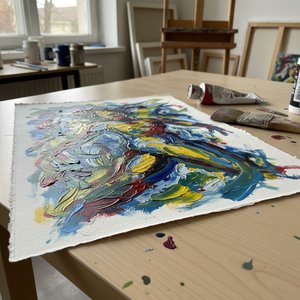 Acrylic on Paper: A Modern Canvas for Contemporary ExpressionExplore the versatility of acrylic painting on paper! Discover expert techniques, artist insights & archival practices for creating stunnin…