

 Eelvaade
 Saada
Saada Jaga
Jaga
 Teave teose kohta
 Juhend

 Laadi alla
 Sarnased teosed
 Röntgenuuring
 Slaidietendus
 Q&A
Q&A Statistika
The Examination (Das Verhören)
 Oil On Canvas
- WallArt
- 19th Century Realism
 1868
1868 66.0 x 54.0 cm
 The Jewish Museum
 Loe lähemalt
Giclée / Kunstiprint
Muuseumikvaliteediga giclée- või kangasprint kiire tootmisega ja paindlikud viimistlusvõimalused. ( Osta käsitsi maalatud teos Lülita digitaalse pildi juurde)




P118B €10

P118H €10

P118W €10

P438Z €10

P508JH €12

P508YH €12

P805H €10

P805Z €10

P919BZ €10

P919G €10

P919XJ €10

P959ZH €10

P968JZ €12

W106C €8

W218G €10

W218JH €8

W218Y €10

W307PJ €10

W316G €10

W316PJ €8

W316Y €10

W398PJ €8

W4111J €10

W500HY €15

W500JH €15

W692G €12

W849H €8

W940BG €15

W953PJ €8




Vali meie eelmääratud suurused, mis vastavad teose algupärastele proportsioonidele.

Sisestage vajalik laius ja kõrgus, et see sobiks teie raamile või seinale. Trükki saab ainult lõigata, seda ei saa kunagi pildist suuremaks teha, seega ka erineva mustega suurus kaotab osa pildist. Enne trükkimist saadame teile kinnitamiseks digitaalse näidisprojektsiooni. Sellel lehel näidatud pilt ei kujuta reaalset lõiget — seda näitab ainult näidisprojektsioon.
Ülemaailmne tarne () 2 nädala jooksul, tavalise 4/5 nädala asemel. (30 oktoober)

Tasuta ekspresssaatmine üle maailma

Kõrgekvaliteediline lina-kangas

Täielik transpordikindlustus

Tollimaksude tagastamise garantii

Värvitoime täpsuse garantii

100 päeva tagastusõigus (ainult valmistusdefektide korral)

100% raha tagasi garantii

Hulgusoodustus
 Klaasivalik on saadaval ainult kuni 110 cm suuruses teostes

The Examination (Das Verhören)
Giclée / Kunstiprint
Reproduktsiooni suurus
-


Koguhind
€ 71
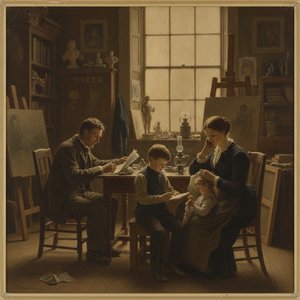
The Intimate Portrait of Family Life: Moritz Daniel Oppenheim’s “The Examination”
Moritz Daniel Oppenheim's "The Examination," painted in 1868, is more than just a domestic scene; it’s a poignant window into the heart of 19th-century Jewish family life. This intimate portrait, rendered with remarkable sensitivity and detail, captures a moment of quiet contemplation within a warmly lit living space – a space that speaks volumes about tradition, education, and familial bonds. The painting immediately draws the viewer in, not with grand gestures or dramatic action, but through the subtle interplay of glances, postures, and the palpable sense of connection between father and daughters.
Oppenheim’s style leans heavily towards Realism, yet it transcends mere representation. He masterfully employs a muted color palette – predominantly browns, creams, and ochres – to create an atmosphere of understated elegance and domestic tranquility. The lighting is particularly noteworthy; it's diffused and natural, casting gentle shadows that enhance the three-dimensionality of the figures and their surroundings. The artist’s brushwork is deliberate and controlled, meticulously building up layers of paint to achieve a rich texture and a sense of depth. Notice how he subtly captures the textures of the fabrics – the worn velvet chair, the simple wooden table, the folds in the women's dresses – adding an incredible level of realism and grounding the scene.
A Glimpse into Jewish Life and Education
The painting’s subject matter is deeply rooted in the social and cultural context of its time. “The Examination” depicts a father, presumably a scholar or religious leader, seated with his two daughters. He's absorbed in reading a book, while they attentively observe him, suggesting a scene of learning and guidance. This wasn’t simply a casual family gathering; it represented a crucial element of Jewish upbringing – the transmission of knowledge and tradition from one generation to the next. The presence of the books scattered around the room reinforces this theme, hinting at a home filled with intellectual pursuits and a commitment to education.
Oppenheim’s decision to portray a family scene within a Jewish context was groundbreaking for its time. While many artists were depicting Jewish subjects, Oppenheim's work focused on portraying everyday life, familial relationships, and religious practices – offering a more nuanced and intimate representation of the Jewish community than previously seen in Western art. This focus aligns with the burgeoning “Wissenschaft des Judentums” (Jewish knowledge) movement, which sought to study Judaism as an academic discipline, documenting its history, culture, and traditions.
Symbolism and Emotional Resonance
Beyond its straightforward depiction of a family moment, "The Examination" is rich in symbolic detail. The vase positioned centrally on the table – holding fresh fruit – can be interpreted as representing knowledge, wisdom, or even reward. The gesture of the father pointing to the book, combined with the daughters’ attentive expressions, suggests a process of learning and understanding. The overall mood is one of quiet dignity and affection, conveying a sense of warmth and familial harmony.
Furthermore, the painting subtly alludes to the importance of Jewish tradition and heritage. The setting itself – a comfortable home filled with books – speaks to a commitment to intellectual pursuits and the preservation of cultural values. The scene evokes a feeling of stability, continuity, and the enduring strength of family bonds. It’s a testament to Oppenheim's ability to capture not just a visual likeness but also the emotional essence of his subjects.
A Timeless Masterpiece – Reproduction Considerations
Reproductions of “The Examination” offer a remarkable opportunity to bring this evocative artwork into your home or office. When selecting a reproduction, consider the quality of the print and the canvas or paper used. A high-resolution digital print on archival-quality canvas will ensure that the colors and details are faithfully reproduced, capturing the painting’s subtle nuances and rich textures. The original's muted palette translates beautifully to a wide range of interior design styles – from traditional to contemporary – adding a touch of understated elegance and intellectual warmth.
As an investment piece, a high-quality reproduction of “The Examination” is more than just a decorative item; it’s a window into the past, a celebration of family life, and a testament to the artistic vision of Moritz Daniel Oppenheim. It's a reminder that even in quiet moments, profound beauty and enduring values can be found.
Korduvad küsimused
Millist tunnet toob "The Examination (Das Verhören)" kingitusena kaasa?
Olles emotsionaalselt Reflective, on teose „The Examination (Das Verhören)“, autor Moritz Daniel Oppenheim soovitav kingitus, mida teha Wedding.
Milline on teose „The Examination (Das Verhören)“, autor Moritz Daniel Oppenheim visuaalne heledus?
Perseptsioonilt on teose „The Examination (Das Verhören)“, autor Moritz Daniel Oppenheim ereonim deep_shadow.
Kes müüb teose "„The Examination (Das Verhören)“, autor Moritz Daniel Oppenheim" käsitsi maaldatud koopiaid?
Teos "The Examination (Das Verhören)" on saadaval kujundisena käsitsi maalatud õlireproduktsioon linaelapale. Tellimust saab esitada selle Käsitsi maalatud reproduktsioon lehel, kus on võimalik valida erinevad suurused.
Kunstniku elulugu
Juudi identiteedi visjonäär
Moritz Daniel Oppenheim (1800–1882) seisab Saksa kunstiajaloos eralduna ja sügavalt tähtsana üks juudi kunstilise esinduse tõeline pioneer. Saksamaal, Hanau linnas sündinud kunstniku elu ja looming olid sügavalt juurdunud püüdlusse dokumenteerida ning tähistada juudi elu ja kultuuri nüansse rahuldamatult muutliku üheksندا sajandi jooksul. Teda on sageli peetud esimeseks juudi maalariks, kes saavutas laialdast tunnustust peavarusas asuvad kunstiväljundid, liikudes kaugemale pelgalt biograafilistest detailidest, et luua teoskog, mis toimib elutähtsa visuaalse mälustikuna kogukonnale, kes püüdis navegatsioonit moderniseerumise keerulistes võrgustikes säilitada oma pühasid traditsioone.
Oppenheimi kunstiline teekond algas põhilise õppimisega Conrad Westermayri juures tema sünnilinnas, kus ta esimest korda omastas saksa romantilist maalipõhimõtteid. Kuid tema tõeline professionaalne tõus algas seitsmete aasta vanuses Müncheni Kunstakadeemias liitumisega. Just nendes prestiižsetes saalides teritas ta oma tehnilist meistriklassi koos selliste kaasajatega nagu Wilhelm Leibl ja Johann Baptist Eberhard Krauss. Horisonti laiendades alustas Oppenheim transformaatilist õppimisaega välismaal, rändates Pariisi, et õppida Jean-Baptiste Regnaaltilt, ning hiljem Rooma. Itaalias, suuretede nagu Bertel Thorwaldsen ja nazareenide maalar Johann Friedrich Overbeck juhendamisel, arenes tema stiil sofisteetse seguniku becomeks täpne observatsioon ja klassikaline mõju. See Rooma periood oli eriti murdilis, kuna see infuseeris tema tööde ajaloolise gravitatsiooniga, mis kujundas hiljem tema kirjeldusi juudi rituaalidest ja igapäevasest elust.
Intiimsuse ja traditsiooni kunst
Oppenheimi panus kunstile peitub tema võimes muuta kodune sfäär sügavaks kultuuriliseks narratiiviks. Tema maalid keskenduvad sageli juudi pereluugi intiimsetele stseenidele, tabades rituaalide vaikset väärikust ja kogukonna siduste soojust. Tema pintslitõlg läbi muutub igapäevane monumentaalneks. Teostes nagu Sabbati lõpp (Sabbath-Auslik) kasutab ta meisterlikku realismist ja peidetud sümbolistikat, et kujundada puudutavat üleminekut pühasest sabbati puhkusest tagasi ajalikku maailma, kutsumates vaatajat tunnistama peretraditsiooni pühadust.
Tema võime koota ajalooline kontekst isulise emotsiooniga on kõige selgemalt nähtav tema žanrimalides, mis dokumenteerivad konkreetseid kultuurilisi sündmusi. Näiteks:
- Pulv (Die Trauung): Hinget lõikav detailne kujundus 1866. aasta juudi pulmast Frankfurti getos, kus Oppenheim tabab traditsiooniliste riietuste ihtlusest ja pulmakatuse pühalusest haruldast, säilinud pilgu kaduvasse eluviisid.
- Vapli naasmine (The Return of the Volunteer): Selles vapustavas 1834. aasta õlimaalist uurib ta juudi pärandi ja laiemat Euroopa ajalugu, kujutades sõdast, kes naaseb Vabadusvõitlustest koju peresse, mis elab endiselt iidsed kommid:
Pärand ja ajalooline tähendus
Lisaks tehnilisele oskusele on Oppenheimi töö lahutumatu osa Wissenschaft des Judentums liikumisest — teaduslikust püüdeldusest kinnitada juudi ajalugu ja kultuur kui austatud akadeemiline valdkonnana. Tema maalid toimisid visuaalse uurimistööna, pakkudes väärikat ja autentset esitlust kogukonnale, mis oli Euroopa kunstikanonis sageli marginaalne. Järgides juudi teemade kujundamisel sama detailset, väärikast ja romantilist suuremoodust, mida tavaliselt varudati aristokraatlikud või müütilised teemad, väljakutsus ta olemasolevaid eelarvamusi ning kinnitas juudi identiteedi olulisust Saksa kultuurilises koodistikus.
Lõplikult on Moritz Daniel Oppenheimi pärand vastupidluse ja nähtavuse pärand. Ta ei maalinud pelgalt stsène; ta lõi visuaalse keele üleminekuera jaoks. Tema võime tabada õranet tasakaalu vanat ja uuega tagab, et tema töö jääb elutähtevaks peegelduseks üheksdasaja juudi kogemuse mõistamiseks, tehes temast asendamatu tegelase nii Saksa romantilismis kui ka juudi kunsti globaalses narratiivis.

Moritz Daniel Oppenheim
1800 - 1882 , Saksamaa
Lühikest infot
- Artistic Movement Or Style: Romantism
- Artists Who Influenced This Artist:
- Jean-Baptiste Regnault
- Bertel Thorwaldsen
- Barthold Georg Niebuhr
- Johann Friedrich Overbeck
- Date Of Birth: 7. jaanuar 1800
- Date Of Death: 1882
- Full Name: Moritz Daniel Oppenheim
- Nationality: Saksa
- Notable Artworks:
- Vabatahtlase naasmine
- Mignon ja lüür
- Itaalia žanriteene
- Konfirmatsioon
- Sabbati õnnistus
- Place Of Birth: Hanau, Saksamaa
Sarnased artiklid

Evolving Portraits: Personalized Art as a Chronicle of Family Life Across Generations
Create a timeless family legacy with custom portraits! OriginalUniqueArt connects you with skilled artists for heirloom-quality paintings & prints. Explore styles, commission your unique artwork today.
Victorian Realism: Capturing the Soul and Intricate Detail of a Golden Era
Explore the exquisite world of Victorian Realism. Discover how 19th-century masters captured unparalleled detail and emotion through oil painting, and learn to curate these timeless masterpieces for your luxury interior collection.

Romantic Realism's Finest: 10 Masterpieces for Your Home | OriginalUniqueArt
Explore 10 defining masterpieces of Romantic Realism! Discover Courbet, Millet & Daumier's powerful paintings—capturing emotion and social realities. Find museum-quality reproductions for your home at OriginalUniqueArt.com.

Victorian Naturalism: The Raw, Hyper-Real Aesthetic That Defined an Era
Explore the raw power of Victorian Naturalism. Discover how 19th-century artists rejected romantic idealism to capture the gritty, hyper-real truth of the industrial era through masterful observation and unmatched technical precision.

The Gaze of a Changing World: Victorian Realism & Modern Life
Explore the captivating world of Victorian Realism! Discover genre painting's rise, social commentary in art, & masters like Fedotov and Wilkie. Expert analysis & high-quality reproductions at OriginalUniqueArt.