 Eelvaade
 Saada
Saada Jaga
Jaga
 Teave teose kohta
 Juhend

 Laadi alla
 Sarnased teosed
 Röntgenuuring
 Slaidietendus
 KÜSIMUSED JA VASTUSID
 Statistika
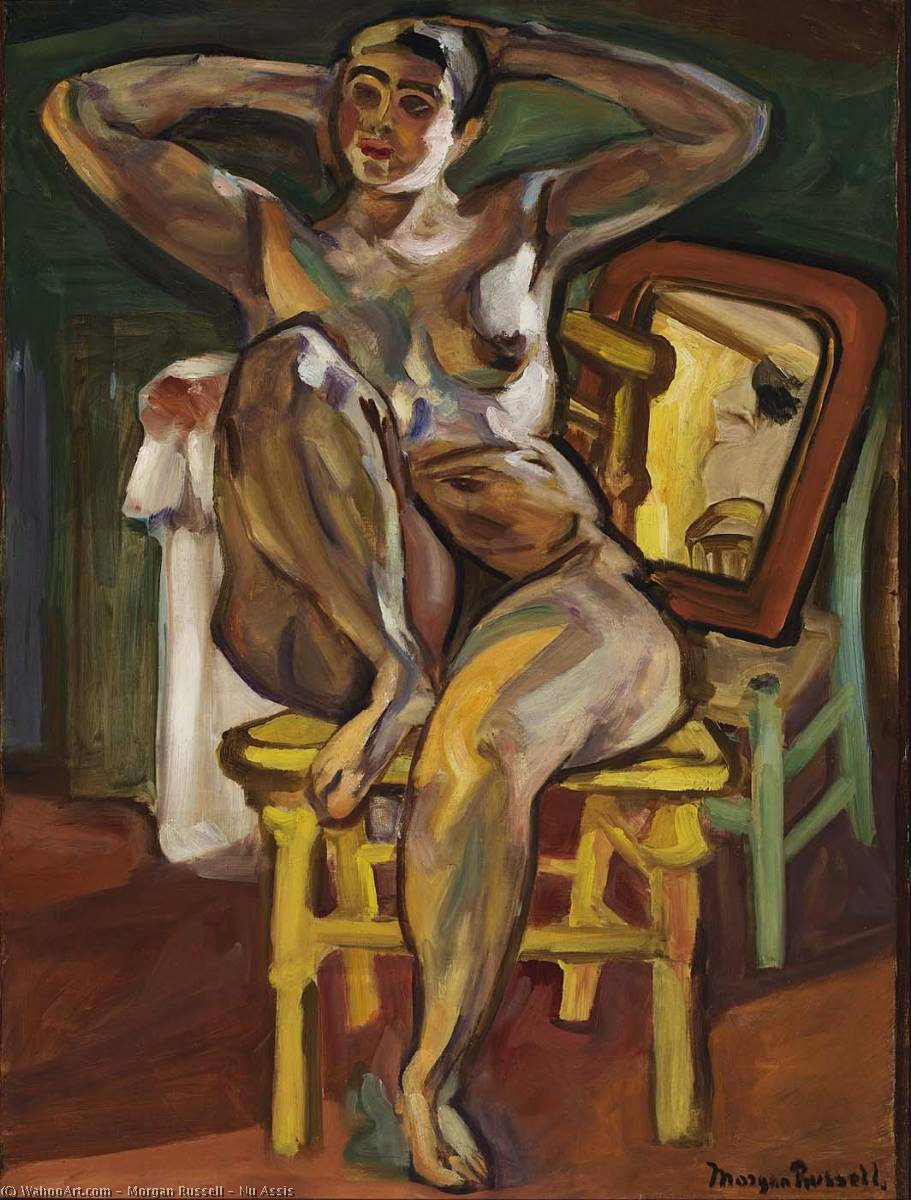
Nu Assis

- 73.0 x 55.0 cm

 Loe lähemalt
Giclée / Kunstiprint
Muuseumikvaliteediga giclée- või kangasprint kiire tootmisega ja paindlikud viimistlusvõimalused. ( Osta käsitsi maalatud teos Lülita digitaalse pildi juurde)




































Vali meie eelmääratud suurused, mis vastavad teose algupärastele proportsioonidele.

Sisestage vajalik laius ja kõrgus, et see sobiks teie raamile või seinale. Trükki saab ainult lõigata, seda ei saa kunagi pildist suuremaks teha, seega ka erineva mustega suurus kaotab osa pildist. Enne trükkimist saadame teile kinnitamiseks digitaalse näidisprojektsiooni. Sellel lehel näidatud pilt ei kujuta reaalset lõiget — seda näitab ainult näidisprojektsioon.
Ülemaailmne tarne () 2 nädala jooksul, tavalise 4/5 nädala asemel. (15 november)

Tasuta ekspresssaatmine üle maailma

Kõrgekvaliteediline lina-kangas

Täielik transpordikindlustus

Tollimaksude tagastamise garantii

Värvitoime täpsuse garantii

100 päeva tagastusõigus (ainult valmistusdefektide korral)

100% raha tagasi garantii

Hulgusoodustus
 Klaasivalik on saadaval ainult kuni 110 cm suuruses teostes

Nu Assis
Giclée / Kunstiprint
Reproduktsiooni suurus
-


Koguhind
€ 72
Kunstniku elulugu
The Architect of Color: The Life and Legacy of Morgan Russell
Born into the vibrant, burgeoning energy of New York City on January 25, 1886, Morgan Russell emerged as a transformative force in the landscape of American Modernism. His journey was never merely about the application of pigment to canvas, but rather an architectural pursuit of light and form. Before he became a master of abstract color, Russell’s early inclinations leaned toward the structural precision of architecture and the tactile depth of sculpture. Studying at the Art Students League under the guidance of figures like Arthur Lee and James Earle Fraser, he developed a profound sensitivity to materiality and volume. This sculptural foundation would later become the secret engine behind his most famous innovation, allowing him to treat color not as a surface decoration, but as a structural element capable of creating depth and movement within a two-dimensional plane.
The trajectory of Russell’s career was irrevocably altered by his encounters with the European avant-garde. Supported by the visionary patronage of Gertrude Vanderbilt Whitney, Russell traveled to Paris and Rome, immersing himself in the very heart of the modern revolution. In the legendary salons of Gertrude Stein, he moved among the giants of the era—Picasso, Rodini, and Matisse. These encounters were more than mere social engagements; they were intellectual crucibles. While absorbing the rhythmic fragmentation of Cubism and the emotive power of Fauvism, Russell began to seek a way to synthesize these disparate influences into a uniquely American voice. His time in Paris allowed him to witness the birth of new visual languages, yet he remained driven by a desire to find a method where color could function with the same harmonic complexity as a musical symphony.
The Birth of Synchromism and the Symphony of Sight
In 1912, alongside his collaborator Stanton Macdonald-Wright, Russell co-founded Synchromism, one of the first truly abstract movements in American art. The name itself—derived from the Greek for "with color"—encapsulated their radical mission: to orchestrate colors in a way that mimicked the temporal and emotional progression of music. This was not merely an aesthetic choice but a philosophical rebellion against the stagnant traditions of academic realism. Russell’s "synchromies" sought to move beyond representation, using rhythmic arrangements of hues to evoke sensation and structure. He believed that just as a composer arranges notes to create tension and resolution, a painter could use color temperature and saturation to direct the eye and build a sense of sculptural weight.
The technical brilliance of Russell’s work lies in this very intersection of color and construction. His paintings often possess an unexpected muscularity; even in his most abstract compositions, one can sense the influence of his early sculptural training. He utilized contrasting color relationships to create "optical" forms that seem to push forward or recede into space, effectively painting with light. This approach challenged the viewer to experience art as a dynamic, living entity rather than a static image. Through Synchromism, Russell and Macdonald-Wright provided an essential bridge between European experimentation and the development of a distinct American modernism, proving that abstraction could be both intellectually rigorous and viscerally powerful.
A Lasting Impression on Modernist History
Though the height of the Synchromist movement flourished in the 1910s and 1920s, Morgan Russell’s impact resonated far beyond this period. His ability to marry the structural logic of architecture with the fluid emotion of color helped pave the way for subsequent generations of abstract painters. He remained a pivotal figure in the evolution of modern art, constantly refining his understanding of how visual elements interact to create meaning. His legacy is defined by several key contributions:
- The Innovation of Color Theory: He pioneered the idea that color could serve as a primary structural tool, independent of representational subject matter.
- Cross-Disciplinary Synthesis: By blending sculptural form, architectural logic, and musical rhythm, he expanded the boundaries of what a painting could achieve.
- Founding American Abstraction: As a co-founder of Synchromism, he helped establish an early foothold for abstract expression in the United States, moving the center of gravity away from purely European traditions.
- Intellectual Rigor: His work bridged the gap between the visceral experience of art and the complex philosophical inquiries regarding perception and space.
Today, when we look at the works of Morgan Russell, we see more than just beautiful arrangements of pigment; we see the blueprints of a revolution. He remains a testament to the power of the avant-garde spirit—a man who looked at the world not as a collection of objects to be copied, but as a symphony of light and form waiting to be conducted.

Morgan Russell
1886 - 1953 , United States
Lühikest infot
- Full Name: Morgan Russell
- Nationality: American
- Date Of Birth: 1886
- Date Of Death: 1953
- Place Of Birth: New York City
- Notable Artworks:
- Untitled
- Nu Assis
- Artistic Movement Or Style: Synchromism
- Artists Who Influenced This Artist:
- Percyval Tudor-Hart
- Stanton Macdonald-Wright
- Artists Or Movements Influenced By This Artist: ['Cubism']
Sarnased artiklid

Amedeo Modigliani 25 Parimat Teost: Elegants, Melanhoolia ja Kunstikollektsioon | OriginalUniqueArt
Avastage Amedeo Modigliani 25 parimat teost! Sukeldume ekspressionistlikku maailma, elegantsetesse portreedesse ja melanhooliasse. Leidke täiuslik kunstikollektsioon OriginalUniqueArt.com-is – kvaliteetsed reproduktsioonid ja interjööride inspiratsioon.

Masterpieces of Motion: The Top 25 Artworks by Sir Alfred James Munnings
Experience the vibrant spirit of British equestrian art through the top 25 masterpieces by Sir Alfred James Munnings. From impressionistic landscapes to iconic horse portraits, explore timeless stories and museum-quality reproductions for your decor. Discover all masterpieces on OriginalUniqueArt.com.

25 Masterpieces by Amedeo Modigliani: The Soul of Modern Portraiture
Explore 25 iconic Modigliani masterpieces and their soulful stories. Discover the full collection online at OriginalUniqueArt.com.

Masterpieces of Motion: The Top 25 Artworks by Sir Alfred James Munnings
Immerse yourself in the vibrant world of Sir Alfred James Munnings. Explore 25 iconic equestrian masterpieces capturing the soul of the British countryside through impressionistic light and motion. Find museum-quality reproductions for your decor. Discover all masterpieces on OriginalUniqueArt.com.

Masterpieces of Satire: The Top 25 Artworks by William Hogarth
Explore William Hogarth's iconic satirical masterpieces. Discover the stories behind his greatest works on OriginalUniqueArt.com.