

 Eelvaade
 Saada
Saada Jaga
Jaga
 Teave teose kohta
 Juhend

 Laadi alla
 Sarnased teosed
 Röntgenuuring
 Slaidietendus
 Statistika
Поликрат


 Loe lähemalt
Hankige trükiivaldatav fail, mis on kvaliteedilt palju parem kui veebilehel näidatud eelvaade. Kõik meie müüdavad digitaalsed pildid pärinevad meie arhiivist kõrge resolutsiooniga originaalfailidest — tavaliselt 5000 kuni 15 000 pikslit laiust — nii et saate julgelt trükida suurematsat, lüüdist teha või detailset sisu reproduktsiooni teha.
Meie stuudiost ei lahtu ükski fail puutumatuna. Digiekpert võrdleb värve algsest maalistimusega ja vajadusel korrigeerib neid, seejärel parandab selgust ja detaile professionaalsete retušimisvahendite abil — püüdes alati jääda truudeks kunstniku pintoonile ja stiilile. Tulemuseks on pilt, mis näeb välja nagu maali, mitte nagu filtreeritud skann.
Teet kinnituse enne lõplikku valmimist: meie ekspert saadab pildi 72 tunni jooksul e-posti ülevaatamiseks. Ei ole rahul? Paluge parandusi või korrektsioone ning kui kvaliteet ei vasta ootustele, võite paluda tagastamist.
See on kvaliteet, millele tuguvad väljaandjad, disainistuudiod, galeriid ja trükikoda.
Digitaalne kunstiteos
Laadi alla kõrge resolutsiooniga fail isiklikuks vaatamiseks, trükkimiseks ja loomingulisteks projektideks. ( Lülita trükkitoodetele Osta käsitsi maalatud teos)
Sisse kuulub iga digitaalse pildi tellimusega
Eksperdi digitaalne kohaletoimetamine, garanteeritud
Valides OriginalUniqueArt.com, ei saa sa lihtsalt pilti – saad professionaalselt parandatud digitaalse teose, mida on valmistatud täpsusega ja mis on toetatud rahuldamatusgarantiiga. Siin on kõik, mis sinu tellimusega automaatselt kaasneb:

Kiire digitaalne edastus
Teie kõrge resolutsiooniga digitaalne pildifail saadetakse teile e-posti 72 tunni jooksul pärast tellimist – kohe kasutamiseks valmis.

Tehisintellektiga täiustatud digitaalne fail
Teie teos on professionaalselt optimeeritud arenenud tehisintellekti tööriistade ja käsitsi redigeerimise abil, tagades maksimaalse detailitaseme, selguse ja värvitäpsuse.

Tasuta eluaegne uuesti saatmine
Kas kustutasid faili kogukalu unustamisel või kustutamisel? Puudub mure – saad selle uuesti igal ajal ilma lisatasuta.

Puuduvad importimaksud – alati
Nautige oma teoseid koheselt ilma tolli-, maksude või tarnimaskuludeta – digiletchargused on alati maksuvabadud.

Värvitäpsuse garantii
Me tagame, et teie digitaalne pilt kajastaks originaali värve professionaalsete tööriistade ja värvihalduse abil võimalikult täpselt.

100 päeva rahuldamatuse garantii
Kui te ei ole oma digitaalse pildi eest rahul, siis me parandame seda või tagastame 100% summast 100 päeva jooksul – küsimusteta.

100% raha tagastamise garantii
Ei ole rahul? Saate täielise tagastaja 100 päeva jooksul pärast digitaalse faili kättesaamist – ilma küsimusteta.

Suurema tellimuse soodustused
Osta 3 pilti, säästa 10% - Osta 5, säästa 15% - Osta 10+, säästa 20%. Sobib suurepäraselt loomingulisteks projektideks, galeriideks ja agentuurideks.
Polycrates: A Titan’s Struggle Embodied in Marble
The sculpture of Polycrates by Mikhail Kozlovsky, created in 1790, stands as a testament to the Romantic spirit of its time—a period obsessed with heroic narratives and dramatic emotion. More than just a depiction of a figure, it's an exploration of human resilience against overwhelming odds, captured within the austere beauty of neoclassical form. The artwork resides prominently within the State Russian Museum in St Petersburg, attracting visitors eager to contemplate its profound symbolism and masterful execution.- Subject Matter: Kozlovsky’s Polycrates portrays a nude male figure caught in a moment of agonizing exertion—a man reaching upwards with one arm while his body twists downwards, draped in fabric. This posture immediately evokes images of struggle, mirroring the biblical story of Samson wrestling the Lion, and symbolizing the battle between strength and defeat.
- Style: The sculpture firmly adheres to Neoclassical principles, prioritizing idealized human anatomy and restrained emotion. Kozlovsky consciously rejected the flamboyant excesses of Baroque art, opting for a style characterized by clarity, balance, and intellectual contemplation—values championed by Enlightenment thinkers.
- Technique: Crafted from gypsum (likely cast from a marble prototype), Polycrates exemplifies Kozlovsky’s meticulous sculpting skill. The artist employed a technique known as *lost wax casting*, ensuring exceptional detail and surface smoothness. Careful polishing brought out the subtle nuances of the material, highlighting its texture and enhancing the sculpture's visual impact.
Historical Context: Echoes of Classical Heroism
Kozlovsky’s Polycrates emerged during a fervent revival of interest in classical antiquity—a movement fueled by archaeological discoveries and philosophical debates about virtue and heroism. The sculpture reflects the broader cultural preoccupation with portraying figures wrestling with adversity, mirroring myths and legends from ancient Greece and Rome. Kozlovsky's work served as an inspiration for many artists of his era.
Symbolism: Reaching Beyond Limits
The upward thrust of Polycrates’ arm symbolizes aspiration—a yearning for transcendence and a defiance of mortality. Simultaneously, the downward twist represents vulnerability and defeat, acknowledging the inevitable challenges faced by humankind. The sculpture's stark simplicity underscores these themes, conveying an emotional intensity that transcends mere physical representation.
Emotional Impact: A Portrait of Resolve
Viewing Polycrates evokes a powerful response—a feeling of empathy for the figure’s predicament and admiration for his unwavering determination. Kozlovsky skillfully captures the psychological drama inherent in the pose, conveying not just physical exertion but also inner turmoil. The sculpture's enduring appeal lies in its ability to resonate with viewers across generations, prompting reflection on themes of courage, perseverance, and the human condition.
Provenance & Reproduction
Originally housed in St Petersburg’s State Russian Museum, Polycrates continues to captivate audiences today. OriginalUniqueArt offers high-quality reproductions that allow enthusiasts worldwide to experience Kozlovsky's masterpiece firsthand. Explore our collection and discover the beauty of classical sculpture.
Korduvad küsimused
Kes on teose "Поликрат" kunstnik?
Teose "Поликрат" loovija on Mihhail Ivanovitš Kozlovski. Selle lehe info kirjeldab Mihhail Ivanovitš Kozlovski algteost.
Millist tunnet edastab „Поликрат“, autor Mihhail Ivanovitš Kozlovski?
Teoses "Поликрат" on Draamatiline meeleolu koos Dramatiline emotsiooniga.
Kui palju valgust tundub teose "Поликрат" värvid peegeldavat?
Teose „Поликрат“, autor Mihhail Ivanovitš Kozlovski luminants on Tume.
Kunstniku elulugu
The Sculptor of Enlightenment Ideals
Mikhail Ivanovich Kozlovsky stands as a preeminent figure in the landscape of Russian Neoclassical sculpture, a master whose hands shaped the very essence of the Age of Enlightenment. Born in Saint Petersburg, Russia, his artistic journey began within the prestigious halls of the Imperial Academy of Arts. Under the tutelage of Anton Losenko, Kozlovsky embarked on a path that would eventually lead him far beyond the borders of his homeland, seeking inspiration in the great art capitals of Europe. His travels to Rome and Paris were not merely educational excursions but transformative odysseys that allowed him to absorb the burgeoning Neoclassical spirit sweeping through the continent.
The evolution of Kozlovsky’s style is a fascinating study in artistic maturation. His earliest endeavors retained a lingering connection to the dramatic, emotive sensibilities of the Baroque period. However, as he matured, his work underwent a profound metamorphosis, shedding ornamental excess in favor of Neoclassical monumentality and clarity. This transition saw him embracing the ideals of reason, order, and anatomical precision, mirroring the intellectual shifts of his era. By the time he returned to Paris in 1788 to supervise Russian students abroad, he had emerged as a sculptor capable of translating complex mythological narratives into enduring, dignified forms.
Mastery of Form and Mythological Narrative
Kozlovsky’s oeuvre is characterized by an extraordinary ability to breathe life into bronze and marble, capturing both the physical prowess of heroes and the ethereal grace of the divine. His works often serve as profound emblems of classical mythology, utilized to convey contemporary values of strength and wisdom. In pieces such as Hercules on Horseback, one observes a masterclass in realism; the meticulous rendering of equine and human musculature creates a sense of dynamic vitality that draws the viewer into the heart of the legend. His use of composition, often employing powerful diagonal thrusts, directs the eye through scenes of intense action and heroic struggle.
Beyond the depiction of raw power, Kozlovsky possessed a delicate touch for allegorical subjects. His sculpture Minerva and the Genius of the Arts, commissioned during the reign of Catherine II, exemplifies his ability to embody Enlightenment thought. Through the figures of the Roman goddess of wisdom and her artistic companion, he sculpted more than just myth; he captured the very aspiration of human intellect toward higher truth and order. His technical repertoire was equally diverse, ranging from the dramatic, gilded bronze of Samson Rending the Lion's Jaws—a centerpiece for the Grand Cascade at Peterhof Palace—to the expressive, martial character of the Suvorov Monument.
Legacy and Artistic Significance
The historical significance of Mikhail Kozlovsky lies in his role as a bridge between eras and a foundational pillar of Russian sculptural tradition. As a professor at the Academy of Arts, he played a crucial role in shaping the next generation of sculptors, ensuring that the principles of Neoclassicism would flourish in Saint Petersburg long after his passing. His contributions to the decorative splendor of imperial sites like Pavlovsk and Peterhof helped define the visual identity of the Russian Empire during a period of immense cultural growth.
His life's work remains a testament to the power of classical influence when wedded to technical mastery. Through his ability to adapt his manner from Baroque sensibility to Neoclassical grandeur, Kozlovsky achieved a level of permanence that transcends time. His sculptures continue to be celebrated for their:
- Anatomical Precision: A remarkable skill in rendering the complexities of human and animal forms with photographic realism.
- Symbolic Depth: The use of mythological figures to represent the enduring ideals of heroism, wisdom, and national triumph.
- Technical Versatility: An expert command over diverse media, including bronze casting and marble carving.
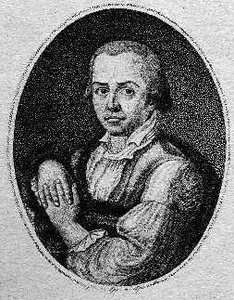
Mihhail Ivanovitš Kozlovski
1753 - 1802 , Venemaa