Lülita trükkitoodetele
 Loe lähemalt







































 Kunstiteoste või reproduktsioonide puhul, mille üks külg on üle 105 cm (umbikmolt 41 tolli), saadetakse raam kirjal asendis, la Dismantlitud komplektina. See meetod tagab ohutuse kohaletoimetamisel ja väldib transpordil tekkivaid kahjustusi.


The Weight of Eternity: Contemplating Memling's Last Judgment
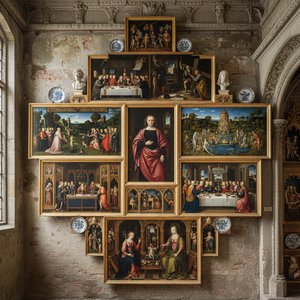
To stand before Hans Memling’s depiction of the Last Judgment is not merely to observe paint on wood; it is to confront the monumental sweep of human destiny. This intricate triptych detail, dating from 1467, plunges the viewer into a moment suspended between earthly life and eternal reckoning. The scene is overwhelmingly dramatic, characterized by a palpable sense of divine power juxtaposed against the raw vulnerability of humanity. One feels the weight of history pressing down, as if the very air in the depicted space crackles with unspent judgment.
Mastery of Detail and Netherlandish Realism
Hans Memling, the celebrated Bruges Master, was renowned for his exquisite attention to detail, a hallmark of Early Netherlandish painting. Here, that mastery is breathtakingly evident. Observe the figures: they are rendered with an almost startling realism, whether they are depicted in repose, suggesting death's gentle claim, or caught in postures of desperate appeal. The artist does not shy away from the physicality of the human form, treating even the deceased with a profound dignity. This meticulous observation, combined with his sophisticated handling of oil paint, allows light to play across every fold of drapery and every anguished expression, giving the scene an unsettling yet beautiful verisimilitude.
Symbolism in the Face of Judgment
The composition itself is a rich tapestry woven from profound Christian symbolism. The backdrop, often suggested by flames or intense light sources, speaks to the purifying fire of divine judgment. Scattered across this dramatic stage are figures representing all stations of life—the saved, the damned, and those caught in transition. Each naked body, each gesture, carries narrative weight. It invites deep contemplation on morality, salvation, and the ephemeral nature of our own existence. The tension between the chaos suggested by some bodies and the structured grandeur of the divine presence creates a powerful visual dialectic that has captivated viewers for centuries.
An Emotional Resonance for the Modern Collector
For the contemporary collector or designer seeking art with soul, this piece offers more than mere decoration; it offers meditation. Reproducing such an iconic work allows one to bring a focal point of profound spiritual contemplation into a modern space. The drama inherent in Memling’s technique—the interplay between deep shadow and brilliant highlight—provides unparalleled depth for any interior setting. It is art that demands slow viewing, encouraging the viewer to pause, reflect, and engage with its timeless themes of consequence and grace.
Korduvad küsimused
Jääb teos "Last Judgment Triptych (detail) (12)" kunstniku kodumaale?
Jah – teos asub kunstniku kodumaal. Hans Memling sünnimaa on Saksamaa ning teose "Last Judgment Triptych (detail) (12)" originaali hoiab endas muuseum, mis asub riigis Saksamaa.
Milline suurus on soovituslik teosele "Last Judgment Triptych (detail) (12)" ruumis Living Room?
Soovitatav kombinatsioon teosele „Last Judgment Triptych (detail) (12)“, autor Hans Memling: Large trükis Living Room-s.
Kas „Last Judgment Triptych (detail) (12)“, autor Hans Memling on maalid, joonis või etsing?
"Last Judgment Triptych (detail) (12)" on WallArt teos.
 Eelvaade
 Saada
Saada Jaga
Jaga
 Teave teose kohta
 Juhend

 Laadi alla
 Sarnased teosed
 Röntgenuuring
 Slaidietendus
 KÜSIMUSED JA VASTUSID
 Statistika