Surrealist Expressionism · 1927
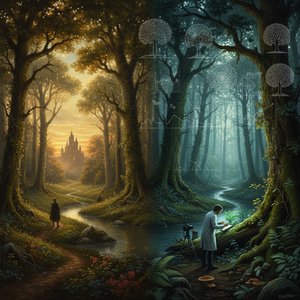
The Forest (Max Ernst, 1927)
Max Ernst (1891–1976) on loonud teose The Forest. See on pärinev 1927 aastast. See kuulub Surrealist Expressionism suuntrime. See on valmistatud materjalist Acrylic On Canvas. Teos on säilitatud Tel Aviv Museum of Art kogamuses Tel Aviv, Israel. Mõõtmed on 25 × 36 cm.
- 1927
- Acrylic On Canvas
- 25 × 36 cm
- Tel Aviv Museum of Art

 Eelvaade

 Käsitsi maalatud õlimaalatsioon
 Saada
 Jaga
 Teosest infokaart


 Laadi alla
 Sarnased teosed
 Röntgenuuring
 Slaidietendus
 KÜSIMUSED JA VASTUSID

 Statistika
The Forest lühidalt
- Pealkiri
- The Forest
- Kunstnik
- Max Ernst (1891–1976)
- Kunstniku sünnukoht
- Brühl, Saksamaa
- Kuupäev
- 1927
- Materjalid
- Acrylic On Canvas
- Mõõtmed
- 25 × 36 cm
- Kus seda näeb
- Tel Aviv Museum of Art, Tel Aviv, Israel
- Liikumine
- Surrealist Expressionism
- Aeglkond
- Early Modern
- Teema
- moonlit cityscape, surreal forest, urban night, max ernst, german art, 1927 painting
Mida The Forest kujutab?
A Nocturne of Dreams: Max Ernst’s “The Forest”
Max Ernst's "The Forest," painted in 1927, isn’t merely a depiction of a landscape; it’s an immersion into the subconscious, a carefully constructed dreamscape rendered with the unsettling beauty characteristic of the artist’s early Surrealist explorations. This intimate canvas – measuring just 25 x 36 cm – holds within its borders a potent collision of natural and urban elements, inviting viewers to contemplate the anxieties and aspirations simmering beneath the surface of modern life. The painting immediately draws the eye upward to a luminous moon dominating the sky, casting an ethereal glow upon the sprawling cityscape below. Buildings rise from the darkness, not as symbols of progress or order, but as strangely distorted monoliths, hinting at a world both familiar and profoundly alien.
Ernst’s technique is deliberately evocative, employing a layered approach that anticipates techniques he would later refine in his collage work. He utilizes loose, expressive brushstrokes, building up the forms of trees and buildings with a sense of urgency and movement. The color palette leans heavily into cool blues and greens, punctuated by the stark white of the moon and the muted tones of the city lights – colors that contribute to the painting’s nocturnal atmosphere and imbue it with a feeling of quiet mystery. Notice how he doesn't meticulously render detail; instead, he favors suggestion and mood, allowing the viewer’s imagination to fill in the gaps.
The Seeds of Surrealism: Ernst’s Intellectual Landscape
Understanding “The Forest” requires acknowledging Max Ernst’s unique artistic trajectory. Born in Brühl, Germany, in 1891, Ernst wasn't a traditional painter; his path was forged through rigorous academic study – philosophy, art history, literature, psychology, and psychiatry at the University of Bonn. This intellectual grounding profoundly shaped his approach to art, moving him beyond mere representation towards exploring the realm of dreams, memory, and the irrational. His father, a teacher of the deaf, instilled in him a sensitivity to the world and a rebellious spirit – qualities that would become central to Ernst’s artistic vision. He was deeply influenced by thinkers like Freud and Jung, particularly their theories on the unconscious mind, which he sought to translate into visual form.
The year 1927 is crucial within this context. It represents a pivotal moment in Ernst's development as a Surrealist, a period marked by experimentation with automatism – a technique of spontaneous creation designed to bypass conscious control and tap directly into the subconscious. "The Forest," therefore, can be seen as a product of this process, a visual manifestation of his inner world.
Symbolic Echoes: Nature Versus Urbanity
The juxtaposition of the forest and the city is laden with symbolic weight. The forest, traditionally associated with nature, instinct, and the primal, stands in stark contrast to the rigid geometry and artificial light of the urban landscape. This isn’t a harmonious blend; rather, it's a tension – a suggestion that the encroachment of modernity threatens to overwhelm the natural world. The moon itself is a potent symbol, often linked to cycles, intuition, and the hidden realms of the unconscious. Its presence elevates the scene beyond a simple cityscape, transforming it into a dreamlike tableau.
Furthermore, consider the distorted forms of the buildings. They aren’t simply architectural structures; they seem to lean inward, almost collapsing under their own weight, mirroring perhaps a sense of unease or anxiety about the future. The trees, though present, are somewhat obscured by the city's glow, hinting at a diminishing connection with nature.
A Timeless Resonance: Reproduction and Artistic Legacy
"The Forest" continues to resonate with viewers today because it taps into fundamental human experiences – the longing for escape, the anxieties of urban life, and the enduring power of the subconscious. OriginalUniqueArt’s meticulously crafted hand-painted reproductions capture not only the visual details of Ernst's original but also its emotional depth and atmospheric quality. Each reproduction is created with the same attention to texture and color as the original, ensuring a faithful representation of this iconic Surrealist masterpiece. Whether you are an art collector seeking to expand your collection or an interior designer searching for a unique piece to elevate a space, a OriginalUniqueArt reproduction of “The Forest” offers a captivating glimpse into the mind of one of 20th-century’s most visionary artists.
Kumba muuseumis asub teos The Forest?
Tel Aviv Museum of Art
Tel Aviv, Israel
Loovuse majakas Vahtimere rannikul Tel Avivi vibratil südamil, linnas, mis pulseerib kunstilise energiaga ja ajaloolise tähtsusega, asub Tel Avivi Kunstimuuseum —Iisraeli õitsva kultuurimaastiku tõeline tunnistus. Olles enam kui pelgalt meistritekipaik, TAMA, nagu seda armsalt kutsutakse, annab kunstile elu, edustades dialoogi, inspireerides põlvkondi ja toimides elutähtsa sidena riigi mineviku ning dünaamilise praeguse vahel. Selle lugu ei alguse suuretest saalidest, vaid Tel Avivi esimese lipniku kodu armsatest seinteდან — ruumist, mis on täis oma identiteeti loovava rahva kaja.


The Forest kõrge resolutsiooniga pildid

Autoriõigustega kaitstud: need failid on mõeldud isiklikuks kasutamiseks, mitte uuestipublickeerimiseks.
Max Ernst, The Forest (1927), Tel Aviv Museum of Art.
Küsimused teemal The Forest – vastused
Kust saab teose „The Forest“, autor Max Ernst täna vaadata?
Originaalteost "The Forest" saab vaadata Tel Aviv Museum of Art, Tel Aviv, Israel-is.
Mis on teose „The Forest“, autor Max Ernst loomisaeg?
Teose „The Forest“, autor Max Ernst loomimisaastaks on märgitud 1927.
Millest on teos "The Forest" valmistatud?
Teose "The Forest" loomisel kasutas Max Ernst Acrylic On Canvas tehnikat. See tehnika määrab originaalteose materjalilise olemuse.
Mis on originaalteose „The Forest“, autor Max Ernst mõõdud?
Teose „The Forest“, autor Max Ernst mõõdud on 25 x 36 cm. Reproduktsioone saab tellida muutes mõõtust, säilitades samal ajal samad proportsioonid.
Mille kohta teos "The Forest" on?
Teemad, mis teoses „The Forest“, autor Max Ernst esinevad, hõlmavad moonlit cityscape, surreal forest, urban night, max ernst, german art, 1927 painting, dreamlike scene. Koos need kokkuvõtavad teose sisu.
Kas teose „The Forest“, autor Max Ernst pilt on vabalt reproduseeritav?
Tegijateõiguse osas on teos "The Forest" kuuluv klassifikatsiooni alla: on endiselt autoriõiguse all under kaitse.
Kes on teose "The Forest" kunstnik?
Teose "The Forest" autoriks on mõeldud Max Ernst.
Millissele stiilile kuulub "The Forest"?
Teosest „The Forest“, autor Max Ernst tuntud kunstisuuna on Surrealist Expressionism. See klassifikatsioon aitab teost paigutada sarnaste kunstnike ja teoste hulka.
Kuhu Max Ernst loomingulisse perioodi kuulub teos "The Forest"?
Max Ernst loomingus kuulub teos "The Forest" perioodi Early Surrealism. See etap aitab seda võrdida kunstniku teiste töödega.
Kunstnik Max Ernst kohta

1891–1976, Saksamaa
Max Ernst
Maksi Ernsti Elu: Sürrealismi ja Vabaduse Tõus Max Ernst, sündinud Maximilian Maria Ernst 1. aprillil 1891 Brühli linnas, Saksamaal, oli kunstnik, kelle tee ei kulgenud tavapärase kunstiõpingu teed, vaid eneseotsingute ja katsetamise teed, mis viisid teda sürrealismi südameni. Tema isa, kurtide kooli õpetaja ja harrastuskunstnik, andis talle nii maailma tundlikkust kui ka vaimustamist konventsiooniliste normidega vastuolus. See sisemine pingelangus kujundas Ernsti loomingut läbi terve elukäigu.
Ka Max Ernst teosed
 Célèbes või Elefant Célèbes1921
 The Elephant Celebes1921
 Euroopa pärast sadu II1942
 Sellest Mehed Midagi Ei Tea1923
Teemad teemal The Forest
 Symphony of Sunlight: The Luminous Legacy of Pine Tree Landscapes in Art HistoryExplore the luminous history of pine landscapes through Sorolla and Shishkin. Discover the magic of forest art today.
 Unlocking the Unconscious: The Top 25 Surrealist Masterpieces by Max ErnstStep into the dreamscapes of Max Ernst. Explore 25 iconic Surrealist masterpieces, from pioneering collages to haunting landscapes. Find in…
 The Enchanted Canopy: Exploring Forests in Art History – From Romantic Idealization to Ecological ConsciousnessExplore the rich history of forests in art! Discover Romantic masterpieces by Friedrich & Monet, Symbolist depths, and contemporary visions…