Expressionism
Sinagoga (Max Beckmann)
Max Beckmann (1884–1950) on loonud teose Sinagoga. See kuulub Expressionism suuntrime. Teos on valmistatud materjalist Oil On Canvas. Teos asub Städel Museum kogamuses Frankfurt, Saksamaa.
- Oil On Canvas
- Städel Museum, Frankfurt

 Eelvaade

 Käsitsi maalatud õlimaalatsioon
 Saada
 Jaga
 Juhend


 Laadi alla
 Sarnased teosed
 Röntgenuuring
 Slaidietendus
 KÜSIMUSED JA VASTUSID

 Statistika
Sinagoga: põhitooded
- Pealkiri
- Sinagoga
- Kunstnik
- Max Beckmann (1884–1950)
- Kunstnik on sündinud
- Leipzig, Saksamaa
- Tehnika
- Oil On Canvas
- Kus seda näeb
- Städel Museum, Frankfurt, Saksamaa
- Suunad
- Expressionism
- Aeglkond
- Modern
- Teema
- synagogue, buildings, dog, figures, red, orange
Mida Sinagoga kujutab?
A Fractured Urban Vision
The city breathes with a heavy, unsettling rhythm in Sinagoga. Buildings lean inward, their sharp, angular forms slicing through a sky that feels thick with tension. There is no steady horizon here; instead, the architecture twists and tilts, defying the logic of gravity and space. A central pathway pulls the eye into a depth that feels strangely shallow, as if the world is being compressed into a claustrophobic dream. The warmth of the palette—deep reds, burnt oranges, and earthy browns—does not offer comfort. Instead, it radiates a feverish heat, a sense of simmering anxiety that clings to every surface. A dog occupies the foreground, a silent witness to this distorted landscape, while small, distant figures move through the shadows of the towering structures, appearing insignificant against the weight of the stone and geometry.
The Language of Distortion
The artist employs a visual language that rejects the comfort of realism to reach for a deeper, more subjective truth. The composition is a complex web of intersecting planes and heavy outlines that push the viewer into an uncomfortable proximity with the scene. Through a masterful application of oil paint, the surfaces possess a palpable weight, where thick, gestural strokes meet smoother, blended areas to create a sense of layered history.
- The use of multiple vanishing points creates a disorienting, non-linear perspective.
- Sharp, diagonal lines introduce a constant sense of instability and movement.
- Geometric shapes like rectangles and triangles are rearranged to emphasize a fractured reality.
- A muted, somber quality in the color transitions suggests a mood of profound introspection.
The Weight of Existence
In this work, the urban environment becomes a stage for the human condition. The presence of the Synagogue suggests a landscape shaped by identity and the heavy shadows of social reality. The distortion of the buildings feels less like a stylistic choice and more like a reflection of a fractured world, where the very foundations of society seem to tilt and buckle. This is the essence of Expressionism, where the external world is bent and broken to mirror an internal state of alienation and unease. The scene does not offer a window into a place, but rather a mirror to a feeling of profound displacement, leaving the viewer to navigate a space where nothing is quite as it seems.
Kumba muuseumis asub teos Sinagoga?
Städel Museum
Frankfurt, Saksamaa
Origins and History of the Städel Museum The Städel Museum traces its origins to the personal collection of Johann Friedrich Städel, a Frankfurt banker and art patron. Established as a civic foundation in 1815, the institution was formally founded in 1817. Städel’s intent was to preserve his holdings and provide public access to the art he had amassed through his travels and business activities.


Sinagoga kõrgel resolutsioonil
Avalik omanik: kunstnik suri aastal 1950.
Max Beckmann, Sinagoga, Städel Museum. Avalik omaniklik õigus
Digitaalne ekspert kontrollib värve vastavust originaalteosele ja retusseerib faili, püsides truulena kunstniku pintlapidele.
Osta kõrge resolutsiooniga piltKüsimused teemal Sinagoga
Kas on olemas sarnaseid teoseid kui "Sinagoga"?
Teosed, mis sarnanevad teosega „Sinagoga“, autor Max Beckmann, on koondatud selle teose lehel Sarnased teosed.
Kuidas teos "Sinagoga" sobitub artisti Max Beckmann teemade ja stiiliga?
Max Beckmann loomingus on teos "Sinagoga", mis kuulub Expressionism stiili ja kordub teemad nagu rembrandt and rubens, old masters, cézanne and van gogh, northern european artists, bosch and bruegel.
Millise riigi kunstilihubast pärineb Expressionism teos "Sinagoga"?
Teos "Sinagoga" ühendab oma looja sünneloolise piirkonna ja Saksamaa läbi Expressionism suunaga.
Milline on teose „Sinagoga“, autor Max Beckmann värvitoit?
Teose "Sinagoga" värvipalett on koonuse方面 Clear Color Presence.
Kui harmoniliselt on teoses „Sinagoga“, autor Max Beckmann värvid ühendatud?
Teose „Sinagoga“, autor Max Beckmann värvid kujutavad Strong Color Unity harmooniat. Harmoonia kirjeldab, kuidas värvid omavahel seotud on.
Mis tüüpi teos on „Sinagoga“, autor Max Beckmann?
Kataloogis on teos „Sinagoga“, autor Max Beckmann liigitatud kui WallArt. See kategooria aitab leida sarnaseid teoseid.
Kas saan kasutada täiendatud reaalset, et näha teost „Sinagoga“, autor Max Beckmann oma toonas?
Teose „Sinagoga“, autor Max Beckmann leht AR-eelvaade teose kohta kasutab täiendatud reaalset, et näidata teost ühilduva seadme abil teie enda ruumis.
Mis on Max Beckmann pseudonüümid või alternatiivsed nimed?
Teised Max Beckmann jaoks kirjutatud nimed, teose "Sinagoga" looja, hõlmavad ka Max Carl Friedrich Beckmann.
Kas saan näha teose „Sinagoga“, autor Max Beckmann röntgenpilti?
Teost "Sinagoga" saab uurida kiht kihti teose Röntgenuuring lehel, mis on restauraatori valgelaudast inspireeritud interaktiivne vaatur, pakkudes kujundist üksteist optilist lugemist.
Kunstnikust, Max Beckmann

1884–1950, Saksamaa
Max Beckmann
Max Beckmanni elu ja kunst Max Beckmann oli mitmekülgne kunstnik, kes tegutses nii maali-, joonistus-, grafika-, skulptuur- kui ka kirjandusega. Ta sündis 12. veebruaril 1884 Saksamaal, Saksia liidus asuvas Leipzigis. Ta kasvas ülemasseklassikus peres, olles kolmest lasrest noorum.
Ka Max Beckmann teosed
 Öö1919
 Suur Agonia Stseen1906
 Raudsild (Frankfurdi vaade)1922
 Kolumbiin1950
Essee teemadel Sinagoga
 Max Beckmann: Navigating Trauma & Modernity Through a Distorted LensExplore the powerful world of Max Beckmann's art – a journey through trauma, modernity & distortion. Discover his key works, influences, an…
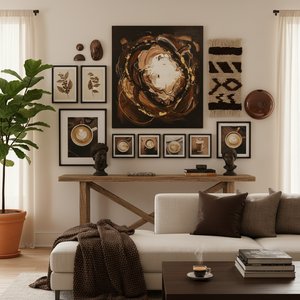 Espresso Tones in Art: 10 Masterpieces for a Richly Layered Home DecorDelve into 10 famous paintings with captivating 'espresso tones'! Explore masterpieces by Rembrandt, Caravaggio & Vermeer. Find museum-qual…
 From Concept to Canvas: Exploring Triadic Interpretations of Artistic Inspiration – Realism, Abstraction, and Poetic ImaginationExplore the art world with OriginalUniqueArt! Discover museum-quality reproductions, custom paintings from photos & expert advice. Elevate …