Eelvaade
 Saada
Saada Jaga
Jaga
 Teave teose kohta
 Juhend

 Laadi alla
 Sarnased teosed
 Röntgenuuring
 Slaidietendus
 Statistika
Idols and Temples at Brambanang, Java
 Acrylic On Canvas
- WallArt
- Botanical Realism
 1876
1876 25.0 x 35.0 cm
 Marianne North Gallery
 Loe lähemalt
Giclée / Kunstiprint
Muuseumikvaliteediga giclée- või kangasprint kiire tootmisega ja paindlikud viimistlusvõimalused. ( Osta käsitsi maalatud teos Lülita digitaalse pildi juurde)




P118B €10

P118H €10

P118W €10

P438Z €10

P508JH €12

P508YH €12

P805H €10

P805Z €10

P919BZ €10

P919G €10

P919XJ €10

P959ZH €10

P968JZ €12

W106C €8

W218G €10

W218JH €8

W218Y €10

W307PJ €10

W316G €10

W316PJ €8

W316Y €10

W398PJ €8

W4111J €10

W500HY €15

W500JH €15

W692G €12

W849H €8

W940BG €15

W953PJ €8




Vali meie eelmääratud suurused, mis vastavad teose algupärastele proportsioonidele.

Sisestage vajalik laius ja kõrgus, et see sobiks teie raamile või seinale. Trükki saab ainult lõigata, seda ei saa kunagi pildist suuremaks teha, seega ka erineva mustega suurus kaotab osa pildist. Enne trükkimist saadame teile kinnitamiseks digitaalse näidisprojektsiooni. Sellel lehel näidatud pilt ei kujuta reaalset lõiget — seda näitab ainult näidisprojektsioon.
Ülemaailmne tarne () 2 nädala jooksul, tavalise 4/5 nädala asemel. (28 oktoober)

Tasuta ekspresssaatmine üle maailma

Kõrgekvaliteediline lina-kangas

Täielik transpordikindlustus

Tollimaksude tagastamise garantii

Värvitoime täpsuse garantii

100 päeva tagastusõigus (ainult valmistusdefektide korral)

100% raha tagasi garantii

Hulgusoodustus
 Klaasivalik on saadaval ainult kuni 110 cm suuruses teostes

Idols and Temples at Brambanang, Java
Giclée / Kunstiprint
Reproduktsiooni suurus
-


Koguhind
€ 70
A Journey Through Ancient Echoes: Marianne North’s “Idols and Temples at Brambanang”
Marianne North's "Idols and Temples at Brambanang, Java," painted in 1876, is more than just a depiction of an ancient ruin; it’s a portal to a vanished world, a testament to Victorian exploration, and a poignant meditation on the enduring power of faith and time. This captivating artwork transports us to the heart of Java, specifically the remnants of a Hindu temple complex nestled amidst lush jungle landscapes – a place steeped in legend and shrouded in the mists of centuries past.
The scene unfolds with remarkable detail, showcasing two imposing stone statues seated upon weathered pedestals within the crumbling walls. These figures, likely representing deities or revered ancestors, command attention despite their eroded state, hinting at the grandeur they once possessed. Surrounding them are a collection of other smaller sculptures – fragments of a lost civilization scattered across the scene like forgotten memories. Beyond the immediate focus of the statues, North masterfully incorporates elements of the natural world: towering trees with gnarled roots reaching towards the sky, and distant mountains rising majestically in the background, creating a sense of both scale and serenity.
A Victorian Explorer’s Vision
Marianne North (1830-1890) was an extraordinary figure – a pioneering artist, botanist, and intrepid explorer who defied the conventions of her era. Driven by a relentless curiosity and a deep love for the natural world, she embarked on a series of ambitious expeditions throughout Asia, Africa, and South America, documenting flora and fauna with meticulous detail and capturing their beauty through vibrant watercolor paintings. Unlike many artists of her time who relied on studio work, North actively sought out remote locations, often traveling alone and enduring challenging conditions to bring back her artistic visions.
Her journey to Java was part of a larger effort to document the region’s rich cultural heritage. North meticulously researched local folklore and religious practices, seeking to understand the significance of the temples she encountered. “Idols and Temples at Brambanang” is not simply a record of a physical site; it's infused with her observations and interpretations of the spiritual atmosphere surrounding these ancient ruins.
Technique and Artistic Style
North’s distinctive style is immediately recognizable in this work. She employed a loose, expressive watercolor technique, prioritizing capturing the essence of light and shadow over precise detail. The colors are rich and luminous, particularly the deep greens of the jungle foliage contrasting with the weathered tones of the stone structures. Notice how she uses broken brushstrokes to create a sense of texture and movement – the rough surface of the statues, the tangled roots of the trees, and the hazy atmosphere of the distant mountains all contribute to a dynamic and immersive visual experience.
Her approach was revolutionary for her time; she deliberately avoided academic precision, favoring instead an intuitive and emotionally driven style. This allowed her to convey not just what she *saw*, but also what she *felt* about the place – a sense of reverence, mystery, and the passage of time.
Symbolism and Emotional Resonance
The crumbling temples themselves are potent symbols of impermanence and the cyclical nature of history. They stand as reminders of civilizations that have risen and fallen, leaving behind only fragments of their former glory. The statues, though weathered and incomplete, retain an aura of dignity and power, suggesting a continuity of faith and tradition despite the ravages of time.
"Idols and Temples at Brambanang" evokes a profound sense of melancholy and contemplation. It’s a poignant reminder of our own mortality and the enduring legacy of human endeavor. The painting's beauty lies not only in its technical skill but also in its ability to transport us to another time and place, inviting us to reflect on the mysteries of the past and the timelessness of the human spirit. It is a powerful piece that speaks volumes about exploration, faith, and the enduring allure of ancient civilizations.
Korduvad küsimused
Kuidas materjal ja suund teoses "Idols and Temples at Brambanang, Java" kokku saavad?
Teoses "Idols and Temples at Brambanang, Java" kohtuvad Acrylic On Canvas tehnika ja Botanical Realism suundumus.
Kuidas leida teoseid, mis on stiilis sarnased teosele „Idols and Temples at Brambanang, Java“, autor Marianne North?
Teose „Idols and Temples at Brambanang, Java“, autor Marianne North lehel Sarnased teosed on esiletõstetud sarnased teosed.
Kuidas teos „Idols and Temples at Brambanang, Java“, autor Marianne North seob Botanical Realism kunstniku kodumaaga?
Teose "Idols and Temples at Brambanang, Java" on loonud Suurbritannia-s sündinud Marianne North, tuginedes Botanical Realism suunale. Kunstniku päritolu seob teose Botanical Realism stiiliga, mida praktiseerivad Suurbritannia kunstnikud.
Kunstniku elulugu
Marianne North: Viktorian Ajatuled ja Taimekunst
Marianne Northi nimi helgib tänapäevani kui särav täheke viktoriaanlikus kunstimaailmas, kuid tema teekond kuulsuse tippu oli nii erakordne kui ka tema loodud värviteosed. Sündinud 1830. aastal Inglismaal Hastingsis, näis ta olevat sündinud mugavaks ja konventsionaalseks eluks, kuid sisemiselt põles temas seiklustunne ja soov maailma avastada – mitte salongi-naise pilgu läbi, vaid kunstniku südamega. Tema elu oli harmooniline segu muusikalisest andest, mis jäi teostamata, ning sügavast armastusest taimekunsti vastu, mis viis teda uskumatutele reisidele üle maailma ja lõpuks ka legendaarse näituse loomisele Kew Gardensis.
Northi varajane elu oli mõjutatud privileegidest ja haridusest. Tema isa, Frederick North, oli poliitik ning ema Janet Marjoribanks pärit jõukast suguvõsast. Noorena õpetati talle laulmist, kuid hääle probleemid sundisid teda pöörduma kunsti poole. Just siis avastas ta oma tõelise kutsumuse – värvidega püüda jäädvustada looduse ilu ja keerukust. Tema esimene kunstiline kasvupaik oli Euroopa, kus pere reisis palju ning Marianne õppis vaatlema maastikke ja lillede detaile. Kui tema ema suri 1855. aastal, muutus Northi elu radikaalselt. Ta kaotas oma lähedase sõbra ja toetaja, kuid see avas samal ajal ukse uuele peatükile – seikluste ja kunstilise vabaduse ajale.
Maailmareisid ja Taimeportreed
1869. aastal, isapõlve kaotusega, tundis North sügavat soovi leida uus eesmärk ning teekond viis ta maailma avastama. Tema reisid olid uskumatud – Kanadast Lõuna-Ameerikasse, Jaapanist Borneosse ja Indiat kuni Austraaliani välja. Ta ei sõitnud koos teadlaste rühmadega ega lootnud ametlikele toetustele; tema reisi rahastas ise ning see näitab tema tugevat tahtejõudu ja iseseisvust. Northi maalimisviis oli ainulaadne – ta kasutas peamiselt õli, mis oli tolleaegsete lillemaalijate seas haruldane. Tema teos ei olnud pelgalt täpse botaniilise illustratsiooni jäljend; see oli elav ja atmosfääriline vaade loodusele, kus iga värvitoon ja joon rääkis loo kohta, kus ta viibis.
Northi maalidel on eriti silmapaistev tema võime jäädvustada troopiliste taimede rikkalikku mitmekesisust. Ta ei peljanud kujutada ka suuri loomseid – elevante, eksootilisi kalu ja leheputukaid – integreerides need looduslikult oma taimeportreedesse. Tema teos "Tegoro, Sarawak" on suurepärane näide sellest, kuidas ta suutis tabada vihmametsa tihedust ja värviküllust. Northi maalimisprotsess oli hoolitud ja täpne; ta veetis tunde vaatledes oma objekte ning pühendas end nende detailide jäädvustamisele. Tema teos "On the Way from Tibet near Nagkunda, North India" näitab tema oskust kujutada ka mägimägesid ja suurejoonilisi maastikke.
Pärand Kew Gardensis
Northi reisimise ja maalimisega seostatud saavutuste tipuks oli tema ainulaadne kingitus – üle 800 värviteose annetus Royal Botanic Gardensile Kew Gardensis. Ta ei piirdunud ainult teoste andmisega, vaid pakkus ka raha näituse ruumi ehitamiseks. Marianne Northi Galerii avati 1882. aastal ning see on tänapäevani ainukordne – ainsaks naiskunstniku pühendatud näitusruumiks Kew Gardensis. Galerii on pühendunud tema teoste eksponeerimisele ja tutvustamisele, pakkudes külastajatele võimaluse sukelduda Northi maailma ning kogeda tema pilgu läbi looduse ilu.
Marianne Northi elu oli tõestus naise võimekusest ületada tolleaegsed piirangud ja teostada oma unistusi. Ta oli seikleja, kunstnik ja teadlane, kes andis olulise panuse nii kunsti kui ka botaanika alale. Tema maalijõud on tänapäevani inspireeriv ning tema pärand elab edasi Kew Gardensi galeriis, tuletades meile kõigile meeles, et iseseisvus ja kirg võivad viia uskumatutele avastustele.
Tuntumad Teosed
- Foliage, Flowers and Fruit of the Cashew, Tanjore, India: Elav kujutus troopilise taime keerukusest.
- Elephants, Exotic Fish, and Leaf Insect: Näitab Northi võimekust kujutada nii taimi kui ka loomi nende loomulikus keskkonnas.
- Tegoro, Sarawak: Vihmametsa stseen, mis näitab tema realistlikku vaadet ja atmosfääri.
- On the Way from Tibet near Nagkunda, North India: Himaalaja maastike kujutamine romantilise realismiga.
- Lake of Ajmere, North West India: Akvarellmaaling, mis kujutab India mägesid ja rahulikku päikeseloojumist.

Marianne North
1830 - 1890 , Suurbritannia
Lühikest infot
- Artistic Movement Or Style: Viktorianism
- Artists Who Influenced This Artist: ['Joseph Dalton Hooker']
- Date Of Birth: 24 oktoober 1830
- Date Of Death: 30 august 1890
- Full Name: Marianne North
- Nationality: Britannia
- Notable Artworks:
- Tegoro, Sarawak
- On the Way from Tibet
- Lake of Ajmere
- Foliage, Flowers and Fruit
- Place Of Birth: Hastings, Ühendriigid
Sarnased artiklid

Timeless Echoes: Capturing the Majesty of Ancient Ruins through the Lens of Fine Art History
Explore the profound beauty of ancient ruins through fine art history. Discover how masters like Pannini captured Roman grandeur, and learn how to bring this timeless architectural majesty into your home with museum-quality, hand-painted oil reproductions.
Victorian Botanical Art: How Bold, High-Impact Florals are Reclaiming Modern Interior Design
Discover how Victorian botanical art is transforming modern spaces. Explore high-impact floral aesthetics, from Marianne North's tropical drama to bold, hand-painted reproductions that bring vintage scientific beauty into contemporary urban design.
The Timeless Elegance of Victorian Botanical Painting: A Journey Through Nature's Intricate Detail and Scientific Artistry
Discover the exquisite world of Victorian botanical painting, where scientific precision meets profound aesthetic grace. Explore a journey through nature's intricate details, from legendary illustrators to the untamed beauty of Marianne North’s vibrant floral masterpieces.
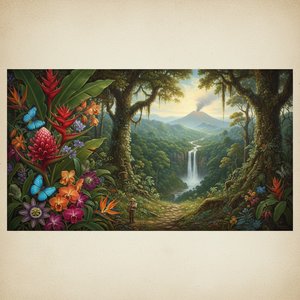
Exploring the Vibrant World of Marianne North: A Journey Through Botanical and Exotic Landscapes
Discover the breathtaking botanical world of Marianne North. Explore her vibrant Victorian oil paintings of exotic landscapes, from Brazil to Jamaica, through an expert art-historical lens. Perfect for classic art enthusiasts and collectors of fine natural history art.
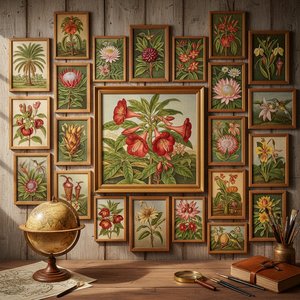
Marianne North's Masterpieces: 25 Botanical Paintings That Bloom With Adventure | OriginalUniqueArt
Journey through the vibrant world of Marianne North’s botanical paintings! Explore 25 iconic artworks from this Victorian artist, celebrating exotic flora & travel. Find museum-quality reproductions and curated decor ideas at OriginalUniqueArt.com.