Expressionist Cubism
Lovers (Marc Chagall)
Marc Chagall (1887–1985) on loonud teose Lovers. See kuulub Expressionist Cubism suuntrime. See on valmistatud materjalist Acrylic On Canvas. Mõõtmed on 23 × 18 cm.
- Acrylic On Canvas
- 23 × 18 cm

 Eelvaade

 Käsitsi maalatud õlimaalatsioon
 Saada
 Jaga
 Teosest infokaart


 Laadi alla
 Sarnased teosed
 Röntgenuuring
 Slaidietendus
 KÜSIMUSED JA VASTUSID

 Statistika
Lovers lühidalt
- Pealkiri
- Lovers
- Kunstnik
- Marc Chagall (1887–1985)
- Kunstniku sünnukoht
- Lozna, Valgevene
- Materjalid
- Acrylic On Canvas
- Mõõtmed
- 23 × 18 cm
- Liikumine
- Expressionist Cubism
- Teema
- love, kissing, chagall, romance, dreamlike, vitebsk
Mida Lovers kujutab?
A Dreamscape of Love and Longing: Marc Chagall’s “Lovers”
Marc Chagall's "Lovers," rendered in a captivating monochrome palette, isn’t merely a depiction of an intimate moment; it’s a portal into the artist’s deeply personal world—a realm where memory intertwines with myth and the familiar landscapes of his childhood bleed into fantastical visions. This evocative piece, often associated with Chagall's exploration of Russian folklore and Jewish identity, speaks to universal themes of love, connection, and the bittersweet ache of longing. The painting immediately draws the viewer in with its central focus: two figures locked in a tender embrace, their faces nearly touching within an oval frame that simultaneously protects and confines them.
The composition is deliberately flattened, eschewing traditional perspective for a more symbolic approach. Chagall’s signature style—a potent blend of Cubism, Expressionism, and Symbolism—is evident in the simplified forms and distorted features. The figures aren't rendered with photographic realism; instead, they are stylized representations imbued with emotional weight. Notice how their limbs flow organically, mirroring the undulating lines that define the background – a suggestion of rolling hills and perhaps even a distant village, hinting at Chagall’s roots in Vitebsk, Belarus. The three indistinct figures lurking in the periphery add to the dreamlike quality, acting as silent witnesses or perhaps echoes of past loves and experiences.
Technique and Materials: A Dance of Ink and Line
Examining the technique reveals a deliberate layering of textures achieved through meticulous hatching and cross-hatching. These subtle variations in tone create a sense of depth and volume, particularly noticeable in the rendering of the figures’ clothing and hair. The artist skillfully employed black ink or charcoal on paper, creating a surface that is both delicate and robust. The visible lines themselves become part of the artwork's narrative—a testament to the hand that brought this vision to life. It’s a technique reminiscent of his early training as a sign painter, grounding the fantastical elements in a tangible, almost tactile reality.
Interestingly, research into Chagall’s work reveals parallels with “Lovers’ Sky” (1957), another painting featuring intertwined figures against a vibrant, swirling backdrop. This suggests a recurring motif—the idea of love transcending earthly boundaries and soaring towards the heavens. The monochromatic palette in "Lovers" amplifies this sense of elevation, stripping away distractions and focusing solely on the emotional core of the scene.
Symbolism and Emotional Resonance
Beyond its visual appeal, “Lovers” is rich with symbolic meaning. The oval frame can be interpreted as a representation of intimacy, protection, or even imprisonment—a space where love exists in isolation. The close proximity of the figures’ faces underscores their profound connection, while the lack of explicit detail invites viewers to project their own experiences and emotions onto the scene. The painting evokes a powerful sense of nostalgia, a yearning for a lost moment or an idealized past.
Chagall himself often spoke of his childhood memories in Vitebsk—the vibrant colors, the bustling marketplaces, and the deep-seated traditions of his Jewish community. “Lovers” is arguably a distillation of these memories, filtered through the lens of his artistic vision. It’s a testament to the enduring power of personal experience to shape an artist's work and resonate with audiences across generations.
A Timeless Masterpiece for Home and Collection
Reproductions of “Lovers” offer a beautiful way to bring Chagall’s dreamlike world into your home. The artwork’s enduring appeal lies in its ability to evoke powerful emotions—a sense of romance, longing, and the beauty of human connection. Whether displayed as a statement piece in a contemporary space or incorporated into a more traditional setting, this captivating image will undoubtedly serve as a source of inspiration and contemplation for years to come. Consider a hand-painted reproduction – a faithful recreation that captures the essence of Chagall’s original vision, allowing you to experience the magic of “Lovers” firsthand.
Lovers kõrge resolutsiooniga pildid

Autoriõigustega kaitstud: need failid on mõeldud isiklikuks vaatamiseks, mitte uuestipublickeerimiseks.
Marc Chagall, Lovers.
Küsimused teemal Lovers – vastused
Millises materjalis on teos „Lovers“, autor Marc Chagall valmistatud?
Teos "Lovers" on valmistatud tehnika Acrylic On Canvas.
Mis on teose „Lovers“, autor Marc Chagall tegelik suurus?
Teose "Lovers" originaalmõõdud on 23 x 18 cm. Algdimensioonid on kasulik viide reproduktsiooni suuruse valimisel.
Mida „Lovers“, autor Marc Chagall kujutab?
Teemad, mis teoses „Lovers“, autor Marc Chagall esinevad, hõlmavad love, kissing, chagall, romance, dreamlike, vitebsk, symbolism. Koos need kokkuvõtavad teose sisu.
Kas teose „Lovers“, autor Marc Chagall pilt on vabalt reproduseeritav?
Autoriõiguse teave teose „Lovers“, autor Marc Chagall kohta: teos kuulub luba ala on endiselt autoriõiguse all under kaitse. See määrab, kas kujundist on lubatud vabadelt reproduktsioone teha.
Millisele kunstnikule on teos "Lovers" atribuutseeritud?
Teose "Lovers" looja on Marc Chagall. Teos on kataloogitud nime Marc Chagall all.
Millissele kunstisuunale kuulub teos „Lovers“, autor Marc Chagall?
Teosest „Lovers“, autor Marc Chagall tuntud kunstisuuna on Expressionist Cubism. See klassifikatsioon aitab teost paigutada sarnaste kunstnike ja teoste hulka.
Millissele perioodile Marc Chagall karjäärist kuulub teos "Lovers"?
Teos "Lovers" kuulub Marc Chagall loomingulise karjääri perioodi Mature Period. See klassifikatsioon seostab teose kunstniku loovliku arenguga.
Mis selgitab teose „Lovers“, autor Marc Chagall autoriõiguste olukorda?
Marc Chagall teos "Lovers" on on endiselt autoriõiguse all under kaitse. Autoriõiguse kaitseajad arvutatakse alates kunstniku surmaõigustest ning Marc Chagall suri aastal 1985.
Kust koht teoses "Lovers" on Marc Chagall loomingus?
"Lovers" kuulub Marc Chagall Expressionist Cubism perioodi teosetele, mille tuntud teemad hõlmavad folklore, jewish tradition, dreams, russian culture, vitebsk memories, cubism, expressionism, symbolism.
Kunstnik Marc Chagall kohta
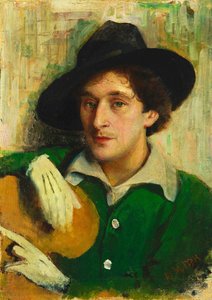
1887–1985, Valgevene
Marc Chagall
Varane elu, pere ja haridus Marc Chagall ilmub maailma 7. juilhel 1887 Vitebskis, Vene Imperiaalis, sündides nimega Moishe Segal. Ta on esimene üheks lapsedest väikeses ja vaatlikus juudi peres. Tema elu rütmi määratlevad pidev töö ja väikese mõõdus kaubandus.
Ka Marc Chagall teosed
 Mina ja küla1911
 Valge ristiium1938
 Marc Chagall
Elu maalitud unelmates: Marc Chagalli maailm
Marc Chagall, sündinud Moishe Shagalina 1887. aastal väikses Valgevene linnas Lioznas Vitebski lähedal, ei olnud pelgalt maaler; ta oli värvide poeet, unelmate kootaja ja mälu kroonik. Tema elu,1915
 Linna kohal1918
Teemad teemal Lovers
 Belarusian artworks of the 1960sIconic Belarusian artworks of the 1960s, including masterpieces by Marc Chagall. Explore the full collection online at OriginalUniqueArt.co…
 Shadow and Sanguine: The Technical Mastery of Chiaroscuro and Red Chalk in Fine ArtMaster the technical secrets of chiaroscuro and red chalk through historical analysis. Explore the science of light and shadow today.
 Dreaming in Color: The 25 Most Iconic Masterpieces by Marc ChagallStep into the dreamlike world of Marc Chagall. Explore 25 iconic masterpieces, from vibrant surrealist tales to soulful folklore. Find insp…