Cubism · 1914
Blue Lovers (Marc Chagall, 1914)
Marc Chagall (1887–1985) on loonud teose Blue Lovers. See on pärinev 1914 aastast. See kuulub Cubism suuntrime. Teos on valmistatud materjalist Oil. Mõõdud on 49 × 44 cm.
- 1914
- Oil
- 49 × 44 cm

 Eelvaade

 Käsitsi maalatud õlimaalatsioon
 Saada
 Jaga
 Teave teose kohta


 Laadi alla
 Sarnased teosed
 Röntgenuuring
 Slaidietendus
 KÜSIMUSED JA VASTUSID

 Statistika
Blue Lovers lühidalt
- Pealkiri
- Blue Lovers
- Kunstnik
- Marc Chagall (1887–1985)
- Kunstnik on sündinud
- Lozna, Valgevene
- Kuupäev
- 1914
- Tehnika
- Oil
- Mõõtmed
- 49 × 44 cm
- Suunad
- Cubism
- Aeglkond
- Modern
- Teema
- love, embrace, blue sky, couple, gesture, surrealism
Mida Blue Lovers kujutab?
Blue Lovers: A Symphony of Color and Emotion
Marc Chagall’s “Blue Lovers,” completed in 1914 during his formative years as a Cubist innovator, transcends mere visual representation; it embodies the very essence of romantic connection. Measuring 49 x 44 cm, this oil painting stands as a cornerstone of Cubism—a stylistic choice that Chagall skillfully employed to convey his profound personal vision and artistic exploration.
- Style: Cubism – Chagall’s embrace of this revolutionary movement distinguishes him from many contemporaries. Unlike Impressionists who sought to capture fleeting moments of light, Cubism dissected objects into geometric fragments, presenting multiple perspectives simultaneously—a technique that challenged conventional artistic norms and paved the way for Surrealist experimentation.
- Technique: Chagall’s masterful brushwork contributes significantly to the painting's emotive power. Thick impasto creates textural surfaces that capture the physicality of the figures and imbue them with palpable warmth. The artist meticulously blended blues—ranging from serene cerulean to deep indigo—to establish a dominant color palette symbolizing tranquility, timelessness, and transcendence.
The Significance of Blue
Chagall’s unwavering fascination with blue is documented throughout his oeuvre, reflecting his belief in its ability to evoke spiritual contemplation. As he famously stated, “Blue symbolizes a space devoid of mass and time,” mirroring the idealized realm where earthly constraints dissolve and lovers merge into one harmonious entity. This sentimentality resonates deeply with Chagall's own relationship with Bella Rosenfield—a tumultuous romance that fueled his artistic creativity until her passing in 1994.
Historical Context: Vitebsk’s Influence
The painting’s genesis occurred in Vitebsk, Belarus—a city brimming with cultural diversity shaped by Orthodox Christianity and Jewish traditions. Chagall's upbringing instilled within him a distinctive aesthetic sensibility characterized by fantastical imagery and vibrant hues—elements that would permeate his subsequent works. The depiction of the couple’s faces pressed together underscores the importance of intimacy and vulnerability in human experience, mirroring themes prevalent in Vitebsk folklore.
Symbolism: Gesture and Light
The painting's composition is meticulously crafted to convey a sense of movement and dynamism—a subtle tremor that captures the fleeting beauty of a moment shared. The couple’s gesture—a tender embrace—represents affection, devotion, and mutual support. Furthermore, Chagall skillfully utilizes light—primarily emanating from an unseen source—to illuminate the figures' faces and create an ethereal atmosphere, symbolizing enlightenment and spiritual illumination.
Legacy: A Masterpiece Preserved
"Blue Lovers" resides within The Museum Staatsgalerie Moderner Kunst (Munich, Germany), cementing Chagall’s place as one of the foremost artists of the 20th century. Alongside “Les yeux” by Maria H., this painting exemplifies Chagall's unparalleled ability to fuse stylistic innovation with heartfelt emotion—a testament to his enduring artistic legacy.
Blue Lovers kõrge resolutsiooniga pildid
Protected by copyright: these files are for personal reference, not a licence to republish.
Marc Chagall, Blue Lovers (1914).
Küsimused teemal Blue Lovers – vastused
Mis aastal loodi teos „Blue Lovers“, autor Marc Chagall?
Teos "Blue Lovers" on pärit aastast 1914. See ajastu aitab mõista teost Marc Chagall karjääri ja selle ajastu kontekstis.
Millist tehnikat teose „Blue Lovers“, autor Marc Chagall valmistamisel kasutati?
Teos "Blue Lovers" on valmistatud tehnika Oil.
Mis on originaalteose "Blue Lovers" mõõdud?
Originaalteose „Blue Lovers“, autor Marc Chagall mõõdud on 49 x 44 cm.
Millised teemad teoses „Blue Lovers“, autor Marc Chagall esile tõelve?
„Blue Lovers“, autor Marc Chagall kujutab: love, embrace, blue sky, couple, gesture, surrealism, geometry.
Kas teos „Blue Lovers“, autor Marc Chagall kuulub avalikku omandisse?
Tegijateõiguse osas on teos "Blue Lovers" kuuluv klassifikatsiooni alla: on endiselt autoriõiguse all under kaitse.
Kes on teose "Blue Lovers" kunstnik?
Teose "Blue Lovers" looja on Marc Chagall. Teos on kataloogitud nime Marc Chagall all.
Millissele kunstisuunale kuulub teos „Blue Lovers“, autor Marc Chagall?
"Blue Lovers" on Cubism suunaga teos. See suundumine viitab kunstilisele traditsioonile, millega teos on seotud.
Kuhu Marc Chagall loomingulisse perioodi kuulub teos "Blue Lovers"?
Teos "Blue Lovers" esindab kunstniku Marc Chagall loovperioodi Early Period.
Kui vana oli Marc Chagall, kui ta loositud teose "Blue Lovers" aastal 1914?
Kui teos "Blue Lovers" loodi aastal 1914, oli Marc Chagall (sündinud aastal 1887) 27 aastane.
Kunstnikust, Marc Chagall
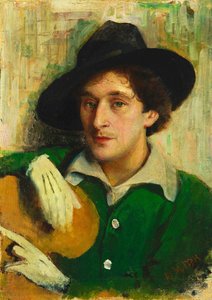
1887–1985, Valgevene
Marc Chagall
Varane elu, pere ja haridus Marc Chagall ilmub maailma 7. juilhel 1887 Vitebskis, Vene Imperiaalis, sündides nimega Moishe Segal. Ta on esimene üheks lapsedest väikeses ja vaatlikus juudi peres. Tema elu rütmi määratlevad pidev töö ja väikese mõõdus kaubandus.
Ka Marc Chagall teosed
 Mina ja küla1911
 Valge ristiium1938
 Marc Chagall
Elu maalitud unelmates: Marc Chagalli maailm
Marc Chagall, sündinud Moishe Shagalina 1887. aastal väikses Valgevene linnas Lioznas Vitebski lähedal, ei olnud pelgalt maaler; ta oli värvide poeet, unelmate kootaja ja mälu kroonik. Tema elu,1915
 Linna kohal1918
Essee teemadel Blue Lovers
 Belarusian artworks of the 1950s1950s Belarusian art features masterpieces by Marc Chagall, including works like The Prophet. Find museum-quality reproductions on Original…
 Dreaming in Color: The 25 Most Iconic Masterpieces by Marc ChagallStep into the dreamlike world of Marc Chagall. Explore 25 iconic masterpieces, from vibrant surrealist tales to soulful folklore. Find insp…
 Belarusian artworks of the 1960sIconic Belarusian artworks of the 1960s, including masterpieces by Marc Chagall. Explore the full collection online at OriginalUniqueArt.co…