
 Eelvaade
 Saada
Saada Jaga
Jaga
 Teave teose kohta
 Juhend

 Laadi alla
 Sarnased teosed
 Röntgenuuring
 Slaidietendus
 KÜSIMUSED JA VASTUSID
 Statistika
Portrait of Anna Codde

- 86.0 x 66.0 cm


 Loe lähemalt
Giclée / Kunstiprint
Muuseumikvaliteediga giclée- või kangasprint kiire tootmisega ja paindlikud viimistlusvõimalused. ( Osta käsitsi maalatud teos Lülita digitaalse pildi juurde)




P118B €10

P118H €10

P118W €10

P438Z €10

P508JH €12

P508YH €12

P805H €10

P805Z €10

P919BZ €10

P919G €10

P919XJ €10

P959ZH €10

P968JZ €12

W106C €8

W218G €10

W218JH €8

W218Y €10

W307PJ €10

W316G €10

W316PJ €8

W316Y €10

W398PJ €8

W4111J €10

W500HY €15

W500JH €15

W692G €12

W849H €8

W940BG €15

W953PJ €8




Vali meie eelmääratud suurused, mis vastavad teose algupärastele proportsioonidele.

Sisestage vajalik laius ja kõrgus, et see sobiks teie raamile või seinale. Trükki saab ainult lõigata, seda ei saa kunagi pildist suuremaks teha, seega ka erineva mustega suurus kaotab osa pildist. Enne trükkimist saadame teile kinnitamiseks digitaalse näidisprojektsiooni. Sellel lehel näidatud pilt ei kujuta reaalset lõiget — seda näitab ainult näidisprojektsioon.
Ülemaailmne tarne () 2 nädala jooksul, tavalise 4/5 nädala asemel. (5 november)

Tasuta ekspresssaatmine üle maailma

Kõrgekvaliteediline lina-kangas

Täielik transpordikindlustus

Tollimaksude tagastamise garantii

Värvitoime täpsuse garantii

100 päeva tagastusõigus (ainult valmistusdefektide korral)

100% raha tagasi garantii

Hulgusoodustus
 Klaasivalik on saadaval ainult kuni 110 cm suuruses teostes

Portrait of Anna Codde
Giclée / Kunstiprint
Reproduktsiooni suurus
-


Koguhind
€ 72
A Window into the Dutch Renaissance: The Portrait of Anna Codde
Maerten van Heemskerck’s “Portrait of Anna Codde,” painted in 1529, isn't merely a likeness; it’s a meticulously crafted tableau vivant – a snapshot of life within the burgeoning world of early Dutch Renaissance society. More than just a portrait, this work offers a rare glimpse into the domestic sphere, revealing a woman engaged in a timeless activity: spinning wool. The scene unfolds with quiet dignity and understated elegance, capturing not only Anna’s physical appearance but also her role as a skilled artisan and devoted wife – a common yet increasingly valued ideal within the Dutch merchant class of the era.
The painting immediately draws the eye to Anna herself, seated comfortably in a simple chair. Her long, flowing hair is partially arranged, suggesting a deliberate effort towards presentation, while her gaze is direct and engaging, inviting the viewer into her world. The spindle she holds isn’t just an object of craft; it's a symbol of domesticity, industry, and the woman’s vital contribution to the household economy. Her dress, though modest in style, speaks volumes about her status – a subtle indication of wealth and refinement. Notice the careful attention to detail in the rendering of her hands, demonstrating Heemskerck’s mastery of capturing texture and form.
The Painter's Palette: Technique and Style
Heemskerck’s style is immediately recognizable as a masterful blend of Italian Renaissance ideals with distinctly Dutch sensibilities. The influence of Jan van Scorel, his former teacher, is evident in the use of light and shadow – a technique known as *chiaroscuro* – which creates a sense of depth and volume within the composition. However, Heemskerck departs from the purely idealized forms often found in Italian portraits, opting for a more naturalistic approach that reflects the growing interest in portraying individuals with greater realism.
The painting’s color palette is restrained yet sophisticated, dominated by earthy tones – browns, ochres, and muted greens – which evoke the textures of the wool and the surrounding domestic environment. The background, featuring a chair and a clock on the wall, provides context without overwhelming the central figure. Heemskerck's skill lies not just in depicting individual features but also in creating a harmonious whole, where every element contributes to the overall narrative.
A Portrait of an Era: Historical Context
“Portrait of Anna Codde” was painted during a period of significant social and economic transformation in the Netherlands. The rise of merchant families like the Coddes fueled a burgeoning economy and a growing emphasis on wealth, status, and family lineage. Portraits became increasingly important as a means of documenting these achievements and solidifying one’s place within society. The inclusion of domestic scenes like this one was not uncommon; it served to portray the subject as both a successful businesswoman and a devoted wife – qualities highly valued in 16th-century Dutch culture.
Furthermore, the painting reflects the growing interest in secular portraiture during this time. While religious subjects remained important, artists began experimenting with depicting everyday life and capturing the personalities of their patrons. The meticulous detail and realistic portrayal of Anna Codde demonstrate Heemskerck’s commitment to portraying his subject with honesty and dignity.
Symbolism and Emotional Resonance
Beyond its technical merits, “Portrait of Anna Codde” is rich in symbolism. The spinning wheel represents not only her craft but also the woman's role as a provider for her household – a vital contribution to the family’s well-being. The clock on the wall serves as a reminder of time and the passage of life, subtly emphasizing the importance of cherishing each moment. The birds in the background, one near the top right corner and another towards the bottom left of the painting, may represent good fortune or simply add to the idyllic scene.
Ultimately, “Portrait of Anna Codde” is a poignant reminder of a bygone era – a time when domesticity was intertwined with prosperity and artistry. It’s a testament to Heemskerck's skill as a painter and his ability to capture not just a likeness but also the essence of a human being within her historical context. Reproductions of this captivating work offer a beautiful window into the heart of the Dutch Renaissance.
Korduvad küsimused
Kas „Portrait of Anna Codde“, autor Maerten Van Heemskerck on maalid, joonis või etsing?
„Portrait of Anna Codde“, autor Maerten Van Heemskerck on klassifitseeritud kui WallArt. See kategooria kirjeldab originaalteose kunstivormi.
Kust saan näha originaalteost „Portrait of Anna Codde“, autor Maerten Van Heemskerck?
Originaalteost "Portrait of Anna Codde" saab vaadata Rijksmuseum, Amsterdam, Netherlands-is.
Kas teos „Portrait of Anna Codde“, autor Maerten Van Heemskerck kuulub avalikku omandisse?
Teos „Portrait of Anna Codde“, autor Maerten Van Heemskerck on lubaõiguslikult avalikus õiguses – selle autoriõigud onหมดunud. See staatus reguleerib teose pildi reprodüseerimise võimalusi.
Kunstniku elulugu
varase elu ja õppimine
maerten van heemskerck, silmapaistva hollandi portreedi- ja religioospintur, sündis 1. juunil 1498 Heemskerki külas, Põhja-Hollandis. Tema kunstiline teekond algas Haarlemis Cornelius Willemszi juhendamisel, jättes järeposse lühikese perioodi Delftis koos Jan Lucasziga. Lõpuks sai ta jan van scoreli õpilaseks, omastades oma õpetaja itaalsia mõjutustega stiili.karjääri tippsaavutused
- maerten van heemskercki töö on iseloomulik oma innovaativalisele hollandi ja itaalia mõjudete segunemisele, nagu nähtub tema kuulsas familiaportreelis, mida peetakse esimeseks sellise tüüpi teoseks pikas hollandi familiapiltide sarjas.
- Tema koostöö antonio da sangallo nooremaga, battista franco ja francesco de' rossiga (il salviati) Rooma Porta San Sebastianiano ümberkorustamisel — triumfikaarel karolus V auks — demonstreerib tema kiiret oskust dekoratiivmaalajana.
- Heemskercki klassikalise skulptuuri ja arhitektuuri joonised, mis on praegu säilitatud kahes skitsiraamatus berliini kupferstichkabinettis, tõendavad tema võimekust tabada itaalia kunsti olemust.
olulised teosed ja pärand
- annustaja ja madonna sveta madalene (vaata OriginalUniqueArt-is)
- neitsi ja sveta juhan evangeeliumist (vaata OriginalUniqueArt-is)
- samson lammamas templi sambad, maarten van heemskerck (vaata OriginalUniqueArt-is)
joht sõna
maerten van heemskercki sügav mõju kunstimaailmale on vaieldamatu. Tema teosed, mis kuuluvad nüüd erinevate muuseumik betterit, sealhulgas Rijksmuseumi, jätkavad inspiratsiooni jagamist nii kunstnikele kui ka kunstuhudustele. Tema meistriteoste põhjalikumaks uurimiseks külastage maerten van heemskercki lehte OriginalUniqueArt-is. Tema elu ja loomingut sügavamaks mõistmiseks vaadake tema biografiat wikipedias.
Maerten Van Heemskerck
1498 - 1574 , Madalinest
Lühikest infot
- Artistic Movement Or Style: Manierism
- Artists Who Influenced This Artist:
- Jan van Scorel
- Antonio da Sangallo noorem
- Date Of Birth: 1. juun 1498
- Date Of Death: 1. oktoober 1574
- Full Name: Maerten Jacobsz van Heemskerck
- Nationality: Hollandi
- Notable Artworks:
- Kristuse surma murendamine
- Pieter Jan Foppeszoon ja tema pere
- Kristus kui kurbuse mees
- Place Of Birth: Heemskerk, Holland
Sarnased artiklid

Maerten van Heemskerck: Bridging Mannerism & Renaissance Ideals
Explore the captivating world of Maerten van Heemskerck, a pivotal Dutch Renaissance painter bridging Mannerism & Italian influence. Discover his masterpieces and legacy with OriginalUniqueArt.

Willem van de Velde the Elder: Master of Maritime Painting & Chronicler of the Dutch Golden Age
Discover the captivating maritime paintings of Willem van de Velde the Elder, a master chronicler of the Dutch Golden Age. Explore his unparalleled realism and lasting influence on naval art history.

Jan van Goyen: Master of Dutch Landscape & Atmospheric Perspective
Discover Jan van Goyen, the master of Dutch landscape painting. Explore his subtle technique, atmospheric realism & lasting influence on art history. Learn about this 17th-century pioneer at OriginalUniqueArt.
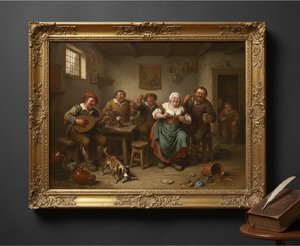
Adriaen van Ostade: A Master of Dutch Genre Painting & Social Commentary
Explore the life & work of Adriaen van Ostade, a leading Dutch Golden Age painter. Discover his realistic genre scenes, social commentary, and lasting influence on art history. Learn more at OriginalUniqueArt.

Rembrandti 25 meistriteost: Valgus ja varjud Hollandi kuldajast kunstikollektsioonis
Avastage Rembrandti 25 meistriteost! Hollandi kuldajastu barokkmaalid, portreed ja ajaloolised stseenid. Leidke inspiratsiooni interjööri kujunduseks või soetage luksuslik Rembrandt reproduktsioon OriginalUniqueArt.com-ist. Avastage kogu kollektsioon veebis!