
 Eelvaade
 Saada
Saada Jaga
Jaga
 Teave teose kohta

 Laadi alla
 Sarnased teosed
 Röntgenuuring
 Slaidietendus
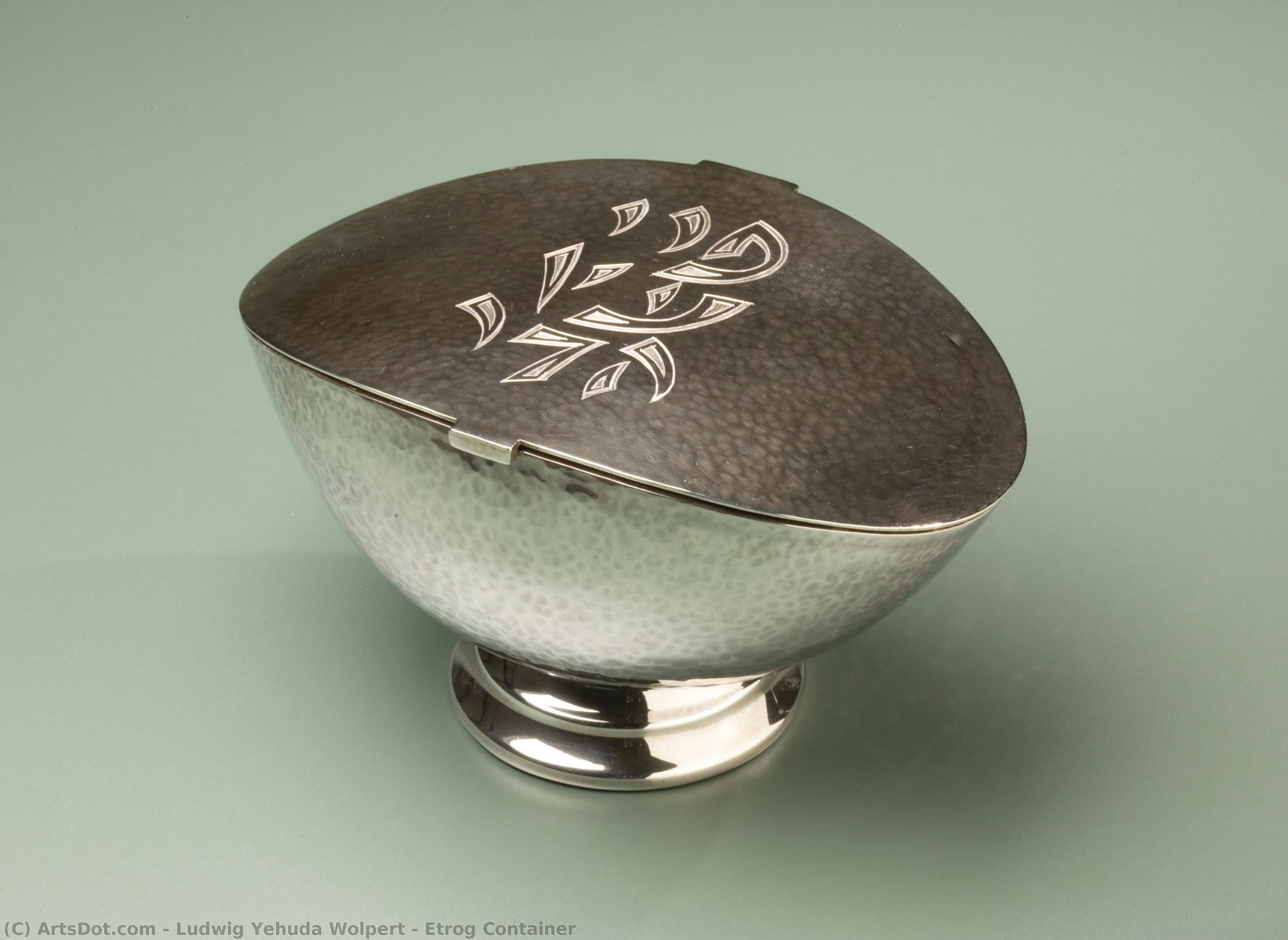
Etrog Container
 1960
1960 16.0 x 17.0 cm
 Derfner Judaica Museum + The Art Collection
 Loe lähemalt
Ostke kõrglahutusel ja täiustatud digitaalne pilt, mis on oluliselt parem kui veebilehel näidatud eelvaade.
Iga fail on meie spetsialistide poolt hoolikalt ette valmistatud, kasutades kaasaegseid tööriistu ja professionaalset käsitsi retušeerimist. Tagame, et igal pildil on erakordne selgus, täpne värvitäpsus ja peen detail.
Lõplik fail saadetakse e-posti teel 72 tunni jooksul, olles optimeeritud koheseks kasutamiseks professionaalsetes, toimetuslikes ja trüki keskkondades. See on sama kvaliteet, mida usaldavad tipptasemel disainistuudiod, kirjastused ja galeriid.
Digitaalne kunstiteos
Laadi alla kõrge resolutsiooniga fail isiklikuks vaatamiseks, trükkimiseks ja loomingulisteks projektideks. ( Osta print Osta käsitsi maalitud maal)
Sisse kuulub iga digitaalse pildi tellimusega
Eksperdi digitaalne kohaletoimetamine, garanteeritud
Valides OriginalUniqueArt.com, ei saa sa lihtsalt pilti – saad professionaalselt parandatud digitaalse teose, mida on valmistatud täpsusega ja mis on toetatud rahuldamatusgarantiiga. Siin on kõik, mis sinu tellimusega automaatselt kaasneb:

Kiire digitaalne saatmine
Teie kõrge resolutsiooniga digitaalne pildifail saadetakse teile e-posti 72 tunni jooksul pärast tellimist – kohe kasutamiseks valmis.

Tehisintellektiga täiustatud digitaalne fail
Teie teos on professionaalselt optimeeritud arenenud tehisintellekti tööriistade ja käsitsi redigeerimise abil, tagades maksimaalse detailitaseme, selguse ja värvitäpsuse.

Tasuta eluaegne uuesti saatmine
Kas kustutasid faili kogukalu unustamisel või kustutamisel? Puudub mure – saad selle uuesti igal ajal ilma lisatasuta.

Puuduvad importimaksed – alati
Nautige oma teoseid koheselt ilma tolli-, maksude või tarnimaskuludeta – digiletchargused on alati maksuvabadud.

Värvitäpsuse garantii
Me tagame, et teie digitaalne pilt kajastaks originaali värve professionaalsete tööriistade ja värvihalduse abil võimalikult täpselt.

60-päevane rahulolu garantii
Kui te ei ole oma digipildiga rahul, parandame seda või tagastame 100% summast 60 päeva jooksul – küsimusi ei esita.

100% raha tagastamise garantii
Ei ole rahul? Saate täielise tagastaja 60 päeva jooksul pärast digitaalse faili kättesaamist – küsimata.

Suurema tellimuse soodustused
Osta 3 pilti, säästa 10% - Osta 5, säästa 15% - Osta 10+, säästa 20%. Sobib suurepäraselt loomingulisteks projektideks, galeriideks ja agentuurideks.
Kunstniku biograafia
Ludwig Yehuda Wolpert: The Architect of Modern Judaica
Ludwig Yehuda Wolpert, born in Berlin in 1900 and tragically passing away in 1981, stands as a pivotal figure in the evolution of Jewish ceremonial art. More than just a goldsmith, he was a visionary who dared to break from tradition and forge a distinctly modern aesthetic for Judaica – objects imbued with religious significance – transforming them into works of both beauty and profound symbolism. His journey, marked by displacement, artistic exploration, and a deep commitment to his craft, ultimately established him as the first artist widely recognized for designing Judaica in styles that were radically innovative for their time. Wolpert’s legacy resides not just in the exquisite objects he created but also in his pioneering spirit and his ability to bridge the gap between ancient rituals and contemporary design sensibilities.Early Life and Influences: A German Jewish Childhood
Ludwig Yehuda Wolpert's early life was shaped by both privilege and hardship. Born into a Lithuanian Jewish family of modest means in Hildesheim, Germany, he experienced the sting of antisemitism from an early age. This experience, coupled with a cleft lip that caused him considerable social isolation during his childhood, instilled within him a deep sense of identity and a desire to express himself through art. His artistic training began at the Frankfurt School of Art in 1916, where he initially focused on sculpture. However, it was his studies in goldsmithing from 1925-1928 that truly ignited his passion and would ultimately define his career. The Bauhaus movement, with its emphasis on geometric forms, functional design, and the integration of art and craft, exerted a profound influence on Wolpert’s work, shaping his approach to both form and content. The principles of simplification, clarity, and the rejection of superfluous ornamentation became cornerstones of his artistic philosophy.Breaking with Tradition: Modern Judaica Takes Shape
Following the rise of Nazism in 1933, Wolpert, along with his family, sought refuge in Palestine (then Mandatory British Palestine). He initially worked as a craftsman for Bernhard Friedländer, honing his skills and further developing his unique vision. It was during this period that he began to experiment with creating Judaica – ceremonial objects used in Jewish religious practices – but rejecting the ornate, heavily decorated styles prevalent at the time. Instead, Wolpert embraced clean lines, geometric shapes, and a minimalist aesthetic, drawing inspiration from the Bauhaus principles and incorporating Hebrew calligraphy into his designs. His 1939 exhibition at the New York World’s Fair showcased this groundbreaking approach, introducing modern Judaica to an international audience and establishing him as a leading innovator in the field. His work deliberately avoided traditional religious iconography, opting instead for abstract forms that conveyed spiritual meaning through their inherent beauty and balance.Key Works and Notable Designs
Wolpert’s impact is most vividly demonstrated through his iconic designs, including the “Honey Dish” (1960), a stunning silver ceremonial platter showcasing Bauhaus-inspired Judaica & geometric design – a rare piece of modern art that exemplifies his commitment to simplicity and elegance. The "Kiddush Cup" (1957) further solidifies this legacy, a masterpiece reflecting Bauhaus design and Jewish ritual, demonstrating polished realism meeting ceremonial art. His Passover Seder set with plates, dishes, and wine cup (1953), featuring stainless steel & glass, is another significant example of his ability to translate religious symbolism into contemporary materials and forms. These pieces, along with numerous other designs for Hanukkah lamps, Kiddush cups, and menorahs, represent a radical departure from traditional Judaica while retaining its spiritual essence.Legacy and Recognition
Ludwig Yehuda Wolpert’s contributions to the world of Jewish art are undeniable. He was recognized as the first artist to design Judaica in modern styles, paving the way for subsequent generations of artists who sought to reinterpret traditional rituals through a contemporary lens. His work has been exhibited extensively throughout his career, including retrospectives at the Jewish Museum of New York and Chicago’s Spertus Institute. He received numerous accolades, including an honorary doctorate from the Spertus Institute in 1976, recognizing his profound impact on Jewish culture and art. Wolpert's influence continues to resonate today, as his designs are still admired for their beauty, innovation, and enduring relevance. His work is preserved and celebrated at institutions like the Israel Museum in Jerusalem, ensuring that his pioneering spirit and artistic vision will continue to inspire for years to come.
ludwig yehuda wolpert
1900 - 1981

