- Avaleht

- Digitaalne kunstiteos
- Lionello Spada
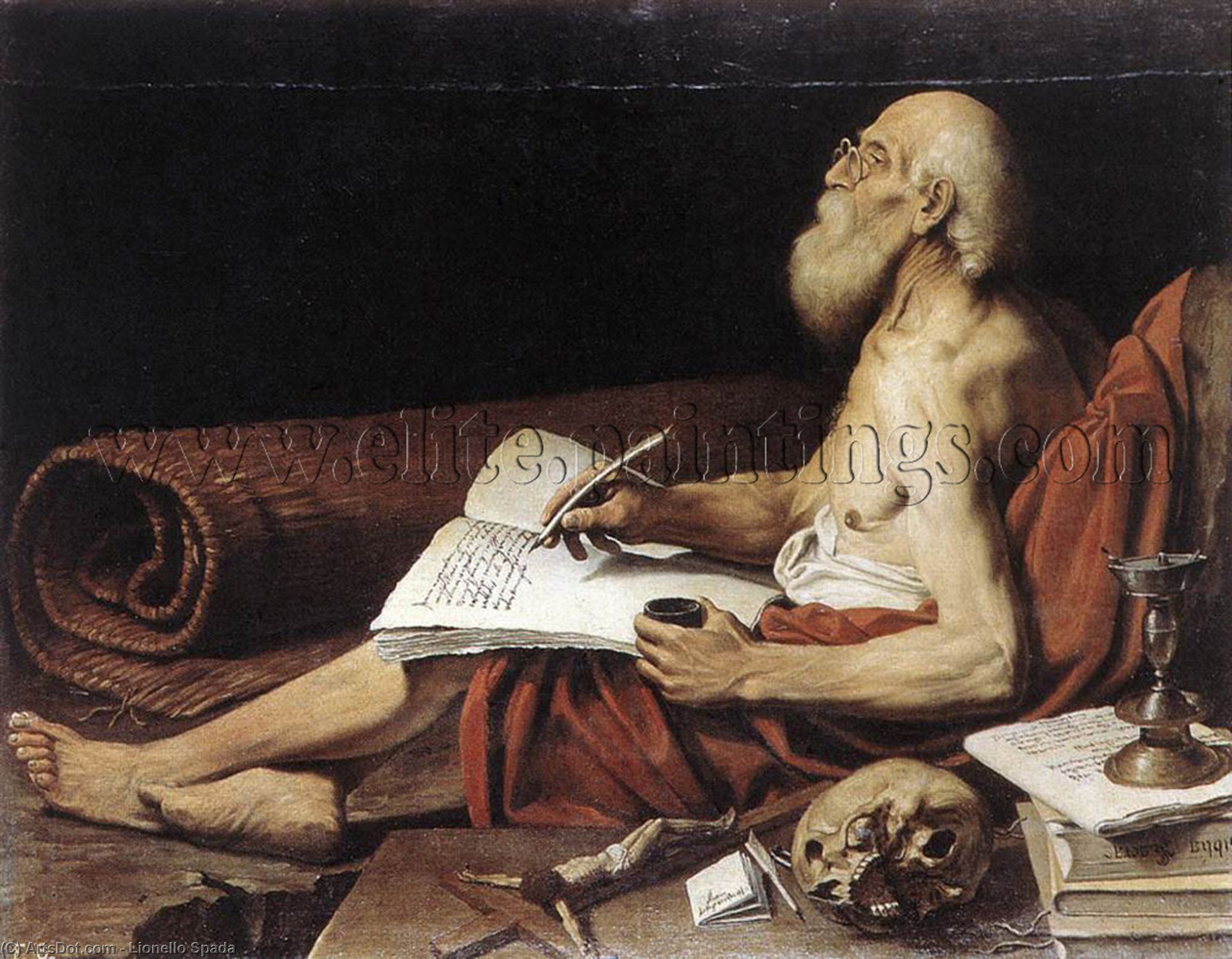
- St Jerome
 Telli trükis Tellimaks maali
 Saada
Saada
 Jaga
Jaga
 Teave teose kohta
 Lisa lemmikutesse

 Laadi alla
 Sarnased teosed
 Röntgenuuring
 Slaidietendus
St Jerome
 Oil On Canvas
- WallArt
 1610
1610- Early Modern
 112.0 x 143.0 cm
 Galleria Nazional d’Arte Antica
 Loe lähemalt
Ostke kõrglahutusel ja täiustatud digitaalne pilt, mis on oluliselt parem kui veebilehel näidatud eelvaade.
Iga fail on meie spetsialistide poolt hoolikalt ette valmistatud, kasutades kaasaegseid tööriistu ja professionaalset käsitsi retušeerimist. Tagame, et igal pildil on erakordne selgus, täpne värvitäpsus ja peen detail.
Lõplik fail saadetakse e-posti teel 72 tunni jooksul, olles optimeeritud koheseks kasutamiseks professionaalsetes, toimetuslikes ja trüki keskkondades. See on sama kvaliteet, mida usaldavad tipptasemel disainistuudiod, kirjastused ja galeriid.
Digitaalne kunstiteos
Laadi alla kõrge resolutsiooniga fail isiklikuks vaatamiseks, trükkimiseks ja loomingulisteks projektideks.
Sisse kuulub iga digitaalse pildi tellimusega
Eksperdi digitaalne kohaletoimetamine, garanteeritud
Valides OriginalUniqueArt.com, ei saa sa lihtsalt pilti – saad professionaalselt parandatud digitaalse teose, mida on valmistatud täpsusega ja mis on toetatud rahuldamatusgarantiiga. Siin on kõik, mis sinu tellimusega automaatselt kaasneb:

Kiire digitaalne saatmine
Teie kõrge resolutsiooniga digitaalne pildifail saadetakse teile e-posti 72 tunni jooksul pärast tellimist – kohe kasutamiseks valmis.

Tehisintellektiga täiustatud digitaalne fail
Teie teos on professionaalselt optimeeritud arenenud tehisintellekti tööriistade ja käsitsi redigeerimise abil, tagades maksimaalse detailitaseme, selguse ja värvitäpsuse.

Tasuta eluaegne uuesti saatmine
Kas kustutasid faili kogukalu unustamisel või kustutamisel? Puudub mure – saad selle uuesti igal ajal ilma lisatasuta.

Puuduvad importimaksed – alati
Nautige oma teoseid koheselt ilma tolli-, maksude või tarnimaskuludeta – digiletchargused on alati maksuvabadud.

Värvitäpsuse garantii
Me tagame, et teie digitaalne pilt kajastaks originaali värve professionaalsete tööriistade ja värvihalduse abil võimalikult täpselt.

60-päevane rahulolu garantii
Kui te ei ole oma digipildiga rahul, parandame seda või tagastame 100% summast 60 päeva jooksul – küsimusi ei esita.

100% raha tagastamise garantii
Ei ole rahul? Saate täielise tagastaja 60 päeva jooksul pärast digitaalse faili kättesaamist – küsimata.

Suurema tellimuse soodustused
Osta 3 pilti, säästa 10% - Osta 5, säästa 15% - Osta 10+, säästa 20%. Sobib suurepäraselt loomingulisteks projektideks, galeriideks ja agentuurideks.
Kunstniku biograafia
The Dramatic Legacy of Lionello Spada
In the vibrant, shadow-drenched landscape of the early seventeenth century, few artists captured the visceral tension of the Baroque era as profoundly as Lionello Spada. Born in Bologna in 1576, Spada emerged as a pivotal figure within the Bolognese school, a movement that sought to balance classical grace with an unprecedented emotional intensity. His life, though tragically brief—concluding with his death in 17 May 1622 at only forty-six years of age—was defined by a relentless pursuit of realism and a mastery over the interplay of light and darkness. To look upon a Spada canvas is to witness the transition from the stylized elegance of Mannerism into the raw, theatrical power of the Caravaggesque revolution.
Spada’s artistic DNA was woven from the finest threads of his era's competing traditions. His early training under Cesare Bagliente provided him with a rigorous foundation in disegno, the disciplined art of drawing and anatomical precision that had been the hallmark of the Renaissance masters. However, it was the atmospheric influence of the Flemish painter Denis Calvaert that truly ignited Spada's creative spirit. Through this connection, the seeds of Caravaggio’s revolutionary naturalism began to take root in his work. This fusion allowed Spada to move beyond mere anatomical accuracy, embracing a style where light does not simply illuminate a scene but actively sculpts it, carving figures out of an encroaching, velvety gloom.
Mastery of Light and Illusion
As Spada’s career matured, he became a master of the theatrical, expanding his repertoire beyond traditional easel painting into the grand, immersive realms of quadratura. Alongside his collaborator Girolamo Curti, Spada specialized in decorative illusionistic painting, a technique designed to dissolve the physical boundaries of walls and ceilings. These works were not merely decorations but architectural transformations, creating vast, celestial vistas that seemed to open the very heavens above aristocratic halls. This ability to manipulate space and perspective demonstrated a technical versatility that few of his contemporaries could match.
His stylistic evolution is marked by several key artistic milestones:
- The Caravaggesque Influence: The adoption of chiaroscuro, using extreme contrasts between light and shadow to heighten the psychological drama of his subjects.
- Anatomical Rigor: A persistent commitment to the structural integrity of the human form, inherited from his early Bolognese training.
- Collaborative Grandeur: The successful execution of large-scale fresco cycles that integrated painting with architectural illusionism.
- Emotional Realism: A departure from idealized beauty in favor of capturing the grit, movement, and raw humanity of biblical and historical narratives.
Historical Significance and Enduring Impact
The significance of Lionello Spada lies in his role as a bridge between eras. He stood at the crossroads where the structured humanism of the Renaissance met the emotive, often turbulent energy of the Baroque. While much of his biographical history remains shrouded by the passage of time, his visual legacy is unmistakable. By synthesizing the meticulous draftsmanship of the Bolognese tradition with the dramatic naturalism of the Caravaggisti, he helped define a new visual language for Europe.
Today, Spada is remembered not merely as a follower of greater masters, but as a visionary in his own right. His works serve as profound windows into a period of intense religious and social transformation, where art was used to provoke awe, inspire piety, and command the senses. Through his mastery of shadow and his ability to breathe life into the painted figure, Spada ensured that the spirit of the Bolognese Baroque would endure long after his untimely passing.

Lionello Spada
1576 - 1622 , Italy
Lühikesed faktid
- Artistic Movement Or Style: Baroque
- Artists Or Movements Influenced By This Artist: ['Caravaggio']
- Artists Who Influenced This Artist:
- Ludovico Carracci
- Denis Calvaert
- Date Of Birth: 1576 Bologna Italy
- Date Of Death: 1622
- Full Name: Lionello Spada
- Nationality: Italian
- Notable Artworks:
- Saint Sebastian
- Joseph & Potiphar’s Wife
- Martyrdom of St Peter
- Place Of Birth: Bologna Italy

