

 Eelvaade
 Saada
Saada Jaga
Jaga
 Teave teose kohta

 Laadi alla
 Sarnased teosed
 Röntgenuuring
 Slaidietendus
Herdboy and ox
 Socialist Realism
 48.0 x 31.0 cm
 Hong Kongi Kunstimuuseum
 Loe lähemalt
Giclée / Kunstiprint
Muuseumikvaliteediga giclée- või kangasprint kiire tootmisega ja paindlikud viimistlusvõimalused. ( Osta käsitsi maalitud maal Osta pilt)




P118B $10

P118H $10

P118W $10

P438Z $10

P508JH $12

P508YH $12

P805H $10

P805Z $10

P919BZ $10

P919G $10

P919XJ $10

P959ZH $10

P968JZ $12

W106C $8

W218G $10

W218JH $8

W218Y $10

W307PJ $10

W316G $10

W316PJ $8

W316Y $10

W398PJ $8

W4111J $10

W500HY $15

W500JH $15

W692G $12

W849H $8

W940BG $15

W953PJ $8




Vali meie eelmääratud suurused, mis vastavad teose algupärastele proportsioonidele.

Saate sisestada oma mõõdud, et need sobiks konkreetse raami või ruumi sisse. Kui valitud suurus ei vasta originaalteose proportsioonidele, lõigame teose ära või laiendame pilti peegeldatud või ühtlase servaga. Enne tootmisprotsessi algust saadetakse Teie kinnitamiseks digitaalne näidis.
Palun märka, et ekraanil kuvatav eelvaade ei kajasta tegelikku lõigamist või laiendamist. Ainult näidis kujutab täpselt lõplikku kompositsiooni.
Kuigi erimõõdu on saadaval, soovitame originaaproportsioonide säilitamiseks valida mõõt ette määratud nimekirjast.
Ülemaailmne tarne () 2 nädala jooksul, tavalise 4/5 nädala asemel. (30 august)

Tasuta ekspresssaatmine üle maailma

Kõrgekvaliteediline linakangas

Täielik transpordikindlustus

Tollimaksude tagastamise garantii

Värvitoime täpsuse garantii

60-päevane tagastusõig: ainult tootmisdefektide korral

100% raha tagasi garantii

Hulgusoodustus
 Klaasivalik on saadaval ainult suuruses kuni 110 cm

Herdboy and ox
Giclée / Kunstiprint
Reproduktsiooni suurus
-


Kogusumma
$ 80
Kunstniku elulugu
The Soul of Ink: The Life and Legacy of Li Keran
In the vast tapestry of twentieth-century Chinese art, few threads shine with as much profound depth and luminous intensity as those woven by Li Keran. Born Li Yongshun in 1907 amidst the storied landscapes of Xuzhou, Jiangsu province, his journey was one of remarkable self-reliance and artistic evolution. Coming from a family where his parents could not read or write, Li’s early life was defined by an innate, hungry curiosity for the visual world. Guided initially by the local master Qian Shizhi, he began to grasp the delicate language of traditional Chinese landscape painting, yet his spirit was far too expansive to be confined solely to the classical canon. His path would eventually lead him to bridge the ancient wisdom of the literati with the bold, structural innovations of Western oil painting, creating a visual dialect that felt both timeless and strikingly modern.
The formative years of Li Keran’s education were marked by a series of pivotal encounters with artistic giants. His enrollment at the Shanghai Art Academy in 1923 opened doors to a new world of perspective and light, while his later studies at the National Academy of Arts in Hangzhou introduced him to the transformative techniques of Lin Fengmian and André Claudot. This exposure to Western oil painting principles was not a departure from his roots, but rather an enrichment of them. He learned to manipulate volume, shadow, and light, which he would later reintegrate into the medium of ink. As he moved through the turbulent decades of the Second Sino-Japanese War, serving the Nationalist government through powerful propaganda posters and murals, Li developed a sense of social purpose that would forever inform his subject matter, grounding his ethereal landscapes in the palpable reality of human existence and national identity.
A Master of Light and Shadow
What truly distinguishes the oeuvre of Li Keran is his revolutionary approach to guohua (traditional Chinese painting), specifically through his mastery of what is often termed "backlighting." While traditional landscape painting often relied on flat washes and linear clarity, Li sought to capture the atmospheric drama of nature. He utilized accumulated ink and layered textures to create a sense of profound depth, where mountains do not merely sit upon the paper but emerge from a misty, luminous void. His technique allowed him to depict the interplay of light filtering through heavy clouds or the stark contrast of dark silhouettes against a glowing sky, a feat that brought a sculptural, almost cinematic quality to the medium of ink and wash.
This technical brilliance is perhaps most beautifully realized in his depictions of rural life and the natural world. In works such as Herdboy and Ox, one can witness the harmonious marriage of his influences. The heavy, textured application of ink on the buffalo’s body echoes the strength of Western realism, yet the composition remains deeply rooted in the poetic, rhythmic flow of classical Chinese aesthetics. Under the mentorship of legends like Qi Baishi and Huang Binhong, Li learned to respect the spontaneous vitality of the brushstroke, ensuring that even his most structurally complex landscapes retained a sense of organic, breathing life.
Historical Significance and Enduring Influence
Li Keran’s impact extends far beyond the borders of his own canvases; he was a foundational architect of modern Chinese art education. As a professor at the Central Academy of Fine Arts, he nurtured a new generation of painters, instilling in them the same courage to experiment that had defined his own career. His ability to synthesize the traditional literati spirit with contemporary global movements ensured that Chinese landscape painting remained a living, evolving tradition rather than a static relic of the past.
The enduring value of his work is reflected not only in its profound emotional resonance but also in its monumental presence in the global art market. His masterpiece, Thousands of Hills in a Crimsoned View, stands as a testament to his ability to evoke both grandeur and intimacy, commanding record-breaking valuations that speak to his status as a titan of the twentieth century. Today, Li Keran is remembered as an artist who did not merely paint landscapes, but who captured the very breath of the earth, leaving behind a legacy of light, shadow, and an unyielding devotion to the transformative power of art.

Li Keran
1907 - 1989
Lühikesed faktid
- Artistic Movement Or Style: Guohua (Traditional Chinese Painting)
- Artists Or Movements Influenced By This Artist: ['Contemporary Chinese Landscape']
- Artists Who Influenced This Artist:
- Qi Baishi
- Huang Binhong
- Date Of Birth: March 26, 1907
- Date Of Death: December 5, 1989
- Full Name: Li Keran
- Nationality: Chinese
- Notable Artworks:
- Landscape in Red
- Magnificent Mountains With Gushy Cascades
- Shaoshan
- Place Of Birth: Xuzhou, Jiangsu
Seotud artiklid

John Constable: 25 Suurimat Teost Inglise Maastikumaali Tippu
Avastage John Constable'i 25 suurimat teost! Sukeldu inglise maastikumaali romantismisse, imetlege Dedham Vale ilu ja leia inspiratsiooni kodukaunistuseks. Kvaliteetsed kunstireprodutsioonid OriginalUniqueArt.com-is. Vaata kohe!

Cultivating Visions: A Historical Journey Through Rural Landscapes in Art
Explore the rich history of rural landscape painting with OriginalUniqueArt. Discover Impressionist masterpieces, key artists & movements. Find your perfect serene artwork and bring nature's beauty home.

Romantilise Maastikukunsti 10 Meisterteost: Kunstiteosed Koduks OriginalUniqueArt.com'ist
Avastage 10 romantilise maastikukunsti meistriteost! Tutvuge Caspar David Friedrichi, J.M.W. Turneri ja teiste suurte kunstnike loominguga OriginalUniqueArt.com-is. Leidke täiuslik õlimaal või reproduktsioon koduks – inspireeriv kollektsioon ootab!

Evocations of Place: A Historical Journey Through Landscape Art
Explore the rich history of landscape art with OriginalUniqueArt. Discover renowned artists, movements like Impressionism & Romanticism, and expert guidance for collecting timeless pieces. Find your perfect serene escape today!
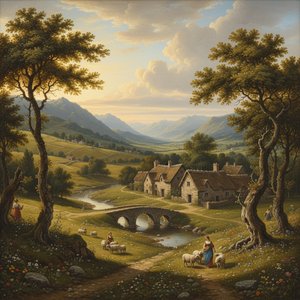
Evoking Arcadia: A Historical & Aesthetic Exploration of Rural Landscape Art
Explore the rich history of pastoral landscape art, from classical Arcadia to Impressionism & beyond. Discover key artists, movements, and how to collect serene rural scenes for your home. Expert insights at OriginalUniqueArt.

