

 Eelvaade
 Saada
Saada Jaga
Jaga
 Teave teose kohta

 Laadi alla
 Sarnased teosed
 Röntgenuuring
 Slaidietendus
 Statistika
“Going Over” through a Wheatfield


 Loe lähemalt
Käsitsi valmistatud õlimaalireproduktsioon
Meie kunstnike poolt tellimusel valmistatud käsitsi maalitud õli-kainaste teos teie soovitud suuruses ja raamis. ( Lülita trükkitoodetele Ülemineks digitaalse pildiga müügi kanalisse)




P118B $10

P118H $10

P118W $10

P438Z $10

P508JH $12

P508YH $12

P805H $10

P805Z $10

P919BZ $10

P919G $10

P919XJ $10

P959ZH $10

P968JZ $12

W106C $8

W218G $10

W218JH $8

W218Y $10

W307PJ $10

W316G $10

W316PJ $8

W316Y $10

W398PJ $8

W4111J $10

W500HY $15

W500JH $15

W692G $12

W849H $8

W940BG $15

W953PJ $8




Vali meie eelmääratud suurused, mis vastavad teose algupärastele proportsioonidele.

Sa võite sisestada oma mõõtmed konkreetse raami või ruumi sobivuse tagamiseks. Kui teie valitud suurus ei vasta originaalpildi proportsioonidele, siis kärvime kunstiteost või laiendame maali täiendavate käsitsi maalitud elementidega. Enne tootmise algust saadetakse teile heakskiitmiseks digitaalne eelvaade.
Palun pidage meeles, et ekraanil kuvatav eelvaade ei kajasta tegelikku kärpimist või laiendamist. Ainult eelvaade näitab täpselt lõplikku kompositsiooni.
Kuigi on saadaval kohandatud suurused, soovitame originaalproportsioonide säilimiseks valida mõõdud eelmääratletud nimekirjast.
Pärast tellimust saadab OriginalUniqueArt.com meeskond kliendile e-posti juhised ning esitab eelvaate kavandi.
Maailmline tarne 3–4 nädala jooksul tavalise 5 nädala asemel. (18 september). Kvaliteedis kompromisse ei tehta.

Tasuta ekspresssaatmine üle maailma

Kõrgekvaliteediline linakangas

Täielik transpordikindlustus

Tollimaksude tagastamise garantii

Värvitoime täpsuse garantii

100 päeva tagastusõigus (ainult tootmisdefektide korral)

100% raha tagasi garantii

Hulgusoodustus
 Klaasivalik on saadaval ainult suuruses kuni 110 cm

“Going Over” through a Wheatfield
Reproduktsiooni tehnika
Reproduktsiooni suurus
-


Kogusumma
$ 300
Kunstniku elulugu
The Etched Chronicles of Lester George Hornby
Lester George Hornby (1882–1956) remains a poignant figure in the tapestry of early 20th-century American art, an artist whose work serves as both a technical masterclass in printmaking and a visceral historical record. Born in Lowell, Massachusetts, to a father who was himself a clergyman and an artist, Hornby’s creative sensibilities were nurtured within a domestic environment that valued both spiritual depth and aesthetic precision. His early artistic education was rigorous and diverse, spanning the Pape School of Arts in Boston, the Rhode Island School of Design, and the prestigious Art Students League in New York City. These institutions provided him with a robust foundation in classical technique, yet it was his subsequent immersion in the European avant-garde that would truly define his visual language.
In 1906, Hornby’s journey led him to France, a move that proved transformative for his burgeoning career. Immersed in the vibrant atmosphere of Paris, he began exploring the delicate complexities of copper engraving and etching. He found profound inspiration in the works of masters such as Jean-Paul Laurens, whose meticulous approach to tonal gradations and ability to evoke deep emotion through subtle visual cues became a guiding light for Hornly’s own hand. This period of study allowed him to absorb the lingering essence of Impressionism—the sensitivity to light and atmosphere championed by luminaries like Monet and Renoir—while refining the disciplined, linear precision required for high-level printmaking.
Witness to the Great War
The trajectory of Hornby’s life and art was irrevocably altered by the outbreak of World War I. Having been living in France when war was declared in 1914, he found himself positioned at a unique historical crossroads. Upon returning to Boston briefly, his determination to document the unfolding catastrophe led him back to the French front lines in 1916. Armed with an extraordinary work ethic, Hornby obtained special passes that allowed him to traverse the war zones, where he famously produced upwards of fifty drawings and sketches in a single day. This period of intense, frontline observation birthed some of his most significant and harrowing works.
His etchings from this era are far more than mere illustrations; they are hauntingly atmospheric chronicles of combat. One notable work, “Going Over” through a Wheatfield, captures the terrifying vulnerability of the Allied forces during a charge near Soissons in July 1918. Through his mastery of the etching needle, Hornby was able to convey the stark contrast between the serene, natural landscape and the sudden, lethal intrusion of machine gun nests and heavy fighting. His ability to render the exposure of the Marines as they advanced through open terrain provides a psychological depth that transcends simple reportage, capturing the very essence of dread and bravery inherent in the conflict.
Legacy and Artistic Maturity
As the decades progressed following the Great War, Hornby’s focus shifted from the immediate chaos of the battlefield to more contemplative and instructional pursuits. In his later years, he settled in Rockport, Massachusetts, where he dedicated much of his energy to teaching the next generation of artists. While he rarely sought the grand exhibition stages of his contemporaries, his influence persisted through his pedagogical contributions and the enduring quality of his prints. His later works, including lithographs such as his 1950s holiday greeting cards, demonstrate a continued command over medium and light, reflecting a lifetime of refined observation.
The historical significance of Lester George Hornby lies in his ability to bridge the gap between the classical traditions of the 19th century and the raw, modern realities of the 20th. His oeuvre stands as a testament to the power of printmaking to act as a witness to history. Through the delicate interplay of ink and metal, he preserved the fleeting shadows of war and the enduring beauty of the landscapes he traversed, ensuring that the psychological weight of his era would remain etched in the collective memory of the art world.

lester george hornby
1882 - 1956 , United States of America
Lühikesed faktid
- Artistic Movement Or Style: WWI Imagery & European Influenced Style
- Artists Or Movements Influenced By This Artist: ['Romanticism']
- Artists Who Influenced This Artist: ['Jean-Paul Laurens']
- Date Of Birth: March 27, 1882
- Date Of Death: December 17, 1956
- Full Name: Lester George Hornby
- Nationality: American
- Notable Artworks: ['Going Over']
- Place Of Birth: Lowell, United States
Seotud artiklid

The Intricate World of Etching: A Historical Survey of Technique, Aesthetic Evolution, and Enduring Artistic Impact
Explore the rich history of etching, from its origins to modern practice. Discover techniques, key artists like Rembrandt, and insights for collectors. A comprehensive guide by OriginalUniqueArt.

Etching: A Historical Survey of Technique, Aesthetic Qualities & Enduring Artistic Significance
Explore the rich history of etching, from its origins to Rembrandt's masterful innovations. Discover the technique, aesthetic qualities & enduring legacy of this captivating art form. Expert insights for collectors and enthusiasts.

Romantilise Maastikukunsti 10 Meisterteost: Kunstiteosed Koduks OriginalUniqueArt.com'ist
Avastage 10 romantilise maastikukunsti meistriteost! Tutvuge Caspar David Friedrichi, J.M.W. Turneri ja teiste suurte kunstnike loominguga OriginalUniqueArt.com-is. Leidke täiuslik õlimaal või reproduktsioon koduks – inspireeriv kollektsioon ootab!
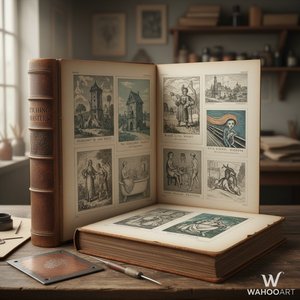
Etching Masters: 10 Legendary Prints That Revolutionized Art | OriginalUniqueArt
Journey through 10 legendary etching masterpieces by Rembrandt, Dürer & Goya. Explore the history of printmaking and discover timeless art for your home. Find museum-quality reproductions at OriginalUniqueArt.com.

Evocations of Place: A Historical Journey Through Landscape Art
Explore the rich history of landscape art with OriginalUniqueArt. Discover renowned artists, movements like Impressionism & Romanticism, and expert guidance for collecting timeless pieces. Find your perfect serene escape today!