Baroque
St. Peter (Jusepe De Ribera)
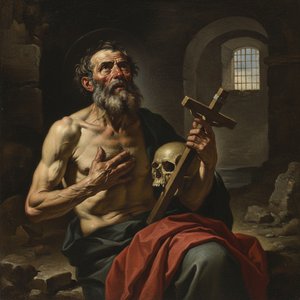
Jusepe De Ribera (1591–1652) on loonud teose St. Peter. See kuulub Baroque suuntrime. Teos on valmistatud materjalist Oil On Canvas. Teos asub Museo del Prado kogamuses Madrid, Hispaania.
- Oil On Canvas
- Museo del Prado, Madrid

 Eelvaade

 Käsitsi maalatud õlimaalatsioon
 Saada
 Jaga
 Juhend


 Laadi alla
 Sarnased teosed
 Röntgenuuring
 Slaidietendus
 KÜSIMUSED JA VASTUSID

 Statistika
St. Peter: põhitooded
- Pealkiri
- St. Peter
- Kunstnik
- Jusepe De Ribera (1591–1652)
- Kunstnik on sündinud
- Xativa, Hispaania
- Tehnika
- Oil On Canvas
- Kus seda näeb
- Museo del Prado, Madrid, Hispaania
- Suunad
- Baroque
- Aeglkond
- Early Modern
- Teema
- man, beard, book, keys, cloak, brown
Mida St. Peter kujutab?
The Portrait of St. Peter by Jusepe de Ribera
In this oil painting on canvas, Jusepe de Ribera presents us with a portrait of St. Peter. The subject, a central figure among the apostles of Jesus and recognized as the first Pope, is rendered with a profound sense of presence. Ribera focuses on the man himself, capturing the weight of his role and the character of his lived experience. There is a quiet intensity in the way the figure is presented, inviting a closer look at the weathered details of his countenance.
The work is a significant example of the Baroque style. Through this approach, the artist emphasizes the spiritual and human dimensions of the apostle. The depiction avoids idealization, opting instead for a directness that feels immediate. By focusing on the specific attributes of the saint, Ribera allows the subject to command the space, presenting a figure that is both a religious icon and a man of flesh and bone.
Composition and Visual Elements of the Portrait
The composition is built upon a stable pyramidal structure, with the head of St. Peter forming the apex of the form. He is presented from the waist up, his body turned slightly toward the viewer's left. In his right hand, he holds a book and a set of keys, objects that anchor the figure within the frame. This arrangement directs the eye upward toward his weathered features, creating a sense of quiet, grounded presence.
A strong light source enters from the left, illuminating his face and upper body while casting the rest of the figure into deep shadow. This light creates a sharp contrast against a background that is nearly black, pushing the subject forward into the viewer's space. The color palette is restrained, dominated by warm earth tones—ochre, brown, and gold—which emphasize the textures of his skin and the heavy folds of his clothing.
Technique and Artistic Style of the Work
The work is defined by a profound use of tenebrism, where the subject emerges from a nearly black background into a sharp, focused light. This dramatic chiaroscuro creates a sense of volume, pulling the figure forward and emphasizing the physical presence of the man. Such a heavy interplay of light and shadow reflects the influence of Caravaggio, grounding the religious subject in a palpable, earthly reality. The light source, positioned to the left, carves out the contours of the face and the weathered texture of the skin, casting deep shadows that heighten the emotional weight of the portrait.
Ribera’s approach to the medium is tactile and deliberate. He employs a technique of layering paint to build up depth, allowing the viewer to sense the physical weight of the drapery and the coarse nature of the beard. Visible brushstrokes are not hidden; instead, they contribute to the overall effect, lending a sense of immediacy to the rendering of the fabric and the aged features. Strong, defined lines delineate the eyes, nose, and mouth, providing a structural clarity that balances the more fluid, organic shapes of the figure. The result is a composition that feels both intensely personal and physically substantial.
Other Works by Jusepe de Ribera
The artist's exploration of this particular subject matter is reflected in several other significant pieces within our collection and major institutions. We hold St. Simeon 1 in our catalog, a work that speaks to the same profound human experience found in this portrait. Another notable piece in our collection is The Repentance of Saint Peter, which is currently housed in the Museum of Fine Arts, Lyon.
Beyond our own holdings, Ribera's preoccupation with the themes of remorse and spiritual weight is evident in other historical examples. The work known as Penitent St. Peter, dated about 1630, is held at the Kunsthistorisches Museum in Vienna. This piece shares a similar intensity in its depiction of the apostle's character. Additionally, The Tears of Saint Peter, which dates to 1612, is part of the collection at the Metropolitan Museum of Art in New York. These works collectively illustrate the artist's ability to capture the complexities of faith and the physical reality of the human condition through his characteristic use of light and shadow.
Kumba muuseumis asub teos St. Peter?
Museo del Prado
Madrid, Hispaania
Madridi Museo del Prado: Kunstniku Hingest Ajatu Ilu Sisenedes Madridi Museo Nacional del Pradosse, tunned end olevat astunud ajas tagasi – elavas kroonikas, mis peegeldab Hispaania kunsti arengut ja kuningate toetust. See ei ole pelgalt meistriteoste hoiukohus, vaid uhke palee, mille seinad kajastavad Velázquezi, Goyaga, El Grecosa ja paljude teiste pintslilööke. Algselt Ferdinand VII pool loodud "Looduskabinetina" muutis julge otsus tähistada Hispaania kunstipärandit sellest ambitsioonikast projektist üheks maailma mainekamaks muuseumiks – kohaks, kus mineviku hiilguse ja tänapäeva akadeemilise teadlikkuse elav pulsatsioon sulavad kokku.


St. Peter kõrgel resolutsioonil
Avalik omanik: kunstnik suri aastal 1652.
Jusepe De Ribera, St. Peter, Museo del Prado. Avalik omaniklik õigus
Digitaalne ekspert kontrollib värve vastavust originaalteosele ja retusseerib faili, püsides truulena kunstniku pintlapidele.
Osta kõrge resolutsiooniga piltKüsimused teemal St. Peter
Kust saab teose „St. Peter“, autor Jusepe De Ribera täna vaadata?
Originaalteost „St. Peter“, autor Jusepe De Ribera hoiustatakse Museo del Prado, Madrid, Hispaania muuseumis. Reproduktsioon võimaldab teost koduses keskkonnas esitleda.
Millest on teos "St. Peter" valmistatud?
Teos "St. Peter" on valmistatud tehnika Oil On Canvas.
Millised teemad teoses „St. Peter“, autor Jusepe De Ribera esile tõelve?
Teemad, mis teoses „St. Peter“, autor Jusepe De Ribera esinevad, hõlmavad man, beard, book, keys, cloak, brown, gold, skin. Koos need kokkuvõtavad teose sisu.
Kas teos „St. Peter“, autor Jusepe De Ribera kuulub avalikku omandisse?
Autoriõiguse teave teose „St. Peter“, autor Jusepe De Ribera kohta: teos kuulub luba ala avalikus õiguses – selle autoriõigud onหมดunud. See määrab, kas kujundist on lubatud vabadelt reproduktsioone teha.
Kes on teose "St. Peter" looja?
Teose "St. Peter" loovija on Jusepe De Ribera. Selle lehe info kirjeldab Jusepe De Ribera algteost.
Millisse kunstisuuna kuulub teos „St. Peter“, autor Jusepe De Ribera?
Teos „St. Peter“, autor Jusepe De Ribera kuulub Baroque suunasse. See suund annab teosele stilistilise konteksti.
Kuhu Jusepe De Ribera loomingulisse perioodi kuulub teos "St. Peter"?
Teos "St. Peter" esindab kunstniku Jusepe De Ribera loovperioodi Mature Period.
Mis selgitab teose „St. Peter“, autor Jusepe De Ribera autoriõiguste olukorda?
Teose "St. Peter" autoriõiguste staatus - avalikus õiguses – selle autoriõigud onหมดunud - tuleneb kunstniku surma aastast 1652.
Kas teost „St. Peter“, autor Jusepe De Ribera hoiustatakse kunstniku kodumaal?
Jah – teos asub kunstniku kodumaal. Teost "St. Peter" hoivadatud Hispaania, samal ajal sündis Jusepe De Ribera riigis Hispaania.
Kunstnikust, Jusepe De Ribera

1591–1652, Hispaania
Jusepe De Ribera
Elu Varjus ja Valguses Jusepe de Ribera, tuntud paljudele kui Lo Spagnoletto – “Väike Hispaanlane” – oli barokiaajastu võimas figuur, kunstnik, kelle lõuendid pulseerisid dramaatilise intensiivsusega ja kompromissitu realismiga. Sündinud Xàtivas, Hispaanias 1591. aastal, viis tema teekond ta kaugele valentsialastest päritoludest, et kinnistada end kui üht olulisimat maalikunstnikku 17. sajandi Napolis – linna, mis oli toona Hispaania valitsemise all.
Teel Jusepe De Ribera kohta Jusepe De Ribera silmapaistvad teosed
Ka Jusepe De Ribera teosed
 Magdalena Ventura oma mehe ja poja juures1631
 Käppjalg
 St. Onuphrius1637
 The Duel of Women (The Duel of Isabella de Carazzi and Diambra de Pettinella)1636
Essee teemadel St. Peter
 Mastering the Shadows: The Dramatic Power of Chiaroscuro and Tenebrism in Baroque Fine ArtExplore the profound drama of chiaroscuro and tenebrism. Discover how masters like Caravaggio used light and shadow to sculpt emotion and v…
 Masterpieces of Light: The Top 25 Artworks by Duccio di BuoninsegnaJourney through the divine elegance of Duccio di Buoninsegna. Explore 25 iconic Sienese masterpieces, from the Maestà to the Rucellai Madon…
 Jusepe de Ribera: Dramatic Realism & Spiritual Intensity in the Spanish Golden AgeExplore the powerful Baroque paintings of Jusepe de Ribera, master of tenebrism and dramatic realism. Discover his spiritual intensity, inf…