Cubism
L (Juan Gris)
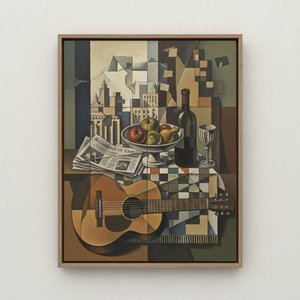
Juan Gris (1887–1927) on loonud teose L. See kuulub Cubism suuntrime. Teos on valmistatud materjalist Oil On Canvas. Teos asub Biennale Internazionale dell'Antiquariato di Firenze kogamuses Firenze, Italia.
- Oil On Canvas
- Biennale Internazionale dell'Antiquariato di Firenze

 Eelvaade

 Käsitsi maalatud õlimaalatsioon
 Saada
 Jaga
 Teave teose kohta


 Laadi alla
 Sarnased teosed
 Röntgenuuring
 Slaidietendus
 KÜSIMUSED JA VASTUSID

 Statistika
L lühidalt
- Pealkiri
- L
- Kunstnik
- Juan Gris (1887–1927)
- Kunstnik on sündinud
- Madrid, Hispaania
- Tehnika
- Oil On Canvas
- Kus seda näeb
- Biennale Internazionale dell'Antiquariato di Firenze, Firenze, Italia
- Suunad
- Cubism
- Aeglkond
- Modern
- Teema
- guitar, music paper, man, geometric abstraction, monochrome, picasso influence
Mida L kujutab?
The Architect of Cubism: The Visionary World of Juan Gris
In the vibrant, avant-garde heart of early 20th-century Paris, a new visual language was being forged—one that dismantled the familiar to reveal a deeper, more structured truth. At the center of this revolution stood Juan Gris, a Spanish master whose analytical mind and poetic soul converged to create some of the most enduring icons of Synthetic Cubism. While contemporaries like Picasso and Braque often focused on the fragmentation of form, Gris brought a unique sense of mathematical precision and crystalline clarity to the movement. His work does not merely break objects apart; it reconstructs them into a harmonious symphony of geometric planes, where every line and shadow serves a deliberate, architectural purpose.
To encounter a piece like "Guitar & Music Paper" is to step into a world where reality is distilled into its most essential elements. The composition is a masterful dance of interlocking rectangles and cubes, creating a rhythmic interplay that guides the eye across the canvas. Gris utilized a sophisticated technique of layering textures and subtle gradations, allowing light to play across the surface as if through a prism. His palette, often characterized by earthy, muted tones, avoids the distraction of bright colors to focus instead on the profound relationship between shape and space. This deliberate restraint creates an atmosphere of contemplative stillness, inviting the viewer to linger within the complexity of the design.
A Symphony of Form and Symbolism
Beyond the technical brilliance lies a deep, symbolic resonance that continues to captivate collectors and decorators alike. The recurring motifs in Gris’s oeuvre—the guitar, the musical score, the newspaper—are not merely objects of study but symbols of the modern era's sensory richness. In "Guitar & Music Paper," the fusion of the instrument with the sheet music suggests a blurring of boundaries between the physical and the ephemeral, between sound and sight. The way the geometric shapes overlap creates an illusion of depth that feels both modern and timeless, making such works incredibly versatile for contemporary interior design.
For the discerning art lover or interior designer, a high-quality reproduction of a Juan Gris masterpiece offers more than just decoration; it provides a focal point of intellectual and aesthetic sophistication. The structured nature of his Cubist compositions lends itself beautifully to modern, minimalist, or mid-century modern environments, where the artwork can act as an anchor of stability and elegance. The emotional impact of his work is one of profound balance—a sense that even in a fragmented world, there is an underlying order and beauty waiting to be discovered. Owning a piece inspired by Gris is an invitation to celebrate the intersection of logic and lyricism, bringing a touch of Parisian avant-garde history into the sanctuary of the home.
Kumba muuseumis asub teos L?
Biennale Internazionale dell'Antiquariato di Firenze
Firenze, Italia
Uusimine florentine renessanss: Süvenemine BIAF-s Florenc on kunsti hing: see ei ole lihtsalt linnus, *millest* löytyb kunsti, vaid linnas, mis *on* kunst – see on kooditud linna igasse kivi ja kaja kordub selle palatšides. Sellises igavenelt ilu atmosfääris toimub Biennale Internazionale dell'Antiquariato di Firenze (BIAF), üritus, mis ületab tavalise antikvariadi mässi ja muutub hoolikalt kuraeritud pielgrimageks Itaalia kunstikäsitluse südamesse. BIAF toimub suurepärases Palazzo Corsini palees, mis on ise barokkmeisterteos, pakkudes mitte ainult vaatamiskogemust, vaid täielikku süvenemist – võimalust seostuda sajast aastast vana kadart ja Itaalia rikkalikul kultuuripärandil.


L kõrge resolutsiooniga pildid

Avalik omanik: kunstnik suri aastal 1927.
Teised laiused, uueste lõikud ja alluding →Juan Gris, L, Biennale Internazionale dell'Antiquariato di Firenze. Avalik omaniklik õigus
Küsimused teemal L – vastused
Millises muuseumis on säilitatud originaal "L"?
Teos „L“, autor Juan Gris on näitustel Biennale Internazionale dell'Antiquariato di Firenze, Firenze, Italia. Muuseumi keterangane viitab originaalteosele, mitte reproduktsioonidele.
Millest on teos "L" valmistatud?
Millised teemad teoses „L“, autor Juan Gris esile tõelve?
Kas teos „L“, autor Juan Gris kuulub avalikku omandisse?
Tegijateõiguse osas on teos "L" kuuluv klassifikatsiooni alla: avalikus õiguses – selle autoriõigud onหมดunud.
Millissele kunstisuunale kuulub teos „L“, autor Juan Gris?
Millissele perioodile Juan Gris karjäärist kuulub teos "L"?
Miks on teose "L" autoriõiguste staatus selline, nagu see on?
Kunstnikust, Juan Gris

1887–1927, Hispaania
Juan Gris
Varane elu, pere ja kunstiline haridus Sündides 23. märtsil 1887 Hispaanias, Madridis, nimega José Victoriano González-Pérez, kasvas mees, kes sai hiljem tuntuks nimega Juan Gris, suurel ja tööduljal koduperel. Ta oli nelja lõuna neljaastast lapsestikku trimmis kolmandaks, täpsemalt kohalt kolmandateks ja nelja Teistaks. Tema isa, Gregorio Gonzalez, oli jõukakas ärimees ning perekeskkond pakkus stabiilset alust Tema varane haridus sai tehnilise suuna Madridi Kunstide ja Teaduste koolis, kus ta õppis insinööri ahelas.
Ka Juan Gris teosed
 Madame Josette Gris portree1916
 Sõrmede ja viinapumba vahel1913
 Koht Ravignan - Üritus päikesekiirguselt avatud akna ees1915
 Hommastreidl1915

Essee teemadel L
 Spontaneity and Matter: Distinguishing CoBrA from Art InformelMaster the differences between CoBrA and Art Informel with our expert guide. Learn to identify these post-war movements today.
 Juan Gris: Cubist Deconstruction & Synthesis – A Comprehensive ExplorationExplore the revolutionary art of Juan Gris – a master of Cubism. Discover his unique approach to deconstruction, vibrant Synthetic Cubist w…
 Understanding the Difference Between Analytical and Synthetic CubismMaster the differences between Analytical and Synthetic Cubism with our expert guide. Learn to identify these iconic art movements now.