
 Eelvaade
 Saada
Saada Jaga
Jaga
 Teave teose kohta
 Juhend

 Laadi alla
 Sarnased teosed
 Röntgenuuring
 Slaidietendus
 Q&A
Q&A Statistika
Vita somnium breve

- 163.0 x 143.0 cm


 Loe lähemalt
Giclée / Kunstiprint
Muuseumikvaliteediga giclée- või kangasprint kiire tootmisega ja paindlikud viimistlusvõimalused. ( Osta käsitsi maalatud teos Lülita digitaalse pildi juurde)




P118B €10

P118H €10

P118W €10

P438Z €10

P508JH €12

P508YH €12

P805H €10

P805Z €10

P919BZ €10

P919G €10

P919XJ €10

P959ZH €10

P968JZ €12

W106C €8

W218G €10

W218JH €8

W218Y €10

W307PJ €10

W316G €10

W316PJ €8

W316Y €10

W398PJ €8

W4111J €10

W500HY €15

W500JH €15

W692G €12

W849H €8

W940BG €15

W953PJ €8




Vali meie eelmääratud suurused, mis vastavad teose algupärastele proportsioonidele.

Sisestage vajalik laius ja kõrgus, et see sobiks teie raamile või seinale. Trükki saab ainult lõigata, seda ei saa kunagi pildist suuremaks teha, seega ka erineva mustega suurus kaotab osa pildist. Enne trükkimist saadame teile kinnitamiseks digitaalse näidisprojektsiooni. Sellel lehel näidatud pilt ei kujuta reaalset lõiget — seda näitab ainult näidisprojektsioon.
Ülemaailmne tarne () 2 nädala jooksul, tavalise 4/5 nädala asemel. (1 november)

Tasuta ekspresssaatmine üle maailma

Kõrgekvaliteediline lina-kangas

Täielik transpordikindlustus

Tollimaksude tagastamise garantii

Värvitoime täpsuse garantii

100 päeva tagastusõigus (ainult valmistusdefektide korral)

100% raha tagasi garantii

Hulgusoodustus
 Klaasivalik on saadaval ainult kuni 110 cm suuruses teostes

Vita somnium breve
Giclée / Kunstiprint
Reproduktsiooni suurus
-


Koguhind
€ 71
Vita somnium breve – Een Symbool van Kortheid en Hoop
Józef Mehoffer’s “Vita somnium breve” (Life is a short dream), geschreven in 1906, is een prachtige voorbeeld van Art Nouveau kunst die het oog betovert met zijn kleurrijke compositie en complexe ontwerp. Deze kleurrijke vitraamwerk werd gecreëerd door het Krakowski Zakład Witražów i Mozaiki S.G. Żeleński, een prestigieuze zaak voor het maken van kunstglas in Polen, en vertegenwoordigt een belangrijke bijdrage aan de kunstgeschiedenis van het begin van de 20e eeuw. Het werk is gelegen in het Nationale Museum van Krakau en biedt een fascinerende kijk op zowel Mehoffer’s artistieke stijl als de symbolische taal van zijn tijd. ### Een Onderwerp Uit De Filosofie Van Kortheid De afbeelding zelf toont een groep mensen, waaronder vrouwen en kinderen, die zich bevinden in een bosrijke omgeving. Deze scène is niet alleen visueel aantrekkelijk maar ook filosofisch doordrongen; de titel "Vita somnium breve" verwijst naar het korte karakter van het leven en het belang van het omarmen van elke ervaring met aandacht en waardigheid. De kunstenaar heeft een gevoel voor natuurlijke vormen en beweging weten te combineren, waardoor een atmosfeer van rust en contemplatie ontstaat die bij de tijd staat. Het gebruik van licht en kleur draagt bij aan deze emotionele impact, waarbij warme tinten zoals geel en oranje tegenkomen met koele kleuren zoals blauw en groen. ### Art Nouveau Stijl En Een Uitgebreid Techniek Gebruik Mehoffer’s stijl valt onder de Art Nouveau beweging, ook wel Jugendstil genoemd in Duitsland, een kunststroming die zich uitstrekte van ongeveer 1890 tot 1910 en gekenmerkt werd door een liefde voor natuurlijke vormen, elegante lijnen en kleurrijke ornamentatie. Het vitraamwerk is een technisch hoogstaande productie waarbij het gebruik van kleurglas, lood en andere materialen zorgvuldig gecontroleerd wordt om een prachtige lichtshow te creëren. De kunstenaar heeft een gedetailleerde aandacht voor tekstuur en oppervlakte gekregen, waardoor het werk een gevoel van diepte en beweging krijgt dat verder gaat dan alleen maar een visuele ervaring biedt. Het gebruik van verschillende soorten glas zorgt ervoor dat het licht op een manier wordt weergegeven die zowel mooi als expressief is. ### Symbolisme En Een Verhaal Verteld Door Kleur De kleuren die Mehoffer heeft gebruikt zijn bijzonder belangrijk voor het begrijpen van de symbolische inhoud van het kunstwerk. De dominante groene tinten staan voor groei, natuur en hoop – thema’s die centraal staan in de filosofie van kortheid en het belang van het leven hier en nu. Daarnaast worden warme kleuren zoals geel en oranje gebruikt om een gevoel van energie en levenslust uit te drukken, terwijl blauw en groen een gevoel van sereniteit en contemplatie oproepen. De compositie zelf is zorgvuldig gepland om een verhaal te vertellen over de natuurlijke wereld en het menselijk bestaan, waarbij elk element een bepaalde emotionele lading draagt bij aan het totaalbeeld. Het kunstwerk nodigt uit tot reflectie over de schoonheid van het leven en het belang van het waarderen van elke ervaring. ### Een Inspirerende Reproduktie Voor Uw Interieur Een hoogwaardige reproductie van “Vita somnium breve” kan een prachtige aanvulling zijn op elk interieur, waardoor een warme en stimulerende omgeving wordt gecreëerd die de schoonheid van kunst en natuur combineert. Laat u inspireren door deze iconische kunstwerk en breng het verhaal van kortheid en hoop naar huis! Een prachtige manier om uw ruimte te embellonen en uw gevoel voor stijl aan te laten spreken.Korduvad küsimused
Kas teos "Vita somnium breve" on tüüpiline sellele, mida Józef Mehoffer tavaliselt lõi?
Józef Mehoffer dokumenteeritud teemade — symbolic landscape, polish expressionism, decorative art nouveau, window motif, mehoffer legacy — seas paneb teos "Vita somnium breve" erilist tähelepanu teemadel forest, window, people, landscape, symbolism, polish art, stained glass.
Kuidas teose „Vita somnium breve“, autor Józef Mehoffer värvikompositsioon on üles ehitatud?
Teoses "Vita somnium breve" on Ütlus kontrast koos Rikutud värvigarmoonia harmooniasusega.
Kas „Vita somnium breve“, autor Józef Mehoffer on maalid, joonis või etsing?
Kataloogis on teos „Vita somnium breve“, autor Józef Mehoffer liigitatud kui Seinakunst. See kategooria aitab leida sarnaseid teoseid.
Kunstniku elulugu
A Life of Color and Glass
Józef Mehoffer arrived in the world in Ropczyce, Poland, in 1869, though his path to the easel was not immediate. Before he embraced the brush, he pursued legal studies, a direction that only shifted after a gift of paints revealed a different vocation. He sought formal training at the Academy of Fine Arts in Kraków under Władysław Łuszczkiewicz, later expanding his horizons through studies in Vienna and Paris at the Académie Colarossi. This period of wandering through Europe’s great art centers allowed him to absorb the diverse currents of his era.
His work became a bridge between the academic traditions of his teachers, such as Jan Matejko, and the emerging avant-garde. He moved with ease between easel painting and the monumental demands of decorative arts. Whether working on portraits, landscapes, or intricate book illustrations, Mehoffer sought a fusion of form and color. His style grew to include elements of Post- Impressionism and the Secession movement, often utilizing bold palettes and fluid lines that mirrored the organic spirit of Art Nouveau.
The Light of Fribourg
While his presence was felt throughout Poland, Mehoffer achieved significant recognition through his work in Switzerland. Between 1895 and 1936, he dedicated decades to a cycle of thirteen stained-glass compositions for the Cathedral of St. Nicholas in Fribourg. This undertaking required immense technical precision, as he treated the lead came not merely as a structural necessity but as an autonomous graphic line. He selected glass of varying thicknesses and textures, using silver stain and vitreous black to manipulate how light moved through the windows.
The success of these windows brought him international attention. At the 1900 Paris World's Fair, his window titled The Martyrs earned a gold medal. This period of his life saw him blending Polish folk motifs with the sophisticated aesthetics of European Art Nouveau. His ability to translate complex religious and symbolic themes into luminous glass remains a central part of his professional identity.
A Decorative Legacy
Mehoffer’s creative output was remarkably broad, refusing to be confined to a single medium. He was as much a designer of furniture, textiles, and posters as he was a painter of canvases. His hand could be found in the mosaics of the Armenian Cathedral in Lviv and the frescoes of Wawel Cathedral. In 1897, he helped found the society Sztuka, an organization that sought to assert the independence of Polish art from the influence of occupying powers.
In his later years, Mehoffer established a home and studio on Krupnicza Street in Kraków. This house, which he purchased in 1932, became a center for musical and literary gatherings, reflecting his role as a figure of the Polish intelligentsia. He lived through the profound shifts of the early twentieth century, continuing to work even during the hardships of the Second World War. When he passed away in Wadowice in 1946, he left behind a body of work that spanned the transition from nineteenth-century tradition to the modern decorative era.

Józef Mehoffer
1869 - 1946
Lühikest infot
- Artistic Movement Or Style:
- Young Poland
- Post-Impressionism
- Secession
- Art Nouveau
- Symbolism
- Artists Who Influenced This Artist:
- Jan Matejko
- Władysław Łuszczkiewicz
- Henri Matisse
- Full Name: Józef Mehoffer
- Nationality: Polish
- Notable Artworks:
- Vita somnium breve
- Three Kings
- The Farewell
- The Muse
- Medusa
- Place Pigalle in Paris
- Place Of Birth: Ropczyce, Poland
- Date Of Birth: 1869
- Date Of Death: 1946
Sarnased artiklid
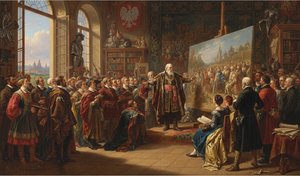
Jan Matejko: Historical Narrative & National Identity in 19th-Century Polish Painting
Explore the powerful historical paintings of Jan Matejko, Poland's national artist. Discover his iconic works & learn how he shaped Polish identity in the 19th century. High-quality reproductions available.
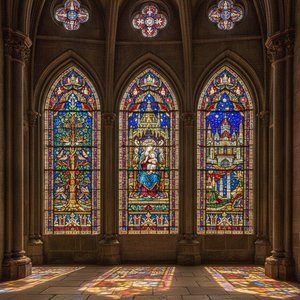
Luminous Masterpieces: The Captivating Beauty and Timeless Elegance of Stained Glass Artworks
Embark on a visual journey through the luminous world of stained glass art. Discover the exquisite craftsmanship, historical significance, and captivating beauty of masterworks from Art Nouveau to the Gothic era, curated for the discerning fine art enthusiast.
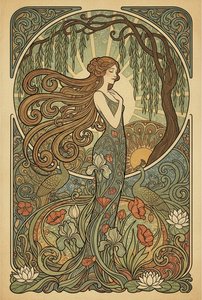
The Flowing Line & Flourishing Form: Exploring Art Nouveau's Aesthetic Legacy
Explore the captivating world of Art Nouveau! Discover its origins, key artists like Horta & Mucha, regional styles, innovative techniques, and lasting influence on architecture & design. A comprehensive guide for art enthusiasts.
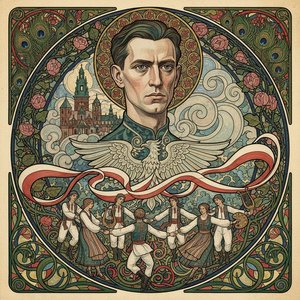
Stanisław Wyspiański: Symbolism, National Identity & the Polish Secession
Explore the life & work of Stanisław Wyspiański, a pivotal figure in Polish Symbolism and the Young Poland movement. Discover his iconic paintings, dramas, and stained glass designs reflecting national identity & artistic innovation.
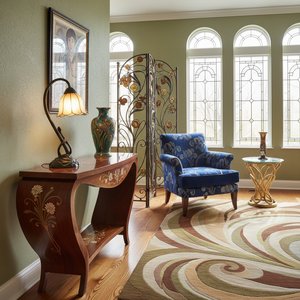
Art Nouveau Klassika: 10 Meisterteost Sisekujunduse Inspiratsiooniks
Sukeldu Art Nouveau maailma! Avasta 10 ikoonilist meistriteost – Klimt, Mucha jt – ja nende ajatu ilu. Loe kunstnike lugusid ning saa inspiratsiooni sisekujunduseks. Kvaliteetsed kunsti reproduktsioonid OriginalUniqueArt.com-ilt! Uuri kogu kollektsiooni veebis.
