 Lülita trükkitoodetele
 Loe lähemalt







































 Kunstiteoste või reproduktsioonide puhul, mille üks külg on üle 105 cm (umbikmolt 41 tolli), saadetakse raam kirjal asendis, la Dismantlitud komplektina. See meetod tagab ohutuse kohaletoimetamisel ja väldib transpordil tekkivaid kahjustusi.


A Monumental Testament to Liberty
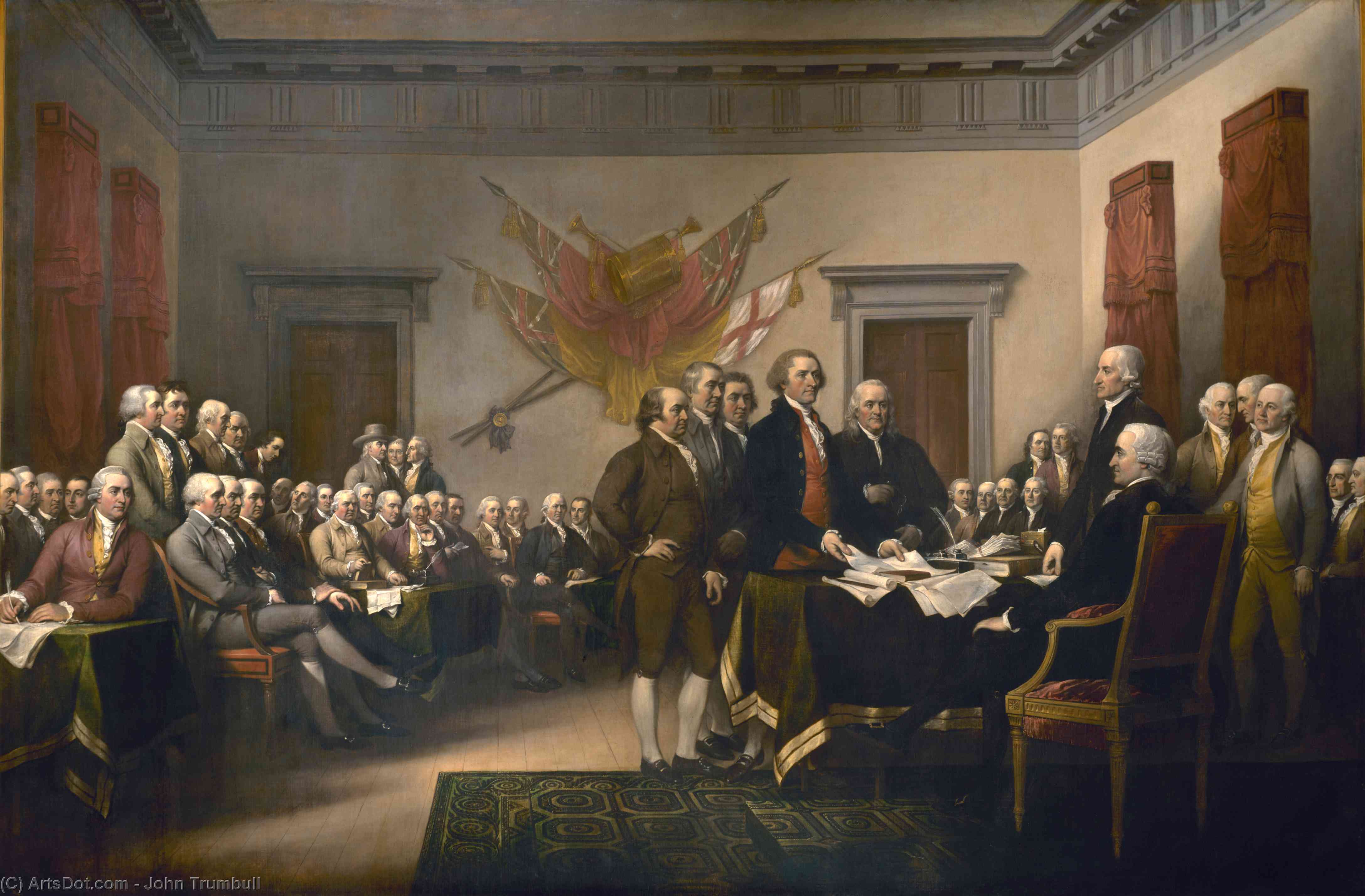
To stand before John Trumbull’s Declaration of Independence is to be transported back to the very crucible of American revolution, a moment etched indelibly into the nation's collective memory. Completed in 1817, this colossal oil on canvas serves as far more than a mere historical record; it is a tangible embodiment of the ideals that birthed a nation. Trumbull, often revered as the "Painter of the Revolution," captures the solemnity of July 4th, 1776, with a precision that feels both immediate and eternal. As the viewer's eye wanders across the expansive scene within Independence Hall, one does not simply observe a signing ceremony but witnesses the heavy weight of responsibility and the profound conviction of the men gathered around a long mahogany table.
The painting meticulously recreates the atmosphere of the Second Continental Congress, featuring thirteen delegates—including luminaries such as Benjamin Franklin, Thomas Jefferson, and John Hancock—rendered with palpable presence. Each figure is positioned to convey their unique role in this historic drama, from those standing in contemplative shadows to those bathed in the warm, flickering glow of candlelight. The inclusion of a prominent book upon the table serves as a silent yet powerful symbol of the foundational documents that underpin the very concept of American law and liberty, anchoring the fleeting moment of human decision-making to the enduring strength of written principle.
The Mastery of Light and Romantic Spirit
Trumbull’s technical prowess is most evident in his masterful use of chiaroscuro—the dramatic interplay between light and shadow. This technique does more than just sculpt the figures and define the architectural space; it breathes life into the room, creating a sense of depth that invites the observer to step into the historical tableau. While Trumbull’s work possesses a certain neoclassical grandeur in its accuracy, there is an undeniable pulse of Romantic idealism flowing through his brushstrokes. He prioritizes the emotional resonance of the scene, using light to illuminate faces etched with gravity and gestures that speak of defiance and aspiration.
For the discerning collector or interior designer, this piece offers a profound sense of gravitas and intellectual depth. The composition is balanced yet dynamic, making it an extraordinary focal point for a sophisticated study, a stately library, or a formal gallery space. The warmth of the candlelight and the rich textures of the mahogany and period attire provide a palette that complements classic and traditional decor, adding a layer of historical narrative to any environment. Owning a high-quality reproduction of this masterpiece is not merely about acquiring art; it is about preserving a piece of the American spirit and surrounding oneself with the enduring light of freedom.
Korduvad küsimused
Kas saan näha teose „Declaration of Independence“, autor John Trumbull röntgenpilti?
Teost "Declaration of Independence" saab uurida kiht kihti teose Röntgenuuring lehel, mis on restauraatori valgelaudast inspireeritud interaktiivne vaatur, pakkudes kujundist üksteist optilist lugemist.
Mida „Declaration of Independence“, autor John Trumbull kujutab ja milline on selle meeleolu?
Teos "Declaration of Independence" kujutab teemasid revolution, independence, founding fathers, declaration, history, americana, painting ning selle meeleolu on Elegant.
Kas on õpilaste jaoks olemas infoleht teose „Declaration of Independence“, autor John Trumbull kohta?
Juhend teose "Declaration of Independence" kohta on selle Õppekasutusjuhend leht – trükkiv infoleht, mis esitab teose koos pealkirja, autori ja identifiekatsioonitabeliga (kunstnik, kuupäevad, tehnika, algne suurus, kollektsioon).
 Eelvaade
 Saada
Saada Jaga
Jaga
 Teave teose kohta
 Juhend

 Laadi alla
 Sarnased teosed
 Röntgenuuring
 Slaidietendus
 KÜSIMUSED JA VASTUSID
 Statistika