Lülita trükkitoodetele
 Loe lähemalt







































 Kunstiteoste või reproduktsioonide puhul, mille üks külg on üle 105 cm (umbikmolt 41 tolli), saadetakse raam kirjal asendis, la Dismantlitud komplektina. See meetod tagab ohutuse kohaletoimetamisel ja väldib transpordil tekkivaid kahjustusi.


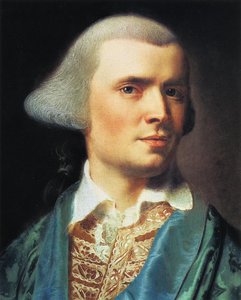
A Glimpse into Georgian Grandeur: The Portrait of Charles Pelham
To stand before John Singleton Copley's Charles Pelham is to step directly into the refined, ordered world of mid-eighteenth-century Boston society. This portrait, executed in 1754, transcends a mere likeness; it is a meticulously crafted document of status, intellect, and burgeoning American aspiration. The subject himself, depicted with an air of composed authority, commands attention through his very bearing. Observe the crisp white shirt, its delicate ruffles catching the light, contrasting beautifully with the formality suggested by his wig. Copley captures not just the man's features—the distinct mustache lending a touch of masculine gravity—but the entire atmosphere surrounding him, inviting the viewer into an intimate, yet grandly staged moment.
The Mastery of Neo-Classical Form
Artistically, Charles Pelham stands as a quintessential example of Neo-Classicism. This style, which championed the ideals of clarity, balance, and rational order drawn from the glories of ancient Greece and Rome, finds its perfect expression here. Copley eschews dramatic excess for an elegant restraint. The composition itself is a masterclass in equilibrium; while the main subject occupies a central focus, the inclusion of figures on the left and another presence near the center-left prevents any single area from feeling static. These supporting elements, along with the object resting upon a surface—perhaps a book or sheaf of papers—ground the portrait in tangible reality, suggesting scholarly pursuits or mercantile success. The clean lines and balanced arrangement are hallmarks of an era that valued Enlightenment ideals.
Technique and Enduring Detail
The technical brilliance evident in this oil on canvas work is breathtaking. Copley’s handling of paint allows for incredible textural differentiation; one can almost feel the weight of the fabric, the sheen of polished wood, or the soft texture of skin. His ability to render detail with such precision speaks volumes about his skill as a portraitist. For those considering bringing this historical elegance into a modern space, understanding this technique is key. A high-quality reproduction allows one to appreciate Copley’s masterful layering and subtle tonal shifts without the prohibitive cost or fragility of an original masterwork.
Symbolism and Social Context
Beyond the visible elements, the painting whispers tales of its time. The formality of dress, the very act of commissioning such a portrait, speaks to the rising merchant class in colonial America—a group eager to solidify their place within established cultural narratives. The presence of multiple figures suggests a social circle, an interconnected web of influence that defined life in Boston during this pivotal period. It is a visual testament to ambition realized through patronage and refined taste. Owning or displaying a reproduction of Charles Pelham is not merely decorating; it is curating a piece of tangible history, invoking the sophisticated spirit of the Georgian era.
Korduvad küsimused
Millist meeleolu ja emotsiooni teos "Charles Pelham" edastab?
„Charles Pelham“, autor John Singleton Copley edastab Reflective tunnet, mis on ümbritsetud üldise Classic meeleolu.
Milline on teose "Charles Pelham" atmosfäär?
Teose „Charles Pelham“, autor John Singleton Copley üldine meeleolu on Classic. See meeleolu kirjeldab teose üldist atmosfääri.
Kui eraldavad teose "Charles Pelham" värvid?
Teose "Charles Pelham" värvitoon on kroomi方面 Subtle Color ja intensiivsuse方面 Balanced.
 Eelvaade
 Saada
Saada Jaga
Jaga
 Teave teose kohta
 Juhend

 Laadi alla
 Sarnased teosed
 Röntgenuuring
 Slaidietendus
 KÜSIMUSED JA VASTUSID
 Statistika