

 Vaata sisu
 Jaga teost
 Jaga
Jaga
 Detailid
 Õppekate juhend

 Laadi alla
 Sarnased teosed
 Röntgenuuring
 Slaidietendus
 Statistika
Beethoven


 Loe lähemalt
Giclée / Kunstiprint
Muuseumikvaliteediga giclée- või kangasprint kiire tootmisega ja paindlikud viimistlusvõimalused. ( Telli käsitsi maalitud reproduktsioon Ülemineku digitaalse pildi müügi kanalisse)




P118B €10

P118H €10

P118W €10

P438Z €10

P508JH €12

P508YH €12

P805H €10

P805Z €10

P919BZ €10

P919G €10

P919XJ €10

P959ZH €10

P968JZ €12

W106C €8

W218G €10

W218JH €8

W218Y €10

W307PJ €10

W316G €10

W316PJ €8

W316Y €10

W398PJ €8

W4111J €10

W500HY €15

W500JH €15

W692G €12

W849H €8

W940BG €15

W953PJ €8




Vali meie eelmääratud suurused, mis vastavad teose algupärastele proportsioonidele.

Sisestage vajalik laius ja kõrgus, et see sobiks teie raamile või seinale. Trükki saab ainult lõigata, seda ei saa kunagi pildist suuremaks teha, seega ka differentse vormiga suurus kaotab osa pildist. Enne trükkimist saadame teile kinnitamiseks digitaalse näidisprojektsiooni. Sellel lehel näidatud pilt ei kujuta reaalset lõiget — seda näitab ainult näidisprojekttsioon.
Ülemaailmne tarne () 2 nädala jooksul, tavalise 4/5 nädala asemel. (25 oktoober)

Tasuta ekspresssaatmine üle maailma

Kõrgekvaliteediline lina-kangastest muld

Täielik transpordikindlustus

Tollimaksude tagastamise garantii

Värvitoime täpsuse garantii

100 päeva tagastusõigus (ainult defektide korral)

100% raha tagasi garantii

Hulgusoodustus
 Klaasivalik on saadaval ainult kuni 110 cm suuruses teostes

Beethoven
Giclée / Kunstiprint
Reproduktsiooni mõõtmed
-


Lõppsumma
€ 70
Johann Nepomuk Maelzel ja Beethoven – Ühe Instrumenti Ülevaade
Johann Nepomuk Maelzel oli Saksamaa kuulsa instrumentide valmistajana tuntud kirjanik, kes jäi hiljemalt maailmale maha 1838ndal aastal. Tema töö oli täis innovatsiooni ja suurepäärase täielikkusega ning tema suurim saavutus oli metronoom – mõõterihendisuse uus tüüp, mis muutis muusikavärbamise maailma. Seda esimest korda kasutati juba 1813ndal aastal ja selle valmistamise kohta tehtud kunstniku töö on tänapäevalgi täielikult hinnatud. Maelzel ei olnud ainult instrumentide valmistaja; ta oli ka suur kirjanik ja näitleja, kes pakkus publikule põnevaid esinemisi ning tõi muusikavärbamises värviküllast maailma. Tema kunstniku töö on osa suuremast kontekstist – Saksa romantism perioodil, milles tähendas uus tänu kunstnike suurusele ka suurem huvi looduse ja inimese kohta. Maelzel oli väga tark ning tema instrumentide valmistamine oli täielikult keskendunud täiuslikule tehnoloogiale ja kunstile. Instrument oli valmistatud kvaliteetsetest materjalidest – hõbe ja puu – ning selle kujundus oli väga detaililine. Instrument oli kaunistatud keerukate musteridega, mis olid mõeldud nähtavaks nii päeval kui öösel. Maelzel kasutas täiel määra uus tehnika – suurmeisterlikku käsitööd – et instrument oleks võimalikult ilus ja funktsionaalne. Üheksa kübara suurusega trompet oli valmistatud hõbedast ning selle kujundus oli väga elegantne ja täielik. Trompet oli kaunistatud lillemusteridega ning selle värv oli tumepruun. Instrument oli valmistatud suure tähelepanuga detailidele ning selle valmistamine võttis palju aega ja jõudu. Maelzel oli suur kirjanik ning tema instrumentide valmistamine oli osa suuremast kunstilinnaku kohta. Tema töö on osa Saksa romantism perioodil, milles tähendas uus tänu kunstnike suurusele ka suurem huvi looduse ja inimese kohta. Instrument oli valmistatud suure tähelepanuga detailidele ning selle valmistamine võttis palju aega ja jõudu. Üheksa kübara suurusega trompet oli valmistatud hõbedast ning selle kujundus oli väga elegantne ja täielik. Trompet oli kaunistatud lillemusteridega ning selle värv oli tumepruun. Instrument oli valmistatud suure tähelepanuga detailidele ning selle valmistamine võttis palju aega ja jõudu. Maelzel oli suur kirjanik ning tema instrumentide valmistamine oli osa suuremast kunstilinnaku kohta. Tema töö on osa Saksa romantism perioodil, milles tähendas uus tänu kunstnike suurusele ka suurem huvi looduse ja inimese kohta. Üheksa kübara suurusega trompet oli valmistatud hõbedast ning selle kujundus oli väga elegantne ja täielik. Trompet oli kaunistatud lillemusteridega ning selle värv oli tumepruun.- Instrument oli valmistatud suure tähelepanuga detailidele ning selle valmistamine võttis palju aega ja jõudu.
- Maelzel kasutas uus tehnika – suurmeisterlikku käsitööd – et instrument oleks võimalikult ilus ja funktsionaalne.
- Instrument oli kaunistatud keerukate musteridega, mis olid mõeldud nähtavaks nii päeval kui öösel.
- Maelzel oli osa suuremast kunstilinnaku kohta – Saksa romantism perioodil.
Küsimused ja vastused
Milline on teose „Beethoven“, autor Johann Nepomuk Maelzel värvitoit?
Teose "Beethoven" värvipalett on koonuse方面 Kerge värvitoon.
Millist etap Johann Nepomuk Maelzel loomingus teos "Beethoven" esindab?
Teos "Beethoven" kuulub Johann Nepomuk Maelzel loomingulise karjääri perioodi Mature Period. See klassifikatsioon seostab teose kunstniku loovliku arenguga.
Millist ruumi on „Beethoven“, autor Johann Nepomuk Maelzel jaoks soovitatav?
Teos „Beethoven“, autor Johann Nepomuk Maelzel on soovitatav paikutada ruumi Elutuba. See soovituse on tehtud teose sisu, värvide ja meeleolu põhjal.
Kunstniku elulugu
Samuel Scott: A Pioneer of Dutch Landscape and Maritime Art
Samuel Scott, a name perhaps less familiar than some of his contemporaries, stands as a pivotal figure in the development of Dutch landscape and marine painting during the 18th century. Born around 1702 in London, he embarked on an artistic journey that ultimately led him to establish himself as a respected artist working primarily in the Netherlands. Scott’s career was marked by a fascinating evolution from maritime scenes – capturing the drama of naval engagements – to a more contemplative engagement with the natural world, reflecting a shift within Dutch art towards greater realism and atmospheric depth. Scott's early training remains somewhat shrouded in mystery; records indicate he began his artistic pursuits around 1720 without documented formal instruction. This self-taught approach fostered an independent spirit and allowed him to develop a distinctive style heavily influenced by the works of Willem van de Velde the Younger, a master of naval painting known for his dynamic compositions and meticulous detail. Scott’s initial focus was on depicting ships at sea – men-of-war engaged in battle, merchant vessels navigating treacherous waters – all rendered with a remarkable sense of movement and realism. These early works demonstrate a keen eye for observation and a skillful command of brushwork, capturing the textures of water, sailcloth, and timber with impressive accuracy. Notably, he collaborated with George Lambert on a series of paintings illustrating scenes from the East India Company’s voyages, showcasing his ability to combine technical skill with narrative storytelling.The Transition to Landscape and the Influence of London
Around the early 1740s, a significant shift occurred in Scott's artistic practice. He began dedicating himself to landscape painting, driven by observations of the burgeoning cityscape of London. The construction of landmarks like Westminster Bridge provided him with an endless source of inspiration, and he meticulously documented these changes through a series of paintings that offer invaluable insights into the visual culture of the era. These works are characterized by their atmospheric quality – Scott skillfully employed light and shadow to create a sense of depth and perspective, capturing the mood and character of the city. His depictions of London Bridge, particularly those painted in the late 1740s and early 1750s, stand as remarkable achievements, accurately portraying the bridge’s structure and the surrounding environment before its eventual demolition. The influence of Canaletto, a Venetian painter renowned for his urban views, is evident in Scott's approach to landscape painting. Like Canaletto, Scott sought to capture not just the physical appearance of a scene but also its overall atmosphere and character. Furthermore, Scott’s artistic journey was intertwined with social circles; he posed for Thomas Hudson, a prominent portrait painter, around 1732, solidifying his position within London's artistic community.A Journey to the River Medway and Early Collaborations
In 1732, Scott embarked on a significant excursion – a “Five Days’ Peregrination” along the River Medway and the Isle of Sheppey in company with William Hogarth and other notable figures. This journey provided him with an unparalleled opportunity to study coastal landscapes, shipbuilding techniques, and maritime activities firsthand. The resulting account, published in 1782, documented this experience and included drawings by Hogarth and Scott themselves. This collaborative effort not only showcased Scott’s artistic talent but also highlighted his ability to work effectively within a group setting. His meticulous observations during the trip are reflected in subsequent landscape paintings that demonstrate an increased understanding of natural forms and atmospheric effects.Later Years and Legacy
Scott continued to paint throughout his life, producing a substantial body of work encompassing both maritime scenes and landscapes. He exhibited works at the Society of Artists of Great Britain until 1761, demonstrating his ongoing commitment to artistic practice. His later years saw him embracing Romanticism, incorporating more dramatic storytelling and evoking emotional responses in his viewers. Despite facing periods of relative obscurity, Samuel Scott’s contributions to Dutch art are now recognized as significant. He played a crucial role in bridging the gap between earlier maritime painting traditions and the rise of landscape painting, establishing a foundation for future generations of artists. His meticulous observation, skillful technique, and atmospheric rendering continue to resonate with viewers today, offering a captivating glimpse into 18th-century Dutch society and its relationship with the natural world. Scott’s legacy lies not only in his individual works but also in his pioneering role as a landscape painter who brought a new level of realism and emotional depth to the genre.
Johann Nepomuk Maelzel
1772 - 1838 , Germany
Lühikest infot
- Full Name: Jan Maurits Quinkhard
- Nationality: Dutch
- Date Of Birth: 1772
- Date Of Death: 1838
- Place Of Birth: Reims, Germany
- Notable Artworks:
- Familiar scenes
- Allegorical works
- Mythological paintings
- Artistic Movement Or Style: Portraiture, History, Mythology
- Artists Who Influenced This Artist:
- Julius Quinkhardt the elder
- Arnold van Boonen
- Artists Or Movements Influenced By This Artist: ['Amsterdam Museum']
Sarnased artiklid

Romantilise Maastikukunsti 10 Meisterteost: Kunstiteosed Koduks OriginalUniqueArt.com'ist
Avastage 10 romantilise maastikukunsti meistriteost! Tutvuge Caspar David Friedrichi, J.M.W. Turneri ja teiste suurte kunstnike loominguga OriginalUniqueArt.com-is. Leidke täiuslik õlimaal või reproduktsioon koduks – inspireeriv kollektsioon ootab!

Jan van Goyen: Master of Dutch Landscape & Atmospheric Perspective
Discover Jan van Goyen, the master of Dutch landscape painting. Explore his subtle technique, atmospheric realism & lasting influence on art history. Learn about this 17th-century pioneer at OriginalUniqueArt.

Golden Light & Dutch Skies: The Timeless Magic of Dutch Golden Age Landscapes
Discover the breathtaking beauty of Dutch Golden Age landscapes. Explore the mastery of light, chiaroscuro, and 17th-century realism through an expert art history lens, celebrating the enduring legacy of the Dutch Masters for discerning collectors and art lovers.
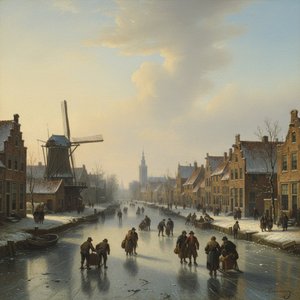
Charles Leickert: Capturing the Dutch Golden Age Light – A Comprehensive Study of Technique, Context, and Legacy
Explore the captivating winter landscapes of Charles Leickert, a master of Dutch Golden Age light & atmosphere. Discover his techniques, symbolism, and lasting legacy – a comprehensive study for art enthusiasts and collectors.

Golden Light & Dutch Skies: Bringing the Magic of Dutch Golden Age Landscapes into Your Home
Transform your home with the breathtaking light of Dutch Golden Age landscapes. Discover how hand-painted oil reproductions of masterworks like Ruisdael and Vermeer bring timeless elegance, atmosphere, and soulful texture to modern interiors. Elevate your space with museum-quality art.
