 Lülita trükkitoodetele
 Loe lähemalt







































 Kunstiteoste või reproduktsioonide puhul, mille üks külg on üle 105 cm (umbikmolt 41 tolli), saadetakse raam kirjal asendis, la Dismantlitud komplektina. See meetod tagab ohutuse kohaletoimetamisel ja väldib transpordil tekkivaid kahjustusi.


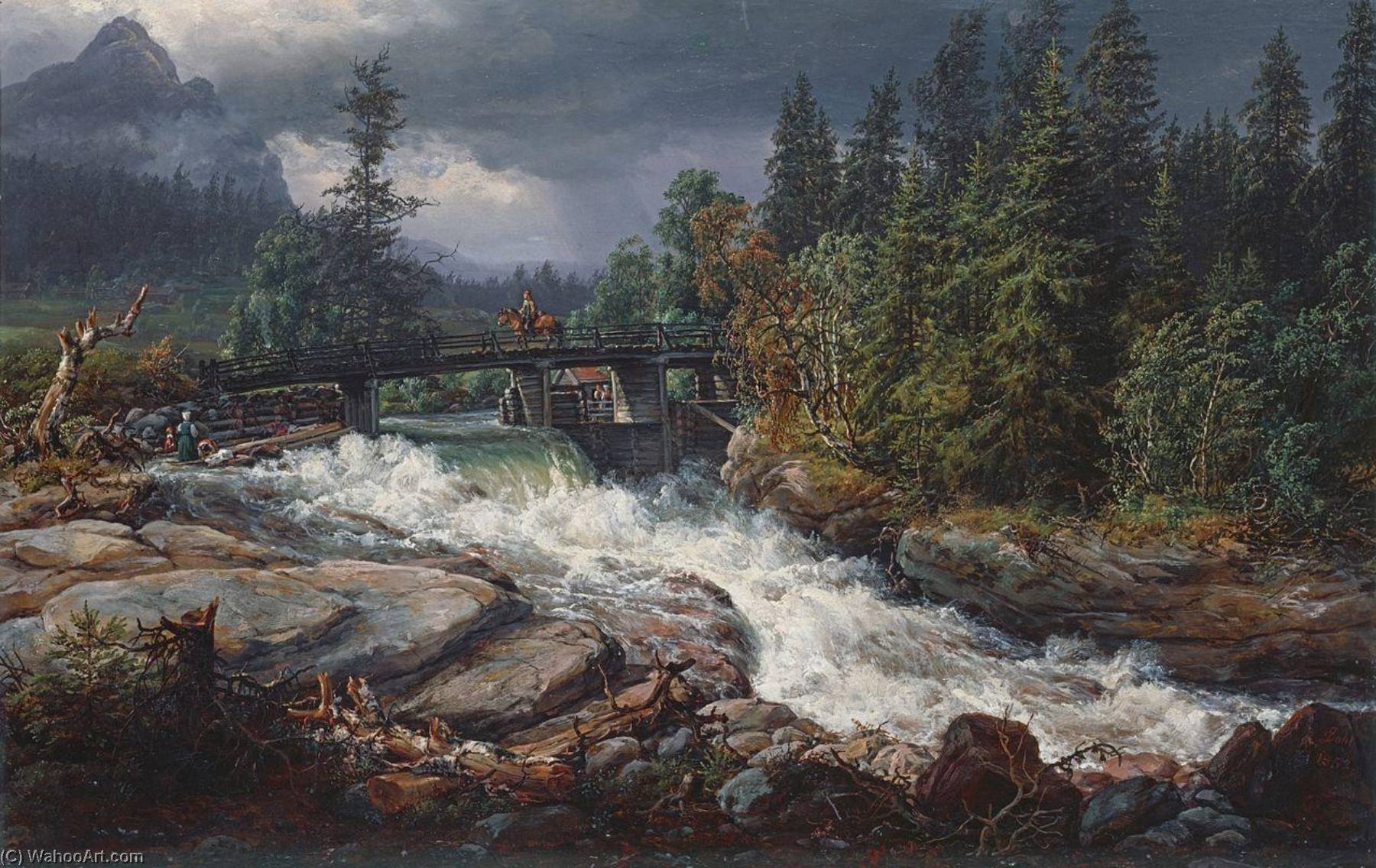
Maridalen: A Symphony of Light and Landscape
Johan Christian Clausen Dahl’s “Maridalen” isn't merely a depiction of a Norwegian fjord; it’s an embodiment of Romantic idealism—a visual poem capturing the sublime beauty of nature and reflecting upon humanity’s place within its grandeur. Painted in 1852, this oil on canvas masterpiece resides at the Galerie Neue Meister in Dresden, Germany, cementing Dahl's legacy as Norway’s foremost landscape artist and a pivotal figure in establishing Romanticism’s aesthetic principles.
Composition and Technique: Mastering Atmospheric Perspective
The painting immediately draws the eye into its serene expanse. Dahl skillfully employs atmospheric perspective—a technique pioneered during this era—to create depth and realism. Layers of misty mountains dominate the horizon, gradually receding into the distance, while a tranquil river winds its way through the valley below. The artist’s meticulous brushstrokes capture the subtle nuances of light and shadow, conveying an unparalleled sense of immediacy. Notice how Dahl utilizes cool blues and greens to represent the fjord's waters and surrounding vegetation, contrasted against warmer hues for the rocky outcrops—a deliberate choice designed to heighten visual impact.
Historical Context: Romanticism’s Embrace of Emotion
“Maridalen” emerged during a period marked by profound intellectual and artistic upheaval. The Romantic movement championed emotion over reason, prioritizing subjective experience and celebrating the power of imagination. Dahl's work aligns perfectly with these ideals, mirroring the broader cultural fascination with untamed landscapes and the spiritual quest for transcendence. It reflects the burgeoning interest in geology and scientific observation alongside a yearning for communion with the natural world—a duality that characterizes Romantic art.
Symbolism: Reflections on Humanity’s Relationship With Nature
Beyond its technical brilliance, “Maridalen” resonates with symbolic meaning. The fjord itself represents both solitude and contemplation – inviting viewers to pause and consider their own existence against the backdrop of immense natural beauty. The solitary figures scattered along the riverbank symbolize humanity's vulnerability yet also its capacity for wonder. Dahl’s masterful use of color contributes to this emotional resonance, fostering a feeling of tranquility and awe—a deliberate aim at capturing the sublime.
Legacy: An Icon of Norwegian Romanticism
"Maridalen" continues to inspire artists and collectors alike. Its enduring appeal stems from its ability to transport viewers back in time, immersing them in the atmosphere of 19th-century Norway and reminding us of the timeless beauty of unspoiled landscapes. Dahl’s contribution to art history is undeniable; he established a new standard for landscape painting—one that prioritizes emotional expression alongside meticulous observation—a legacy that continues to shape artistic sensibilities today.
Korduvad küsimused
Kuidas teose "Maridalen" stiil seotub selle looja ajaga?
Teos „Maridalen“, autor Johan Christian Dahl kuulub Romantic Landscape Painting suunasse ning on loodud autori 19. sajand ajastul.
Millist värvigamma teos "Maridalen" kasutab?
Teose "Maridalen" värvid moodustavad Earthy paleti. See klassifikatsioon kirjeldab domineerivaid värvigruppe.
Kas teos „Maridalen“, autor Johan Christian Dahl on portree-, maastiku- või ruudukompositsioon?
„Maridalen“, autor Johan Christian Dahl on Landscape kompositsioon. Trüki suuruse valimisel on mõistlik kontrollida selle proportsioone.
 Eelvaade
 Saada
Saada Jaga
Jaga
 Teave teose kohta
 Juhend

 Laadi alla
 Sarnased teosed
 Röntgenuuring
 Slaidietendus
 KÜSIMUSED JA VASTUSID
 Statistika


