

 Eelvaade
 Saada
Saada Jaga
Jaga
 Teave teose kohta

 Laadi alla
 Sarnased teosed
 Röntgenuuring
 Slaidietendus
Granada


 Loe lähemalt
Käsitsi valmistatud õlimaalireproduktsioon
Meie kunstnike poolt tellimusel valmistatud käsitsi maalitud õli-kainaste teos teie soovitud suuruses ja raamis. ( Osta print Osta pilt)




P118B $10

P118H $10

P118W $10

P438Z $10

P508JH $12

P508YH $12

P805H $10

P805Z $10

P919BZ $10

P919G $10

P919XJ $10

P959ZH $10

P968JZ $12

W106C $8

W218G $10

W218JH $8

W218Y $10

W307PJ $10

W316G $10

W316PJ $8

W316Y $10

W398PJ $8

W4111J $10

W500HY $15

W500JH $15

W692G $12

W849H $8

W940BG $15

W953PJ $8




Vali meie eelmääratud suurused, mis vastavad teose algupärastele proportsioonidele.

Sa võite sisestada oma mõõtmed konkreetse raami või ruumi sobivuse tagamiseks. Kui teie valitud suurus ei vasta originaalpildi proportsioonidele, siis kärvime kunstiteost või laiendame maali täiendavate käsitsi maalitud elementidega. Enne tootmise algust saadetakse teile heakskiitmiseks digitaalne eelvaade.
Palun pidage meeles, et ekraanil kuvatav eelvaade ei kajasta tegelikku kärpimist või laiendamist. Ainult eelvaade näitab täpselt lõplikku kompositsiooni.
Kuigi on saadaval kohandatud suurused, soovitame originaalproportsioonide säilimiseks valida mõõdud eelmääratletud nimekirjast.
Pärast tellimust saadab OriginalUniqueArt.com meeskond kliendile e-posti juhised ning esitab eelvaate kavandi.
Maailmline tarne 3–4 nädala jooksul tavalise 5 nädala asemel. (31 august). Kvaliteedis kompromisse ei tehta.

Tasuta ekspresssaatmine üle maailma

Kõrgekvaliteediline linakangas

Täielik transpordikindlustus

Tollimaksude tagastamise garantii

Värvitoime täpsuse garantii

60-päevane tagastusõig: ainult tootmisdefektide korral

100% raha tagasi garantii

Hulgusoodustus
 Klaasivalik on saadaval ainult suuruses kuni 110 cm

Granada
Reproduktsiooni tehnika
Reproduktsiooni suurus
-


Kogusumma
$ 300
A Symphony of Light and Life: Exploring Joaquín Sorolla’s *Granada*
Joaquín Sorolla y Bastida's *Granada* is more than just a depiction of a Spanish landscape; it’s an immersive experience, a testament to the artist’s masterful command of light and his profound connection to the vibrant spirit of his homeland. Painted during a period of immense artistic flourishing in Spain – the late 19th and early 20th centuries – this work embodies the *luminismo*, a style characterized by its intense use of sunlight, creating an almost palpable sense of warmth and energy. The scene unfolds with remarkable clarity, capturing a bustling town nestled within a valley, framed by majestic mountains that seem to breathe with the very essence of Spain.
- Subject Matter: The painting’s subject is deceptively simple – a typical Spanish townscape – yet Sorolla elevates it through his meticulous observation and skillful rendering. The focus isn't on grand architectural monuments, but rather on the everyday life of its inhabitants, their interactions, and their connection to the surrounding landscape.
- Technique: Sorolla’s technique is instantly recognizable. He employs loose, broken brushstrokes – a hallmark of his style – to capture the shimmering effect of sunlight on surfaces. The paint appears almost translucent in places, allowing the light itself to contribute to the image's luminosity. This layering of color and texture creates a remarkable sense of depth and movement.
The Luminismo: Sorolla’s Embrace of Light
Sorolla was deeply influenced by the Impressionists, particularly their exploration of light and atmosphere. However, unlike his European counterparts, he translated this influence into a distinctly Spanish idiom. The *luminismo*, as it became known, wasn't simply about depicting bright colors; it was about capturing the way sunlight transforms the world – its ability to evoke emotion, create drama, and reveal the beauty of ordinary moments. Notice how the light dances across the buildings, illuminating the figures and creating a sense of warmth and vitality. This technique is particularly evident in the reflections shimmering on the valley floor.
- Color Palette: Sorolla’s palette is dominated by warm tones – ochres, yellows, and oranges – reflecting the intense sunlight characteristic of the Valencia region. He skillfully uses complementary colors (blues and greens) to create contrast and enhance the sense of depth.
- Brushwork: The artist's signature broken brushstrokes are not haphazard; they are carefully controlled to achieve a specific effect—a shimmering, vibrating quality that mimics the way light interacts with surfaces.
Symbolism and Emotional Impact
*Granada* is rich in subtle symbolism. The presence of people engaged in everyday activities – perhaps a market scene or a gathering of friends – suggests a celebration of life and community. The two dogs, casually integrated into the composition, add to the painting’s sense of realism and spontaneity. More than just a picturesque landscape, *Granada* evokes a powerful emotional response—a feeling of warmth, joy, and connection to nature. It's a scene brimming with optimism and a celebration of the simple pleasures of life, reflecting Sorolla’s own zest for living and his deep appreciation for the beauty of Spain.
A Legacy of Light
Joaquín Sorolla’s *Granada* stands as a quintessential example of Spanish landscape painting at its finest. Its enduring appeal lies in its masterful use of light, its vibrant colors, and its ability to capture the essence of a moment in time. A hand-painted reproduction offers an unparalleled opportunity to experience this remarkable artwork firsthand, bringing a touch of Sorolla’s luminous vision into your home or office.
Kunstniku elulugu
Joaquín Sorolla y Bastida – A Life Bathed in Light
Joaquín Sorolla y Bastida, a name synonymous with the radiant light and vibrant energy of Spain, was more than just a painter; he was a chronicler of his nation’s soul. Born in Valencia in 1863, Sorolla's early life was marked by tragedy. Orphaned at the tender age of two following a cholera epidemic that claimed both parents, young Joaquín and his sister were raised by their maternal aunt and uncle. This early experience with loss perhaps instilled within him a profound appreciation for the fleeting beauty of life – a sentiment that would permeate his art. Though hardship shadowed his beginnings, it did not dim the spark of artistic talent that quickly became apparent. He received initial instruction in Valencia, demonstrating an aptitude that led to studies under established artists like Cayetano Capuz and José Benlliure, eventually culminating in a four-year grant to study in Rome. It was there, amidst the classical grandeur of Italy, that Sorolla began to forge his unique artistic path, absorbing influences while simultaneously developing a style distinctly his own.Early Life and Artistic Beginnings
Joaquín Sorolla’s formative years were shaped by profound loss and circumstance. Born on February 27, 1863, in Valencia, Spain, he descended from a modest family of tradesmen. Tragically, just two years later, his parents succumbed to cholera—a devastating epidemic that gripped the city—leaving him orphaned alongside his sister, Concha. Their maternal aunt and uncle stepped forward to provide care, fostering an early awareness of vulnerability and resilience – themes that would subtly inform Sorolla’s artistic vision throughout his career. Recognizing his exceptional talent at a young age, he commenced formal art education in Valencia, honing his skills under the tutelage of prominent Valencian artists like Cayetano Capuz and José Benlliure. This foundational training instilled in him a disciplined approach to observation and representation—skills that would prove invaluable as he embarked on his artistic journey. At eighteen, Sorolla ventured to Madrid, immersing himself in the vibrant cultural landscape of the capital and dedicating himself to intensive study at the Museo del Prado, where he encountered the masterpieces of Velázquez and other titans of Spanish art.Rome: The Crucible of Impressionism
A pivotal moment arrived when Sorolla secured a prestigious grant enabling him to pursue his artistic ambitions in Rome—the Italian capital—between 1884 and 1888. This immersion in the artistic milieu of Italy proved transformative, exposing him to the burgeoning currents of Impressionism and fostering an enduring fascination with capturing fleeting moments of light and color. Influenced by artists such as Jules Bastien-Lepage and Adolf von Menzel—whose works he meticulously studied—Sorolla began to experiment with looser brushstrokes and brighter palettes, distancing himself from the more rigid conventions of academic painting. He established connections with José Benlliure and Emilio Sala, furthering his artistic education and solidifying his stylistic evolution. During this period, Sorolla’s gaze turned towards Paris, where he encountered the epicenter of modern art—a city pulsating with innovation and intellectual ferment. Exhibitions featuring Bastien-Lepage and Menzel profoundly impacted his artistic sensibilities, shaping his approach to composition and color harmony.The Valencian Coast: A Celebration of Light
Sorolla’s artistic focus shifted decisively upon returning to Valencia in 1890—a homecoming marked by a renewed appreciation for the luminous landscapes of his birthplace. He married Clotilde García del Castillo, forging a lifelong partnership that would inspire him creatively and provide unwavering support throughout his prolific career. Together they established a family in Madrid, where Sorolla continued to produce monumental canvases depicting scenes from Valencian life—particularly those centered around the Mediterranean coast. His fascination with capturing the effects of sunlight on water and skin reached its zenith during this period, resulting in iconic paintings like *The Return from Fishing* and *Children on the Seashore*. He adopted a technique characterized by rapid brushwork and vibrant color combinations—a deliberate departure from academic realism—reflecting his unwavering commitment to Impressionistic principles. Sorolla’s canvases are imbued with an extraordinary sense of immediacy and vitality, conveying not merely what he saw but also how he felt—a testament to his artistic empathy and profound connection to the natural world.Major Achievements & Legacy
Sorolla achieved international acclaim during his lifetime through numerous exhibitions across Europe and America. His paintings were recognized for their technical brilliance and emotional depth, establishing him as one of Spain’s foremost artists of his era. He garnered considerable honors—including the Grand Prix at the Paris Salon in 1900—and was commissioned to undertake ambitious projects such as *Vision of Spain*, a monumental mural cycle for the Hispanic Society of America—completed posthumously—that cemented his reputation as a visionary artist and a champion of Spanish culture. Sorolla’s influence extended far beyond his own lifetime, inspiring generations of painters who embraced Luminism—the art movement that sought to capture the essence of light and atmosphere—and whose works continue to resonate with audiences today. His legacy resides not only in his stunning canvases but also in his unwavering dedication to artistic innovation and his profound appreciation for the beauty of everyday life—a painter whose enduring vision continues to illuminate our understanding of Spanish art history.
Joaquín Sorolla
1863 - 1923 , Hispaania
Lühikesed faktid
- Artistic Movement Or Style: Лумнизм, Импрессионизм
- Artists Or Movements Influenced By This Artist: ['Импрессионизм']
- Artists Who Influenced This Artist:
- Ф. Прадилла
- Жюль Бастиен-Лепаж
- Date Of Birth: 27 февраля 1863 г.
- Date Of Death: 10 августа 1923 г.
- Full Name: Joaquín Sorolla y Bastida
- Nationality: Испанский
- Notable Artworks:
- Маргарита
- Отплытие из рыбалки
- Бедная наследница
- Place Of Birth: Валенсия, Испания
Seotud artiklid

Hokusai's Masterpieces: 25 Iconic Prints & Paintings for Art Lovers | OriginalUniqueArt
Journey through Katsushika Hokusai’s 25 most iconic artworks, including *The Great Wave*. Explore the ukiyo-e master's history, style & timeless Japanese woodblock prints. Find museum-quality reproductions for your home at OriginalUniqueArt.com.

Romantilise Maastikukunsti 10 Meisterteost: Kunstiteosed Koduks OriginalUniqueArt.com'ist
Avastage 10 romantilise maastikukunsti meistriteost! Tutvuge Caspar David Friedrichi, J.M.W. Turneri ja teiste suurte kunstnike loominguga OriginalUniqueArt.com-is. Leidke täiuslik õlimaal või reproduktsioon koduks – inspireeriv kollektsioon ootab!
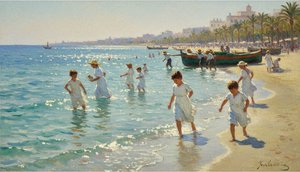
Joaquín Sorolla: Capturing Spanish Light & Life – A Legacy of Impressionism
Explore the luminous world of Joaquín Sorolla, Spanish master of Impressionism. Discover his life, techniques & legacy – a guide for art collectors and enthusiasts. Invest in timeless beauty.
Romantic Realism's Finest: 10 Masterpieces for Your Home | OriginalUniqueArt
Explore 10 defining masterpieces of Romantic Realism! Discover Courbet, Millet & Daumier's powerful paintings—capturing emotion and social realities. Find museum-quality reproductions for your home at OriginalUniqueArt.com.

John Constable: 25 Suurimat Teost Inglise Maastikumaali Tippu
Avastage John Constable'i 25 suurimat teost! Sukeldu inglise maastikumaali romantismisse, imetlege Dedham Vale ilu ja leia inspiratsiooni kodukaunistuseks. Kvaliteetsed kunstireprodutsioonid OriginalUniqueArt.com-is. Vaata kohe!



