
 Eelvaade
 Saada
Saada Jaga
Jaga
 Teave teose kohta
 Juhend

 Laadi alla
 Sarnased teosed
 Röntgenuuring
 Slaidietendus
 KÜSIMUSED JA VASTUSID
 Statistika
Copernicus in the tower at Frombork, or Conversations with God

- 221.0 x 315.0 cm


 Loe lähemalt
Giclée / Kunstiprint
Muuseumikvaliteediga giclée- või kangasprint kiire tootmisega ja paindlikud viimistlusvõimalused. ( Osta käsitsi maalatud teos Lülita digitaalse pildi juurde)




P118B €10

P118H €10

P118W €10

P438Z €10

P508JH €12

P508YH €12

P805H €10

P805Z €10

P919BZ €10

P919G €10

P919XJ €10

P959ZH €10

P968JZ €12

W106C €8

W218G €10

W218JH €8

W218Y €10

W307PJ €10

W316G €10

W316PJ €8

W316Y €10

W398PJ €8

W4111J €10

W500HY €15

W500JH €15

W692G €12

W849H €8

W940BG €15

W953PJ €8




Vali meie eelmääratud suurused, mis vastavad teose algupärastele proportsioonidele.

Sisestage vajalik laius ja kõrgus, et see sobiks teie raamile või seinale. Trükki saab ainult lõigata, seda ei saa kunagi pildist suuremaks teha, seega ka erineva mustega suurus kaotab osa pildist. Enne trükkimist saadame teile kinnitamiseks digitaalse näidisprojektsiooni. Sellel lehel näidatud pilt ei kujuta reaalset lõiget — seda näitab ainult näidisprojektsioon.
Ülemaailmne tarne () 2 nädala jooksul, tavalise 4/5 nädala asemel. (8 november)

Tasuta ekspresssaatmine üle maailma

Kõrgekvaliteediline lina-kangas

Täielik transpordikindlustus

Tollimaksude tagastamise garantii

Värvitoime täpsuse garantii

100 päeva tagastusõigus (ainult valmistusdefektide korral)

100% raha tagasi garantii

Hulgusoodustus
 Klaasivalik on saadaval ainult kuni 110 cm suuruses teostes

Copernicus in the tower at Frombork, or Conversations with God
Giclée / Kunstiprint
Reproduktsiooni suurus
-


Koguhind
€ 72
The Visionary Canvas: Jan Matejko’s “Copernicus in the Tower at Frombork”
Jan Matejko's "Copernicus in the Tower at Frombork, or Conversations with God" isn’t merely a painting; it’s a potent distillation of intellectual fervor and spiritual contemplation. Completed in 1873, this monumental oil on canvas transports us to the heart of Renaissance Poland, capturing a pivotal moment not just in astronomical history but also in the nation's burgeoning sense of self-awareness. The scene unfolds within the austere yet majestic confines of Frombork Cathedral’s tower, a location imbued with both religious significance and scientific curiosity – a perfect embodiment of the painting’s central theme: the harmonious intersection of faith and reason.

A Masterpiece of Romantic Drama
Matejko, a towering figure in 19th-century Polish art, masterfully employs the tenets of Romanticism to elevate this historical subject. The painting pulsates with dramatic lighting – a chiaroscuro effect that sculpts the figures and emphasizes the solemnity of the scene. The deep blues and purples of the night sky contrast sharply with the warm hues of Copernicus’s study, creating a visual tension that mirrors the intellectual struggle he embodies. Notice how Matejko uses loose brushstrokes to convey movement and emotion, imbuing the composition with a sense of dynamism rarely found in earlier historical paintings. The figures are rendered with an almost theatrical intensity, their gestures and expressions conveying profound thought and perhaps even a touch of awe.
The Anatomy of Inquiry: Symbolism and Detail
Beyond its dramatic impact, “Copernicus” is rich in symbolic detail. Nicolaus Copernicus himself, depicted as a man of quiet contemplation, sits at his desk surrounded by the tools of his trade – astronomical instruments, charts, and open books. The globe, prominently displayed, speaks to his revolutionary heliocentric model of the universe, challenging the established geocentric view. A partially visible diagram of the solar system hints at the complex calculations he undertook. The inclusion of a skullcap suggests the weight of religious tradition alongside the pursuit of scientific truth. Even the brick wall in the background serves as a grounding element, anchoring the scene within the physical reality of Frombork and reminding us of the earthly context of this extraordinary intellectual journey.
A Legacy Forged in Faith and Reason
The painting’s creation coincided with the 400th anniversary of Copernicus' birth, a moment of national pride for Poland. Matejko’s decision to portray Copernicus not as a triumphant discoverer but as a man engaged in dialogue with something greater than himself—perhaps even God—resonates deeply within Polish cultural identity. The painting became a symbol of the nation’s intellectual and spiritual heritage, embodying the spirit of inquiry and the courage to challenge established dogma. Its eventual acquisition by the Jagiellonian University – a bastion of learning since the 14th century – underscores its enduring significance as a testament to the power of human intellect and the pursuit of knowledge. Today, this magnificent work continues to inspire contemplation on the relationship between science, faith, and the boundless mysteries of the universe.
Korduvad küsimused
Kas ma saan enne ostmist näha teost „Copernicus in the tower at Frombork, or Conversations with God“, autor Jan Matejko oma seinal?
Teose „Copernicus in the tower at Frombork, or Conversations with God“, autor Jan Matejko leht AR-eelvaade teose kohta kasutab täiendatud reaalset, et näidata teost ühilduva seadme abil teie enda ruumis.
Kes lõi teose "Copernicus in the tower at Frombork, or Conversations with God" ja millal?
Teose "Copernicus in the tower at Frombork, or Conversations with God" on loonud Jan Matejko aastal 1872.
Kust leian juhendi teose "Copernicus in the tower at Frombork, or Conversations with God" kohta?
Juhend teose "Copernicus in the tower at Frombork, or Conversations with God" kohta on selle Õppekasutusjuhend leht – trükkiv infoleht, mis esitab teose koos pealkirja, autori ja identifiekatsioonitabeliga (kunstnik, kuupäevad, tehnika, algne suurus, kollektsioon).
Kunstniku elulugu
Varajane elu ja haridus
Jan Alojzy Matejko, tuntud poola maalikunstnik, sündis 24. juunil 1838 Krakovis, Poolas. Tema isa, Franciszek Ksawery Matejko, oli tšehhi päritolu õpetaja ja muusikapedagoog. Jani varajast elu mõjutasid Krakówi revolutsioon 1846. aastal ning 1848. aasta Austria vägede piiramine Krakovis – sündmused, mis hiljem tema kunstilisi teemasid mõjutasid. Matejko käis St. Anna gümnaasiumis, kuid katkestas õpingud 1851. aastal kehvade hinnete tõttu. Siiski näitas ta varakult erakordset andekust kunsti alal. Ta õppis Krakówi Kunstikoolis aastatel 1852–1858, spetsialiseerudes ajaloo maalimisest Wojciech Korneli Stattleri ja Władysław Łuszczkiewiczi juhendamisel.Kunstiline karjäär
Matejko esimene suurem teos, Tsaar Shuysky Zygmunt III ees, valmis 1853. aastal. Ta hakkas oma ajaloo maalide näitusi korraldama Krakówi Sõprade Seltsis alates 1855. aastast. Tähelepanuväärsed teosed hõlmavad:- Rejtan (1866): suur õlimaal lõuendil, mis kujutab poola ajaloos olulist hetke.
- Lublini unioon (1869): oluline teos, mis näitab Matejko oskust ajaloolisi sündmusi tabada.
- Grunwaldi lahing (1878): meistriteos, mis rõhutab tema võimet edasi anda lahingute intensiivsust.
Muuseumi panus ja pärand
Matejko elas enamasti Krakówis, saades lõpuks direktoriks Jan Matejko Kunstiakadeemias, varem tuntud kui Krakówi Kunstiakadeemia. Tema õpilaste hulka kuulusid silmapaistvad maalikunstnikud nagu Maurycy Gottlieb, Jacek Malczewski, Józef Mehoffer ja Stanisław Wyspiański. Tähelepanuväärsed teosed OriginalUniqueArt’is:- Jan Matejko: Varna (romantism)
- Jan Matejko: Still Life (romantism)
- Jan Matejko: Lublini unioon (298 x 512 cm, romantism, õlimaal lõuendil)
Mõjud ja areng
Matejko varasele loomingule avaldasid mõju barokk-stiilis maalid, eriti need, mida ta nägi Krakówi Waweli lossis. Tema hilisemad teosed näitasid selget romantismiliikumise mõju, rõhutades dramaatilisi kompositsioone, intensiivseid värve ja ajalooliste sündmuste emotsionaalset väljendamist. Ta oli sügavalt seotud Poola rahvusliku identiteedi ja vabaduse ideedega, mis kajastusid tema maalide teemades. Matejko püüdis oma töödes tabada poola ajaloo keerukust ja traagikat, rõhutades kangelaslikkust ja ohverdusi. Tema loomingut iseloomustab detailirohkus, realistlikud kujutised ja suurepärane kompositsioonikunst. Ta kasutas sageli monumentaalset formaati, et luua muljetavaldavaid ja võimsaid teoseid, mis pidid äratama rahvuslikku uhkust ja vaimu.Viited:
Avastades Muzeum Narodowe Krakówi meistriteoseid, Poolas (wikipedia.org)
Jan Matejko
1838 - 1893 , Eesti
Lühikest infot
- Artistic Movement Or Style: Romantism
- Artists Or Movements Influenced By This Artist: ['Maurycy Gottlieb']
- Artists Who Influenced This Artist:
- Wojciech Stattler
- Władysław Łuszczkiewicz
- Date Of Birth: 24. juuni 1838
- Date Of Death: 1. november 1893
- Full Name: Jan Alojzy Matejko
- Nationality: Poolane
- Notable Artworks:
- Grunwaldi lahing
- Lublini unioon
- Place Of Birth: Kraków, Poola
Sarnased artiklid

The Enduring Legacy of Oil on Canvas: Technique, History & Aesthetic Impact
Explore the rich history & techniques of oil painting – from Renaissance masters to Impressionism. Discover pigments, layering methods, and why this timeless medium endures. Expert insights for artists & art enthusiasts.

Lõuendi püsivus ja väljendusvõime: Tehnika, ajalugu ja kaasaegne praktika
Avastage lõuendi püsivuse ja väljendusvõime saladused! Ajaloolised tehnikad, kaasaegsed lähenemised ja ekspertide nõuanded maalikunsti austajatele. Lugege nüüd!

The Enduring Power of Painting: A Historical & Contemporary Exploration of Form and Emotion
Explore the rich history & enduring techniques of oil painting with OriginalUniqueArt. Discover masterpieces, learn about art collecting, and find authentic handmade reproductions crafted by skilled artists.

Oil on Canvas: A Historical & Technical Exploration of a Timeless Artistic Medium
Explore the rich history & enduring techniques of oil painting on canvas. Discover the science behind its longevity, conservation practices, and contemporary relevance. Expert insights for art enthusiasts.
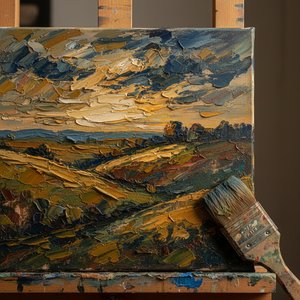
The Timeless Beauty of Oil on Canvas: A Masterclass in Texture, Impasto, and Artistic Mastery
Discover the profound allure of oil on canvas. Explore the mastery of impasto textures, the science of pigment longevity, and expert guides to selecting museum-quality reproductions that elevate your collection with timeless elegance and tactile depth.

