Text size

() ·

A painting made for you, by hand

Italian Landscape

Käsitsi valmistatud õlimaalireproduktsioon

Meie kunstnike poolt tellimusel valmistatud käsitsi maalitud õli-kainaste teos teie soovitud suuruses ja raamis. ( Lülita trükkitoodetele Lülita digitaalse pildi juurde)

Kogumisobjekti kirjeldus

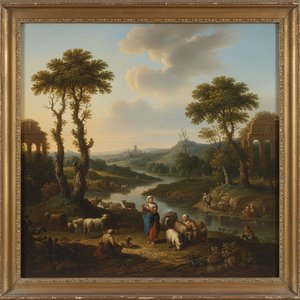
Admire Jan Asselijn's "Italian Landscape" – a serene oil painting capturing a picturesque Italian vista with figures and ruins. A stunning piece of Dutch Golden Age art, perfect for collectors.

Kunstniku elulugu

Jan Asselijn (1610-1652): Hollandi Kuldajastu maalikunstnik, tuntud itaalia stiilis maastike ja dramaatiliste teoste, nagu 'Ohustatud luik', poolest. Mõjutatud Van de Velde'st ja Rembrandist.

from ·

Chapter 1

How large should it be?

Slide to change the size; the picture on the left shows the frame at its real width. The proportions of the original are kept.

Standardne suurus
kohandatud
CM
INCH

Vali meie eelmääratud suurused, mis vastavad teose algupärastele proportsioonidele.

laius
kõrgus

Sisestage vajalik laius ja kõrgus, et teos sobiks teie raamile või seinale. Kuna tegu on käsipainatud teosega, siis erineva kujuga suuruse korral võib kunstnik jätta pildi ümber veidi rohkem marginaali või lõigata osa ära — valik on teie. Enne maali alustamist saadame teile kinnitamiseks digitaalse näidisprojektsiooni. Sellel lehel näidatud pilt ei kajasta tegelikku tulemust — seda näitab ainult näidisprojektsioon.

Chapter 2

How should it arrive?

Choose the edges of the stretched canvas

Choose your frame

Corner sample of the WhiteWrap canvas edge finish, stretched on massivpuit bars
White €1
Corner sample of the BlurSideWrap canvas edge finish, stretched on massivpuit bars
Blurside €1
Corner sample of the ExtendedWrap canvas edge finish, stretched on massivpuit bars
Extended €1
Corner sample of the P118B picture frame: vormitud polüstüreen, 5 cm wide and 3 cm thick
P118B €10
Corner sample of the P118H picture frame: vormitud polüstüreen, 5 cm wide and 3 cm thick
P118H €10
Corner sample of the P118W picture frame: vormitud polüstüreen, 5 cm wide and 3 cm thick
P118W €10
Corner sample of the P438Z picture frame: vormitud polüstüreen, 5.5 cm wide and 3.5 cm thick
P438Z €10
Corner sample of the P508JH picture frame: vormitud polüstüreen, 7 cm wide and 3.5 cm thick
P508JH €12
Corner sample of the P508YH picture frame: vormitud polüstüreen, 7 cm wide and 3.5 cm thick
P508YH €12
Corner sample of the P805H picture frame: vormitud polüstüreen, 5 cm wide and 3.5 cm thick
P805H €10
Corner sample of the P805Z picture frame: vormitud polüstüreen, 5 cm wide and 3.5 cm thick
P805Z €10
Corner sample of the P919BZ picture frame: vormitud polüstüreen, 7 cm wide and 3.5 cm thick
P919BZ €10
Corner sample of the P919G picture frame: vormitud polüstüreen, 7 cm wide and 3.5 cm thick
P919G €10
Corner sample of the P919XJ picture frame: vormitud polüstüreen, 7 cm wide and 3.5 cm thick
P919XJ €10
Corner sample of the P959ZH picture frame: vormitud polüstüreen, 5 cm wide and 3 cm thick
P959ZH €10
Corner sample of the P968JZ picture frame: vormitud polüstüreen, 6 cm wide and 4 cm thick
P968JZ €12
Corner sample of the W106C picture frame: massivpuit, 5 cm wide and 3 cm thick
W106C €8
Corner sample of the W218G picture frame: massivpuit, 5 cm wide and 3 cm thick
W218G €10
Corner sample of the W218JH picture frame: massivpuit, 5 cm wide and 3 cm thick
W218JH €8
Corner sample of the W218Y picture frame: massivpuit, 5 cm wide and 3 cm thick
W218Y €10
Corner sample of the W307PJ picture frame: massivpuit, 6 cm wide and 3 cm thick
W307PJ €10
Corner sample of the W316G picture frame: massivpuit, 6 cm wide and 3 cm thick
W316G €10
Corner sample of the W316PJ picture frame: massivpuit, 6 cm wide and 3 cm thick
W316PJ €8
Corner sample of the W316Y picture frame: massivpuit, 6 cm wide and 3 cm thick
W316Y €10
Corner sample of the W398PJ picture frame: massivpuit, 5 cm wide and 3 cm thick
W398PJ €8
Corner sample of the W4111J picture frame: massivpuit, 6.5 cm wide and 3.5 cm thick
W4111J €10
Corner sample of the W500HY picture frame: massivpuit, 7 cm wide and 5 cm thick
W500HY €15
Corner sample of the W500JH picture frame: massivpuit, 7 cm wide and 5 cm thick
W500JH €15
Corner sample of the W692G picture frame: massivpuit, 8 cm wide and 4 cm thick
W692G €12
Corner sample of the W849H picture frame: massivpuit, 5 cm wide and 3 cm thick
W849H €8
Corner sample of the W940BG picture frame: massivpuit, 7.5 cm wide and 4.5 cm thick
W940BG €15
Corner sample of the W953PJ picture frame: massivpuit, 6 cm wide and 3.5 cm thick
W953PJ €8
Corner sample of the H24-GOLD picture frame: kareeritud puit ja gesso, 10 cm wide and 6 cm thick
H24-GOLD €30
Corner sample of the H24-SILVER picture frame: kareeritud puit ja gesso, 10 cm wide and 6 cm thick
H24-SILVER €30
Corner sample of the H36-GOLD picture frame: kareeritud puit ja gesso, 15 cm wide and 6.5 cm thick
H36-GOLD €45
Corner sample of the H36-SILVER picture frame: kareeritud puit ja gesso, 15 cm wide and 6.5 cm thick
H36-SILVER €45
Raami eelvaade
Raamitud

Moulding: . Overall size with the frame: .

Chapter 3

Who paints it, and should anything change?

Examples of what can be changed: Replace face with customer photo; Add pet (e.g., replace cat with dog); Include hidden message in background; Change background landscape or elements.
After order, OriginalUniqueArt.com team will email client for instructions and provide a mockup preview

Maailmline tarne 3–4 nädala jooksul tavalise 5 nädala asemel. (1 november). Kvaliteedis kompromisse ei tehta.

Chapter 4

The finishing touches

A nameplate, as in a museum?

Graveeritud pronksplaadi üksikasjad

This elegant plaque features the artist's name and the title of the artwork, finely engraved for a timeless presentation.

It is made from bronze with a refined, elegant finish. The text is precisely laser-engraved for a sharp and permanent result. Measuring 9x2 cm, the plaque is compact yet easy to read. It's built to be durable and scratch-resistant, offering a professional, museum-quality look. Mounting is simple thanks to the included adhesive backing.

Läbipaistva akrüülplaadi üksikasjad

The plaque includes essential engraved details such as the artist's name, the title of the artwork, the date it was created, the type of media used-like oil on canvas or watercolor-a brief description of the piece, and a QR code that links to the complete artwork information.

It is crafted from clear acrylic, offering a sleek, modern appearance. The text is UV-engraved in black to ensure strong visual contrast. With a size of 10x15 cm, it ensures optimal readability. It comes equipped with two metal hooks for secure wall mounting. The plaque is designed to be weather-resistant, making it suitable for various environments, and it includes interactive features that work seamlessly with smartphone scanning.

Musta akrüülplaadiรายละเอียด (Note: The user provided "Musta akrüülplaadi detailid" as the current translation and asked for an improved version. Since "Musta akrüülplaadi

This elegant plaque includes engraved information such as the artist's name, the title of the artwork, the date it was created, the type of media used (like oil on canvas or watercolor), a short description of the artwork, and a QR code for quick access to more information.

The plaque itself is made from refined black acrylic with a premium finish. The text is laser-engraved in white for high contrast and readability. Its size is 10x15 cm, designed to be easy to read. It comes with two metal hooks for professional mounting. The design is sleek and fits any interior style. It is also weather-resistant and durable, with built-in digital integration for mobile compatibility.

A protective varnish?

When do you need it?

Chapter 5

Your painting, as you ordered it

Italian Landscape

Reproduktsiooni tehnika

Reproduktsiooni suurus

-

Eelistatud tippkunstnik

Rohkem detaile, peenust ja lisatootmisaega

-

Reproduktsiooni raamivalikud

-

-

Kunstiteoste või reproduktsioonide puhul, mille üks külg on üle 105 cm (umbikmolt 41 tolli), saadetakse raam kirjal asendis, la Dismantlitud komplektina. See meetod tagab ohutuse kohaletoimetamisel ja väldib transpordil tekkivaid kahjustusi.

Vajalik professionaalne kokkupanek – see ei ole isetegevusega valmistamiseks mõeldud toode.
Komplekt tuleb kokku panna ja lõvet pingutada kogemusega professionaalse raamija, kasutades puiduliim (ei kuulu komplekti), lõvetpingi ja klempe, et hoida raami kande mustad õigena liimi kuivamisaja jooksul. Vale kokkupanek või ebaühtlane lõvetping võib kunstiteost püsivalt kahjustada ning seda ei katta meie garantii.

  • Kaasatud on kõik tahked puidust liistud, täpselt lõigatud vastavaks suuruseks.

  • Kokku panemiseks kasutatakse lisatud kruvisid ning nurkade liimamiseks vajalikku puuliima, mida ei ole komplektis ja mida peab raamivalmistaja ise hankima.

  • Vajalik on kasutada professionaalseid tööriistu, mis ei kuulu komplekti: lõvetelapide pingist (pingutaja) ja klambreid, et hoida raami puidu nurgas õigena liimi kuivamisaja jooksul.

Oluline:
Nurgaliimamiseks on vaja puiduliim, liimimine peab toimuma klempide all kuni liim on täielikult kuivanud ning kokku monteeritud raami kanga pingutamiseks on vajalik kanga pingutustang. Kumbki neist ei kuulu komplekti. Palun veenduge enne selle suuruse tellimist, et teil on saadaval kogenud professionaalne raamistaja.

Nimesildikiri

-

-

Kaitsevärnitsus

Läikiv lakk (muudab värvid elavamaks ning kaitseb valgust ja niiskust eest)

-

Kohanda oma teost

Näiteid muudatuste kohta: Asenda nägu kliendi fotoga; Lisa lemmikloom (nt asenda kass koeraga); Lisa taustale peidetud sõnum; Muuda tausta maastikku või elemente.

-

Kiire tarne

Ülemaailmne tarne riiki 3–4 nädalaga tavalise 5 nädala asemel. (1 november). Kvaliteedis kompromisse ei tehta.

-

Kiirsaatmine

Ülemaailmne tarne () 5 nädala jooksul. (8 november).

Sisse kuuluv

Koguhind

€ 267

Kogu summa € 267

Klaasivalik on saadaval ainult kuni 110 cm suuruses teostes

Included with every order

  • Tasuta ekspresssaatmine üle maailma
  • Kõrgekvaliteediline lina-kangas
  • Täielik transpordikindlustus
  • Tollimaksude tagastamise garantii
  • Värvitoime täpsuse garantii
  • 100 päeva tagastusõigus (ainult valmistusdefektide korral)
  • 100% raha tagasi garantii
  • Hulgusoodustus

A Glimpse of Italian Pastoral: Jan Asselijn’s “Italian Landscape”

Jan Asselijn's "Italian Landscape," painted circa 1625-1652, isn’t merely a depiction of a picturesque vista; it’s an invitation to step into a carefully constructed world of serene beauty and subtle drama. This oil on canvas transports the viewer to a hypothetical Italian landscape – a deliberate choice by Asselijn that speaks volumes about the evolving artistic sensibilities of the Dutch Golden Age. The painting, now housed in collections like Bonhams, exemplifies the influence of both the Venetian masters and the burgeoning tradition of “pure” landscape painting emerging from Italy itself.

Asselijn’s style is distinctly characterized by a meticulous attention to detail and a masterful command of atmospheric perspective. He leans heavily into the techniques pioneered by Bamboccio – a contemporary painter known for his evocative, almost dreamlike landscapes – creating an image that feels both familiar and subtly unsettling. The composition unfolds with deliberate grace: a modest, classically-inspired building anchors the left foreground, its geometric solidity providing a grounding element against the undulating hills and hazy distance. The artist skillfully employs a muted palette of browns, ochres, and blues, avoiding bright colors to emphasize the painting’s contemplative mood. This restrained approach allows the subtle shifts in tone – from the dark shadows cast by distant trees to the luminous highlights reflecting off water – to create a remarkably convincing sense of depth and atmosphere.

The Influence of Venetian Masters and Italianate Tradition

Asselijn's work is deeply rooted in the artistic currents flowing through Italy at the time. He was profoundly influenced by the Venetian landscape painters, particularly those who favored a looser, more atmospheric style than their predecessors. However, unlike many of his contemporaries who simply copied Italian scenes directly, Asselijn imbued them with a distinctly Dutch sensibility – a focus on light, texture, and a carefully considered composition. This blending of influences is evident in the painting’s balanced structure, its subtle use of color, and its overall sense of quiet contemplation.

Furthermore, “Italian Landscape” reflects the broader trend toward what became known as "Italianate landscape" within Dutch art circles. This style sought to emulate the idealized landscapes depicted by artists like Claude Lorrain, who had established a dominant visual language for representing Italian scenery in Northern Europe. Asselijn’s painting isn't a literal transcription of an Italian vista; rather, it’s a carefully constructed fantasy – a “imaginary Italian Landscape” as described in some historical sources – designed to evoke the spirit and beauty of Italy while adhering to Dutch artistic conventions.

Symbolism and Emotional Resonance

Beyond its technical merits, "Italian Landscape" is rich in symbolic meaning. The solitary building, often interpreted as a villa or farmhouse, suggests themes of rural life, tranquility, and perhaps even isolation. The distant mountains, shrouded in mist, evoke a sense of mystery and the sublime – a recognition of nature’s power and grandeur. The figures scattered across the foreground, riding horses and walking along the riverbank, add a touch of human presence to the scene, reminding us of our connection to the natural world.

The painting's overall effect is one of profound serenity and contemplative beauty. It invites the viewer to slow down, to appreciate the subtle details of the landscape, and to lose themselves in its timeless atmosphere. It’s a testament to Asselijn’s skill as an artist – his ability to capture not just the appearance of a scene but also its emotional essence.

A Reproduction for Today's Spaces

Reproductions of “Italian Landscape” offer a beautiful addition to any interior space. The painting’s calming colors and evocative imagery create a sense of tranquility and sophistication, making it ideal for living rooms, bedrooms, or studies. The detailed depiction of the landscape invites contemplation and provides a visual connection to the natural world – a welcome respite from the stresses of modern life. Consider framing this piece in a classic wooden frame to further enhance its timeless appeal.

Korduvad küsimused

Kui suur on kontrasst teoses „Italian Landscape“, autor Jan Asselijn?

Teoses „Italian Landscape“, autor Jan Asselijn on nähtav Balanced kontrast heellemiste ja tumedate alade vahel.

Mille teiste nimetega on Jan Asselijn tuntud?

Kunstnik Jan Asselijn on tuntud ka nimeel Jean Asselin, Jan Asselyn.

Kas saan teost "Italian Landscape" lähemalt uurida?

Teose „Italian Landscape“, autor Jan Asselijn röntgenvaade on saadaval selle Röntgenuuring lehel: see on interaktiivne pildi uurimine läbi üheksateist optilise kihti.

More about this painting

Eelvaade AR-eelvaade Lülita trükkitoodetele Lülita digitaalse pildi juurde Saada
Teave teose kohta Juhend Lisa lemmikutesse Laadi alla Sarnased teosed Röntgenuuring Slaidietendus Q&A Statistika

In numbers

  • 29frames to choose from
  • standard sizes, in its own proportions
  • 5weeks to paint and deliver it
Jan Asselijn

Jan Asselijn

1610 - 1652, Prantsusmaa

Quick facts about Jan Asselijn

  • Artistic Movement Or Style: Italiaanlik maastik
  • Artists Or Movements Influenced By This Artist: ['Frederick de Moucheron']
  • Artists Who Influenced This Artist:
    • Esaias van de Velde
    • Bamboccio
  • Date Of Birth: umbes 1610
  • Date Of Death: 1652
  • Full Name: Jan Asselijn
  • Nationality: Hollandlane
  • Notable Artworks:
    • The Threatened Swan
    • Hangout in Italy
  • Place Of Birth: Dieppe, Prantsusmaa

Kunstniku elulugu

Elu ja teekond maastikumaalija Jan Asselijnina

Jan Asselijn, sündinud Jean Asselin umbes 1610. aastal Prantsusmaa sadamalinnas Dieppes, elas elu, mida kujundasid usuline rahutus ja kunstiline avastusretk. Tema perekond, hugenottide tagakiusamisest põgenejad, kolis 1621. aastal Amsterdamisse – elava kaubanduskeskusse ja õitseva kunstitalendi keskmesse Hollandi Kuldajastul. See ümberasumine osutus pöördeliseks, sukeldades noore Jeani maailma, kus maalikunst arenes kiiresti traditsioonilistest kujutustest atmosfääri- ja emotsionaalselt resonantssemate stseenide suunas. Ta õppis alguses Jan Martszeni Noorema juures, lihvides oma oskusi lahingupiltidel, enne kui avastas oma tõelise kutsumuse – loodusmaastike ja loomade ilu ning dramaatilise jäädvustamise. Asselijni varane kokkupuude Hollandi valguse ja avarate taevastega kujunes tema töö määrava omadusena, kuigi just viibimine Itaalias kinnistas lõplikult tema kunstilise visiooni.

Itaalia mõjud ja Bentvueghelid

Nagu paljud ambitsioonikad Põhja-Euroopa maalikunstnikud sel ajastul, otsis Asselijn täiendust Itaaliast, jõudes sinna tõenäoliselt pärast 1635. aastat. Seal omaks ta täielikult *itaalia stiili* – žanri, mida iseloomustasid päikeseleekides vaated, klassikalised varemed ja pastoraalsed stseenid, mis olid täis romantikat. Ta liitus *Bentvueghelide* ridadesse, väririkka ühendusega Hollandi ja flaami kunstnikke, kes töötasid Roomas. Need “sarnaste sulgede linnud” olid tuntud oma ebatraditsioonilise käitumise, satiiriliste hüüdnimede ja pühendumuse poolest maalida otse elust – lükates tagasi stuudiotöö piirangud. Selles lärmakas kogukonnas teenis Asselijn hüüdnime "Krabbetje" (väike krabi) käelihaku tõttu, kuid ta õitses loovalt. Ta omandas inspiratsiooni kunstnikelt nagu Pieter van Laer (Bamboccio), kelle kujutused Rooma taluelust ja maastikest resonantsisid sügavalt Asselijni enda areneva stiiliga. See periood oli otsustav tema võime kujundamisel edasi anda atmosfääri, valgust ja narratiivset tunnet oma kompositsioonides.

Valguse ja sümbolismi meisterdamine: põhitööd

Asselijn naasis Amsterdamisse täiustatud tehnikaga ja eristuva häälega. Tema maale iseloomustab täpsus ja valgust suurepäraselt käsitlev oskus – omadused, mis said kiiresti tunnustuse. Kuigi ta lõi ajaloolisi ja lahingupiltideid, olid just tema maastikud ja loomakunst, mis eristasid teda tõeliselt. Ohustatud Luik, maalitud 1640ndatel, on siiani tema kuulsaim teos. Rohkem kui lihtsalt lindude kaitsmise kujutus sai see maal võimsa sümbolina Hollandi rahvuslikust vastupanuvõitlusest välisohu vastu. Ägedalt kaitsev luik, kes agressiivselt tõrjub sissetungijaid oma pesa lähedal, resonantsis kaasaegsete ärevuste ja seda interpreteeriti isegi allegooriana Johan de Wittist, silmapaistvast Hollandi riigimehest. Huvitaval kombel lisasid hilisemad omanikud lõuendile sümbolilisi kirju – “Holland” ühele munale ja “Riigi vaenlane” ähvardava koera kõrvale – kinnitades selle poliitilist alatooni. Muude tähelepanuväärsete tööde hulka kuuluvad Ratsaväe rünnak päikeseloojangul, mis demonstreerib tema varasemat väljaõpet lahingupiltidel dramaatilise flairiga, ja maaelu kujutused nagu Karjased veiste ja Rooma Colosseumi kaare all, mis ühendavad kaunilt itaalia stiilis maastikke loomauuringutega. Püha Antoniuse tammi murdumine Amsterdami lähedal demonstreerib tema võimet jäädvustada rahvusliku kriisi hetke, peegeldades vee igavesest ohust ja Hollandi maa tagasivõitmiseks vajalikku leidlikkust.

Mõju ja pärand: kestev mulje

Jan Asselijni mõju ulatas oma viljakale väljundile kaugemale. Teda imetlesid kaasaegsed kunstnikud nagu Rembrandt, kes lõi isegi etsingu kunstnikust tööl – kuigi tähelepanuväärselt varjavad need etsingud Asselijni käsi, võib-olla tundlik tunnistus tema füüsilisest väljakutsest. Ta oli ka Frederik de Moucheronile mentoriks, teine silmapaistev Hollandi maastikumaalija, kes populariseeris itaalia stiili veelgi. Asselijni uuenduslik lähenemine valgusele ja atmosfäärile mõjutas terve põlvkonna kunstnikke, sillutades teed suuremale naturalismile ja emotsionaalsele sügavusele maalikunstis. Tema töid hoitakse nüüd prestiižsetes kollektsioonides nagu Rijksmuseum Amsterdamis, tagades tema pärandi säilimise olulise figuurina Hollandi Kuldajastul. Ta suri suhteliselt noorelt 1652. aastal, kuid jättis endast maha tööde kogu, mis jätkab publikut lummas oma ilu, dramaatilise jõu ja peensete tähenduskihtidega.

Teave teose kohta

  • Dimensions: 22 x 26in (55.9 x 66.0cm)
  • Year: 1652
  • Artistic style: Atmospheric, serene
  • Movement: Italianate landscape
  • Medium: Oil on canvas
  • Title: Italian Landscape

Kunstiteaduse kvartett

Iga küsimuse kohta on ainult üks õige vastus.

Küsimus 1:
What is the primary subject depicted in Jan Asselijn’s ‘Italian Landscape’?
Küsimus 2:
Which artistic movement is most closely associated with Jan Asselijn’s style, as evidenced by his ‘Italian Landscape’?
Küsimus 3:
The painting utilizes a predominantly monochromatic color scheme. What effect does this primarily achieve?
Küsimus 4:
Jan Asselijn’s background included a period spent in Italy. What impact did this experience have on his artistic development?
Küsimus 5:
The painting ‘Italian Landscape’ is considered part of a broader artistic tradition. What is this tradition primarily known for?